

https://xitter.cf/t.co/uRSxeJqp20
Joined March 2016
- Tweets2.6K
- Following1K
- Followers821
- Likes13.4K








Pinned Tweet
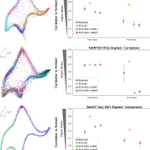
Very happy our teams story (@Toker_IA @YaelMor3) is finally out! Even transient transgenerational effects can have an impact on evolutionary processes. great-grand progeny of stressed worms inherit the ability to produce male attracting odor, increasing their chances of mating.

Our “Distracted Worm” paper is finally published! Can transgenerational RNA inheritance bias crucial behavioral decisions for multiple generations? Read how stress controls the progeny’s mating preferences by boosting attractiveness 🔥💥👇 sciencedirect.com/science/ar…

Itamar Lev retweeted

I want to tell you about something new today: we’re launching the @qedScience Insight Feed!🥂 I’m excited about it and want to tell you what it does and why we built it. Part of it is that I miss Science Twitter 😌
Itamar Lev retweeted
Lab meetings can be the worst,
or the best! :)
Here are 22 tips for improving them (including mine)
nature.com/articles/d41586-0… @Nature

Itamar Lev retweeted

DeorphaNN: Virtual screening of GPCR peptide agonists using AlphaFold-predicted active-state complexes and deep learning embeddings
sciencedirect.com/science/ar…
Itamar Lev retweeted

Wait... what????
🤯

In @eLife: Cytoplasmic circular dsDNA is a key constituent of stress granules doi.org/10.7554/eLife.111336…

Itamar Lev retweeted

For decades, two revolutions in neuroscience ran in parallel:
- 🧠 In vivo imaging — watch neurons fire in living animals
- 🧬 Spatial transcriptomics — read cell's molecular identity
Meet TRU-FACT - a graph-based method that matches cells between these datasets at scale 🧵
Itamar Lev retweeted

High-resolution global recombination mapping in C. elegans reveals sexual dimorphisms shaped by meiotic chromosomal features and ... biorxiv.org/content/10.64898… #biorxiv_genetic
Important context for all the hype on the fly connectome brain simulation.

The digital sphinx: Can a worm brain control a fly body? biorxiv.org/content/10.64898… #biorxiv_neursci

Itamar Lev retweeted
It’s finally out! Together with @EMBO and @ReviewCommons, we conducted a structured side-by-side comparison of human peer review and our AI scientific review.
Here’s what we did: Authors whose manuscripts had already received journal-agnostic review at Review Commons were provided with an independent AI review generated by @qedScience. The AI analysis was compared to the combined feedback of multiple human reviewers, not to a single report, and had no access to those reviews.
We then asked authors how they evaluate the strengths and limitations of both approaches, and how they would actually want to use AI.
The conclusion was clear: Scientists want AI feedback to strengthen their work IN ADVANCE, under their control. Not as a gatekeeper, but as a tool for constructive input.
That is exactly what we are building at q.e.d! We are on the authors' side.
q.e.d. is not working in isolation; we are collaborating with leading pro-scientists organizations, including EMBO (and other journals), Review Commons, and OpenRxiv (@biorxivpreprint), and are working closely with researchers across fields. At the same time, we are building an alternative model that puts agency directly in scientists’ hands.
Researchers should be the ones deciding when their work is ready to be shared. We are building the infrastructure to support that.
A pleasure doing this with the great Thomas Lemberger @tlemberger and Niv Samuel Mastboim @nivmast

Itamar Lev retweeted
BIG ANNOUNCEMENT📣: I haven’t been this excited to be part of something new in 15 years… Thrilled to reveal the passion project I’ve been working on for the past year and a half!🙀🥳 It started from my frustration with the depressing effect that the current publishing system has on the well-being of myself, my team, and pretty much every scientist I know (maybe you’ve noticed from my stupid jokes… :) I was exhausted of dealing with the huge delays, reviewers that can be abusive, and how arbitrary it all is. Unfortunately, the most important factors are often WHO your reviewers are and who YOU are... It’s clear we need alternatives or at least ways to improve the situation. So, together with a really special and talented team we worked to develop this idea into “qed” a platform where you can get CONSTRUCTIVE feedback on your own work or CRITICALLY assess other people’s papers. It can be a real difference maker if many of you join us (thousands have tried it already, but today we release a NEW and much stronger version ;) Let’s harness qed to put the power back in the scientists’ hands, to do, to read & to publish science on our own terms. I’m dying for you to TRY IT, and it’s very simple - just drop a paper (the link to the website is in the replies👇) - it’s completely secure, private, and free, and you get results fast. Please show your support, SHARE, tell your friends, and let’s be the revolution 🫵!

A super cool story from Ethan and the @OdedRechavi , O2-sensation-related, neuronal small RNAs regulate germline DNA damage and fertility in high temp!🔥

Itamar Lev retweeted

rRNA intermediates dictate nucleolar architecture in C. elegans biorxiv.org/content/10.1101/…

Itamar Lev retweeted
Molecular profiling of adult C. elegans glia across sexes by single-nuclear RNA-seq
cell.com/developmental-cell/…
Itamar Lev retweeted

Last year, we posted a preprint providing the first genetic evidence that the Harbin skull likely belonged to a Denisovan: biorxiv.org/content/10.1101/… Today, DNA evidence provided the final proof: www-sciencedirect-com.ezprox…

Itamar Lev retweeted
Divergence in neuronal signaling pathways despite conserved neuronal identity among Caenorhabditis species
sciencedirect.com/science/ar…
Itamar Lev retweeted

📄 New paper: "A Minimum Description Length Approach to Regularization in Neural Networks" with Orr Well, Emmanuel Chemla, @roni_katzir, and @nurikolan .
We explore why neural networks often struggle with simple structured tasks.
Spoiler: our regularizers might be the problem.
🧵
Itamar Lev retweeted

Flatworms, but make it high-res. 🧠🪱
This new protocol combines tissue expansion + light-sheet microscopy to reveal planarian neural and muscle anatomy in 3D, at single-cell resolution. #Planaria #Microscopy #DevBio
elifesciences.org/articles/1…
Itamar Lev retweeted

🔥🔥🔥OUR NEW PREPRINT: Slowing and reversing aging? Nature does it, here we show how! Age deceleration and reversal gene patterns in dauer diapause. Huge congrats to Kristy Totska, João Barata, Walter Sandt and @Meyer_DH biorxiv.org/content/10.1101/…
Itamar Lev retweeted
WOW!! A new pre-print rethinking how mosquitoes, the world's deadliest animal, mates. Amazing work from Leah @LeahHouri (former PhD student in my lab) conducted in @leslievosshall's lab. Huge implications!
Leah found that contrary to what was previously thought, mosquito mating is a female-controlled process, and discovered a new active "lock and key" gating mechanism that controls mating. biorxiv.org/content/10.1101/…
Itamar Lev retweeted

Reactivation of retrotransposable elements is associated with environmental stress and ageing
nature.com/articles/s41576-0…

Itamar Lev retweeted
That's dramatic (and cool): "archaea species can also form multicellular tissue–like structures when compressive forces are applied... ... These results establish multicellularity as a feature of all three domains of life"science.org/doi/10.1126/scie…
