

@pipeline_xyz intern pfp collection @Uwaaa_xyz banner by @HuwahuwaPm TG stickers: https://xitter.cf/t.co/eYvVSeVaBT
Joined February 2023
- Tweets7.4K
- Following754
- Followers1K
- Likes32.7K





Pinned Tweet
G @monad Gm @Uwaaa_xyz
3 months went by so fast, as of today the total Uwaaa pfps I’ve drawn has reached 200.
Thanks as always to everyone who’s been supporting Uwaaa all this time.💜💜💜


Gmonad 💜
Today is the 30th day I've been drawing @Uwaaa_xyz pfp , and I've drawn around 120 nads in total.
I probably wouldn't have been able to draw this many if the other nads didn't support me.
Thank you so much all nads.. 💜 I love you all..💜
@monad_xyz @pipeline_xyz

Issei retweeted

Quantum-Resistance is hard because PQ signatures are much larger (25x larger) and quorum certificates on PQ signatures are much much larger (2500x larger)
So, @category_xyz solved this problem with Quantum Cadence, a new version of Cadence that eliminates quorum certificates altogether. The new protocol actually scales better with more proposers.
Incredibly exciting developments in the Monad world. Monad will simply run faster as quantum takes center stage

Today we are releasing Quantum Cadence, a post-quantum version of Cadence, our consensus protocol with multiple concurrent proposers. Quantum Cadence uses no quorum certificates, and its safety and liveness do not depend on signatures.
Most modern consensus protocols, Cadence included, rely heavily on signatures and quorum certificates, which a large-scale quantum computer could forge. Simply replacing today's signatures with post-quantum ones would make certificates too large for every validator to send around in a high-performance blockchain. Quantum Cadence instead draws on Forget-IT, a recent signature-free consensus protocol co-developed by researchers at Category Labs.
Quantum Cadence still keeps the overall architecture and core guarantees of Cadence, so our Cadence prototype was easy to carry over: an AI was able to adapt it to Quantum Cadence in a few hours, and an early prototype now runs on an internal test network.
We designed Quantum Cadence to be practical for a high-performance blockchain. In our simulations, its latency is similar to Cadence's, and it scales better with the number of proposers.
Interactive explainer: category.xyz/quantum-cadence.
Full paper: arxiv.org/abs/2610.32803.
Joint work by @MohammadMJalal1, @TobiasKlenze, and @komasito55
Issei retweeted
Shoutout @LlamaRisk for great analysis and automation in support of @aave Monad. PT-AUSD-17DEC2026 now live

Risk management at scale
PT-AUSD-17DEC2026 on @Aave V3 @Monad is live with dynamic risk parameter updates, enabling a market priced to @Pendle_fi’s implied rates.
Powered by LlamaGuard.
Issei retweeted
With their Plume Vaults, @plumenetwork is bringing OnRe's ONyc to Monad as nONYC.
RWA distribution is a key pain point and it's been inspiring to see the Plume team tackling this head on. LFG!

ONyc is coming to @Monad through nONYC.
Built by @onrefinance, ONyc gives onchain exposure to reinsurance-backed yield, with returns generated from underwriting premiums and collateral rather than crypto-native incentives.
Until now, ONyc has been available only on Solana. nONYC packages the asset through Plume Vaults, making it deployable across supported EVM networks and opening access to new sources of capital and liquidity.
With more than $225M deployed across Solana DeFi, ONyc has already established itself as a significant RWA onchain.
Now, it’s moving beyond its original ecosystem.
This is what RWA distribution looks like: taking institutional assets that already exist and making them accessible across the networks where capital is already moving.


Issei retweeted
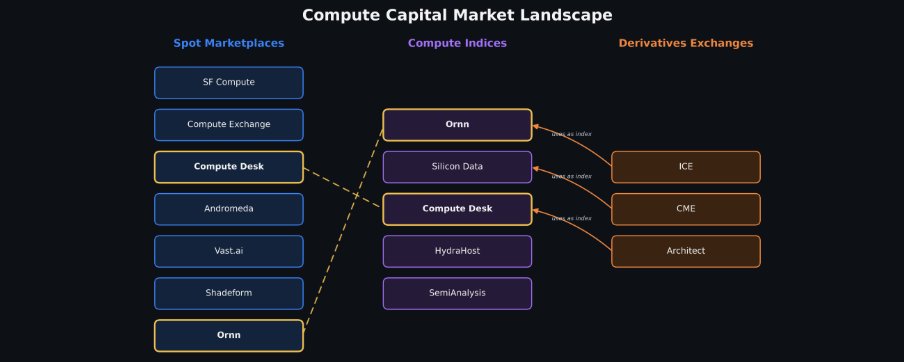
Everyone agrees that compute is a big market and that compute derivatives ought to be massive.
But how that transpires depends on
- the usefulness of the hedge (which depends how correlated the index is to the real prices paid/earned in specific scenarios)
- the delivery ergonomics (e.g. expiring future vs perpetual)
- leverage ratios, margin rates, margin custody details
- buy-in from producers and consumers
- trust in the platform - to protect user assets and to handle all market operations fairly
Read this article for some hints about which of the competing solutions will win:

Issei retweeted
If you are a signer on a multisig with admin control on a DeFi protocol, you should ONLY be signing using a separate device that you DON’T use to browse the internet, take video calls, vibe code, etc.
Hardware wallets store your private key. But the computer you plug it into prepares the transaction. If you plug the hardware wallet into a computer doing everyday tasks, you cannot trust the payload.
Many of the largest hacks this year could have been prevented by doing this. Every victim team describes the attack as complex, but fundamentally most of the boil down to getting access to the signing computer. Do you want all of your users’ funds to be taken and all of your hard work to get washed away? Switch with urgency. It is an extremely high-leverage action.
MacBook Neos are pretty good for this. You can go cheaper too.
If you are confused about this, please DM me and I will help you or put you in touch with our security team. Regardless of where you are building, we are happy to help. Security affects us all - hacks burn trust in the industry we know and love.
Issei retweeted
Prop AMMs are growing on Monad, quoting tighter than CEXes.
@0xhaythem built mpamm.wtf (inspired by pmm dot wtf) to visualize the exact realtime pricing from Prop AMMs on chain. Check it out!

Issei retweeted
MON is live on @IBKR , and users can convert USD into USDC and move USDC to/from Monad.
This is exciting! In my first trading job out of school, colleagues would often recommend IBKR - low fees and designed for professionals. That was the rep then, and still true 15 years later

MON trading is now live on @IBKR along with support for USDC deposits and withdrawals on the Monad network
Issei retweeted

Why did @MetaMask build Money Account on Monad?
@ethereumJoseph breaks it down 👇
Issei retweeted
The point of onchain finance is access: better lending, borrowing, and investing opportunities, open to anyone.
Nook brings that access to everyday savers who never have to think about the chain, and Monad is now the second L1 it supports, after Ethereum. Opportunity awaits, on Monad.

Issei retweeted
Introducing Agent Hub: a home for AI agents on Monad
Users can:
- Launch their agents in 1 click
- Interact with the Monad ecosystem using DApp skills
- Participate in campaigns for AI agents
app.monad.xyz/agent
Issei retweeted
We are signaling the near-future direction of Monad: becoming the blockchain that delivers MEV-resistance, while also improving on industry-leading performance.
This will be delivered through two major research innovations: Cadence (announced today) and Encrypted Mempools via BTX (last month).
Cadence in particular is @category_xyz’s novel MCP protocol, featuring 100ms block times and 200 ms finality, by taking pipelining to the logical conclusion and interleaving block proposals.
The team has been implementing for several months and we’re excited to show you what’s next. The work builds upon what’s already great about Monad - async execution, deterministic RaptorCast, and a carefully designed, modular consensus system - so the path to delivering this, while hard, is doable.
Fundamentally, we believe that decentralized systems can deliver the best of all worlds - trust minimization, pre-trade privacy, fast finality, reliability, and global access - and we’re here to prove it.
Category Labs is proud to introduce Cadence, our multiple-concurrent-proposers (MCP) consensus protocol that matches the optimal good-case latency of single-leader consensus while supporting arbitrarily short block intervals. When combined with BTX, our design for encrypted mempools, this represents a significant step towards solving the problem of MEV at the protocol level.
In nearly every blockchain today, a single party ends up in control of each block: it decides which transactions get in, and can reorder them at will. MCP is the natural fix, but most recent designs pay for it with a separate aggregation phase, adding two extra communication rounds per block.
Cadence makes the proposers part of consensus itself. Its fast path finalizes in an optimal three communication rounds, even when proposers are offline. Cadence also offers speculative finality, similar to MonadBFT, after just two rounds, revertible only if a proposer provably equivocated. In a simulation using estimated network delays between Monad mainnet's 200 globally distributed validators, finalization takes 219 ms on average, speculative finality 167 ms.
Cadence pushes pipelining to the extreme: each block is proposed and finalized in its own independent consensus instance, without waiting on preceding blocks. The block interval then becomes a protocol parameter that can be arbitrarily small. At our initial target of 100 ms, a transaction waits on average just 50 ms to enter a proposal, and oracle prices, liquidations, and auctions can update every 100 ms. Cadence dynamically throttles the opening of new instances to bound the number of outstanding slots even during periods of network instability.
When the network is healthy (under synchrony), a transaction included by an honest proposer can be neither dropped nor deferred (short-term censorship resistance), and no proposer can see the others' proposals in time to react (hiding). We prove both, together with safety and liveness under partial synchrony at the optimal 3f+1 fault bound.
The Cadence protocol is modular: each module is simple on its own, and any of them can be swapped out without touching the rest.
Cadence also builds on components already being deployed: proposals are disseminated as erasure-coded chunks over Deterministic RaptorCast, now rolling out on Monad, and validators vote on proposal digests, so voting does not wait for the full data to arrive.
Start with the interactive tutorial: category.xyz/cadence.
Full paper: arxiv.org/abs/2607.02275.
Joint work by Kushal Babel, Fatima Elsheimy, Lioba Heimbach, Mohammad Mussadiq Jalalzai, Tobias Klenze, Jovan Komatovic, Jason Milionis, Mike Setrin, and Victor Shoup.
Issei retweeted
Cadence is a new consensus protocol by @category_xyz with multiple-concurrent-proposers. This unlocks:
- a major step towards solving MEV when combined with the BTX encrypted mempool design
- 100ms block times initially
- 219ms finality on average
Learn more below 👇
Category Labs is proud to introduce Cadence, our multiple-concurrent-proposers (MCP) consensus protocol that matches the optimal good-case latency of single-leader consensus while supporting arbitrarily short block intervals. When combined with BTX, our design for encrypted mempools, this represents a significant step towards solving the problem of MEV at the protocol level.
In nearly every blockchain today, a single party ends up in control of each block: it decides which transactions get in, and can reorder them at will. MCP is the natural fix, but most recent designs pay for it with a separate aggregation phase, adding two extra communication rounds per block.
Cadence makes the proposers part of consensus itself. Its fast path finalizes in an optimal three communication rounds, even when proposers are offline. Cadence also offers speculative finality, similar to MonadBFT, after just two rounds, revertible only if a proposer provably equivocated. In a simulation using estimated network delays between Monad mainnet's 200 globally distributed validators, finalization takes 219 ms on average, speculative finality 167 ms.
Cadence pushes pipelining to the extreme: each block is proposed and finalized in its own independent consensus instance, without waiting on preceding blocks. The block interval then becomes a protocol parameter that can be arbitrarily small. At our initial target of 100 ms, a transaction waits on average just 50 ms to enter a proposal, and oracle prices, liquidations, and auctions can update every 100 ms. Cadence dynamically throttles the opening of new instances to bound the number of outstanding slots even during periods of network instability.
When the network is healthy (under synchrony), a transaction included by an honest proposer can be neither dropped nor deferred (short-term censorship resistance), and no proposer can see the others' proposals in time to react (hiding). We prove both, together with safety and liveness under partial synchrony at the optimal 3f+1 fault bound.
The Cadence protocol is modular: each module is simple on its own, and any of them can be swapped out without touching the rest.
Cadence also builds on components already being deployed: proposals are disseminated as erasure-coded chunks over Deterministic RaptorCast, now rolling out on Monad, and validators vote on proposal digests, so voting does not wait for the full data to arrive.
Start with the interactive tutorial: category.xyz/cadence.
Full paper: arxiv.org/abs/2607.02275.
Joint work by Kushal Babel, Fatima Elsheimy, Lioba Heimbach, Mohammad Mussadiq Jalalzai, Tobias Klenze, Jovan Komatovic, Jason Milionis, Mike Setrin, and Victor Shoup.


Issei retweeted
Maple is now on Monad
SyrupUSDC is a yield bearing dollar asset issued by @maplefinance, backed by institutional borrowing activity
SyrupUSDC markets on Monad are now live on @aave
Issei retweeted
It was really fun to sit down with @ethereumJoseph , a true leader in our space who has faced every challenge with courage and optimism
We discuss the future of money, AI, and why our two teams are working closely together to grow adoption of crypto via Metamask Money on Monad
We sat down for the first time with @ethereumJoseph, Founder and CEO of Consensys and Co-Founder of Ethereum, and @KeoneHD, Co-Founder and GM of Monad Foundation.
A conversation about where the future of money is headed, AI, and the new @metamask Money Account.
Timestamps:
0:00 Intro
1:46 What Joe thought the internet would do to money
7:00 Why a 16-year-old skips the bank entirely
12:52 Has crypto only helped people already doing fine?
15:47 How AI changed the way they build
19:47 Is traditional finance moving onto crypto, or is crypto redefining it?
22:47 What do TradFi institutions actually want?
26:51 What is the MetaMask Money Account?
29:43 Who is it for?
30:14 What does it take at the chain level?
31:48 Why did MetaMask chose Monad?
33:37 When will stablecoins go mainstream?
38:09 AI agents that move money on their own
43:35 The story that says it all
Issei retweeted
We sat down for the first time with @ethereumJoseph, Founder and CEO of Consensys and Co-Founder of Ethereum, and @KeoneHD, Co-Founder and GM of Monad Foundation.
A conversation about where the future of money is headed, AI, and the new @metamask Money Account.
Timestamps:
0:00 Intro
1:46 What Joe thought the internet would do to money
7:00 Why a 16-year-old skips the bank entirely
12:52 Has crypto only helped people already doing fine?
15:47 How AI changed the way they build
19:47 Is traditional finance moving onto crypto, or is crypto redefining it?
22:47 What do TradFi institutions actually want?
26:51 What is the MetaMask Money Account?
29:43 Who is it for?
30:14 What does it take at the chain level?
31:48 Why did MetaMask chose Monad?
33:37 When will stablecoins go mainstream?
38:09 AI agents that move money on their own
43:35 The story that says it all
