

Seeking PhD Chemistry Vacancy | M.Phil Chemistry 🧪| Teacher by Profession ✍️| Football Lovers ⚽ | Poetry Lovers 😍
Sialkot, Pakistan
Joined February 2024
- Tweets1.3K
- Following1.1K
- Followers807
- Likes1.2K


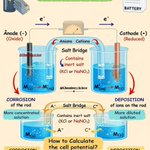


An electrochemical cell uses a redox reaction (oxidation + reduction) to either produce electricity or use electricity to drive a chemical reaction.
🔬 Key components
Two electrodes
Anode: where oxidation occurs
Cathode: where reduction occurs
👇👇

1
27
Electrolytic cell
Converts electrical energy → chemical energy
Reaction is non-spontaneous
Example: Electrolysis of water, metal plating
👇👇
1
7
🔋 Common examples
Dry cell
Lead–acid battery
Lithium-ion battery
Fuel cells (DMFC, PEMFC)
#ElectrochemicalCell #Electrochemistry
#PhysicalChemistry #ChemistryConcepts
#ChemistryNotes #ChemistryStudents
#ChemistryTeacher #ChemistryLife #ScienceEducation #LearnChemistry
22
Water vs Hydrogen Peroxide: Detailed Chemical & Molecular Comparison
Explore the key differences between water (H2O) and hydrogen peroxide (H2O2) in this instructional video. Dive into their chemical formulas, molecular structures, bond types and angles, polarity, and stability.
82
Intizar Hussain retweeted

BREAKING NEWS
The Royal Swedish Academy of Sciences has decided to award the 2025 #NobelPrize in Chemistry to Susumu Kitagawa, Richard Robson and Omar M. Yaghi “for the development of metal–organic frameworks.”

Why Do Apples Turn Brown After You Cut Them? This everyday phenomenon is a great example of chemistry in action. When you slice an apple, you’re not just preparing a snack—you’re triggering a chemical reaction called enzymatic browning. 👇👇

1
43
Here’s what happens: 1️⃣ Cutting the apple damages its cells, releasing an enzyme called polyphenol oxidase (PPO). 2️⃣ PPO reacts with phenolic compounds in the fruit in the presence of oxygen. 3️⃣ This reaction produces melanin pigments, which give the apple its brown color. 👇
1
21
💡 Science Tip: Applying lemon juice slows browning because the vitamin C and acidity inhibit PPO’s activity. #Chemistry #ScienceInEverydayLife #Chemist #Enzymes #Research
23
Differentiate b/w AAS & Flame Photometer
AAS (Atomic Absorption Spectroscopy)
1. Principle: Measures the absorption of light by atoms in a sample.
2. Instrumentation: Uses a hollow cathode lamp, atomizer, and detector.
3. Application: Quantitative analysis of elements, 👇
1
1
82
3. Application: Quantitative analysis of alkali and alkaline earth metals.
4. Sensitivity: Suitable for analyzing elements like sodium, potassium, and calcium.
Key Differences
1. Principle: AAS measures absorption, while flame photometry measures emission.👇
1
61
Intizar Hussain retweeted

Glowing up enzymes 🦠 with purple light💡to make enantiopure molecules #photocatalysis #biocatalysis
