
Maths Education and Assessment Specialist interested in Edtech, History of Maths, and Linguistics. He/him
Slough, England
Joined August 2015
- Tweets1.3K
- Following201
- Followers297
- Likes1.4K





Alex Cutbill retweeted

From September 2026, The MAT will no longer take place. The University of Oxford will use the TMUA. More info: buff.ly/K4bVGPx
🤠* The rumours are true! I'll be at #MathsConf39 talking about exam standards. Do come along with your questions and thoughts. I promise it will be more interesting than it sounds!
*hat not included

📣 Another #MathsConf39 workshop announcement!
✨ The Maths Assessment System in England: How Standards Are Set and Maintained
with Alex Cutbill (@intersectarian)
Who decides how many pupils “meet the expected standard” at the end of KS2, or achieve grade 4 at GCSE? This session explores the mechanisms behind standard-setting, busts common myths, and critically examines whether the current system meets its aims.
We’ll also consider what might be possible in the future for assessment in mathematics and how changes could impact teaching and learning.
✨ What you’ll take away:
✅ A clear understanding of how standards are set and maintained in KS2 and GCSE maths
✅ Insight into the myths and realities of assessment outcomes
✅ Discussion on the effectiveness of current systems
✅ Perspectives on possible future directions for assessment in maths
Leave with a deeper understanding of maths assessment and its implications for schools, teachers, and learners.
Learn more and book your tickets: completemaths.com/community/…

There is a persistent myth that a third of students are doomed to 'fail' GCSE maths (i.e. not achieve at least a grade 4) every year, because GCSEs are norm-referenced (aka graded on a curve).
This is simply not true.
linkedin.com/posts/alex-cutb…

Largest known prime in each century
15th Century: 1499
16th Century: 1597
17th Century: 1699
18th Century: 1789
19th Century: 1889
20th Century: 1999
21st Century: 2099
22nd Century: 2179


TMUA 2022 papers are now online. admissionstesting.org/for-te… Eight months on, we can now see if Paper 1 deserved all the hate! old.reddit.com/r/6thForm/com…

Alex Cutbill retweeted

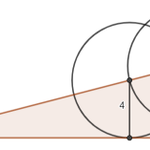
The yellow circle has radius 4. What’s the total area of the two quarter circles?


Alex Cutbill retweeted

Something I hear all the time lately.
"If robots can complete our assessments, that shows our assessments aren't good enough."
I disagree. This statement misunderstands 3 important principles about technology, education & assessment.
blog.nomoremarking.com/if-we…

Interesting that his citation leads with @OakNational: "He led the creation of Oak National Academy and, in his role as Chair, more than 2 million children per week were supported during the pandemic, making it a permanent fixture in the school’s system. As Chair of Ofqual…" 1/2

Breaking: Ian Bauckham, an academy trust boss who advises ministers and chairs @Ofqual and @OakNational has been knighted in the #newyearshonours list
Honours also go to @BeckyFrancis7, @DomHerrington1 and 60 others linked to England's schools
schoolsweek.co.uk/arise-sir-…

Constructions and loci, circle theorems, foundation trig, transformations, exact trig ratios. What do these topics have in common? Obviously numeracy (and statistical literacy) is incredibly important but is that all GCSE maths should be?
This Post is from an account that no longer exists. Learn more
Alex Cutbill retweeted

We are now recruiting markers for the 2023 National Reference Test in Mathematics and English.
For more information, please visit bit.ly/31w1hIu

ALT Information about recruiting markers for the 2023 National Reference Tests. Markers require previous GCSE teaching and marking experience.
Find the three real values of p for which the graph of
y = (x² + 3px + 36p)/(x² − p²)
intersects the x-axis exactly once.
Solution here: xitter.cf/intersectarian/status/…

Time for another thread! There are two different phenomena that generate our three values of p:
1) the denominator could have a repeated root.
2) the numerator and denominator could have a common factor.
That's what makes the question interesting to me.
p = 16, where the numerator has a repeated root…
p = −9, where (x − p) is a factor of both numerator and denominator…
and p = 18, where (x + p) is a factor of both numerator and denominator.
Can you spot these values on the graph as p varies? desmos.com/calculator/kqgamp…