

Working on AOSP-related things at @ActinisHQ. Leading the apps team at @GrapheneOS. Opinions are my own.
Estonia
Joined February 2014
- Tweets366
- Following103
- Followers37
- Likes7.6K








Artem retweeted
Android Security Bulletins have been twisted into a way to mislead the public about security. Patches are only listed in the bulletins 2-6 months after they're disclosed to each Android OEM and allowed to be shipped. Patches listed in the September 2026 bulletin were available to ship for months.
Android Security Bulletins are divided into two sections. The first section contains High and Critical severity Android Open Source Project (AOSP) patches backported to older releases. For years already, Low and Moderate severity AOSP patches have required updating to the latest major releases.
The first section is the main portion of the patches and gets provided 2-6 months in advance as security preview patches. The security preview patches are allowed to be shipped right away, which is sensible. The horrific part is delaying disclosure of the vulnerabilities and patches for months.
The security preview patches aren't only for Android projects but rather also include patches to external projects. Some of these external patches are already publicly disclosed while others are not. As one example, there have been non-publicly-disclosed security preview patches for wpa_supplicant.
GrapheneOS provides security preview releases providing early access to all of the security preview patches. It's the only OS quickly shipping all of these patches. A subset of these patches are shipped early by the stock OS on Pixels and Samsung flagships but far from all and it comes weeks later.
In 2026, Google has been completely overwhelmed by the volume of vulnerabilities being discovered by AI models both internally and externally. They recently announced to OEMs that the full set of High and Critical severity patches will only be available through the latest yearly and QPR2 releases.
Their announcement explains the massive number of vulnerabilities discovered by AI models internally will only be patched in the latest major releases. A subset deemed to pose an imminent risk to users will be backported to the most recent releases but not to older releases with security support.
Each Android Security Bulletin also has a 2nd section with listing an extraordinarily small subset of the vulnerabilities patched in the upstream Linux kernel along with a small subset of vulnerabilities patched in drivers/firmware shared by many devices. This is deliberate to keep the bar very low.
Google wants Android users to feel safe due to believing they have the latest privacy and security patches. Therefore, they delay patches being listed in the bulletins for months and don't list a substantial portion of Linux, driver and firmware patches. It's a very low bar so devices can keep up.
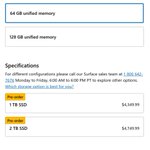
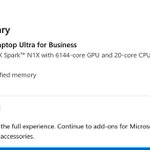
Hopefully, it will get proper Linux support from Day 1. It would be a really good AOSP build machine if so (I already validated that building AOSP on ARM64 is possible and is pretty fast on DGX Spark: actinis.io/blog/building-aos…)


XBPlayer is available on Google Play 🚀
play.google.com/store/apps/d…
iOS & Steam Deck versions are still under review.


XBPlayer is now up for pre-registration on Google Play 🎮
It's an Xbox Remote/Cloud Gaming client we've been working on: play.google.com/store/apps/d…
And soon, that Android app will also be available on SteamOS.
Yes, the Android app. That's where @ActinisHQ Drion comes in 🙂

The iOS version is coming soon too - XBPlayer is built with @jetbrains' amazing Compose Multiplatform.
The SteamOS version, however, will still run the Android build through Drion rather than using the desktop JVM target 🙂

Asked ChatGPT to edit a @RevenueCat paywall with Computer Use. It did, but by prompting RevenueCat's AI 😀


Artem retweeted
We have a partial port of GrapheneOS to the Pixel 11 series after a week of work on it. We're unable to complete the port due to lack of support for ARM hardware memory tagging in software, firmware and near certainly hardware. It appears Google cut an important security feature to save money.
ARM hardware memory tagging (MTE) is used by GrapheneOS across the entire base OS including the kernel and every standard base OS process. It's only temporarily disabled for a few device-specific processes. It greatly improves protection against nearly all remote exploits and many local exploits.
Pixel 8 launched with hardware MTE support in October 2023. We integrated it into our hardened_malloc project and began using it across the OS later that month. Android and the Pixel OS never started using it by default. Android Advanced Protection Mode in Android 16 enables it for a few processes.
Apple's Memory Integrity Enforcement (MIE) is an always enabled feature on the iPhone 17. It's simply a high quality implementation of MTE using the latest standard extensions. It uses MTE in the most secure mode in the kernel and a large portion of userbase. They did a very good job integrating it.
Apple's MIE and Android 16+ AAPM don't use MTE for user installed apps unless those explicitly opt in. GrapheneOS enables it for more apps automatically and has a toggle for users to opt-in for every user installed app. There's a per-app toggle to opt-out for incompatible apps which is uncommon.
Neither iOS or Android encourage app developers to opt into MTE and other more aggressive security features used in the base OS. Apple's docs warn developers of performance and stability issues. Even Signal doesn't opt-in. Our approach enables forcing using MTE in the standard allocators regardless.
Pixel 11 does have security improvements including moving to post-quantum secure verified boot (ML-DSA) and replacing Samsung Shannon IMS with AOSP IMS. Titan M3 should significantly improve protection against data extraction in Before First Unlock state. It's too bad they ruined it by cutting MTE.
Pixel 11 series is a lot more expensive for an incremental improvement to the CPU, the same underpowered GPU and reduced RAM for the Pro base models. They finally caught up to the last generation of Qualcomm cellular radio. It's overpriced, the upgrades aren't impressive and losing MTE is appalling.
Compared to the Pixel 11, a Snapdragon 8 Elite Gen 5 has ~40% higher single threaded CPU performance, ~80% higher multi threaded performance, over 100% higher GPU performance and a far better cellular radio. It also finally has MTE. The next gen is what will be in the first Motorola with GrapheneOS.
Pixel 9a and earlier (including Nexus devices) were the Android Open Source Project reference devices. Pixel support was removed from AOSP with Android 16. It's now harder to support Pixels than many other devices and massive progress towards open source firmware and driver libraries was discarded.
Compared to the stock Pixel OS, GrapheneOS ships AOSP patches months earlier and Linux kernel patches many months earlier. However, we rely on them for firmware and most driver updates. We also want to move to new kernel branches earlier. These things can be improved with our Motorola partnership.
We strongly recommend against buying Pixel 11 devices. Pixel 8, 9 and 10 have much better overall security for GrapheneOS. Pixel 10 is cheaper with similar hardware and MTE. Pixel 11's Titan M3 should improve BFU security for users without a strong passphrase, but losing MTE craters AFU security.
We haven't determined what to do about this situation. It may be best for us to skip the Pixel 11 series devices. We can shift our focus entirely to the upcoming Motorola devices instead. Pixel 10a was really a 9th gen Pixel, so hopefully the Pixel 11a does the same with 10th gen and includes MTE.

