

#1 Cloud-Based #LearningPlatform for #Training & #EducationInstitutes and Corporate Extended Enterprise. Delivered 1000+ learning systems to 5M Users.
North Carolina, USA
Joined February 2009
- Tweets1.8K
- Following816
- Followers1.1K
- Likes194



At #NCIOM, a key question: How do we turn healthcare AI governance into everyday practice?
Executives, clinicians, staff & patients need role-specific AI literacy—not just policies.
At Instancy, we're bridging learning and in-workflow guidance.
#HealthcareAI #ResponsibleAI

Do the math: 12 patients a day × 20 min of charting each = 4 hours of a PT’s shift just typing. Half the clinical day, in the EMR. It follows them home as 9pm pajama time — and 91% of providers link admin burden to burnout (APTA 2025). zurl.co/49Yfv

40 prior auths. 13 hours of staff time weekly. The solution isn’t working faster. It’s combining AI, in-app guidance, and automation across EHRs and portals. Less paperwork. More patient care.
RCM Automation & Staff Training | zurl.co/RU3vD #RCM #HealthcareAI

ACCME’s message for CME providers is clear: AI can accelerate education, but responsibility stays with the accredited provider.
AI governance must be built into the learning workflow—not added later.
Use AI. Govern it. Make integrity visible.
#CME #HealthcareAI

HIMSS26 signal: 85% of the largest EHR’s base is live on its AI suite, with native agent-building and medical foundation models. Bolt-on AI is giving way to an architecture question: “Which architecture?”
zurl.co/Gi2R5
#EHR #HealthIT #AgenticAI

The 2026 EHR benchmark (620 execs, 145 orgs): the market shifted from replacement to optimisation. 79% now rate clinical governance as critical, 76% stabilisation, 72% workflow simulation, 68% benefits tracking. The value is in adoption, not installation. zurl.co/LFtdS

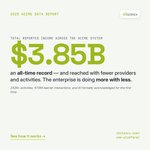
The 2025 ACCME Data Report: 242K+ activities, 57.5M learner interactions, a record $3.85B in income, and AI formally acknowledged for the first time. The twist: fewer providers and activities than last year. The field is doing more with less. zurl.co/Siw9I

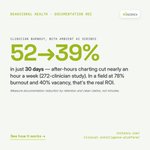
Behavioral health: 78% burnout, 40% vacancy, and clinicians spend 34-55% of their time on documentation. A 272-clinician study found ambient AI cut burnout from 52% to 39% in 30 days. Measure documentation ROI in retention, not minutes saved. zurl.co/Onmtx

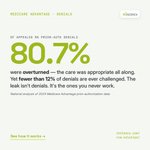
Medicare Advantage denies at ~2x traditional Medicare. But 80.7% of appealed MA prior-auth denials get overturned, and fewer than 12% are ever appealed. Most denials are winnable; almost nobody works them. Your biggest leak is the denials you skip. zurl.co/jagpJ

At Duke’s Caregiver Community Event in Durham.
Caregiving is the work between visits. That’s what we’re building toward: education families can follow, visibility between sessions, and prior auth that doesn’t steal hours from the care.
zurl.co/cEg3P

The 2026 denial benchmark: ~12.6% average initial denial rate, ~806M denied claims, ~$262B cost. But AI-first orgs deny 30-50% less, by preventing, not appealing. Top drivers (CARC 197, 11, 16) are all catchable pre-submission. Where do you sit? zurl.co/l6mLN

ACCME's new 2026-2029 goals, "Leading Through Learning," are a positioning brief for your CME program: strengthen trust (integrity, not just credits), expand reach & value, advance better care (tie activities to outcomes). Commit, demonstrate, connect. zurl.co/CyPd4

Medicare raised the conversion factor for the first time in 5 years: $33.40 for most PT/OT (+3.26%). But a permanent −2.5% RVU cut on eval codes drops the real net to ~1.75%, and some eval-heavy practices land near flat. Read the net, not the headline. zurl.co/XONLe

Five shifts are reshaping 2026 revenue cycle: new prior-auth rules, rising denials, a dual Medicare conversion factor, AI workflows, and tougher audits. Top performers answer with three priorities: automation, prevention, and visibility. zurl.co/Zmy9G

ED physicians spend a median 6.82 min in the EHR per patient—measured from audit logs. At 2-3 patients/hr that's 80-120 min of typing per shift. Most of it is documentation, not chart review. And EM has the highest burnout of any specialty. zurl.co/edA4Z

The RTM market is headed for $825M by 2030. Only ~30% of patients finish their home program without digital monitoring. And 2026 CMS expanded the RTM codes. Demand, need, and reimbursement are aligning—but the market grows whether or not you're in it. zurl.co/l8jXG

5 most documented hospital EHR failures are organizational, not technical: no frontline input, go-live treated as done, generic training, thin go-live support, no post-go-live audits. The tech rarely fails—the rollout does. zurl.co/uOoqr #EHR #HealthIT

New 2026 RCM survey: AI in the revenue cycle moved from promise to proof. 63% have integrated AI automation.
The proof is upstream, a "shift left" into documentation + prior auth to prevent denials before claims go out.
zurl.co/37ty3
#RCM #HealthcareAI

RTM's evidence base is getting rigorous. A large real-world analysis (4,081 RTM vs 28,916 non-RTM, 900+ clinics) reports 34% better PROMIS Physical Function and 33% better Pain Interference. The point isn't the %, it's that they're NIH-validated measures.
zurl.co/CoCT0

The most missed root cause of specialty EHR adoption failure: specialty workflows forced into generic templates. A behavioral health note in a primary care template = worse records AND more work. It looks like a training problem. It's a fit problem. zurl.co/KxK4j
