

Check out the Inflation Guy podcast at https://xitter.cf/t.co/IkrlMfK1oI . Visit our website at https://xitter.cf/t.co/cEgFwkXfwQ!
Morristown, NJ
Joined July 2009
- Tweets9.7K
- Following206
- Followers16.9K
- Likes3.2K





Inflation Guy’s CPI Summary (September 2026)
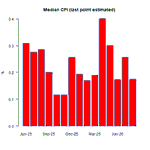
It’s time for another CPI report. The next couple of months after this one will be interesting, since the government shutdown really screwed up the October 2025 (which didn’t exist) and November 2025 (which used some odd assumptions about October) comps....
inflationguy.blog/2026/10/14…

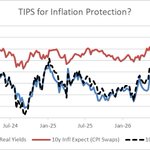
Real Yield Rise is Not That Mysterious
A lot recently has been made about this chart. We all know that nominal yields have been shooting higher since the spring, when the Iran war began pushing energy prices up....
inflationguy.blog/2026/09/28…

23 years ago, I traded the first interbank US inflation swap. I was the sole market maker for CPI futures. That's the world I've lived in ever since. For the last 17 years, Enduring Investments has been the only investment manager built exclusively around inflation as an asset class — no drift, no side bets, just the one thing done deeply.
We're now raising capital to fund our next phase of growth. Accredited investors: email [email protected] for details.
This, believe it or not, was my first-ever interview on the floor of the NYSE. Now, I'm a bond guy but still, it was cool. @AssetTVUS
assettv.com/player/default-p…
Inflation Guy’s CPI Summary (August 2026)
Core CPI has been mostly boring and fairly trendless over the last 6-8 months. Not so high as to be worrisome, but not obviously declining, either....
inflationguy.blog/2026/09/11…

There Are Warsh Things I Could Do
Honestly, I feel like I would really like to write about something other than new Fed Chairman Kevin Warsh....
inflationguy.blog/2026/09/02…

I love this

A hedge fund manager put a jar of 1,776 jelly beans in front of a room at Google and proved in two rounds why most investors will always lose money. for free.
His name is Joel Greenblatt. Gotham Capital. 50% a year for a decade. he asked the room to guess how many jelly beans were in the jar.
First round: everyone wrote their guess silently. no talking. no looking around. the average was 1,771. five off. almost perfect.
Second round: people said their guesses out loud. heard each other. adjusted. the average collapsed to 850. same room. same jar. the only thing that changed was influence.
He told the room: the second guess is the stock market. everyone knows what they just read in the paper. what the guy next to them said. what they saw in the news. the cold independent guess was better. that is not how the market works. but that is where the opportunity is.
Then he showed 20 years of data. the cheapest 20% of stocks averaged 38% a year. the most expensive averaged the least. the strategy is simple. the reason it still works is that people are still crazy. and they always will be.
55 minutes. one jar. still free.
Watch this space...I was surprised to see median wage growth tick up to 3.8%, now higher than end of 2025. Job-Switcher is at 4.4%, higher than end of 2024. This matters for supercore. 3.5%-3.8% is okay, that's where it was pre-COVID. You just don't want to see it a lot higher.

Inflation Guy’s CPI Summary (July 2026)
The Bloomberg survey’s consensus numbers headed into CPI today were for +0.11% on headline inflation and +0.20% on Core....
inflationguy.blog/2026/08/12…

Michael Ashton retweeted

Institutions don't need another yield app. They need infrastructure that fits how they already operate on-exchange, non-custodial, certified. We built the module that does it. Nothing like it exists.
Michael Ashton retweeted

This is key:
Tokenized Treasuries are an important building block for on-chain finance.
USDi adds a different one: a digital currency designed to track purchasing power rather than the prevailing cash rate.
usdicoin.com

Socialism and Inflation Measurement
One of the common complaints about the Consumer Price Index (CPI) is that it doesn’t reflect the way inflation…...
inflationguy.blog/2026/08/05…
100%

I’m glad the conversation has shifted in this direction…and I am glad others are beginning to understand it. But all this started back in 2008 with QE and “abundant reserve” monetary policy. Both Warsh, and the WSJ, supported this overreaction in monetary policy. It wasn’t actually needed. And counterfactual proof that it worked is nonsense. Before QE, there was an active market for short-term interest rates and banks all had Federal Funds Trading Desks (FFTD). The Fed could influence the rate by adding or subtracting reserves, but banks traded billions of dollars of overnight money every day. After QE, banks are flooded with reserves and all those FFTD’s are gone. There is no longer a market for federal funds. So, where does the funds rate come from? Well, the Fed just makes it up. In short, it is “price fixing”. The Fed literally makes up the cost of money in the short-term. They claim there are market signals, but this signals are distorted by heavy-handed capital and liquidity rules and regulations. So, while the market may influence long-term rates, it has no say in short-term rates. The only way to fix this is do QT until there are no excess reserves anymore and banks start trading federal funds again. We are a long way from that. There are massive losses on both bank books and the Fed’s balance sheet, more losses than the subprime market had in 2008. We have had 40-year highs in inflation. The Treasury funded trillions of dollars of government growth at artificially low rates (basically 0%) The market waits for the Fed to tell it what short-term rates are and has no input itself. This entire QE experiment has been a failure.
In reading about the "Situational Awareness" debacle, my first thought is "What an ironic name for a company." My second thought, once I read the stories, is that the single key phrase is "...with no previous investment experience..." to describe Aschenbrenner. It's probably a good idea to avoid hedge funds - and asset managers generally - that have "no previous investment experience." But, $45bln worth of investors apparently did not think that was an important factor.
For the record, I have previous investment experience.
Multiple Poppycock Warning on Warsh Fed Meeting #1 inflationguy.blog/2026/07/29…

Michael Ashton retweeted

inflationguy.blog/
@inflation_guy's discussion of what drove the CPI data so much lower than expected. does it feel that way? maybe not, but the numbers are the numbers

Inflation Guy’s CPI Summary (June 2026)
Okay, I will admit that I came into today thinking ‘this is one of the more low-stress releases in quite a while...
inflationguy.blog/2026/07/14…
