

Enabling global trade for companies big and small..
Scottsdale, AZ
Joined March 2009
- Tweets1.6K
- Following297
- Followers2.9K
- Likes9








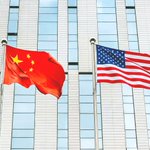

“Shipping records prove the claim.” Said our CEO Michael Kanko, in his recent FreightWaves interview.
A $100 billion gap separates China’s reported exports to the US from recorded US imports from China. Hear him explain what this discrepancy could mean for global supply chains, and how shipment records help businesses discover who supplies their competitors. Catch the full interview below!
The biggest lesson from this year’s holiday shopping season? Don’t wait until the last minute.
Retailers have fundamentally changed their procurement strategies, spreading imports over longer periods and stocking up earlier to hedge against trade volatility.
The result: a banner year for holiday imports. In the latest 𝘔𝘢𝘯𝘪𝘧𝘦𝘴𝘵, ImportGenius data reveals how retailers are adapting — and what other importers can learn from their playbook.
Link to the full report in the comments.

Nearly twenty years ago, Nucor promised to clean forced labor out of its Brazilian pig iron supply chain. Government raids on remote charcoal camps just found the same problems again.
Labor officials cited six of Nucor's suppliers, including Carajas Siderurgia, for camps that meet Brazil's legal definition of modern slavery. ImportGenius customs records show at least 18 shipments from those suppliers reached Nucor over three years, about 5% of its average annual pig iron purchases, well after the violations were documented.
Link to the full story in the replies.


CHAINge 2026 is just days away, and we're ready.
Jannine Krish, MBA, Daniel Mikhail, Carolyn James, and William George will be representing ImportGenius at ASCM's flagship supply chain conference in Long Beach, September 29–30. If you're working in procurement, sourcing, or compliance, they'd love to connect.
Registration link in the replies.

Our next 𝘔𝘢𝘯𝘪𝘧𝘦𝘴𝘵 features an exclusive interview with 𝗟𝗼𝗿𝗶 𝗔𝗻𝗻 𝗟𝗮𝗥𝗼𝗰𝗰𝗼, award-winning author, former CNBC journalist, and founder of the 𝗖𝗼𝗻𝘁𝗮𝗶𝗻𝗲𝗿𝘀 𝗗𝗼𝗻'𝘁 𝗟𝗶𝗲 conference series. She breaks down what's reshaping global shipping routes and why just-in-time has become a thing of the past.
Subscribe to get it when it drops. Link in the comments.
Flock Safety used to market its license plate cameras as "made in the USA." Now, its marketing materials no longer say where the hardware is assembled at all.
A Wired investigation used ImportGenius customs data to trace what changed. Its records show commodity camera units and radar pods arriving from Primax Electronics in Thailand. "It looks like Primax manufactures whole security camera solutions," said ImportGenius Lead Analyst Lynn Hughes, pointing to shipment records that repeatedly list "Radar" in the product description.
Read the full investigation: link in the replies.


A single Panama Canal transit slot sold for a record $5.3 million for a Sept 1 transit, but six months ago the average was just $55,000.
El Niño is draining the canal, with rainfall in the zone 34% below its historical average, and the canal authority has cut daily transits down to 32 per day. At the same time, traffic is rising: the Hormuz crisis is rerouting oil and LPG shipments toward the Americas, pushing more cargo into a canal with less room for it.
If your freight runs through Panama, it's either costing more or taking longer. Shipments still transiting are facing surging slot premiums. Those rerouted around the Cape of Good Hope may face longer, more costly journeys. Knowing which one applies to yours is how you plan for it.
Explore Panama Canal data: link in the replies.

Learn more about the Panama Canal's transit data here: importgenius.com/how-it-work…

We're proud to be sponsoring ASCM CHAINge 2026 in Long Beach, California, September 29–30, and presenting at the Innovation Showcase. Stop by to learn how global shipment intelligence helps teams:
• Identify and vet new suppliers before the first conversation
• Monitor competitor supply chains and sourcing shifts in real time
• Strengthen trade compliance with shipment-level visibility
If you're working on procurement, compliance, or supply chain strategy, we'd love to connect.
Registration link in the replies.

America is buying a lot less from China. But that doesn’t mean it has broken its dependence.
U.S. imports from China fell 𝟮𝟯% 𝗶𝗻 𝘁𝗵𝗲 𝗳𝗶𝗿𝘀𝘁 𝗵𝗮𝗹𝗳 𝗼𝗳 𝟮𝟬𝟮𝟲 as supply chains for computers, electronics, batteries and other major products shifted elsewhere. Yet for everything from child safety seats to critical herbicides, China still commands more than 90% of U.S. imports. The latest 𝘔𝘢𝘯𝘪𝘧𝘦𝘴𝘵 goes inside the data to show where decoupling is happening — and where China still has a chokehold.
Link to the full report in the replies.

On paper, the Maldives sent Russia about $2,300 of tuna and $25 of leaflets and brochures between 2022 and 2025. Russian trade data tells a different story: imports from the Maldives jumped to more than $630 million in 2022, up from less than $7 million the year before.
A Wall Street Journal investigation used ImportGenius records to surface that gap, tracing dual-use goods like microchips and aerospace components moving through a single airport toward Moscow. Our Director of Research, William George, noted the real figures "probably understate the true volume of trade," pointing out that Russia began censoring parts of the data in 2024 and cut access entirely in early 2025.
Link to the full story in the comments.
