

나보리. 크립토 3년째. 번거 쥐뿔도 없지만 코인세금반대청원 항상 1빠로함
Joined November 2022
- Tweets13.3K
- Following3.1K
- Followers2.7K
- Likes14.4K



Pinned Tweet
Renaiss Gacha가 Binance Wallet에 정식 출시되었다고?!
안녕하세요! Renaiss에 진심인 보리입니다!! ❤️
오늘은 Renaiss에서 정말 반가운 소식이 들려왔는데요!!
바로 Renaiss Gacha가 Binance Wallet에 정식으로 통합되었다는 소식입니다!!ㅎㅎ
그동안 Renaiss에서 직접 팩을 개봉하며 다양한 포켓몬 카드를 수집해왔던 저에게도 굉장히 반가운 소식이었는데요!
이제는 Binance Wallet에서도 Renaiss의 Gacha 서비스를 직접 이용할 수 있게 되었습니다!!
이번 통합은 단순히 새로운 가챠 서비스를 추가한 것뿐만 아니라, Renaiss가 구축해온 실물 수집품 토큰화 인프라를 외부 지갑에서도 활용할 수 있게 되었다는 점에서 의미가 있다고 생각합니다ㅎㅎ
그럼 어떤 기능들이 있는지 하나씩 살펴볼까요?!
1. Binance Wallet에서 만날 수 있는 4가지 Gacha 머신!
이번에 총 4종류의 머신이 출시되었는데요!
Bronze — $28
Silver — $48
Gold — $88
Lucky — $128 (Binance Wallet 독점)
특히 제가 눈여겨본 건 바로 Lucky $128 머신!!
이 머신은 Binance Wallet에서만 이용할 수 있는 독점 머신인데요!
Lucky 팩에서 BBBV 상승 대상 포켓몬 카드를 획득하면 해당 카드의 BBBV가 상승하는 특별한 메커니즘이 적용된다고 합니다!!
상승 폭은 카드마다 다르다고 하니 어떤 카드들이 대상인지 살펴보는 재미도 있을 것 같네요ㅎㅎ
2. 실물 카드와 1:1로 연결되고, 추첨 과정까지 검증 가능하다?!
Renaiss의 가장 흥미로운 특징 중 하나는 단순한 디지털 카드가 아니라는 점인데요!
토큰화된 모든 카드는 제3자 보관 기관에 실제로 보관된 실물 카드와 1:1로 연결되어 있습니다.
실물 카드가 보관 기관에 입고된 경우에만 토큰이 발행되며, 기록된 보관 위치도 온체인에서 확인할 수 있다고 해요!
또한 Renaiss Fair를 통해 가챠의 공정성도 직접 검증할 수 있습니다!!
오픈소스 알고리즘을 통한 팩 구성 검증
온체인 Merkle 커밋먼트를 통한 카드 풀의 무결성 확인
검증 가능한 난수와 암호화 증명을 통한 추첨 결과 검증
예전부터 Renaiss Fair를 이용해봤던 입장에서 이런 검증 시스템이 Binance Wallet의 Gacha에도 적용된다는 점이 반갑네요!!ㅎㅎ
3. 카드를 뽑은 뒤에는 Community Offer도 이용 가능!!
팩을 개봉하고 카드가 공개되는 순간부터 72시간 동안 Community Offer를 이용할 수 있는데요!
적용 요율은 카드 공개 후 경과 시간에 따라 달라집니다.
최초 1시간 이내: 90%
1시간 ~ 24시간: 85%
24시간 ~ 72시간: 50%
72시간이 지나면 제안이 만료되기 때문에 표시된 금액과 남은 시간을 꼭 확인해야 합니다!
참고로 Lucky 머신에서 BBBV가 상승하는 경우에도 Community Offer의 이용 시간과 요율은 동일하게 적용된다고 해요!!
4. Binance Wallet에서 Gacha 이용하는 방법!
참여 방법도 간단합니다!!
Binance 앱 → Wallet → Market → Gacha
해당 메뉴에서 원하는 머신을 선택하고 결제를 확인하면 팩을 개봉할 수 있습니다!!
이번 Binance Wallet 통합을 통해 Renaiss를 처음 접하는 유저들도 더 많아질 수 있을 것 같은데요!
개인적으로는 Renaiss의 카드 수집 경험이 더 많은 사람들에게 알려질 수 있는 좋은 기회라고 생각합니다ㅎㅎ
특히 Binance Wallet 독점 Lucky 머신에서는 어떤 카드가 나올지 정말 궁금하네요!!
Renaiss의 1주년에 이어 이런 반가운 소식까지 들려오니 앞으로의 행보도 더욱 기대됩니다!!
여러분이라면 4가지 머신 중 어떤 머신을 가장 먼저 이용해보고 싶으신가요?! >3<
@renaissxyz @renaissCLTB @RenaissKrCM
@BinanceWallet @BNBCHAIN


Renaiss의 첫 번째 생일을 축하합니다!! 🎂❤️
안녕하세요! Renaiss에 진심인 보리입니다!!
Renaiss가 런칭된 지 딱 1년이 되는 날이라고 해요!!ㅎㅎ
그동안 Renaiss와 함께하면서 카드 개봉부터 다양한 커뮤니티 이벤트, 해커톤까지 정말 많은 경험을 할 수 있었는데요!
단순히 카드를 수집하는 것뿐만 아니라 같은 관심사를 가진 분들과 소통하고 새로운 추억을 만들어갈 수 있어서 더욱 애정이 생긴 프로젝트인 것 같습니다ㅎㅎ
그리고 이번 1주년을 기념해 특별한 이벤트도 진행된다고 하는데요!
원피스 TCG 신제품 OP-18을 받을 수 있는 기회!!
참여 방법도 정말 간단해요!!
1. Renaiss 공식 1주년 기념 게시물에 좋아요 누르기!
2. 해당 게시물을 인용 리트윗하고 Renaiss의 1주년을 축하하는 메시지 작성하기!
추첨을 통해 총 3명에게 원피스 TCG 신제품 OP-18 증정!!
🔗 이벤트 게시물
xitter.cf/renaissCLTB/status/212…
앞으로 Renaiss가 2주년, 3주년을 맞이할 때도 함께 축하할 수 있었으면 좋겠네요ㅎㅎ
앞으로도 Renaiss에 진심인 보리로 활동하겠습니다!!
Happy 1st Anniversary, Renaiss!! ❤️
@renaissxyz @renaissCLTB @RenaissKrCM

Why Optimum Looks Beyond Individual Nodes to Understand Network-Wide Data Propagation #25
@get_optimum
How do we determine whether a blockchain network is distributing data efficiently?
At first, we might think that measuring the total amount of transmitted data or the average propagation speed would be enough.
But these measurements don't always tell us how close individual validators are to reconstructing the original payload.
This is another interesting aspect of Optimum's Peer-Turbo research.
The paper explores the distribution of Degrees of Freedom (DoF) across receiving nodes using a fluid approximation model.
Rather than focusing exclusively on individual packet exchanges, this approach helps analyze how independent information accumulates throughout the network over time.
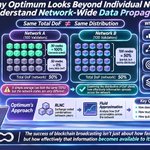
Let's imagine two blockchain networks, each consisting of 100 validators.
In Network A, 50 validators have completely reconstructed a block, while the remaining 50 have received almost no useful information.
In Network B, all 100 validators have accumulated roughly half of the independent information required to reconstruct the same block.
Both networks may have accumulated a similar total amount of independent information across their receivers.
However, their actual data distribution states are very different.
A simple average cannot fully capture this difference.
This is why understanding the distribution of Degrees of Freedom matters.
It provides a way to examine how information recovery progresses across the receiving population, rather than looking only at aggregate network activity.
Through Random Linear Network Coding (RLNC), Peer-Turbo allows receiving nodes to exchange coded combinations of their available information.
As these exchanges continue, nodes can accumulate additional degrees of freedom and move closer to reconstructing the original payload.
The fluid approximation used in Optimum's research helps describe this collective process at a larger scale.
What I find particularly interesting is that this analytical perspective allows us to explore questions beyond raw transmission speed.
How does changing source bandwidth affect data recovery across the network?
How much can receiving peers contribute to the broadcasting process?
How quickly can the network achieve a particular service-quality target?
These questions become increasingly relevant for high-performance blockchains such as Solana and Monad, where large amounts of data must reach validators within demanding time constraints.
A network that delivers information extremely quickly to a small group of validators may not necessarily provide the same benefits as one that enables timely recovery across a broader receiving population.
Of course, analytical models simplify real-world network behavior.
Actual performance can be influenced by heterogeneous bandwidth, network topology, packet loss, computational overhead, and many other implementation-specific factors.
Nevertheless, Optimum's research offers an interesting framework for understanding blockchain broadcasting as a collective information recovery process.
To me, this is what makes the research particularly valuable.
Optimum isn't simply exploring how to transmit more packets in less time.
It's also studying how independent information spreads, accumulates, and ultimately becomes recoverable across an entire network.
The success of blockchain broadcasting shouldn't be measured only by how fast information leaves the source, but also by how effectively that information becomes available to its intended receivers.
And understanding that distinction is an important step toward building more efficient and scalable blockchain infrastructure.


Why Optimum Turns Receiving Nodes Into Active Data Distributors #24
@get_optimum
What if every node receiving blockchain data could also become part of the solution to distributing it?
One of the most interesting aspects of Optimum's Peer-Turbo research is how it rethinks the relationship between the original sender and receiving nodes.
In conventional star-shaped broadcasting architectures, the original source carries much of the responsibility for distributing data.
Tree-shaped architectures distribute some of that responsibility through intermediate relays, but their predefined paths can still create limitations.
As blockchain networks grow, relying heavily on particular nodes or distribution paths can introduce bandwidth bottlenecks and propagation delays.
Optimum's Peer-Turbo research explores a more collaborative approach.
Receiving nodes don't have to wait until they have reconstructed the entire payload before helping other nodes recover it.
Through Random Linear Network Coding (RLNC), nodes can generate coded combinations using the information they have already received.
These combinations can then be shared with other peers, potentially helping them accumulate additional degrees of freedom.
Let's imagine a network with three validators.
Validator A has received 60% of the independent information required to reconstruct a block.
Validator B has received 40%, while Validator C has received 70%.
None of them has fully reconstructed the block yet.
However, if their available information is sufficiently complementary, they can begin exchanging coded packets and help each other progress toward complete reconstruction.
They don't necessarily need to wait for the original source to deliver every missing piece.
This changes how we think about the role of receiving nodes.
A node that has only partially recovered a payload can still contribute useful information to the rest of the network.
Instead of treating receiving nodes as passive destinations, Peer-Turbo enables them to become active participants in the broadcasting process.
There are several interesting implications behind this approach.
Available outbound bandwidth across receiving nodes can be utilized more effectively.
Peers can begin contributing before completing data reconstruction.
The workload associated with broadcasting can become more distributed.
Dependence on the original source can potentially be reduced.
For high-performance blockchains such as Solana and Monad, these characteristics could become particularly valuable as data volumes and networking demands increase.
Of course, adding more participating nodes doesn't automatically guarantee better performance.
The usefulness of coded packets, available bandwidth, network topology, and computational overhead all influence the final outcome.
But what I appreciate about Optimum's research is its underlying philosophy.
Instead of treating network participants simply as additional destinations that need to receive data, it recognizes their potential to contribute resources to the distribution process itself.
As blockchain networks expand, this distinction could become increasingly important.
A larger network shouldn't just mean more nodes waiting to receive information. It should also mean more nodes capable of helping information propagate.
And that's what makes Optimum's collaborative approach to blockchain networking so compelling to me.


bori's rialo #249
[ Why Rialo Needs Continuous Intent Validation for Long-Running AI Agents ]
@RialoHQ
@RialoKorea
안녕하세요! 보리입니다!
지난 글에서는 AI 에이전트가 시스템 장애나 실행 환경의 재시작에도 기존 작업을 안전하게 이어갈 수 있도록 만드는 Durable Execution에 대해 알아봤는데요!
그런데 여기서 한 가지 더 생각해볼 문제가 있습니다.
AI 에이전트가 기존 작업을 정상적으로 유지하고 있더라도, 시간이 지나면서 사용자의 의도가 달라진다면 어떻게 될까요?
앞으로 AI 에이전트는 사용자의 요청을 즉시 처리하는 것뿐만 아니라 며칠, 혹은 몇 달에 걸쳐 자산을 관리하고 특정 조건이 충족되었을 때 자동으로 행동하는 역할까지 수행하게 될 텐데요!
예를 들어 사용자가 AI 에이전트에게 ETH 가격이 특정 수준 이하로 떨어지면 자동으로 매수하도록 요청했다고 해볼게요!
그런데 한 달이 지나면서 시장 상황이 크게 달라졌고, 사용자의 투자 전략과 감수할 수 있는 위험 수준도 변경되었다고 가정해보겠습니다.
에이전트는 처음 설정된 조건을 정상적으로 유지하고 있었기 때문에 가격 조건이 충족되는 순간 거래를 실행합니다.
기술적으로는 정상적인 실행이지만, 실제로는 사용자의 현재 의도와 맞지 않는 행동일 수도 있겠죠ㅠㅠ
이처럼 처음 설정된 작업의 목적과 시간이 지난 뒤의 실제 의도 사이에 차이가 발생하는 현상을 **Intent Drift(의도 변화)**라는 개념으로 설명할 수 있는데요!
저는 앞으로 Agent Economy에서는 사용자의 의도를 처음에 정확하게 파악하는 것만큼이나, 그 의도가 실행 시점에도 여전히 유효한지 확인하는 것이 중요해질 것이라고 생각합니다ㅎㅎ
여기서 활용할 수 있는 개념이 바로 Continuous Intent Validation, Policy Versioning, Context-Aware Execution입니다.
예를 들어 사용자가 투자 전략이나 위험 허용 범위를 변경하면 기존에 등록된 자동화 작업에도 새로운 정책을 적용하고, 이전 정책을 기반으로 생성된 실행 요청은 다시 검증하도록 설계하는 것이죠!
저는 이 부분에서 리알로(Rialo)의 Reactive Architecture가 더욱 흥미롭게 느껴지는데요!
단순히 가격이나 시간, 온체인 이벤트를 트랜잭션의 실행 조건으로 활용하는 것을 넘어, 사용자의 정책 변경 자체를 기존 작업의 재검증을 유도하는 이벤트로 활용하는 것입니다.
여기에 REX 기반의 정책 검증을 결합한다면 기존 작업이 정상적으로 유지되고 있더라도, 현재 유효한 정책과 일치하지 않는 요청은 중요한 키와 실행 권한을 사용하지 못하도록 제한하는 구조도 생각해볼 수 있겠죠!
물론 시스템이 사용자의 마음이 바뀌었다는 사실을 자동으로 알아낼 수는 없습니다. 따라서 명시적인 정책 변경과 권한 만료, 위험도가 높은 작업에 대한 재승인 절차 등이 함께 고려되어야 합니다.
Preserving a Workflow Doesn't Mean Preserving an Outdated Intent!
AI 에이전트가 장기간 자율적으로 행동하는 시대에는 과거의 명령을 충실하게 수행하는 능력뿐만 아니라, 현재의 상황과 변경된 정책을 반영할 수 있는 실행 구조도 중요해질 텐데요!
사용자가 과거에 승인한 행동이 미래에도 무조건 실행되는 것이 아니라, 실행되는 순간까지 유효한 의도와 권한을 확인할 수 있는 환경!
저는 이러한 Continuous Intent Validation과 조건 기반 실행 구조가 앞으로 Rialo를 활용한 Agent Economy에서 자율성과 사용자 통제권 사이의 균형을 유지하는 중요한 기반이 될 것 같습니다!!

bori's rialo #248
[ Why Rialo Needs Durable Execution for Long-Running AI Agent Workflows ]
@RialoHQ
@RialoKorea
안녕하세요! 보리입니다!
지난 글에서는 AI 에이전트가 수행하는 작업의 진행 상황을 정확하게 관리하고, 정해진 조건에 따라 다음 단계로 이동하도록 만드는 State Machine에 대해 알아봤는데요!
그런데 여기서 한 가지 더 생각해볼 문제가 있습니다.
AI 에이전트가 수행하는 작업이 몇 초가 아니라 며칠, 혹은 몇 달 동안 지속되어야 한다면 어떻게 될까요?
앞으로 AI 에이전트는 사용자의 요청을 즉시 처리하는 것뿐만 아니라 장기간에 걸쳐 특정 조건을 모니터링하고, 적절한 시점에 행동하는 역할까지 수행하게 될 텐데요!
예를 들어 사용자가 AI 에이전트에게 다음과 같은 작업을 요청했다고 해볼게요.
"앞으로 30일 동안 ETH 가격을 확인하고, 특정 가격 이하로 떨어지면 매수한 뒤 7일 후에 자동으로 스테이킹해줘!"
그런데 이 작업을 수행하는 도중 서버가 재시작되거나 에이전트의 실행 환경에 문제가 발생한다면 어떨까요?
기존 작업의 정보가 메모리에만 저장되어 있었다면 사용자의 요청과 진행 상황이 모두 사라질 수도 있겠죠ㅠㅠ
여기서 중요한 개념이 바로 **Durable Execution(지속 가능한 실행)**입니다!!
Durable Execution은 시스템에 장애가 발생하거나 실행 환경이 재시작되더라도, 저장된 작업 상태를 바탕으로 기존 작업을 이어갈 수 있도록 만드는 실행 방식인데요!
이를 위해서는 Persistent State, Checkpointing, Event History, Workflow Recovery 등의 개념이 중요합니다.
각 작업의 진행 상황과 실행 결과를 지속적으로 기록하고, 시스템에 문제가 발생하면 마지막으로 확인된 상태를 바탕으로 작업을 재개하는 것이죠!
특히 제가 흥미롭게 생각하는 부분은 AI 에이전트가 작업을 수행하기 위해 항상 활성화된 상태로 존재할 필요는 없다는 점입니다ㅎㅎ
기존 작업의 상태와 실행 조건이 안전하게 유지된다면, 필요한 이벤트가 발생했을 때 다시 작업을 이어가는 구조를 설계할 수 있기 때문인데요!
저는 이 부분에서 리알로(Rialo)의 Reactive Architecture가 중요한 의미를 가질 수 있다고 생각합니다.
시간 조건이나 외부 데이터의 변화, 온체인 이벤트를 후속 작업의 실행 조건으로 연결한다면 에이전트가 jatku적으로 실행되지 않더라도 장기간에 걸친 자동화 워크플로우를 구성할 수 있겠죠!
여기에 REX 기반의 정책 검증을 결합한다면 작업이 재개되는 순간에도 기존 실행 권한이 여전히 유효한지, 사용자가 설정한 조건이 변경되지는 않았는지 확인하도록 설계할 수 있습니다.
물론 작업 상태를 저장한다고 해서 모든 실행의 연속성이 자동으로 보장되는 것은 아닙니다.
복구 과정에서 발생할 수 있는 중복 실행과 외부 데이터의 변화, 권한 만료, 이전 트랜잭션의 실제 처리 결과까지 함께 확인해야 하는데요!
The Agent Can Stop, but the Workflow Should Survive!
저는 앞으로 Agent Economy에서 중요한 것은 AI 에이전트가 얼마나 오랫동안 작동할 수 있는지가 아니라, 에이전트의 실행이 중단되더라도 사용자가 요청한 작업을 얼마나 안정적으로 유지할 수 있는지라고 생각합니다.
에이전트는 잠시 멈출 수 있지만, 사용자가 설정한 의도와 실행 조건은 사라지지 않는 환경!
이러한 Durable Execution과 이벤트 기반 자동화 구조가 앞으로 Rialo를 활용한 장기적인 AI 에이전트 서비스에서 중요한 기반이 될 것 같습니다!!

Why Optimum Turns Receiving Nodes Into Active Data Distributors #24
@get_optimum
What if every node receiving blockchain data could also become part of the solution to distributing it?
One of the most interesting aspects of Optimum's Peer-Turbo research is how it rethinks the relationship between the original sender and receiving nodes.
In conventional star-shaped broadcasting architectures, the original source carries much of the responsibility for distributing data.
Tree-shaped architectures distribute some of that responsibility through intermediate relays, but their predefined paths can still create limitations.
As blockchain networks grow, relying heavily on particular nodes or distribution paths can introduce bandwidth bottlenecks and propagation delays.
Optimum's Peer-Turbo research explores a more collaborative approach.
Receiving nodes don't have to wait until they have reconstructed the entire payload before helping other nodes recover it.
Through Random Linear Network Coding (RLNC), nodes can generate coded combinations using the information they have already received.
These combinations can then be shared with other peers, potentially helping them accumulate additional degrees of freedom.
Let's imagine a network with three validators.
Validator A has received 60% of the independent information required to reconstruct a block.
Validator B has received 40%, while Validator C has received 70%.
None of them has fully reconstructed the block yet.
However, if their available information is sufficiently complementary, they can begin exchanging coded packets and help each other progress toward complete reconstruction.
They don't necessarily need to wait for the original source to deliver every missing piece.
This changes how we think about the role of receiving nodes.
A node that has only partially recovered a payload can still contribute useful information to the rest of the network.
Instead of treating receiving nodes as passive destinations, Peer-Turbo enables them to become active participants in the broadcasting process.
There are several interesting implications behind this approach.
Available outbound bandwidth across receiving nodes can be utilized more effectively.
Peers can begin contributing before completing data reconstruction.
The workload associated with broadcasting can become more distributed.
Dependence on the original source can potentially be reduced.
For high-performance blockchains such as Solana and Monad, these characteristics could become particularly valuable as data volumes and networking demands increase.
Of course, adding more participating nodes doesn't automatically guarantee better performance.
The usefulness of coded packets, available bandwidth, network topology, and computational overhead all influence the final outcome.
But what I appreciate about Optimum's research is its underlying philosophy.
Instead of treating network participants simply as additional destinations that need to receive data, it recognizes their potential to contribute resources to the distribution process itself.
As blockchain networks expand, this distinction could become increasingly important.
A larger network shouldn't just mean more nodes waiting to receive information. It should also mean more nodes capable of helping information propagate.
And that's what makes Optimum's collaborative approach to blockchain networking so compelling to me.
Why Optimum Focuses on Independent Information Rather Than Individual Data Shards #23
@get_optimum
Receiving more data doesn't necessarily mean getting closer to recovering the original information.
This is an interesting distinction in distributed networking, and it helps explain one of the fundamental ideas behind Optimum's Peer-Turbo research.
Imagine a validator trying to reconstruct a block that has been divided into ten individual shards.
If the validator receives ten packets but several of them contain identical information, it still cannot reconstruct the entire block.
The number of packets received isn't what ultimately matters.
What matters is how much independent information those packets contribute.
This brings us to an important concept in information theory known as Degrees of Freedom (DoF).
In Random Linear Network Coding (RLNC), nodes can generate coded packets by combining available data shards using randomly selected coefficients.
Each linearly independent combination contributes an additional degree of freedom to the receiving node.
Once the receiver has accumulated enough independent combinations, it can mathematically reconstruct the original payload.
Let's look at a simple example.
Two validators are trying to reconstruct a block consisting of ten original shards.
Validator A has received seven linearly independent coded packets, while Validator B has received a different collection of coded packets.
Validator B doesn't necessarily need to identify the three specific original shards that Validator A is missing.
Instead, it can generate new coded combinations from the information it already possesses.
If those combinations provide three additional degrees of freedom, Validator A can reconstruct the entire block.
What I find particularly interesting about this approach is how it changes the definition of useful network traffic.
In conventional shard-based distribution, usefulness often depends on whether a particular piece of data is missing.
With network coding, usefulness depends on whether the incoming packet contributes independent information.
This gives peers more flexibility when helping one another recover data.
For high-performance blockchains such as Solana and Monad, where validators operate under demanding propagation deadlines, that flexibility could be especially valuable.
There is less need to wait for a particular original shard to arrive from a particular source.
Instead, recovery can progress whenever a peer delivers a useful coded combination.
Of course, not every coded packet introduces a new degree of freedom. Some combinations may be linearly dependent, and encoding and decoding require computational resources.
The efficiency of this approach therefore depends on factors such as coding parameters, network conditions, and implementation.
Still, the principle behind Optimum's research is compelling.
Rather than measuring progress solely by how many packets a validator receives, network coding allows us to think about progress in terms of how much recoverable information has actually arrived.
And that distinction becomes increasingly important as blockchain networks grow.
The real value of a packet isn't simply that it arrives. It's whether it brings the receiving node closer to recovering the original data.
That's another reason why Optimum's research into network coding deserves attention.


bori's rialo #248
[ Why Rialo Needs Durable Execution for Long-Running AI Agent Workflows ]
@RialoHQ
@RialoKorea
안녕하세요! 보리입니다!
지난 글에서는 AI 에이전트가 수행하는 작업의 진행 상황을 정확하게 관리하고, 정해진 조건에 따라 다음 단계로 이동하도록 만드는 State Machine에 대해 알아봤는데요!
그런데 여기서 한 가지 더 생각해볼 문제가 있습니다.
AI 에이전트가 수행하는 작업이 몇 초가 아니라 며칠, 혹은 몇 달 동안 지속되어야 한다면 어떻게 될까요?
앞으로 AI 에이전트는 사용자의 요청을 즉시 처리하는 것뿐만 아니라 장기간에 걸쳐 특정 조건을 모니터링하고, 적절한 시점에 행동하는 역할까지 수행하게 될 텐데요!
예를 들어 사용자가 AI 에이전트에게 다음과 같은 작업을 요청했다고 해볼게요.
"앞으로 30일 동안 ETH 가격을 확인하고, 특정 가격 이하로 떨어지면 매수한 뒤 7일 후에 자동으로 스테이킹해줘!"
그런데 이 작업을 수행하는 도중 서버가 재시작되거나 에이전트의 실행 환경에 문제가 발생한다면 어떨까요?
기존 작업의 정보가 메모리에만 저장되어 있었다면 사용자의 요청과 진행 상황이 모두 사라질 수도 있겠죠ㅠㅠ
여기서 중요한 개념이 바로 **Durable Execution(지속 가능한 실행)**입니다!!
Durable Execution은 시스템에 장애가 발생하거나 실행 환경이 재시작되더라도, 저장된 작업 상태를 바탕으로 기존 작업을 이어갈 수 있도록 만드는 실행 방식인데요!
이를 위해서는 Persistent State, Checkpointing, Event History, Workflow Recovery 등의 개념이 중요합니다.
각 작업의 진행 상황과 실행 결과를 지속적으로 기록하고, 시스템에 문제가 발생하면 마지막으로 확인된 상태를 바탕으로 작업을 재개하는 것이죠!
특히 제가 흥미롭게 생각하는 부분은 AI 에이전트가 작업을 수행하기 위해 항상 활성화된 상태로 존재할 필요는 없다는 점입니다ㅎㅎ
기존 작업의 상태와 실행 조건이 안전하게 유지된다면, 필요한 이벤트가 발생했을 때 다시 작업을 이어가는 구조를 설계할 수 있기 때문인데요!
저는 이 부분에서 리알로(Rialo)의 Reactive Architecture가 중요한 의미를 가질 수 있다고 생각합니다.
시간 조건이나 외부 데이터의 변화, 온체인 이벤트를 후속 작업의 실행 조건으로 연결한다면 에이전트가 jatku적으로 실행되지 않더라도 장기간에 걸친 자동화 워크플로우를 구성할 수 있겠죠!
여기에 REX 기반의 정책 검증을 결합한다면 작업이 재개되는 순간에도 기존 실행 권한이 여전히 유효한지, 사용자가 설정한 조건이 변경되지는 않았는지 확인하도록 설계할 수 있습니다.
물론 작업 상태를 저장한다고 해서 모든 실행의 연속성이 자동으로 보장되는 것은 아닙니다.
복구 과정에서 발생할 수 있는 중복 실행과 외부 데이터의 변화, 권한 만료, 이전 트랜잭션의 실제 처리 결과까지 함께 확인해야 하는데요!
The Agent Can Stop, but the Workflow Should Survive!
저는 앞으로 Agent Economy에서 중요한 것은 AI 에이전트가 얼마나 오랫동안 작동할 수 있는지가 아니라, 에이전트의 실행이 중단되더라도 사용자가 요청한 작업을 얼마나 안정적으로 유지할 수 있는지라고 생각합니다.
에이전트는 잠시 멈출 수 있지만, 사용자가 설정한 의도와 실행 조건은 사라지지 않는 환경!
이러한 Durable Execution과 이벤트 기반 자동화 구조가 앞으로 Rialo를 활용한 장기적인 AI 에이전트 서비스에서 중요한 기반이 될 것 같습니다!!
bori's rialo #247
[ Why Rialo Needs State Machines for Reliable AI Agent Workflows ]
@RialoHQ
@RialoKorea
안녕하세요! 보리입니다!
지난 글에서는 AI 에이전트가 수행하는 여러 단계의 작업 중 일부가 실패했을 때, 이미 실행된 작업의 영향을 상쇄하는 Compensating Transaction에 대해 알아봤는데요!
그런데 여기서 한 가지 더 생각해볼 문제가 있습니다.
AI 에이전트는 자신이 수행하고 있는 작업이 현재 어느 단계에 있는지 어떻게 정확하게 알 수 있을까요?
앞으로 AI 에이전트는 단순한 트랜잭션 실행을 넘어 여러 블록체인과 외부 서비스를 연결하고, 특정 조건이 충족될 때까지 기다리는 복잡한 작업도 수행하게 될 텐데요!
예를 들어 사용자가 AI 에이전트에게 ETH를 매수한 뒤 다른 네트워크로 브릿징하고, 해당 자산을 DeFi 프로토콜에 예치하도록 요청했다고 해볼게요!
그런데 브릿징이 진행되는 도중에 에이전트의 연결이 끊기거나 시스템이 재시작된다면 어떨까요?
에이전트가 이전 작업의 진행 상황을 정확하게 파악하지 못한다면 이미 완료된 거래를 다시 실행하거나, 아직 브릿징이 완료되지 않았는데 다음 단계로 넘어가려고 할 수도 있겠죠ㅠㅠ
여기서 중요한 개념이 바로 **State Machine(상태 머신)**입니다!!
State Machine은 작업이 가질 수 있는 상태와 각 상태에서 다음 상태로 이동하기 위한 조건을 정의하는 구조인데요!
예를 들어 하나의 AI 에이전트 작업을 다음과 같은 상태로 관리할 수 있습니다.
Pending: 작업 실행 대기
Executing: 트랜잭션 실행 중
Awaiting Confirmation: 실행 결과 확인 대기
Completed: 작업 완료
Failed: 작업 실패
Compensating: 복구 작업 진행 중
이렇게 각 상태와 전환 조건을 명확하게 정의한다면 에이전트가 임의로 다음 단계로 넘어가는 것이 아니라, 필요한 조건이 충족되었을 때만 작업을 진행하도록 설계할 수 있습니다.
저는 이 부분에서 리알로(Rialo)의 Reactive Architecture가 더욱 흥미롭게 느껴지는데요ㅎㅎ
외부 API 응답이나 온체인 이벤트, 시간 조건 등을 단순한 트랜잭션 실행 신호로 사용하는 것을 넘어 작업의 상태를 전환하는 조건으로 활용하는 것입니다!
예를 들어 브릿징이 완료되었다는 사실이 검증되었을 때만 다음 예치 단계로 넘어가고, 일정 시간 동안 완료되지 않는다면 추가 확인이나 복구 절차를 진행하도록 설계할 수 있겠죠!
여기에 REX 기반의 정책 검증을 결합한다면 현재 작업 상태에서 허용되지 않은 요청이 중요한 키나 실행 권한을 사용하는 것을 제한하는 구조도 생각해볼 수 있습니다.
물론 State Machine만으로 모든 실행 오류를 해결할 수 있는 것은 아닙니다.
작업 상태를 지속적으로 기록하고, 중복 이벤트와 네트워크 지연, 블록체인의 최종 확정 여부까지 함께 고려해야 하는데요!
Reliable Agents Need Verifiable States, Not Just Intelligent Decisions!
저는 앞으로 Agent Economy에서 AI 에이전트의 지능만큼이나 중요한 것이 작업의 진행 상황을 정확하게 기록하고 검증할 수 있는 인프라라고 생각합니다.
에이전트가 중간에 멈추더라도 처음부터 모든 작업을 다시 시작하는 것이 아니라, 검증된 상태를 바탕으로 안전하게 이어서 실행할 수 있는 환경!
이러한 State Machine과 이벤트 기반 상태 전환 구조가 앞으로 Rialo를 활용한 복잡한 AI 에이전트 자동화에서 중요한 기반이 될 것 같습니다!!🥰
리알로 파이팅!!

Why Optimum Focuses on Independent Information Rather Than Individual Data Shards #23
@get_optimum
Receiving more data doesn't necessarily mean getting closer to recovering the original information.
This is an interesting distinction in distributed networking, and it helps explain one of the fundamental ideas behind Optimum's Peer-Turbo research.
Imagine a validator trying to reconstruct a block that has been divided into ten individual shards.
If the validator receives ten packets but several of them contain identical information, it still cannot reconstruct the entire block.
The number of packets received isn't what ultimately matters.
What matters is how much independent information those packets contribute.
This brings us to an important concept in information theory known as Degrees of Freedom (DoF).
In Random Linear Network Coding (RLNC), nodes can generate coded packets by combining available data shards using randomly selected coefficients.
Each linearly independent combination contributes an additional degree of freedom to the receiving node.
Once the receiver has accumulated enough independent combinations, it can mathematically reconstruct the original payload.
Let's look at a simple example.
Two validators are trying to reconstruct a block consisting of ten original shards.
Validator A has received seven linearly independent coded packets, while Validator B has received a different collection of coded packets.
Validator B doesn't necessarily need to identify the three specific original shards that Validator A is missing.
Instead, it can generate new coded combinations from the information it already possesses.
If those combinations provide three additional degrees of freedom, Validator A can reconstruct the entire block.
What I find particularly interesting about this approach is how it changes the definition of useful network traffic.
In conventional shard-based distribution, usefulness often depends on whether a particular piece of data is missing.
With network coding, usefulness depends on whether the incoming packet contributes independent information.
This gives peers more flexibility when helping one another recover data.
For high-performance blockchains such as Solana and Monad, where validators operate under demanding propagation deadlines, that flexibility could be especially valuable.
There is less need to wait for a particular original shard to arrive from a particular source.
Instead, recovery can progress whenever a peer delivers a useful coded combination.
Of course, not every coded packet introduces a new degree of freedom. Some combinations may be linearly dependent, and encoding and decoding require computational resources.
The efficiency of this approach therefore depends on factors such as coding parameters, network conditions, and implementation.
Still, the principle behind Optimum's research is compelling.
Rather than measuring progress solely by how many packets a validator receives, network coding allows us to think about progress in terms of how much recoverable information has actually arrived.
And that distinction becomes increasingly important as blockchain networks grow.
The real value of a packet isn't simply that it arrives. It's whether it brings the receiving node closer to recovering the original data.
That's another reason why Optimum's research into network coding deserves attention.
Why Optimum Eliminates the Need for Explicit Shard-State Coordination in P2P Broadcasting #22
@get_optimum
One of the less obvious challenges in distributed networking is knowing what information other nodes already have.
When a blockchain distributes a large block across its validator network, the original payload is often divided into smaller pieces called shards.
However, not every validator receives the same set of shards at the same time.
Some nodes may receive almost everything they need, while others may still be missing a significant portion of the original data.
If these nodes want to help each other, how do they determine which information needs to be exchanged?
One conventional approach involves tracking the shards available at each peer and requesting specific missing pieces.
This is known as explicit shard-state coordination.
While this approach can work, maintaining accurate information about what other peers possess introduces additional communication overhead and complexity.
The larger the network becomes, the more challenging this coordination can be, particularly when data must reach validators within strict consensus deadlines.
Optimum's Peer-Turbo research approaches this problem through Random Linear Network Coding (RLNC).
Instead of requiring nodes to identify exactly which original shards their peers are missing, RLNC allows them to generate and exchange coded combinations of the information they already possess.
Consider a simple example.
Validator A has received several pieces of a block, while Validator B has received a different set of pieces.
Rather than exchanging detailed inventories and requesting individual missing shards, Validator A can generate a coded packet from its available information and send it directly to Validator B.
If that packet provides linearly independent information, Validator B moves one step closer to reconstructing the original block.
This introduces an important concept in network coding: Degrees of Freedom (DoF).
From the receiving node's perspective, what matters is whether an incoming packet contributes new independent information to the decoding process.
Once enough independent information has been collected, the original payload can be reconstructed.
The advantage of this approach is that peers can contribute to data recovery without explicitly coordinating their individual shard states.
For high-performance blockchains such as Solana and Monad, this could offer several benefits:
Reduced communication overhead associated with shard-state coordination.
More flexible collaboration between receiving nodes.
Better utilization of available peer bandwidth.
Less dependence on the original source for completing data delivery.
Of course, RLNC doesn't eliminate every form of network coordination. Coded packets also introduce computational costs, and not every received combination contributes new information.
The actual benefits depend on network conditions and implementation.
Still, I find this particular aspect of Optimum's research fascinating.
Traditional data distribution often focuses on identifying what information is missing and finding a node that possesses it.
Peer-Turbo instead explores how nodes can generate useful information from the data they already have.
That seemingly small change could make a meaningful difference when thousands of validators need to reconstruct the same payload under tight timing constraints.
With Optimum's approach, peers don't need to know exactly what others are missing in order to help them recover it.
And that's one of the more compelling ideas behind using network coding to build scalable blockchain infrastructure.


bori's rialo #247
[ Why Rialo Needs State Machines for Reliable AI Agent Workflows ]
@RialoHQ
@RialoKorea
안녕하세요! 보리입니다!
지난 글에서는 AI 에이전트가 수행하는 여러 단계의 작업 중 일부가 실패했을 때, 이미 실행된 작업의 영향을 상쇄하는 Compensating Transaction에 대해 알아봤는데요!
그런데 여기서 한 가지 더 생각해볼 문제가 있습니다.
AI 에이전트는 자신이 수행하고 있는 작업이 현재 어느 단계에 있는지 어떻게 정확하게 알 수 있을까요?
앞으로 AI 에이전트는 단순한 트랜잭션 실행을 넘어 여러 블록체인과 외부 서비스를 연결하고, 특정 조건이 충족될 때까지 기다리는 복잡한 작업도 수행하게 될 텐데요!
예를 들어 사용자가 AI 에이전트에게 ETH를 매수한 뒤 다른 네트워크로 브릿징하고, 해당 자산을 DeFi 프로토콜에 예치하도록 요청했다고 해볼게요!
그런데 브릿징이 진행되는 도중에 에이전트의 연결이 끊기거나 시스템이 재시작된다면 어떨까요?
에이전트가 이전 작업의 진행 상황을 정확하게 파악하지 못한다면 이미 완료된 거래를 다시 실행하거나, 아직 브릿징이 완료되지 않았는데 다음 단계로 넘어가려고 할 수도 있겠죠ㅠㅠ
여기서 중요한 개념이 바로 **State Machine(상태 머신)**입니다!!
State Machine은 작업이 가질 수 있는 상태와 각 상태에서 다음 상태로 이동하기 위한 조건을 정의하는 구조인데요!
예를 들어 하나의 AI 에이전트 작업을 다음과 같은 상태로 관리할 수 있습니다.
Pending: 작업 실행 대기
Executing: 트랜잭션 실행 중
Awaiting Confirmation: 실행 결과 확인 대기
Completed: 작업 완료
Failed: 작업 실패
Compensating: 복구 작업 진행 중
이렇게 각 상태와 전환 조건을 명확하게 정의한다면 에이전트가 임의로 다음 단계로 넘어가는 것이 아니라, 필요한 조건이 충족되었을 때만 작업을 진행하도록 설계할 수 있습니다.
저는 이 부분에서 리알로(Rialo)의 Reactive Architecture가 더욱 흥미롭게 느껴지는데요ㅎㅎ
외부 API 응답이나 온체인 이벤트, 시간 조건 등을 단순한 트랜잭션 실행 신호로 사용하는 것을 넘어 작업의 상태를 전환하는 조건으로 활용하는 것입니다!
예를 들어 브릿징이 완료되었다는 사실이 검증되었을 때만 다음 예치 단계로 넘어가고, 일정 시간 동안 완료되지 않는다면 추가 확인이나 복구 절차를 진행하도록 설계할 수 있겠죠!
여기에 REX 기반의 정책 검증을 결합한다면 현재 작업 상태에서 허용되지 않은 요청이 중요한 키나 실행 권한을 사용하는 것을 제한하는 구조도 생각해볼 수 있습니다.
물론 State Machine만으로 모든 실행 오류를 해결할 수 있는 것은 아닙니다.
작업 상태를 지속적으로 기록하고, 중복 이벤트와 네트워크 지연, 블록체인의 최종 확정 여부까지 함께 고려해야 하는데요!
Reliable Agents Need Verifiable States, Not Just Intelligent Decisions!
저는 앞으로 Agent Economy에서 AI 에이전트의 지능만큼이나 중요한 것이 작업의 진행 상황을 정확하게 기록하고 검증할 수 있는 인프라라고 생각합니다.
에이전트가 중간에 멈추더라도 처음부터 모든 작업을 다시 시작하는 것이 아니라, 검증된 상태를 바탕으로 안전하게 이어서 실행할 수 있는 환경!
이러한 State Machine과 이벤트 기반 상태 전환 구조가 앞으로 Rialo를 활용한 복잡한 AI 에이전트 자동화에서 중요한 기반이 될 것 같습니다!!🥰
리알로 파이팅!!
bori's rialo #246
[ Why Rialo Needs Compensating Transactions for AI Agent Workflows ]
@RialoHQ
@RialoKorea
안녕하세요! 보리입니다!
지난 글에서는 AI 에이전트가 시스템 오류나 네트워크 지연으로 동일한 작업을 중복 실행하지 않도록 방지하는 Idempotency에 대해 알아봤는데요!
그런데 여기서 한 가지 더 생각해볼 문제가 있습니다.
AI 에이전트가 수행하는 여러 단계의 작업 중 일부만 성공하고 나머지는 실패한다면 어떻게 해야 할까요?
앞으로 AI 에이전트는 단순한 토큰 전송이나 매수를 넘어 여러 프로토콜과 외부 서비스를 연결하는 복잡한 작업까지 수행하게 될 텐데요!
예를 들어 사용자가 AI 에이전트에게 다음과 같은 작업을 요청했다고 해볼게요.
100 USDC로 ETH 매수
매수한 ETH를 다른 네트워크로 브릿징
해당 네트워크의 DeFi 프로토콜에 예치
그런데 ETH 매수와 브릿징까지는 성공했지만, 마지막 예치 과정에서 오류가 발생했다면 어떨까요?
사용자가 원했던 작업은 완료되지 않았지만, 이미 자산의 종류와 위치는 변경된 상태입니다ㅠㅠ
이처럼 전체 작업을 구성하는 여러 단계 중 일부만 성공하는 현상을 **Partial Failure(부분 실패)**라고 합니다!!
특히 블록체인에서는 이미 확정된 트랜잭션을 일반적인 데이터베이스처럼 간단하게 되돌릴 수 없다는 점에서 더욱 중요한 문제인데요!
여기서 활용할 수 있는 개념이 바로 **Compensating Transaction(보상 트랜잭션)**입니다.
Compensating Transaction은 이미 실행된 작업을 삭제하거나 취소하는 것이 아니라, 별도의 트랜잭션을 실행해 이전 작업의 영향을 상쇄하는 방식인데요!
예를 들어 마지막 예치 과정이 실패했다면, 현재 자산의 위치를 확인하고 사용자가 사전에 승인한 조건에 따라 자산을 반환하거나 안전한 지갑으로 이동시키는 것이죠!
이러한 접근은 분산 시스템에서 여러 단계의 작업을 관리하는 Saga Pattern과도 연결됩니다.
각 단계의 실행 상태를 기록하고, 이후 단계에서 문제가 발생하면 사전에 정의된 보상 작업을 수행하는 방식입니다.
저는 이 부분에서 리알로(Rialo)의 Reactive Architecture가 흥미로운 역할을 할 수 있다고 생각하는데요ㅎㅎ
단순히 특정 조건이 충족되었을 때 트랜잭션을 실행하는 것을 넘어, 작업의 성공과 실패 여부에 따라 서로 다른 후속 실행 조건을 정의하는 것입니다.
여기에 REX 기반의 정책 검증을 결합한다면 복구 과정에서도 사전에 승인된 대상 주소와 금액, 실행 범위를 벗어나지 않도록 제한하는 구조를 생각해볼 수 있겠죠!
물론 보상 트랜잭션이 모든 작업을 완벽하게 원래 상태로 돌려놓을 수 있는 것은 아닙니다.
이미 발생한 네트워크 수수료나 슬리피지, 시장 가격의 변화까지 되돌릴 수는 없으며, 보상 트랜잭션 자체가 실패할 가능성도 고려해야 합니다.
Reliable Automation Requires a Plan for Partial Failure!
AI 에이전트가 더 복잡한 작업을 자율적으로 수행할수록 중요한 것은 성공적인 실행 경로를 만드는 것뿐만 아니라, 작업이 중간에 실패했을 때 어떻게 안전하게 대응할 것인지까지 설계하는 일이라고 생각합니다.
저는 이러한 Compensating Transaction과 조건형 복구 구조가 앞으로 Rialo를 활용한 Agent Economy에서 신뢰할 수 있는 자동화를 만드는 중요한 요소가 될 것 같습니다!!🥰
리알로 파이팅!!

Why Optimum Eliminates the Need for Explicit Shard-State Coordination in P2P Broadcasting #22
@get_optimum
One of the less obvious challenges in distributed networking is knowing what information other nodes already have.
When a blockchain distributes a large block across its validator network, the original payload is often divided into smaller pieces called shards.
However, not every validator receives the same set of shards at the same time.
Some nodes may receive almost everything they need, while others may still be missing a significant portion of the original data.
If these nodes want to help each other, how do they determine which information needs to be exchanged?
One conventional approach involves tracking the shards available at each peer and requesting specific missing pieces.
This is known as explicit shard-state coordination.
While this approach can work, maintaining accurate information about what other peers possess introduces additional communication overhead and complexity.
The larger the network becomes, the more challenging this coordination can be, particularly when data must reach validators within strict consensus deadlines.
Optimum's Peer-Turbo research approaches this problem through Random Linear Network Coding (RLNC).
Instead of requiring nodes to identify exactly which original shards their peers are missing, RLNC allows them to generate and exchange coded combinations of the information they already possess.
Consider a simple example.
Validator A has received several pieces of a block, while Validator B has received a different set of pieces.
Rather than exchanging detailed inventories and requesting individual missing shards, Validator A can generate a coded packet from its available information and send it directly to Validator B.
If that packet provides linearly independent information, Validator B moves one step closer to reconstructing the original block.
This introduces an important concept in network coding: Degrees of Freedom (DoF).
From the receiving node's perspective, what matters is whether an incoming packet contributes new independent information to the decoding process.
Once enough independent information has been collected, the original payload can be reconstructed.
The advantage of this approach is that peers can contribute to data recovery without explicitly coordinating their individual shard states.
For high-performance blockchains such as Solana and Monad, this could offer several benefits:
Reduced communication overhead associated with shard-state coordination.
More flexible collaboration between receiving nodes.
Better utilization of available peer bandwidth.
Less dependence on the original source for completing data delivery.
Of course, RLNC doesn't eliminate every form of network coordination. Coded packets also introduce computational costs, and not every received combination contributes new information.
The actual benefits depend on network conditions and implementation.
Still, I find this particular aspect of Optimum's research fascinating.
Traditional data distribution often focuses on identifying what information is missing and finding a node that possesses it.
Peer-Turbo instead explores how nodes can generate useful information from the data they already have.
That seemingly small change could make a meaningful difference when thousands of validators need to reconstruct the same payload under tight timing constraints.
With Optimum's approach, peers don't need to know exactly what others are missing in order to help them recover it.
And that's one of the more compelling ideas behind using network coding to build scalable blockchain infrastructure.
Why Optimum Targets the Source Bandwidth Bottleneck in Blockchain Networking #21
@get_optimum
What happens when a blockchain produces data faster than its network can distribute it?
This is an important question for high-performance blockchains, particularly networks like Solana and Monad, where large amounts of data need to reach validators within strict time constraints.
Increasing execution speed is certainly important, but producing a block quickly doesn't necessarily mean that distributing it will be equally fast.
One of the fundamental problems highlighted in Optimum's Peer-Turbo research is the Source Bandwidth Bottleneck.
Many blockchain broadcasting architectures rely on tree-shaped or star-shaped network topologies.
The source node divides a large payload into smaller shards and distributes them either directly to receiving nodes or through intermediate relays.
While these architectures help organize data distribution, a significant portion of the initial broadcasting workload still depends on the source node's outbound bandwidth.
Consider a simple scenario.
A network expands from hundreds of validators to thousands of validators. Meanwhile, block sizes increase, and the available time for propagation remains limited.
The source node now faces a growing distribution workload.
Upgrading its bandwidth might help, but continuously increasing hardware and networking requirements isn't necessarily a sustainable scaling strategy.
This is where Optimum's Peer-Turbo approach becomes particularly interesting.
Rather than concentrating the distribution workload around the original sender, Peer-Turbo enables receiving nodes to actively participate in completing data propagation.
Using Random Linear Network Coding (RLNC), peers can exchange coded combinations of the information they have already received.
This allows them to assist each other in reconstructing the original data without explicitly coordinating which individual shards are missing.
The underlying idea is to make better use of bandwidth that already exists throughout the network.
According to Optimum's analytical research, this approach offers two particularly interesting possibilities:
1. Maintaining service quality with less source bandwidth
Peer-Turbo can reduce the source bandwidth required to achieve a given service-quality target by up to an order of magnitude under the paper's modeled conditions.
2. Improving propagation speed without increasing source bandwidth
Alternatively, when bandwidth is fixed, the model shows that propagation latency can be reduced by up to an order of magnitude.
These results suggest that improving blockchain networking doesn't always require increasing the capacity of the original sender.
Changing how receiving nodes participate in data distribution can also make a substantial difference.
There's a broader implication for decentralization as well.
If higher blockchain performance continuously requires more expensive networking infrastructure, participation could become increasingly demanding for operators.
More efficient data distribution could help ease some of those infrastructure pressures, although the actual benefits would depend on implementation and real-world network conditions.
What I find particularly interesting about Optimum's research is that it treats network capacity as something distributed across participants, rather than something that must be concentrated at the source.
A blockchain may have thousands of interconnected nodes, each with its own networking resources.
Why not make better use of those resources collectively?
For me, that's one of the most compelling ideas behind Peer-Turbo.
Blockchain scalability shouldn't depend entirely on how much data a single node can send, but also on how efficiently the entire network can share it.
And that's precisely the bottleneck Optimum is working to address.


bori's rialo #246
[ Why Rialo Needs Compensating Transactions for AI Agent Workflows ]
@RialoHQ
@RialoKorea
안녕하세요! 보리입니다!
지난 글에서는 AI 에이전트가 시스템 오류나 네트워크 지연으로 동일한 작업을 중복 실행하지 않도록 방지하는 Idempotency에 대해 알아봤는데요!
그런데 여기서 한 가지 더 생각해볼 문제가 있습니다.
AI 에이전트가 수행하는 여러 단계의 작업 중 일부만 성공하고 나머지는 실패한다면 어떻게 해야 할까요?
앞으로 AI 에이전트는 단순한 토큰 전송이나 매수를 넘어 여러 프로토콜과 외부 서비스를 연결하는 복잡한 작업까지 수행하게 될 텐데요!
예를 들어 사용자가 AI 에이전트에게 다음과 같은 작업을 요청했다고 해볼게요.
100 USDC로 ETH 매수
매수한 ETH를 다른 네트워크로 브릿징
해당 네트워크의 DeFi 프로토콜에 예치
그런데 ETH 매수와 브릿징까지는 성공했지만, 마지막 예치 과정에서 오류가 발생했다면 어떨까요?
사용자가 원했던 작업은 완료되지 않았지만, 이미 자산의 종류와 위치는 변경된 상태입니다ㅠㅠ
이처럼 전체 작업을 구성하는 여러 단계 중 일부만 성공하는 현상을 **Partial Failure(부분 실패)**라고 합니다!!
특히 블록체인에서는 이미 확정된 트랜잭션을 일반적인 데이터베이스처럼 간단하게 되돌릴 수 없다는 점에서 더욱 중요한 문제인데요!
여기서 활용할 수 있는 개념이 바로 **Compensating Transaction(보상 트랜잭션)**입니다.
Compensating Transaction은 이미 실행된 작업을 삭제하거나 취소하는 것이 아니라, 별도의 트랜잭션을 실행해 이전 작업의 영향을 상쇄하는 방식인데요!
예를 들어 마지막 예치 과정이 실패했다면, 현재 자산의 위치를 확인하고 사용자가 사전에 승인한 조건에 따라 자산을 반환하거나 안전한 지갑으로 이동시키는 것이죠!
이러한 접근은 분산 시스템에서 여러 단계의 작업을 관리하는 Saga Pattern과도 연결됩니다.
각 단계의 실행 상태를 기록하고, 이후 단계에서 문제가 발생하면 사전에 정의된 보상 작업을 수행하는 방식입니다.
저는 이 부분에서 리알로(Rialo)의 Reactive Architecture가 흥미로운 역할을 할 수 있다고 생각하는데요ㅎㅎ
단순히 특정 조건이 충족되었을 때 트랜잭션을 실행하는 것을 넘어, 작업의 성공과 실패 여부에 따라 서로 다른 후속 실행 조건을 정의하는 것입니다.
여기에 REX 기반의 정책 검증을 결합한다면 복구 과정에서도 사전에 승인된 대상 주소와 금액, 실행 범위를 벗어나지 않도록 제한하는 구조를 생각해볼 수 있겠죠!
물론 보상 트랜잭션이 모든 작업을 완벽하게 원래 상태로 돌려놓을 수 있는 것은 아닙니다.
이미 발생한 네트워크 수수료나 슬리피지, 시장 가격의 변화까지 되돌릴 수는 없으며, 보상 트랜잭션 자체가 실패할 가능성도 고려해야 합니다.
Reliable Automation Requires a Plan for Partial Failure!
AI 에이전트가 더 복잡한 작업을 자율적으로 수행할수록 중요한 것은 성공적인 실행 경로를 만드는 것뿐만 아니라, 작업이 중간에 실패했을 때 어떻게 안전하게 대응할 것인지까지 설계하는 일이라고 생각합니다.
저는 이러한 Compensating Transaction과 조건형 복구 구조가 앞으로 Rialo를 활용한 Agent Economy에서 신뢰할 수 있는 자동화를 만드는 중요한 요소가 될 것 같습니다!!🥰
리알로 파이팅!!
[ Rialo Builders Hub Recap ]
@RialoHQ
@RialoKorea
안녕하세요! 리알로에 진심인 보리입니다! 💜
이번 Rialo Builders Hub에서는 Resonance와 DASS라는 두 프로젝트를 만나볼 수 있었는데요!
하나는 복잡한 온체인 자동화 기술을 쉽게 배울 수 있도록 돕고, 다른 하나는 여러 체인에 흩어진 자산을 편리하게 사용할 수 있도록 만든 프로젝트였습니다ㅎㅎ
Resonance — 게임처럼 배우는 온체인 금융!
Resonance는 Rialo의 Reactive Transactions와 자산 관리 규칙을 직접 체험하며 배울 수 있는 교육 플랫폼입니다!
사용자는 네 명의 캐릭터 중 하나를 선택해 시나리오와 퀴즈를 진행하고, 학습을 완료하면 Learning Pass NFT를 발급받을 수 있는데요.
특히 흥미로웠던 건 학습한 내용을 직접 실험할 수 있는 다양한 도구들이었습니다!
Reactive Wallet: 가격 조건, 지출 한도, 만료 시간을 설정해 자동 거래 시뮬레이션
Guardrails: 보호할 자금과 주간 지출 한도를 지정해 위험한 거래 차단
Plan Lab: 서로 다른 자산 관리 전략을 동일한 조건에서 비교
Budget Studio: 월별 수입과 지출을 배분하고 미래 예산을 시뮬레이션
AI가 사용자의 요청을 바탕으로 규칙을 제안하고, 실행 전에 권한과 금액 제한을 검증하는 과정도 체험할 수 있습니다!
무엇보다 실제 자금을 사용하지 않고도 자동화와 자산 보호가 어떻게 함께 작동하는지 배울 수 있다는 점이 인상적이었어요ㅎㅎ
DASS — 여러 체인의 자산을 하나의 잔액으로!
두 번째 DASS는 여러 블록체인에 분산된 자산을 통합하고 다양한 결제 서비스를 제공하는 플랫폼입니다!
가장 핵심적인 기능은 Unified Balance인데요.
Ethereum, Base, Arbitrum 등 지원되는 네트워크의 자산을 하나의 잔액처럼 관리하고, 복잡한 브릿지 과정을 직접 거치지 않고도 결제할 수 있도록 설계되었습니다!
특히 재미있었던 기능은 Streaming Payroll이었습니다.
기존처럼 월급날을 기다리는 대신, 기업이 설정한 금액이 직원에게 초 단위로 지속 지급되는 방식인데요!
기업은 지급 속도를 조정하거나 중단할 수 있고, 직원은 실시간으로 누적되는 급여를 확인할 수 있습니다.
여기에 Gacha 카드팩 시스템도 선보였는데요!
통합 잔액으로 카드팩을 구매하고, 결과를 온체인에 기록한 뒤 해시를 통해 검증할 수 있도록 설계했습니다.
다만 현재 카드 결과는 진정한 무작위 방식이 아닌 결정론적 알고리즘을 사용하며, 향후 VRF 기반 검증 가능한 랜덤 시스템을 도입할 계획이라고 합니다!
이번 두 프로젝트를 보면서 느낀 건 Rialo 생태계가 기술을 배우는 단계부터 실제 금융 서비스를 사용하는 단계까지 확장되고 있다는 점이었습니다!
Resonance는 사용자가 자동화 규칙과 권한을 이해하도록 돕고, DASS는 자산 관리와 결제를 더욱 자연스럽게 만들려는 프로젝트니까요.
아직 테스트와 개선이 필요한 부분도 있지만, 매주 Builders Hub에서 새로운 아이디어가 실제 서비스로 발전하는 모습을 볼 수 있어서 정말 기대됩니다ㅎㅎ


Nabori | (❖,❖) retweeted
Renaiss의 첫 번째 생일을 축하합니다!! 🎂❤️
안녕하세요! Renaiss에 진심인 보리입니다!!
Renaiss가 런칭된 지 딱 1년이 되는 날이라고 해요!!ㅎㅎ
그동안 Renaiss와 함께하면서 카드 개봉부터 다양한 커뮤니티 이벤트, 해커톤까지 정말 많은 경험을 할 수 있었는데요!
단순히 카드를 수집하는 것뿐만 아니라 같은 관심사를 가진 분들과 소통하고 새로운 추억을 만들어갈 수 있어서 더욱 애정이 생긴 프로젝트인 것 같습니다ㅎㅎ
그리고 이번 1주년을 기념해 특별한 이벤트도 진행된다고 하는데요!
원피스 TCG 신제품 OP-18을 받을 수 있는 기회!!
참여 방법도 정말 간단해요!!
1. Renaiss 공식 1주년 기념 게시물에 좋아요 누르기!
2. 해당 게시물을 인용 리트윗하고 Renaiss의 1주년을 축하하는 메시지 작성하기!
추첨을 통해 총 3명에게 원피스 TCG 신제품 OP-18 증정!!
🔗 이벤트 게시물
xitter.cf/renaissCLTB/status/212…
앞으로 Renaiss가 2주년, 3주년을 맞이할 때도 함께 축하할 수 있었으면 좋겠네요ㅎㅎ
앞으로도 Renaiss에 진심인 보리로 활동하겠습니다!!
Happy 1st Anniversary, Renaiss!! ❤️
@renaissxyz @renaissCLTB @RenaissKrCM

From XYZ to Protocol.
The scenes flash by.
Suddenly, we’re right back there.
Today, Renaiss turns one. 🎂
Thank you for being with us every step of the way.
We hope you’ll be part of the memories still to come.
Like and QRT this post with a message for Renaiss. We’ll pick 3 participants at random to receive OP18. 🎁
Gacha. Marketplace. Staking.
SDK. CLI. Index. Fair.
What’s next? ✨
Renaiss의 첫 번째 생일을 축하합니다!! 🎂❤️
안녕하세요! Renaiss에 진심인 보리입니다!!
Renaiss가 런칭된 지 딱 1년이 되는 날이라고 해요!!ㅎㅎ
그동안 Renaiss와 함께하면서 카드 개봉부터 다양한 커뮤니티 이벤트, 해커톤까지 정말 많은 경험을 할 수 있었는데요!
단순히 카드를 수집하는 것뿐만 아니라 같은 관심사를 가진 분들과 소통하고 새로운 추억을 만들어갈 수 있어서 더욱 애정이 생긴 프로젝트인 것 같습니다ㅎㅎ
그리고 이번 1주년을 기념해 특별한 이벤트도 진행된다고 하는데요!
원피스 TCG 신제품 OP-18을 받을 수 있는 기회!!
참여 방법도 정말 간단해요!!
1. Renaiss 공식 1주년 기념 게시물에 좋아요 누르기!
2. 해당 게시물을 인용 리트윗하고 Renaiss의 1주년을 축하하는 메시지 작성하기!
추첨을 통해 총 3명에게 원피스 TCG 신제품 OP-18 증정!!
🔗 이벤트 게시물
xitter.cf/renaissCLTB/status/212…
앞으로 Renaiss가 2주년, 3주년을 맞이할 때도 함께 축하할 수 있었으면 좋겠네요ㅎㅎ
앞으로도 Renaiss에 진심인 보리로 활동하겠습니다!!
Happy 1st Anniversary, Renaiss!! ❤️
@renaissxyz @renaissCLTB @RenaissKrCM
From XYZ to Protocol.
The scenes flash by.
Suddenly, we’re right back there.
Today, Renaiss turns one. 🎂
Thank you for being with us every step of the way.
We hope you’ll be part of the memories still to come.
Like and QRT this post with a message for Renaiss. We’ll pick 3 participants at random to receive OP18. 🎁
Gacha. Marketplace. Staking.
SDK. CLI. Index. Fair.
What’s next? ✨
Why Optimum Targets the Source Bandwidth Bottleneck in Blockchain Networking #21
@get_optimum
What happens when a blockchain produces data faster than its network can distribute it?
This is an important question for high-performance blockchains, particularly networks like Solana and Monad, where large amounts of data need to reach validators within strict time constraints.
Increasing execution speed is certainly important, but producing a block quickly doesn't necessarily mean that distributing it will be equally fast.
One of the fundamental problems highlighted in Optimum's Peer-Turbo research is the Source Bandwidth Bottleneck.
Many blockchain broadcasting architectures rely on tree-shaped or star-shaped network topologies.
The source node divides a large payload into smaller shards and distributes them either directly to receiving nodes or through intermediate relays.
While these architectures help organize data distribution, a significant portion of the initial broadcasting workload still depends on the source node's outbound bandwidth.
Consider a simple scenario.
A network expands from hundreds of validators to thousands of validators. Meanwhile, block sizes increase, and the available time for propagation remains limited.
The source node now faces a growing distribution workload.
Upgrading its bandwidth might help, but continuously increasing hardware and networking requirements isn't necessarily a sustainable scaling strategy.
This is where Optimum's Peer-Turbo approach becomes particularly interesting.
Rather than concentrating the distribution workload around the original sender, Peer-Turbo enables receiving nodes to actively participate in completing data propagation.
Using Random Linear Network Coding (RLNC), peers can exchange coded combinations of the information they have already received.
This allows them to assist each other in reconstructing the original data without explicitly coordinating which individual shards are missing.
The underlying idea is to make better use of bandwidth that already exists throughout the network.
According to Optimum's analytical research, this approach offers two particularly interesting possibilities:
1. Maintaining service quality with less source bandwidth
Peer-Turbo can reduce the source bandwidth required to achieve a given service-quality target by up to an order of magnitude under the paper's modeled conditions.
2. Improving propagation speed without increasing source bandwidth
Alternatively, when bandwidth is fixed, the model shows that propagation latency can be reduced by up to an order of magnitude.
These results suggest that improving blockchain networking doesn't always require increasing the capacity of the original sender.
Changing how receiving nodes participate in data distribution can also make a substantial difference.
There's a broader implication for decentralization as well.
If higher blockchain performance continuously requires more expensive networking infrastructure, participation could become increasingly demanding for operators.
More efficient data distribution could help ease some of those infrastructure pressures, although the actual benefits would depend on implementation and real-world network conditions.
What I find particularly interesting about Optimum's research is that it treats network capacity as something distributed across participants, rather than something that must be concentrated at the source.
A blockchain may have thousands of interconnected nodes, each with its own networking resources.
Why not make better use of those resources collectively?
For me, that's one of the most compelling ideas behind Peer-Turbo.
Blockchain scalability shouldn't depend entirely on how much data a single node can send, but also on how efficiently the entire network can share it.
And that's precisely the bottleneck Optimum is working to address.
Why Optimum Uses Random Linear Network Coding to Rethink P2P Broadcasting #20
@get_optimum
There's an interesting problem in blockchain networking that doesn't get discussed very often.
When a node receives only part of a block, how does it get the missing pieces?
In traditional P2P broadcasting systems, large messages are often divided into smaller pieces called shards and distributed across the network.
The idea is straightforward. Instead of sending one massive payload, nodes exchange smaller pieces until they have enough information to reconstruct the original data.
But there's a catch.
Not every node receives the same shards.
One validator might have shards 1, 2, and 3, while another has shards 2, 4, and 5.
If these nodes want to help each other, they need to figure out which pieces are missing and which ones are worth sending.
That coordination creates additional complexity, especially when hundreds or thousands of nodes are trying to receive the same data within a strict time window.
This is where Optimum's latest Peer-Turbo research introduces a different approach.
Instead of exchanging only individual shards, nodes can exchange coded combinations of them.
The technique behind this is called Random Linear Network Coding, or RLNC.
With RLNC, a node generates new coded packets by combining the information it already has using randomly selected coefficients.
The receiving node doesn't necessarily need a specific original shard.
It needs enough linearly independent coded packets to reconstruct the original data.
That difference is important.
Imagine two validators that have received different portions of a block.
In a conventional system, they may need to coordinate which missing shards should be exchanged.
With RLNC, they can instead exchange newly generated coded packets that have a good chance of providing useful information to the other side.
As enough independent information arrives, the original data can be decoded.
Of course, coded packets aren't automatically useful in every case. Some combinations may be redundant, and encoding and decoding introduce computational overhead.
But the underlying advantage is that nodes can cooperate without explicitly tracking every other peer's shard inventory.
And this is exactly the idea explored in Optimum's Peer-Turbo paper.
Rather than making the original source responsible for delivering most of the data, Peer-Turbo allows receiving peers to contribute to the distribution process.
This helps address one of the major limitations of tree-shaped and star-shaped broadcasting architectures: the outbound bandwidth bottleneck at the source.
According to the paper's analytical results, Peer-Turbo can reduce source bandwidth requirements by up to an order of magnitude for a given service-quality target.
Alternatively, under fixed bandwidth constraints, it can achieve up to an order-of-magnitude reduction in propagation latency.
These are theoretical results under the paper's modeled conditions, not guaranteed improvements for every live blockchain deployment.
Still, the implications are interesting.
Networks like Solana and Monad operate under demanding timing requirements, where large amounts of information need to reach validators quickly.
Simply increasing bandwidth isn't always the most efficient solution.
Sometimes the bigger improvement comes from changing how nodes share the information they already possess.
That's what makes RLNC such an interesting part of Optimum's research.
It shifts the focus away from making the original sender do more work and toward making the entire receiving network participate more efficiently.
Instead of asking how one node can send data faster, Optimum is exploring how thousands of nodes can help deliver that data together.
And to me, that's a much more interesting direction for the future of decentralized networking.


카드 디자인하고 300 USDT에 도전?! 참여 방법 알려드립니다!!
안녕하세요! Renaiss에 진심인 보리입니다!! ❤️
최근 Renaiss와 Four.meme가 함께 진행하는 밈 카드 디자인 캠페인에 저도 참여해봤는데요!!ㅎㅎ
저는 저번 게시물에서 말씀드렸듯이
MUBARAK — THE DAWN OF A GOLDEN ERA!!
카드를 직접 제작해봤습니다!! >3<
Renaiss와 Four.meme의 만남으로 새로운 황금시대가 시작된다는 의미를 담아봤는데요ㅎㅎ
이번 이벤트는 총 18개의 밈 캐릭터 중 하나를 선택해 자신만의 얼터너티브 아트 카드를 만드는 캠페인입니다!!
그럼 참여 방법을 설명드릴게요!!
1. 캠페인 사이트에서 원하는 밈 캐릭터 선택하기! (댓글에 사이트 첨부해놓을게요!)
2. 나만의 카드 디자인을 제작하고 카드 제목과 스토리 정하기!
3. 공식 이벤트 게시물을 인용하면서 제작한 카드 이미지와 스토리를 X에 공유하기!
(@renaissCLTB @fourdotmemezh 태그 필수!)
4. 캠페인 사이트에 카드 이미지와 X 게시물 링크를 제출하면 참여 완료!!ㅎㅎ
이번 이벤트는 총 10명의 우승자를 선정하는데요!
커뮤니티 부문 5명: 유료 팩 구매 이력과 보유 SBT에 따른 추첨
KOL 부문 4명: 창의성, 디자인 완성도 등을 기준으로 심사
개인 크리에이터 부문 1명: 창의성, 디자인 완성도 등을 기준으로 심사
특히 커뮤니티 추첨과 개인 크리에이터 심사 부분에 중복 참여도 가능하다고 하니 참고하시면 좋을 것 같아요!!
우승자는 300 USDT 또는 최대 1,000 USDT 상당의 BBW 방콕 여행 지원금 중 하나를 선택할 수 있다고 합니다!!
그리고 참여 마감은 11월 22일까지!!
여러분도 자신만의 밈 카드를 만들어보세요!! >3< ❤️
@renaissxyz @RenaissKrCM
@renaissCLTB @fourdotmemezh


300 USDT 또는 BBW 방콕 여행 지원금을 주는 프로젝트가 있다?!
Renaiss Questline Season 5 — Mission 1
안녕하세요! Renaiss에 진심인 보리입니다!! ❤️
최근 Renaiss와 Four.meme가 함께 특별한 콜라보 캠페인을 진행하고 있는데요!!
이번 이벤트는 총 18개의 밈 캐릭터 중 하나를 선택해 자신만의 얼터너티브 아트 카드를 디자인하는 캠페인입니다!!ㅎㅎ
저도 이번 기회에 직접 카드를 만들어봤어요!! >3<
제가 선택한 캐릭터는 MUBARAK!!
카드 제목은 THE DAWN OF A GOLDEN ERA로,
두 프로젝트의 만남을 통해 새로운 황금시대가 시작된다는 의미를 담아봤습니다ㅎㅎ
이번 협업은 Renaiss의 카드 컬렉팅 경험과 Four.meme의 밈 문화를 결합했다는 점에서 의미가 있는데요!
Renaiss는 다양한 밈 캐릭터를 활용해 카드 콘텐츠의 범위를 넓힐 수 있고, Four.meme는 기존 밈 캐릭터들을 수집형 카드 아트로 선보일 수 있다는 장점이 있습니다.
또한 유저들이 직접 카드를 제작하고 공유하는 방식이라 두 커뮤니티 간의 교류에도 도움이 될 것으로 기대됩니다!!>3<
이번 캠페인에서는 총 10명의 우승자에게
300 USDT 또는 최대 1,000 USDT 상당의 BBW 방콕 여행 지원금 중 하나를 선택할 수 있는 기회가 주어진다고 해요!!
평소에는 Renaiss에서 카드를 개봉하는 입장이었는데, 이번에는 직접 카드를 디자인해볼 수 있어서 색다른 경험이었습니다ㅎㅎ
앞으로도 이런 다양한 콜라보 이벤트가 이어졌으면 좋겠네요!! ❤️
@renaissCLTB @fourdotmemezh @renaissxyz @RenaissKrCM @Plus_Ultra_715


Nabori | (❖,❖) retweeted
카드 디자인하고 300 USDT에 도전?! 참여 방법 알려드립니다!!
안녕하세요! Renaiss에 진심인 보리입니다!! ❤️
최근 Renaiss와 Four.meme가 함께 진행하는 밈 카드 디자인 캠페인에 저도 참여해봤는데요!!ㅎㅎ
저는 저번 게시물에서 말씀드렸듯이
MUBARAK — THE DAWN OF A GOLDEN ERA!!
카드를 직접 제작해봤습니다!! >3<
Renaiss와 Four.meme의 만남으로 새로운 황금시대가 시작된다는 의미를 담아봤는데요ㅎㅎ
이번 이벤트는 총 18개의 밈 캐릭터 중 하나를 선택해 자신만의 얼터너티브 아트 카드를 만드는 캠페인입니다!!
그럼 참여 방법을 설명드릴게요!!
1. 캠페인 사이트에서 원하는 밈 캐릭터 선택하기! (댓글에 사이트 첨부해놓을게요!)
2. 나만의 카드 디자인을 제작하고 카드 제목과 스토리 정하기!
3. 공식 이벤트 게시물을 인용하면서 제작한 카드 이미지와 스토리를 X에 공유하기!
(@renaissCLTB @fourdotmemezh 태그 필수!)
4. 캠페인 사이트에 카드 이미지와 X 게시물 링크를 제출하면 참여 완료!!ㅎㅎ
이번 이벤트는 총 10명의 우승자를 선정하는데요!
커뮤니티 부문 5명: 유료 팩 구매 이력과 보유 SBT에 따른 추첨
KOL 부문 4명: 창의성, 디자인 완성도 등을 기준으로 심사
개인 크리에이터 부문 1명: 창의성, 디자인 완성도 등을 기준으로 심사
특히 커뮤니티 추첨과 개인 크리에이터 심사 부분에 중복 참여도 가능하다고 하니 참고하시면 좋을 것 같아요!!
우승자는 300 USDT 또는 최대 1,000 USDT 상당의 BBW 방콕 여행 지원금 중 하나를 선택할 수 있다고 합니다!!
그리고 참여 마감은 11월 22일까지!!
여러분도 자신만의 밈 카드를 만들어보세요!! >3< ❤️
@renaissxyz @RenaissKrCM
@renaissCLTB @fourdotmemezh
300 USDT 또는 BBW 방콕 여행 지원금을 주는 프로젝트가 있다?!
Renaiss Questline Season 5 — Mission 1
안녕하세요! Renaiss에 진심인 보리입니다!! ❤️
최근 Renaiss와 Four.meme가 함께 특별한 콜라보 캠페인을 진행하고 있는데요!!
이번 이벤트는 총 18개의 밈 캐릭터 중 하나를 선택해 자신만의 얼터너티브 아트 카드를 디자인하는 캠페인입니다!!ㅎㅎ
저도 이번 기회에 직접 카드를 만들어봤어요!! >3<
제가 선택한 캐릭터는 MUBARAK!!
카드 제목은 THE DAWN OF A GOLDEN ERA로,
두 프로젝트의 만남을 통해 새로운 황금시대가 시작된다는 의미를 담아봤습니다ㅎㅎ
이번 협업은 Renaiss의 카드 컬렉팅 경험과 Four.meme의 밈 문화를 결합했다는 점에서 의미가 있는데요!
Renaiss는 다양한 밈 캐릭터를 활용해 카드 콘텐츠의 범위를 넓힐 수 있고, Four.meme는 기존 밈 캐릭터들을 수집형 카드 아트로 선보일 수 있다는 장점이 있습니다.
또한 유저들이 직접 카드를 제작하고 공유하는 방식이라 두 커뮤니티 간의 교류에도 도움이 될 것으로 기대됩니다!!>3<
이번 캠페인에서는 총 10명의 우승자에게
300 USDT 또는 최대 1,000 USDT 상당의 BBW 방콕 여행 지원금 중 하나를 선택할 수 있는 기회가 주어진다고 해요!!
평소에는 Renaiss에서 카드를 개봉하는 입장이었는데, 이번에는 직접 카드를 디자인해볼 수 있어서 색다른 경험이었습니다ㅎㅎ
앞으로도 이런 다양한 콜라보 이벤트가 이어졌으면 좋겠네요!! ❤️
@renaissCLTB @fourdotmemezh @renaissxyz @RenaissKrCM @Plus_Ultra_715
Why Optimum Uses Random Linear Network Coding to Rethink P2P Broadcasting #20
@get_optimum
There's an interesting problem in blockchain networking that doesn't get discussed very often.
When a node receives only part of a block, how does it get the missing pieces?
In traditional P2P broadcasting systems, large messages are often divided into smaller pieces called shards and distributed across the network.
The idea is straightforward. Instead of sending one massive payload, nodes exchange smaller pieces until they have enough information to reconstruct the original data.
But there's a catch.
Not every node receives the same shards.
One validator might have shards 1, 2, and 3, while another has shards 2, 4, and 5.
If these nodes want to help each other, they need to figure out which pieces are missing and which ones are worth sending.
That coordination creates additional complexity, especially when hundreds or thousands of nodes are trying to receive the same data within a strict time window.
This is where Optimum's latest Peer-Turbo research introduces a different approach.
Instead of exchanging only individual shards, nodes can exchange coded combinations of them.
The technique behind this is called Random Linear Network Coding, or RLNC.
With RLNC, a node generates new coded packets by combining the information it already has using randomly selected coefficients.
The receiving node doesn't necessarily need a specific original shard.
It needs enough linearly independent coded packets to reconstruct the original data.
That difference is important.
Imagine two validators that have received different portions of a block.
In a conventional system, they may need to coordinate which missing shards should be exchanged.
With RLNC, they can instead exchange newly generated coded packets that have a good chance of providing useful information to the other side.
As enough independent information arrives, the original data can be decoded.
Of course, coded packets aren't automatically useful in every case. Some combinations may be redundant, and encoding and decoding introduce computational overhead.
But the underlying advantage is that nodes can cooperate without explicitly tracking every other peer's shard inventory.
And this is exactly the idea explored in Optimum's Peer-Turbo paper.
Rather than making the original source responsible for delivering most of the data, Peer-Turbo allows receiving peers to contribute to the distribution process.
This helps address one of the major limitations of tree-shaped and star-shaped broadcasting architectures: the outbound bandwidth bottleneck at the source.
According to the paper's analytical results, Peer-Turbo can reduce source bandwidth requirements by up to an order of magnitude for a given service-quality target.
Alternatively, under fixed bandwidth constraints, it can achieve up to an order-of-magnitude reduction in propagation latency.
These are theoretical results under the paper's modeled conditions, not guaranteed improvements for every live blockchain deployment.
Still, the implications are interesting.
Networks like Solana and Monad operate under demanding timing requirements, where large amounts of information need to reach validators quickly.
Simply increasing bandwidth isn't always the most efficient solution.
Sometimes the bigger improvement comes from changing how nodes share the information they already possess.
That's what makes RLNC such an interesting part of Optimum's research.
It shifts the focus away from making the original sender do more work and toward making the entire receiving network participate more efficiently.
Instead of asking how one node can send data faster, Optimum is exploring how thousands of nodes can help deliver that data together.
And to me, that's a much more interesting direction for the future of decentralized networking.
Optimum Peer-Turbo: Bringing MIT Research Into the Future of P2P Broadcasting #19
@get_optimum
One of the most interesting things about blockchain infrastructure is seeing academic research turn into technology that actually runs on live networks.
That's exactly what we're starting to see with Optimum.
At this year's IEEE Information Theory Workshop, Optimum presented its latest research paper, "Optimum Peer-Turbo: A Scalable and Efficient Solution for P2P Broadcasting."
The research builds on years of work originating from MIT, where the technology behind Optimum was developed.
And there's an important milestone here.
Optimum's first protocol has recently gone live on Ethereum mainnet, marking the transition from academic research into real blockchain infrastructure.
But the new Peer-Turbo paper looks beyond Ethereum.
It explores how similar ideas can improve data broadcasting in networks such as Solana and Monad, where information needs to reach large groups of validators within strict time limits.
So, what problem is Peer-Turbo trying to solve?
In many high-performance blockchains, data is distributed through tree-shaped or star-shaped broadcasting structures.
A source node sends data directly to validators or distributes it through relay nodes, often dividing large payloads into smaller pieces called shards.
This approach can reduce the number of network hops, but it introduces a major bottleneck.
The source node's outbound bandwidth becomes a limiting factor.
When hundreds or thousands of validators need to receive data quickly, relying too heavily on the original sender can make efficient broadcasting difficult.
Peer-Turbo approaches this problem differently.
Instead of making the source responsible for most of the distribution work, it allows receiving nodes to help one another complete the process.
The key technology behind this is Random Linear Network Coding (RLNC).
With RLNC, nodes can exchange coded combinations of data shards rather than relying entirely on specific missing pieces from the original sender.
These coded shards can help other nodes recover the original data without requiring explicit coordination of which shards each peer already possesses.
In other words, the receiving nodes become active participants in data distribution.
And the theoretical results are particularly interesting.
According to the paper, Peer-Turbo can achieve:
1. Up to 10× Lower Source Bandwidth Requirements
For a given service-quality target, the model shows that Peer-Turbo can reduce the bandwidth required from the original sender by up to an order of magnitude.
2. Up to 10× Lower Propagation Latency
Under fixed bandwidth constraints, the approach can alternatively reduce propagation latency by an order of magnitude.
3. More Efficient Peer Collaboration
By allowing nodes to exchange coded shards, Peer-Turbo reduces dependence on the source node and avoids the need for explicit shard-state coordination.
4. Potential Applications Beyond Ethereum
The research targets broadcasting architectures relevant to high-performance networks such as Solana and Monad, showing how Optimum's underlying approach could extend across different blockchain ecosystems.
One detail worth emphasizing is that these improvements come from the paper's analytical model rather than a guarantee that every live deployment will achieve identical results.
Actual performance will depend on network topology, bandwidth conditions, and implementation.
Still, I think the broader direction is worth paying attention to.
For years, blockchain scaling discussions have largely focused on execution speed, block capacity, and transaction throughput.
But even the fastest execution environment needs an efficient way to distribute information across its validator network.
And as blockchains become more demanding, the bandwidth required to broadcast data may become an increasingly important constraint.
What makes Optimum interesting is that it's approaching this challenge through information theory and network coding rather than simply asking nodes to use more powerful hardware.
The Ethereum mainnet deployment shows that Optimum's research is already moving into production, while Peer-Turbo explores how those ideas can be applied to other broadcasting architectures.
The next major improvement in blockchain performance might not come from processing more data, but from finding a smarter way to move it.
And that's the direction Optimum is exploring with Peer-Turbo.


[ Rialo Builders Hub Recap ]
@RialoHQ
@RialoKorea
안녕하세요! 리알로에 진심인 보리입니다! 💜
이번 Rialo Builders Hub에서는 Resonance와 DASS라는 두 프로젝트를 만나볼 수 있었는데요!
하나는 복잡한 온체인 자동화 기술을 쉽게 배울 수 있도록 돕고, 다른 하나는 여러 체인에 흩어진 자산을 편리하게 사용할 수 있도록 만든 프로젝트였습니다ㅎㅎ
Resonance — 게임처럼 배우는 온체인 금융!
Resonance는 Rialo의 Reactive Transactions와 자산 관리 규칙을 직접 체험하며 배울 수 있는 교육 플랫폼입니다!
사용자는 네 명의 캐릭터 중 하나를 선택해 시나리오와 퀴즈를 진행하고, 학습을 완료하면 Learning Pass NFT를 발급받을 수 있는데요.
특히 흥미로웠던 건 학습한 내용을 직접 실험할 수 있는 다양한 도구들이었습니다!
Reactive Wallet: 가격 조건, 지출 한도, 만료 시간을 설정해 자동 거래 시뮬레이션
Guardrails: 보호할 자금과 주간 지출 한도를 지정해 위험한 거래 차단
Plan Lab: 서로 다른 자산 관리 전략을 동일한 조건에서 비교
Budget Studio: 월별 수입과 지출을 배분하고 미래 예산을 시뮬레이션
AI가 사용자의 요청을 바탕으로 규칙을 제안하고, 실행 전에 권한과 금액 제한을 검증하는 과정도 체험할 수 있습니다!
무엇보다 실제 자금을 사용하지 않고도 자동화와 자산 보호가 어떻게 함께 작동하는지 배울 수 있다는 점이 인상적이었어요ㅎㅎ
DASS — 여러 체인의 자산을 하나의 잔액으로!
두 번째 DASS는 여러 블록체인에 분산된 자산을 통합하고 다양한 결제 서비스를 제공하는 플랫폼입니다!
가장 핵심적인 기능은 Unified Balance인데요.
Ethereum, Base, Arbitrum 등 지원되는 네트워크의 자산을 하나의 잔액처럼 관리하고, 복잡한 브릿지 과정을 직접 거치지 않고도 결제할 수 있도록 설계되었습니다!
특히 재미있었던 기능은 Streaming Payroll이었습니다.
기존처럼 월급날을 기다리는 대신, 기업이 설정한 금액이 직원에게 초 단위로 지속 지급되는 방식인데요!
기업은 지급 속도를 조정하거나 중단할 수 있고, 직원은 실시간으로 누적되는 급여를 확인할 수 있습니다.
여기에 Gacha 카드팩 시스템도 선보였는데요!
통합 잔액으로 카드팩을 구매하고, 결과를 온체인에 기록한 뒤 해시를 통해 검증할 수 있도록 설계했습니다.
다만 현재 카드 결과는 진정한 무작위 방식이 아닌 결정론적 알고리즘을 사용하며, 향후 VRF 기반 검증 가능한 랜덤 시스템을 도입할 계획이라고 합니다!
이번 두 프로젝트를 보면서 느낀 건 Rialo 생태계가 기술을 배우는 단계부터 실제 금융 서비스를 사용하는 단계까지 확장되고 있다는 점이었습니다!
Resonance는 사용자가 자동화 규칙과 권한을 이해하도록 돕고, DASS는 자산 관리와 결제를 더욱 자연스럽게 만들려는 프로젝트니까요.
아직 테스트와 개선이 필요한 부분도 있지만, 매주 Builders Hub에서 새로운 아이디어가 실제 서비스로 발전하는 모습을 볼 수 있어서 정말 기대됩니다ㅎㅎ
bori's rialo #244
[ Why Rialo Needs Idempotent Execution for Reliable AI Agent Workflows ]
@RialoHQ
@RialoKorea
안녕하세요! 보리입니다!
지난 글에서는 AI 에이전트가 이미 사용한 실행 권한을 다시 사용하는 것을 방지하는 Replay Attack과 Single-Use Authorization에 대해 알아봤는데요!
그런데 여기서 한 가지 더 생각해볼 문제가 있습니다.
AI 에이전트가 거래를 실행했는데, 성공했는지 확인하지 못한다면 어떻게 해야 할까요?
AI 에이전트는 다양한 외부 API와 블록체인 네트워크를 연결해 자동으로 작업을 수행합니다.
그런데 네트워크 지연이나 일시적인 연결 오류로 인해 트랜잭션은 정상적으로 처리되었지만, 에이전트가 성공 응답을 받지 못하는 상황이 발생할 수 있는데요!
예를 들어 DeFi 에이전트가 100 USDC로 ETH를 매수했다고 해볼게요.
실제로는 블록체인에서 거래가 성공적으로 완료되었지만, 네트워크 문제로 에이전트에게 결과가 전달되지 않았습니다.
에이전트는 거래가 실패했다고 판단하고 동일한 작업을 다시 실행합니다.
그 결과 사용자가 원했던 100 USDC가 아니라 총 200 USDC가 사용될 수도 있겠죠ㅠㅠ
여기서 중요한 개념이 바로 Idempotency, 즉 멱등성입니다!!
멱등성이란 동일한 작업을 여러 번 요청하더라도 최종 결과가 한 번 실행한 것과 같도록 만드는 성질인데요!
저는 앞으로 Agent Economy에서는 단순히 공격자의 중복 요청을 차단하는 것뿐만 아니라, 정상적인 시스템 오류로 발생하는 중복 실행까지 방지하는 것이 중요해질 것이라고 생각합니다ㅎㅎ
이를 위해 활용할 수 있는 방법으로는 Idempotency Key, Execution State Tracking, Transaction Reconciliation 등이 있습니다.
예를 들어 AI 에이전트가 거래를 실행할 때 고유한 Task ID를 부여하고, 실행 결과를 별도로 기록하는 것입니다.
이후 동일한 작업을 다시 요청받더라도 새로운 거래를 곧바로 생성하는 대신, 기존 거래가 이미 처리되었는지 먼저 확인하도록 설계할 수 있겠죠!
특히 중요한 것은 실패 응답과 실제 실행 실패를 구분하는 것입니다.
응답을 받지 못했다고 해서 트랜잭션이 실행되지 않았다는 의미는 아니기 때문인데요!
이런 상황에서는 무조건 재시도하는 대신 온체인 상태와 트랜잭션 기록을 확인하는 과정이 필요합니다.
그리고 리알로(Rialo)의 Reactive Architecture에서도 이러한 접근은 흥미로운 활용 사례가 될 수 있습니다!
특정 조건이 충족되어 자동으로 트랜잭션을 실행할 때, 단순히 조건이 다시 발생했다는 이유만으로 같은 작업을 반복하는 것이 아니라 이전 실행 상태를 확인하도록 설계하는 것이죠.
여기에 REX 기반의 정책 검증을 결합한다면, 이미 완료된 작업에 대해 동일한 실행 권한이 다시 사용되지 않도록 제한하는 구조도 생각해볼 수 있고요!
물론 분산 시스템에서 완벽한 Exactly-Once Execution을 보장하는 것은 쉽지 않습니다.
특히 외부 API와 블록체인을 함께 사용하는 환경에서는 멱등성 관리와 상태 추적, 재시도 정책을 함께 설계해야 실질적인 중복 실행 위험을 줄일 수 있겠죠!
Retry the Request, Not the Consequence!
AI 에이전트가 더 많은 작업을 자율적으로 처리할수록 중요한 것은 오류가 발생했을 때 단순히 다시 실행하는 것이 아니라, 이미 어떤 결과가 발생했는지 정확하게 확인하는 것이라고 생각합니다.
저는 이런 Idempotency와 실행 상태 검증이 앞으로 Rialo를 활용한 Agent Economy에서 안전하고 신뢰할 수 있는 자동화를 만드는 중요한 기반이 될 것 같습니다!!🥰

Nabori | (❖,❖) retweeted

🇹🇭 Your meme. Your card. On display in Bangkok.
🃏 The Renaiss × @fourdotmemezh UGC card design campaign is now live, with @BNBCHAIN as our ecosystem partner!
Choose from 18 designated Meme characters and create your own alternate-art card using the campaign’s co-branded card frame. Bring your pick to life with your own artwork and story.
币安人生, HAJIMI, BANANAS31… who will inspire your creation?
✨ We plan to showcase 10 winning designs at our booth during #BinanceBlockchainWeek
🎁 10 winners across three categories can each choose between a 300 USDT reward or up to 1,000 USDT in travel support!
🗓️ Entries are open now.
⏳ Ends: November 22, 17:59 (UTC+8)

Nabori | (❖,❖) retweeted
300 USDT 또는 BBW 방콕 여행 지원금을 주는 프로젝트가 있다?!
Renaiss Questline Season 5 — Mission 1
안녕하세요! Renaiss에 진심인 보리입니다!! ❤️
최근 Renaiss와 Four.meme가 함께 특별한 콜라보 캠페인을 진행하고 있는데요!!
이번 이벤트는 총 18개의 밈 캐릭터 중 하나를 선택해 자신만의 얼터너티브 아트 카드를 디자인하는 캠페인입니다!!ㅎㅎ
저도 이번 기회에 직접 카드를 만들어봤어요!! >3<
제가 선택한 캐릭터는 MUBARAK!!
카드 제목은 THE DAWN OF A GOLDEN ERA로,
두 프로젝트의 만남을 통해 새로운 황금시대가 시작된다는 의미를 담아봤습니다ㅎㅎ
이번 협업은 Renaiss의 카드 컬렉팅 경험과 Four.meme의 밈 문화를 결합했다는 점에서 의미가 있는데요!
Renaiss는 다양한 밈 캐릭터를 활용해 카드 콘텐츠의 범위를 넓힐 수 있고, Four.meme는 기존 밈 캐릭터들을 수집형 카드 아트로 선보일 수 있다는 장점이 있습니다.
또한 유저들이 직접 카드를 제작하고 공유하는 방식이라 두 커뮤니티 간의 교류에도 도움이 될 것으로 기대됩니다!!>3<
이번 캠페인에서는 총 10명의 우승자에게
300 USDT 또는 최대 1,000 USDT 상당의 BBW 방콕 여행 지원금 중 하나를 선택할 수 있는 기회가 주어진다고 해요!!
평소에는 Renaiss에서 카드를 개봉하는 입장이었는데, 이번에는 직접 카드를 디자인해볼 수 있어서 색다른 경험이었습니다ㅎㅎ
앞으로도 이런 다양한 콜라보 이벤트가 이어졌으면 좋겠네요!! ❤️
@renaissCLTB @fourdotmemezh @renaissxyz @RenaissKrCM @Plus_Ultra_715
🇹🇭 Your meme. Your card. On display in Bangkok.
🃏 The Renaiss × @fourdotmemezh UGC card design campaign is now live, with @BNBCHAIN as our ecosystem partner!
Choose from 18 designated Meme characters and create your own alternate-art card using the campaign’s co-branded card frame. Bring your pick to life with your own artwork and story.
币安人生, HAJIMI, BANANAS31… who will inspire your creation?
✨ We plan to showcase 10 winning designs at our booth during #BinanceBlockchainWeek
🎁 10 winners across three categories can each choose between a 300 USDT reward or up to 1,000 USDT in travel support!
🗓️ Entries are open now.
⏳ Ends: November 22, 17:59 (UTC+8)