

Mathematician
🇩🇪
Joined May 2015
- Tweets2.2K
- Following1.4K
- Followers290
- Likes25.5K






Iman Ebrahimi retweeted

۱. کشتار دی ماه نسلکشی بود.
۲. اکثریت ایرانیان خواستار بازگشت پهلوی هستند.
۳. غیر از یک و دو باقی حاشیه است.
جاوید شاه

Iman Ebrahimi retweeted

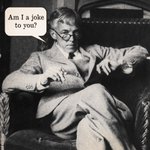
G. H. Hardy, one of Britain's greatest mathematicians, once devised a rather unusual insurance policy against drowning.
Hardy was a convinced atheist, but he enjoyed joking that God was his personal enemy.
During a visit to Denmark, he spent time with his friend Harald Bohr, a distinguished mathematician and the younger brother of physicist Niels Bohr.
When it was time to return to England, Hardy faced a dangerous journey across the North Sea.
The weather was dreadful, and only a small boat was available.
So Hardy came up with an extraordinary idea.
Before boarding, he sent a postcard announcing:
"I have proved the Riemann Hypothesis."
This was completely untrue.
The Riemann hypothesis was one of mathematics' most celebrated unsolved problems. Anyone who proved it would achieve extraordinary recognition.
Hardy's reasoning was delightfully mischievous.
If his boat sank, people might believe that he had solved the problem but died before revealing the proof.
That would give Hardy enormous posthumous mathematical glory.
And surely God, whom Hardy jokingly regarded as his enemy, would never allow that!
Therefore, God would have to prevent the ship from sinking.
Hardy survived the voyage.
The story is recounted in David Wells's The Penguin Book of Curious and Interesting Mathematics and in George Pólya's reminiscences.
It captures Hardy's peculiar combination of mathematical ambition, skepticism, and humor.
For a man who did not believe in God, he had invented a wonderfully elaborate way of trying to outwit Him.


Iman Ebrahimi retweeted
I struggle to understand what drives people with little or no research background to churn out AI-generated slop in highly specialised fields like algebraic geometry or string theory. I suspect they think passing off AI-generated research as their own will make them look brilliant. In reality, they're just burdening the peer-review system and achieving the opposite.
Sure, who wouldn't want to make groundbreaking contributions across multiple fields and be recognised as a genius? But they're missing the most rewarding part of research: tackling difficult problems and learning along the way. I see little value in claiming intellectual achievements without doing the intellectual work.


Iman Ebrahimi retweeted

This AI acknowledgement takes the win. From this paper: arxiv.org/pdf/2610.27918.


Iman Ebrahimi retweeted

This is a very thoughtful essay from an anonymous PhD student in math, and I hope everyone, but particularly established professors, read it. I have written a reply that should also appear in P\&P soon.
proofsandprompts.com/2026/10…

Iman Ebrahimi retweeted

My enthusiasm for reading a math paper increases tenfold when I see something like this

Iman Ebrahimi retweeted

This is the exact opposite interpretation of what actually happened. The case of Yitang Zhang perfectly illustrates how mathematics culture, at its best, is a pure meritocracy. Regardless of how “unknown” you may be, write a paper that proves a longstanding problem and we will read it, and if it’s right, then you will be instantly recognized as a hero by the community.
This part of mathematics may now be gone forever (due to AI), and this is very sad; this is one aspect of what so many of us are mourning, even as we look with awe at all the amazing discoveries we’ve already been gifted and many more sure to come.

In other words, established mathematicians and leaders of the community, completely failed a fellow mathematician yet again, turned him into a @SUBWAY PhD, and wasted almost his entire career over BS for decades.
Point Blank.
Question: why do we listen to leaders like this?
Iman Ebrahimi retweeted

عمویم #قانعیفرد سلیطه خضر حیدری رو شرحهشرحه کرد. تا حالا ندیده سلیطه سرخ ندیده بودم

Iman Ebrahimi retweeted
10 remarks on AI and math that can be true all at once:
1. The recent progress is stunning and exciting.
2. The Quasi-Riemann Hypothesis is arguably Fields-medal level.
3. Mathematics is being transformed and there is no way back.
4. OpenAI doesn't give a fuck about the future of mathematics.
5. Half-baked unreadable preprints claiming major results can effectively stall mathematical progress.
6. Some mathematicians are responding with naive, overly defensive comments.
7. The social-media wankers framing this as "OpenAI tramples gatekeeping" have no experience of mathematical research.
8. The product of mathematics is clarity and understanding. Not theorems, by themselves.
9. Mathematics is a critical infrastructure of human cognition. The human need for understanding isn't obsolete and it can't be offloaded to machines.
10. We haven't "solved" mathematics and we won't get there before the Sun burns out.