

🦞AI Apps investing @ A16Z; A1111; Boards of Ethos, Krea, Deel, Clutch, Untitled, Happy Robot + more; If you’re not at the table, you’re on the menu
San Francisco
Joined March 2009
- Tweets4.1K
- Following3K
- Followers35.7K
- Likes38.7K







Anish Acharya retweeted

Excited to announce the Cosign Awards: celebrating exceptional people, companies, and products that had a massive impact in 2026.
cosign.co/awards
Anyone can nominate and vote. Award winners will be chosen by the public in conjunction with a panel of judges, including industry leaders like @lennysan, @packyM, @amasad, and many more. We’ll host an event in December honoring the winners (10 per category).
For people categories, we’re mostly focused on everyone except the CEO–everyone else building the company behind the scenes.
Companies with the most amount of people nominations will be listed on our “Top Companies to Work For” page.
True to form, at Product Hunt I helped launch the Golden Kitty awards a decade ago to recognize great products. Soon after I launched the Rise Awards, honoring executives and ICs building companies that make them. The Cosign Awards is the next iteration.
We have 41 categories across people, companies, and products.
People categories:
- Future Founders
- Rising Stars
- Engineering
- FDE
- Product
- Design
- AI Researchers
- Marketing
- Comms
- Growth
- Chief of Staff
- Operations
- Talent
- Finance
- Public Intellectuals
- Podcaster of the Year
- Newsletter Author of the Year
- Poster of the Year
Company categories:
- Rising Stars
- Best Place to Work
- Founder Mafia
- Talent Density
- Highest Aura
Product categories:
- Product of the Year
- Launch of the Year
- AI Assistant
- AI Language Model
- AI Coding
- Dev Tools
- Open Source
- Consumer
- Productivity
- Creative & Media Tools
- Product Design & UX
- Enterprise B2B
- Hardware
- Robotics
- Self-Driving
- Healthcare
- Vertical Fintech
- Legal

Anish Acharya retweeted

Krea 3 Ultra lands at #5 on AA-Image-Editing v2.1, with quality similar to Nano Banana 2.1 and MAI-Image-2.6
Krea 3, released on October 15, is Krea's new image editing model and its first on our Image Editing leaderboard. Today Krea adds Ultra, its highest thinking mode, alongside the default Fast mode, and we tested both modes through the Krea API at 2K resolution.
Krea 3 Ultra is the highest-ranked image editing model from outside OpenAI, Google and Microsoft. It places in the top 7 in 15 of our 17 Image Editing categories. Its best results are in Animation & Gaming and Frontier, at #2 in both. Krea 3 Fast, the default mode, lands at #11.
On the Krea API, Krea 3 Fast costs $0.03 per 1K image, plus $0.02 per 1K reference image. Krea 3 Ultra supports 2K output only, and costs $0.27 for a 2K edit with one 1K reference image.
Krea 3 is available on Krea's API and through other 3rd party APIs.
Congratulations to @krea_ai on the release!
See below for our analysis and example outputs of Krea 3 in the Artificial Analysis Image Arena 🧵
Anish Acharya retweeted

Wabi 2.0 is live!
personal agents are one person, one chat. but the parts of life that matter run on more than one person
Wabi is an agent you use together. you talk to it, it does stuff, builds the apps you need, and anyone can join the thread - your partner, your best friend, the preschool moms groupchat
school changes pickup time → Wabi updates the family calendar, everyone sees it.
a show you’d both love → Wabi finds a night that works, gets the tickets.
the trip everyone keeps talking about → Wabi picks the dates, builds the itinerary, books it
go start a thread with your people 👇
🤖 Made with AI
Anish Acharya retweeted

Sooo incredible. I feel like we’re reliving the early Internet all over again. But juiced 10000x

Лучшее, что я видел за последнее время — чел пилит ASCII MMORPG, в которой вся графика состоит из букв и символов.
Да, буквально весь мир, персонажи, окружение и спецэффекты нарисованы разноцветным текстом.
Автор сейчас экспериментирует с магией, визуалом и боссами. Я прям залип на то, как из нескольких десятков символов получается такая красота.
Буквально сны при температуре 37,2.
Via: tiktok.com/@Ansenjeo

Anish Acharya retweeted

DO AGENTS HAVE NETWORK EFFECTS?
We are seeing a new wave of general purpose consumer-friendly agents, and it’s causing many thousands of AI startups to re-evaluate their place in the market. Will these new horizontal players take over completely? Will it be winner take all? Can products that focus vertical use cases survive? The new wave of products - Muse, Town, Instinct, Grokbot, etc - come from taking the power and magic of Openclaw/Hermes but wrapping it in polished, secure, consumer-friendly experience. This is only the beginning, and soon every major tech company will throw their hat in the ring and thousands of startups that have been working on vertical agents in X (travel, shopping, family, work, SMB, etc etc) have big existential questions to answer.
The simple case against winner-take-all dynamics: These agents are tools, not networks. They inherently provide a solo experience, and although packaged as chat experiences, they don’t have network effects the way that Whatsapp or phone networks do. They’re more like email clients - I can use Superhuman and someone else uses Outlook and someone else is on Gmail, but in the end we just send email to each other. In that metaphoi, if a Muse agent encounters a Instinct agent, they will just figure out how to talk to each other by building APIs, or using email/messaging/etc., so that there’s no advantage to everyone running the same thing. Further, you can swap out the underlying LLM - as we saw in the Claude vs Clawdbot saga - things will still work. The memory and underlying context are just text files, and AI are great at porting things from one system to another. So where’s the moat?
Just because they are tools today doesn’t mean they can’t evolve into networks. As I’ve written about in the past, instead of discussing “network effects” as a vague/amorphous concept, let’s instead overlay it against core KPIs each product has to build against:
- Acquisition network effects: More users** = lower CAC, higher virality, more signups
- Engagement effects: More users = higher retention, deeper usage, more frequency
- Monetization effects: More users = higher ARPU, higher conversion, more share of wallet
(**PS. and by “more users” of course I actually mean, of course, higher network density with more interconnection within/across networks. Not scale effects)
So looking at these sub-categories of network effects, you might ask: What are the features that you’d build to actually create network effects in agents? How does this category become winner-take-all?
Acquisition:
In the pre-AI world, network effects in customer acquisition were driven by users taking actions that then bring in even more users - whether that’s sending an invite, sharing a piece of content, or getting mentioned in a comment. Those users would then join the network, repeat the same actions, creating more viral loops that would throw off more users. In the post-AI world, both users and agents can initiate these loops. An agent might suggest, “hey, do you want me to help organize a New Years celebration with family” and then might pull together a group chat with your siblings, in-laws, and parents. It might build a microsite for the event and ask people to sign up and RSVP, creating an opportunity to generate a signup. Or for work, you might finish a slide deck and your agent asks if you want to pull together a meeting to present it to your team. When it does that, it might create a prep doc, take notes, and host it all on a microsite that engaged others.
These types of agentic viral loops need a few things to work: They need to be able to plug into your contacts, and to have enough context to know when to loop which people into which projects/events/activities. They need access to communication channels like email/messaging/otherwise, specifically where they can reach potential users, as this serves as the viral substrate for propagation. The magic will be how to get all of these things without being creepy, and to create enough trust to reach out to friends/colleagues/etc on your behalf, without being too push. No one wants an agent that says, “hey Andrew would like to get lunch next week” followed by “and sign up for this agent to agree!” - it has to be better and more subtle than that.
Many viral loops in the pre-AI era, particularly in the workplace, were built on a content creation loop - you use Google Slides to make a thing, you share a link, and then people would view it. Eventually they might make their own. Many products like Figma, spreadsheets, Notion, Canvas, are all built on this loop, and so are YouTube, Instagram, etc. In the agentic world, you might start by talking to your agent about interior decoration ideas, and it might ultimately build you a Pinterest-like board and make it easily shareable with others. It might build you a spreadsheet mini-app with a budget, a schedule, etc., and again, make it easily shareable. It might volunteer to do this inside a group chat with your friends, and if they want to view it, they should sign up and get their own agent too.
If the content creation loop works for agentic virality, I think it means there’s a big incentive for every agent to volunteer to make visually-appealing, shareable content, do this often. AI is so good at codegen that creating a one-off disposable artifact will probably be more useful than not. And there’s a big incentive to drive virality by building/owning the content yourself as the agent. In the interior decoration example, it would be more viral to create a standalone version hosted by the agent, rather than building an actual Pinterest board, or to build a self-contained mini-spreadsheet rather than creating a GSheet. A properly tuned agentic viral loop will do the former because it helps spread the agent, rather than helping spread Pinterest/GSheets.
This might all sound like horrific spamminess to you, but I think it might be done tastefully. If an agent is high-retention and high-usage, you’ll have many shots on goal to gradually invite your friends onto the same platform as you. The first shot might come from an invite loop that says your colleague/friend wants to set up a place to share photos/coordinate calendars/etc., and even if you say no, over time, your friend might share very useful microsites for projects or events or research that’s relevant, and you might decide that you want to sign up to leave a comment, but then eventually you might try the other functionality as well.
Engagement:
It’s easy to imagine that in a world where everyone by default has super intelligent agents that product engagement in agents would go up. The simple argument is that the ubiquity of agents would lead to more successful task completion, making agents more useful and applicable to more problems. Routine tasks like scheduling something or summarizing/sharing notes from a meeting, would happen instantly if it ran through agents and you removed humans completely. As agents become more successful over time, not only with your own tasks but in coordinating larger and more complex multi-user decisions, you’d end up using them more.
However, this does not answer the question of network effects. The question there is, does your agent get better when other people are all using the SAME agent? As I said earlier, the argument for NO is if each type of agent runs on a frontier AI model, can talk to other agents (all different types) in real-time via email/messaging/APIs/connectors/etc. Then there’s not much leverage. If you’re just organizing a meeting or a dinner party or meeting the agents just ask each other in real-time - and even if they are heterogeneous - they can use email and calendars and figure it out.
But some tasks do benefit from everyone running the same agent, because you get the benefits of centralization: Trust, speed, identity, discovery, etc. Some examples:
- “Who are 10 people in San Francisco that I should meet?” - agents can’t just ask each other to find an optimal solution
- “Find me a VP of Engineering who isn’t publicly looking for a new job, but would leave for a fast-growing startup that pays X in stock” - there’s a mix of private and public info here, and an agent of a passive jobseeker might lie if the asking agent is not trustworthy
- “Who’s a trustworthy seller of X that I should buy from?” - reputation might be gamed, and it might be better to have a global source of truth
- “Help me pick out the best dinner in the next 5 minutes that my friends and all their +1s would like, incorporating allergies/schedules/locations” - real-time solution incorporating a bunch of shared context
- … and even more so, if you imagine that there may be agents that lie, exaggerate, or otherwise to benefit their humans
For the above examples, you could imagine Muse/Town/Instinct/whatever building a shared network+context layer that understands the network, its relation to public/private data, acts as a system of record for identity/trust, does multi-sided marketplace matching, etc. Then it would allow only its agents access to this platform, and agents outside of the network wouldn’t have access. If you’re part of this network, and are contributing data, your agent gets more useful over time. The network gets more powerful over time.
The counterpoint to this counterpoint is that perhaps new startups will fill the void as a series of agent-facing point solutions, making it possible for people running agents of all times to interface with each other. Perhaps Muse creates a proprietary ecommerce marketplace that only Muse agents can use, but perhaps there will just be a next-gen eBay for any agent to sell to any other agent, and this service maintains central reputation/identity at that layer. In other words, perhaps the centralization will still happen, but just at a layer above agents. Most likely both will happen - every large tech company adds chat, commerce, search, etc, but also there are pure play versions of each of these. But this feels like more fragmentation than a true winner-take-all.
Some parting thoughts:
My argument in this writeup is simple: Agents don’t inherently have network effects. If all we build are super-intelligent assistants that can use tools and talk to each other, then the category might look surprisingly fragmented. Your agent can talk to my agent, just as Gmail can send email to Outlook, and there’s no particular reason we need to use the same one. Better models, UX, integrations, memory, and distribution might create very large companies, but those are not network effects.
But the next gen of agents have a big opportunity design network effects in their interactions. On acquisition, they can turn the things they create—documents, events, websites, research, group chats, plans—into viral objects that naturally pull other people in. And on engagement, they can create shared networks of identity, reputation, relationships, private context, and intent that make the agent increasingly useful as more of the people around you join.
There’s many ways for these network effects to instantiate. If we’re lucky, things will look more like the open web - mostly decentralized, with bits of centralization to make certain tasks smoother. Identity could become an open protocol. Reputation could live in marketplaces. Commerce could happen through an agent-native eBay. Professional discovery could happen through an agent-native LinkedIn. Agents could remain interchangeable clients sitting on top of a constellation of networks and marketplaces, much as browsers and email clients do today. In that world, enormous network effects emerge around agents without producing a winner-take-all market for the agents themselves.
My guess is that we’ll see a fight over exactly this boundary. Every major horizontal agent will try to pull valuable network functionality inside its walls: host the artifact instead of creating a Google Doc, execute the transaction instead of sending you to Amazon, make the introduction instead of searching LinkedIn, create the event instead of using Partiful. Every time it does this successfully, it converts somebody else’s network effect into its own. Meanwhile, every incumbent network and a new generation of startups will have the opposite incentive: make their networks universally accessible to every agent so that no horizontal agent can recreate and capture them.
This is why I don’t think the interesting question is simply, “Will agents have network effects?” Of course some will. The much more consequential question is: Where will the network effects live? If they live primarily in open protocols and specialized networks, we may end up with thousands of agents competing on intelligence, personality, UX, specialization, and price, all interoperating with the same underlying ecosystem. Vertical agents can thrive in this world. But if a few horizontal agents successfully accumulate identity, relationships, private context, reputation, latent intent, and distribution - and keep those assets proprietary - then switching agents starts to mean leaving your network behind. Next couple years will be very fun to see how this plays out.
Anish Acharya retweeted

The problem with consumer AI in a nutshell is if you hand an uninitiated user an agent, it's nothing but a blank box to them.
Coders get it instantly, but for everyone else it’s just not intuitive. Solve that, and you reach the next few hundred million real adopters.

The seventh edition of our Top 100 Consumer AI Apps is here, including a new dimension this time: what consumers are actually paying for.
a16z's Elena Burger sits down with Olivia Moore and Josh Elman to unpack the current state of consumer AI:
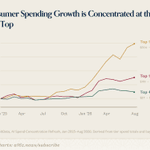
The data reveals a striking power-user economy. Only a small share of consumers currently pay for AI, but among those who do, spending is heavily concentrated at the top. Olivia and Josh discuss why developers, creators, and other power users dominate spending today, and why subscriptions may not be the business model that ultimately brings consumer AI to everyone.
They also dig into the rise of personal agents, the different trajectories of ChatGPT, Claude, and Gemini, how ads could reshape AI economics, and the enormous amount of consumer white space still left to build, from shopping and entertainment to social, dating, and marketplaces.
00:56 Inside the 7th edition
05:55 Muse and Instinct's launch numbers
09:14 The privacy wall for personal agents
14:39 The AI spending power law
20:20 Why subscription is the wrong model
23:51 OpenAI's $1B ad run rate
29:21 ChatGPT vs Claude vs Gemini
32:30 Where creative tools still win
45:12 The white space: dating, shopping, entertainment
YouTube: youtu.be/aCvrzhwUxg0
@omooretweets @JoshElman @VirtualElena
Anish Acharya retweeted

🚨 The @a16z Consumer AI Top 100 is back - but this time, it's 150!
We added revenue data from @yipitdata to track how consumers are spending not just time, but money, on AI.
The result? A story of heavy concentration among AI's power users. Our takeaways 👇


Anish Acharya retweeted

CFO.ai is the truth - if you want to know what the heck your company is spending on and if it is driving to ROI, you owe it to yourself to set this finance agent up for yourself
The integrations out of box mean you're up and running almost instantly


Anish Acharya retweeted

Introducing our State of Markets pt 2, along with a companion podcast where we unpack the data and discuss what comes next.
Tech is the everything cycle.
Supply: putting the buildout in context, just passed railroads as % of GDP. The wisdom of Elon is real: the factory (or the datacenter!) is the product.
Demand: diffusion is so, so early. Median AI vendor spending in the top 1% of companies is 8x that of the top 10%. Only about 30% of S&P 500 companies report a quantified AI impact, which means there’s a substantial opportunity in connecting models to a company's data and workflows. Diffusion into companies is one of the main themes of the next 5 years.
We’re entering the agent work period. Only a few million users today, but applicable to billions of internet users with massive surplus created. META/GOOG monetize US users at $200+ per year today. Agent opportunity is much higher.
Mega-trends the next 5 years: Consumer agents, Robotics, Autonomy, AI x bio, Personal health, Diffusion into enterprise, New era of American Dynamism.
Much more in our SoM report here - a16z.news/p/state-of-markets…
@a16z @sarahdingwang @aleximm @santiago__rdz


Anish Acharya retweeted

Assistant Benchmark creator David Pawlan sits down with a16z's Anish Acharya to unpack the sudden explosion of personal AI agents and what it will take for one to become part of everyday life.
David has been testing dozens of assistants across real-world tasks, from managing email and booking travel to handling financial admin. They discuss why the most useful agents may become increasingly invisible, proactively checking you into flights, finding refunds, filing reimbursements, or simply handling the small tasks that pile up across everyday life.
They also explore whether the winning interface is an app, text thread, voice, or wearable; how much autonomy consumers will actually give their agents; and what happens when agents start interacting with other agents. From commerce and restaurant reservations to entirely new agent-native services, Anish and David ask what the internet looks like when software starts acting on our behalf.
00:54 Poke, Instinct, Muse: the agent boom
03:41 What Assistant Bench actually tests
09:14 Cost savers beat time savers
14:53 Muse charm as Meta's data play
20:03 Silent agents in group chats
26:01 Proactivity is the real moat
32:21 Assistant vs agent, defined
40:22 Amazon blocks Muse, Shopify opens the door
47:35 The $20/day agent economics
YouTube: youtu.be/3T5sij3spWw
@DavidPawlan @illscience
Anish Acharya retweeted
today we're rolling out Wabi 2.0
personal agents today all live in chat. the most magical technology of our time greets you with an empty text box: "what do you want me to do?" early adopters know what to type, but most people try a couple of things and then don't know what to do next.
and the more you use a chat-only agent, the worse the experience gets. your history and ongoing tasks end up buried in one endless scroll.
people don't just want to type-type-type. they want to tap-tap-tap, scroll and look. they love what agents can do, but they also like software.
the most powerful agent will be the one that combines both.
Wabi 2.0 is a messenger where you talk to Wabi, a personal agent that does stuff for you and builds the interface you need in the moment. you can add anyone in your life to any thread.
chat + AI that acts + software made on demand + your people =
an operating system for the agentic era.
UI on demand also takes agents way beyond one-off productivity tasks, into the ongoing parts of your life.
my health thread has a calorie tracker, a weightlifting log, a weight tracker and my health appointments. Wabi tracks my macros, books appointments, and plans workouts around my calendar and sleep score.
my kids thread has a calendar of all their activities, the daily preschool menu, a Japanese learning app for my daughter, SF events to take them to next weekend, and a princess selfie app they love. Wabi stays on top of it all in chat, including triaging every school email.
their dad and our nanny are in that thread too. without the apps, they'd have to ask the agent every time they needed something. now they just glance at the right app.
my boyfriend and I have a thread with an app that recommends experimental and techno shows, a map of our favorite restaurants, and a daily question about our relationship. Wabi books tickets, plans date nights, and occasionally tells us how great we are together.
so far, personal agents have been one person, one chat, a stream of one-off tasks. we think the future is your agent, your apps and your people in one place, running the parts of life that matter most, together.
invite-only to start - reply with your first use case to get off the waitlist!

Introducing Wabi 2.0: a new kind of messenger that makes apps and gets things done for you and your friends.
We’re building the OS for the agentic era - software that adapts to your life, gets things done, and makes more room for the people and things that matter.
Invite-only to start. Download Wabi to get on the waitlist. First come, first served.
Anish Acharya retweeted

Muse and Instinct have set the price for consumer personal assistants: free.
Costs are high right now. They’ll come down substantially, but these products will still require a LOT of capital and time before they come anywhere near break even.
Feels like a very hard category for startups without enormous balance sheets. Meta, OpenAI, Google, etc. can subsidize heavy usage for years while waiting for costs to fall and monetization to emerge. Most startups can’t. I won’t be surprised to see Instinct raise more money in the near future if they scale- they’ll need to!
In consumer agents, having the best product may not be enough. You may also need the ability to lose a lot of money per user for a long time.
There are verticals with enough economics to subsidize the agent (financial services, commerce, travel). But even there, I’m not sure the opportunity is the assistant itself... seems like we will use general agents. If general agents own the consumer relationship, the better business might be owning the transaction, supply, or regulated infrastructure those agents need to call.

Hearing this week that personal assistants cost $3k-$7k per user per year, depending on scale effects / vertical integration / model selection. Implications/questions:
- Consumer subsidies will be a huge factor; people don’t care about privacy, they want utility and they want it for free.
- Model costs are deflating, but not fast enough for many startups. The dark horse is that Jev may rapidly deflate computer-use costs 100x.
- An interesting counter-position would be building an expensive and narrowly focused agent — perhaps combining proprietary supply (Carbone tables!) with a unique POV (“no one goes there anymore, go to The Grill instead”).
- Social is wide open but hinges on a key design challenge: how can agents increase social cohesion and not feel invasive in a group chat? A working social agent would rightly attract an avalanche of capital and be hard for incumbents to replicate.
- Finally, there are vertical focus areas like financial services where the LTVs outweigh the subsidy needed and are outside the near-term competitive focus of the incumbents. If it were me, I’d focus here — Credit Karma as an agent >> Credit Karma as an app.
Overall, it’s still very, very early, and we may very well be in the MySpace era of social or iPhone 2010. Hang onto your hats and keep building!!
Anish Acharya retweeted

New era, new school youtu.be/5JEjv-JlYo8?si=83aG…

Anish Acharya retweeted
Ben Horowitz and Erik Torenberg with Nas, Steve Stoute, and Grandmaster Caz on the Paid in Full Foundation
Caz penned rhymes that became Rapper's Delight. Even with his name in them, he got nothing.
The Paid in Full foundation honors the people who created hip-hop by making sure they're "paid in full," financially, spiritually, and culturally.
As Nas points out, money alone reads as a handout. So the grant comes attached to the honor. Each year at the foundation's Hip Hop Grandmaster Awards, pioneers are celebrated by the artists they inspired.
Caz ultimately received a five-year grant, bought a house, and left the projects. In his words: "The thing is the honor. The thing is putting you in the light that you deserve to be in."
Ben says he bought Paid in Full (the album) for $10 and got at least $5 million worth of value out of the record, with no way to pay it back.
The vision is paying the debt. Felicia Horowitz runs the foundation. She and Ben are matching donations 2.5 to 1, and every dollar goes to the artists.
paidinfullfoundation.org
0:00 Intro
1:40 The $10 album that was worth $5M to Ben
3:10 Nas: in hip-hop, you can't just give money
5:05 Why artists thought it was a scam
9:30 Caz wrote Rapper's Delight and got nothing
11:40 Roxanne Shanté: "I wanted the right award"
16:35 Dr. Dre asks to meet Kool Moe Dee and Slick Rick
18:50 Why the industry never did this
26:05 Ben: start with what's right, not what's possible
29:10 Inside the room: Grand Puba, George Clinton
32:15 The Quincy Jones Award
37:00 Scarface and Rakim talk writing for the first time
38:45 Caz: the grant got me out of the projects
43:45 What hip-hop did for Adidas, Hilfiger and Sprite
48:00 How Felicia saved Scarface's life
52:10 Quincy Jones stories, and Nas's jazz legend dad
@Nas @SteveStoute @GrandmasterCaz @bhorowitz @eriktorenberg
Anish Acharya retweeted

engineering is moving 10x faster. design review hasn't caught up.
introducing Impeccable ..for PRs!
a design review agent that simulates your users, uses your app, finds friction & slop. Impeccable’s design judgment in every PR.
reply if you want in on the closed beta 👀


Anish Acharya retweeted
a16z's Anish Acharya says companies like Cursor and Decagon prove moats don't need to be designed, they can be discovered:
"There's two important ideas. One is something @thejessezhang from Decagon said, which I love, and that is moats are most often discovered, not designed."
"It's really easy, and I've done this as a founder, to get in your own head about needing a business plan that survives scrutiny from MBAs and VCs... And for that team, they just started shipping and it developed over time."
"Another great example is Cursor. They were criticized a lot for not having a moat, but it turned out that initially being a high NPS, high DAU product was really good. And over time they captured all the reasoning traces, they trained their own models... We know how that story plays out."
"The other idea is that we seem to have forgotten that none of the classic moats are based on how hard it is to make the software. Most of us aren't building self-driving cars. So it's network effects, scale advantages, brand effects, proprietary data, or what was historically called a cornered resource."
"Every moat from five years ago generally is still a good moat. We just need founders that have ambition in those directions. We need more multiplayer products. We need consumer social. We need products that get dramatically better the more you use them."
@illscience w/ @lennysan

The "permanent underclass" is a dark fantasy Silicon Valley keeps telling itself.
@illscience (GP at @a16z) points out that by almost every measure, things have never been better, and the job-loss story hasn’t played out as people thought. Radiologists have been “cooked” for 20 years and demand keeps rising. Open engineering roles are at all-time highs. And unlike the mobile era’s winner-take-all markets, every layer of the AI stack has ~20 strong competitors.
We discuss:
🔸 Why you don’t need to be chronically online to keep up
🔸 The "/loop make me happier" opportunity in AI
🔸 Why every company is becoming a series of loops
🔸 Why moats are discovered, not designed
🔸 What's the Birkin bag version of your product?
Listen now 👇
youtube.com/watch?v=LdIyXiq2…

Anish Acharya retweeted
"People of the same trade seldom meet together, even for merriment and diversion, but the conversation ends in a conspiracy against the public, or in some contrivance to raise prices." -Adam Smith
Anish Acharya retweeted

Today we're announcing @lightfld's $47M Series A led by @a16z to reimagine CRM as a world model of a business.
For agents to do customer-facing work, they need to understand how your business actually works.
Salesforce wasn't designed for this. It was built 20+ years ago for humans to update records. Layer agentic processes on top and you get low quality output, because the underlying data is incomplete and lacks the structure agents need.
@lightfld updates itself from every interaction, forming a trustworthy model of your business for people and agents. Since launching last November, 5,000+ companies have signed up - and we're ripping out legacy CRM at mature organizations with hundreds of users.
Companies on Lightfield grow faster than their competitors. It finds prospects that look like your best customers and books meetings with them. It captures commitments from every conversation and automates follow-ups. It diagnoses weaknesses in your funnel and learns from your best sellers to codify what works.
The companies of the future will run on a business world model, not a Salesforce-era database. Our mission is to put that capability in the hands of every employee, and every agent, at every company.
Anish Acharya retweeted
The new moats are the same as the old moats
Every few years, we fall in love with shiny new tech and forget the basic physics of consumer software.
We’re doing it again with AI.
The new moats aren't new at all. They're the exact same as the old moats: network effects, marketplaces, and platforms.
Right now, consumer AI is booming.
New agents like Instinct, Bot, and Tomo are dropping mind-blowing experiences. The underlying tech is incredible, but almost every product being built today shares the exact same challenge:
They are completely single-player.
Single-player products are 100% tied to value - and in this case mostly agent : model performance.
If a competitor drops an agent tomorrow that books travel faster, tracks habits better, or handles life admin more reliably, everyone can switch overnight because leaving is easy and has nearly zero friction. Especially when it is so easy to onboard with just a new message.
The legendary consumer tech giants didn't win because their underlying technology stayed marginally better forever.
They won because of structural lock-in:
Social Networks: You don't abandon WhatsApp for a prettier UI if your friends aren't there.
Marketplaces: Airbnb, Doordash, and Uber hold supply and demand in a tight loop.
Platforms: Apple and Android deliver you a complete device so you take advantage of the software on top of it (though this creates opportunities too)
Novelty gets you initial distribution.
Multi-user dynamics give you long-term retention.
If your consumer AI product doesn't become exponentially more valuable to User A when User B joins, you don't have a moat, just a temporarily superior feature set.
We are seeing this in the coding agents as people jump from tool to tool based on the best performance.
But… all is not lost. There are huge opportunities here. Agents will get better when more of our friends are on them and can help us coordinate and communicate to do more together. Agents that help us improve and strengthen our habits can get better as we add friends and hold each other accountable.
Data flywheels are great, but social and marketplace flywheels are what actually build enduring tech giants.
It’s time to stop building isolated AI tools and start building the platforms where people connect, transact, and coordinate together.