

Lecturer @hslu, Computer Science and Information Technology // Former @CSS_ETHZurich/@ETH, @ECFR, @Pacificforum // all cyber op flavors, IW, CEMA, space 🃔
Zurich (Switzerland)
Joined October 2013
- Tweets11.2K
- Following769
- Followers2.2K
- Likes4.3K


Pinned Tweet
My latest for @lawfare on the "Cyber Corps: Ukraine's least understood cyber actor."
"By the summer of 2024, the Ukrainian military intelligence service (GUR) was one of the closest-watched actors in the Russia-Ukraine war. News outlets reported extensively about the service’s maritime drone campaign against Russia’s Black Sea fleet and drone strikes against Moscow’s strategic early-warning radar network. At the same time, the GUR had begun to self-attribute its offensive cyber operations, an unusual departure from the traditional secrecy of other intelligence services. Yet, on July 1, 2024, another development connected to the GUR passed almost unnoticed. A small band of hacktivists calling themselves the Cyber Corps (Кіберкорпус) quietly appeared on Telegram, claiming the group “was created by officers of the GUR of the Ministry of Defense.”
Whether the Cyber Corps is genuinely affiliated with the Ukrainian military intelligence service cannot be answered definitively. But a series of indicators and circumstantial evidence suggest some form of organizational relationship. To date, the GUR has neither endorsed the Cyber Corps’ claim that GUR officers created it, nor repudiated the corps’ claims taking credit for cyber operations the GUR officially conducted. Curiously, the Cyber Corps’ distributed denial-of-service (DDoS) activities also increasingly overlapped with, and ultimately led to the absorption of, parts of the IT Army of Ukraine."
Link: lawfaremedia.org/article/the…

Stefan Soesanto retweeted

Dozens of court hearings in Russia were disrupted due to “technical malfunctions” after strikes by Ukraine’s armed forces on Yandex data centers.
meduza.io/en/news/2026/10/16…

Stefan Soesanto retweeted

Scoop: The US has begun the process of selecting leaders for its private-sector offensive cyber program, sources say. But questions remain about how companies will be paid and who bears responsibility if operations go wrong.
nextgov.com/cybersecurity/20…

Stefan Soesanto retweeted

Turns out there was a cyber attack on a publicly exposed Danfoss refrigerator controller in Russia in February 2022, just after the start of the war. Hackers switched temp from −24 to +30°C but damage was avoided
HT @ElenaChernenko for the find
1prime.ru/20220228/836207752…

There are countless targets one can hit in cyberspace in peacetime to create discernible effects on an adversary's economy and inflict harm on its population.
Imagine if we transpose that same targeting approach into wartime. We would never run out of targets to hit. Never run out of targets that are vulnerable. Never run out of targets to create impact.
There are three fundamental constraints in the current architecture of stability in cyberspace that stand in the way of this kind of warfighting. Our laws, our morals, and our current capacities. The first two are highly likely to come under intense strain - and maybe even crumble - during a major conflict. Meanwhile, existing capabilities will likely prove insufficient and unable to scale fast enough to exploit the full range of targeting opportunities.
The question that militaries and intelligence services everywhere will have to contend with is whether they are willing to fight a major war in cyberspace with the ferocity, violence, and scale necessary for survival, or whether they believe in a better version of themselves and their adversaries.

Hundreds of French supermarkets have been hit by a cyber-attack that caused their fridges and freezers to heat up. Read more: bbc.in/4i0Dy77
In April 2026, the IT Army of Ukraine faced an internal crisis over unexplained and potentially unlawful targets appearing in its DDoS targeting lists.
Tool developers demanded an audit. Operations were temporarily suspended. Soon after, prominent IT Army DDoS contributors and tool developers migrated to the Cyber Corps, a little-known group with apparent ties to Ukraine’s military intelligence service (GUR).
In my latest article for @lawfare , I take a closer look at the Cyber Corps: Where did it come from? What operations has it conducted? And what evidence links it to Ukraine’s military intelligence service?
The findings raise broader questions about the relationship between volunteers, intelligence services, and the control of cyber operations during armed conflict.
lawfaremedia.org/article/the…
Maybe of interest to others is also the fact that the IT Army of Ukraine's tooling/infrastructure was compromised:
"An internal crisis within the IT Army in April 2026 caused the user migration to the Cyber Corps. It is unclear what happened in late April as the IT Army administrators deleted most of the relevant Telegram messages. The remaining evidence points to a major disagreement between the group’s tool developers. In one now-deleted announcement, an IT Army administrator stated that “over the past few days, we have been forced to investigate a possible compromise of part of our infrastructure. At this time, we still have serious concerns regarding the security and transparency of our current operating environment. Therefore, we ask you to temporarily stop your devices and servers until a separate announcement from us.”
As part of the investigation, several developers demanded a full audit of the IT Army’s tooling and infrastructure. This demand was initially rejected due to concerns that such an audit might expose sensitive information and user data that could potentially lead to arrests by Ukrainian law enforcement. The dispute escalated when one administrator began banning people from the Telegram channel. On April 25, the official IT Army administrator account acknowledged that “the cause of the crisis was the refusal to allow even a minimal audit of the targets, after which the community was placed on pause. The community’s operations have now resumed after uninterrupted access for the audit was obtained.” The statement suggests that some aspect of the IT Army’s centrally managed DDoS target update mechanism was potentially interfered with.
Three days later, the IT Army proposed developing a new open-source tool that would allow transparent auditing. On May 11, OleksandrBlack released his CyberOwl DDoS tool, and two weeks later, the IT Army published its new community-developed DDoS framework, known as the BaseTool.
A longer post by the official IT Army administrator dated May 25 sheds more light on a possible GUR connection. According to the account, the dispute began over the discovery of several targets in their DDoS list whose strategic objective was either unclear or potentially unlawful, prompting the internal team to demand a full audit of the target designation pipeline. When access was eventually granted, the group around OleksandrBlack “took away all the tools, paralyzed our work here, and recruited volunteers from here while posing as intelligence agencies.” The post went on to question what kind of Ukrainian intelligence agency would be interested in shutting down the work of the IT Army—which then-Minister of Defense Mykhailo Fedorov created—and why the group in question was not officially recognized by any of the intelligence services. The post also raised concerns that IT Army volunteers could face criminal charges elsewhere in Europe if they unknowingly participate in DDoS attacks against unlawful targets."


Stefan Soesanto retweeted
On the afternoon of October 8, the websites of many major Russian news outlets stopped loading, RBC reported.
meduza.io/en/news/2026/10/08…

Daryna published a good summary at The Record: therecord.media/belarusian-h…
"In December 2025, the Solar 4RAYS team once again faced an attack by Partisan Zmiy (the “Cyber Partisans” group has been designated as extremist, and its activities are banned in the Russian Federation), this time targeting a healthcare organization."
rt-solar.ru/solar-4rays/blog…

Stefan Soesanto retweeted

In Ukraine, data centers ‘facing increased attacks’ in recent weeks: Ex-official breakingdefense.com/2026/10/…

Stefan Soesanto retweeted

The FBI’s Kinetic Cyber Range, a 22,000-square-foot training environment in Huntsville, Alabama, resembles a small town built for investigations. There are houses and hotel rooms, a power company, a hospital, and a gas station. Each space is wired with functioning systems, networks, and devices designed to behave as they would in the real world.
This new facility reflects a broader shift in how the Bureau prepares agents, analysts, and forensic specialists for investigations that increasingly hinge on digital evidence. For years, much of that training took place in classrooms, where students learned tools and techniques at their desks before applying them later in the field.
On the #FBI’s North Campus at Redstone Arsenal, that model has been turned inside out. fbi.gov/news/stories/inside-…
Great to see the Prime Minister of Japan posting this.

近年、サイバー攻撃は急速に巧妙化・高度化しており、国家を背景とする攻撃グループによる活動も活発化しています。
こうした情勢の中、明日(10/1)、昨年の通常国会で成立した『サイバー対処能力強化法』及び『サイバー対処能力強化法整備法』の一部が施行されますので、その内容をご紹介します。
<「官民連携の強化」について>
『サイバー対処能力強化法』により、「官民連携の強化」の新たな枠組みとして、「サイバー協議会」が新たに設置されるほか、「資産届出」、「インシデント報告」の義務付けが新たに導入されます。
「サイバー協議会」は、関係省庁、自治体、電力・ガスなどの基幹インフラ事業者などが参画する協議体です。
協議会を通じ、国が入手した脅威情報などを含め、積極的な情報共有が可能となり、サイバー攻撃による被害の防止・軽減に官民共同で取り組むことが可能となります。
「資産届出」は、基幹インフラ事業者の皆様から、導入しているVPN装置や重要なデータを保存するサーバなどについて、「資産情報」として国に届け出ていただく制度です。
国が入手した脆弱性情報と突合することにより、脆弱性があるサーバなどを特定し、導入している事業者にピンポイントで注意喚起を行うことが可能となります。
「インシデント報告」は、重要なデータを保存するサーバなどについて、不正アクセスなどの「サイバーインシデント」が発生した場合などに、基幹インフラ事業者の皆様などから、国に報告をしていただく制度です。
国が情報の整理・分析を行い、必要な情報をタイムリーに横展開することで、他の事業者への被害拡大を抑えることが可能となるほか、脅威の未然の把握にもつなげることが期待されます。
<「アクセス・無害化措置」について>
「アクセス・無害化措置」は、国、基幹インフラなどに対する重大なサイバー攻撃の未然防止や被害拡大の防止を行うため、攻撃サーバなどに対して、警察、自衛隊が、ネットワークを介してアクセスした後、
・不正プログラムの消去、
・攻撃者が当該サーバにアクセスできないような設定変更
などの措置を実施するもので、『サイバー対処能力強化法整備法』で新たに導入された対処手法です。
「注意喚起」や「パブリック・アトリビューション」など、サイバー攻撃に対処するためのこれまでのオプションに、「アクセス・無害化措置」が新たに加わることで、我が国を標的とするサイバー攻撃に実効的に対処することが可能となります。
厳しさを増すサイバー脅威に対し、官だけ、民だけ、そして一国だけで対応することは困難です。
国際的に共通する課題として、相互信頼関係にある同志国・同盟国とも、従来にも増して、緊密に連携していく必要があります。
サイバー空間をめぐる脅威は常に変化し続けています。
国民の皆様の暮らしや安全、経済活動、そして我が国の国益を守るため、サイバー攻撃などの脅威に対する対処能力の向上や施策の改善に不断に取り組んでまいります。
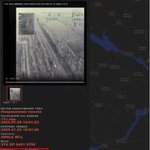
With Finnish drone company Sensofusion aiming to IPO in October, I am curious whether anyone has poked the company on a claim from back in May 2025 by the pro-Russian hacking group Killnet. At the time Killnet claimed to have breached a Sensofusion data platform likely used by the Ukrainian Armed Forces.
To date, neither Sensofusion nor the Ukrainian Armed Forces have provided any comments on the claim. Maybe, Killnet's claim is disinformation, but maybe it is not. It would be good to get some clarification on this.
There are also some hints that the breach potentially did not occur and that the video might be disinformation.
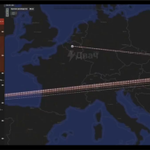
For example, the video shows that several drones in the datafusion platform are also located outside of Ukraine: 3 in Brussels, Belgium (NATO HQ?) and 19 in Wichita, Kansas, USA (Pratt Regional Airport?).
But why would a platform used by the Ukrainian Armed Forces have this information in it?
Either this is legacy information nobody bothered to delete or Killnet clumsily tried to establish a NATO and US linkage (but why Wichita though??)


Here is the longer video posted by ru2ch. No idea how ru2ch got their hands on the video. Killnet did not post it in their official Telegram channel.
Note: The video was recorded with a Russian translation filter. You can see this clearly at 1:27 and 1:42 where it switches from English to Russian.
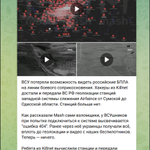
You can also see the "Airfences" line in the screenshot.
There are so many unresolved question around this operation and little to no answers.
The claim is now more than a year old, and it would be great to get some clarifications on whether this was a Russian disinformation operation or whether a Sensofusion platform was actually breached.
Video source: t.me/ru2ch/143130


