

Educação continuada →
Joined July 2019
- Tweets6.8K
- Following749
- Followers20K
- Likes20.5K



Igor Eckert retweeted

Tinha prometido um posicionamento político... hoje tive a oportunidade de escrever esse artigo de opinião publicado na @folha
Agradeço a oportunidade!
www1.folha.uol.com.br/opinia…

Igor Eckert retweeted

Entre os novos recursos no site do @DesvenDados_ , estão textos de autores convidados - como este do @igoreckert sobre um novo remédio contra obesidade. Link no comentário!


Igor Eckert retweeted

Researchers often can't increase the size of their sample (e.g., due to research constraints). In my paper on sample size justification I discuss approaches to increase power without increasing the sample size (e.g., within designs, reducing variability) lakens.github.io/statistical…
Pearson disse que correlação não implica causalidade em 1900
As pessoas em 1899:

Coffee shops boost innovation. 10% more Starbucks in an area --> 3-4% more inventions.
People gather over a cuppa. They share ideas, discuss how to untangle a knotty problem, help see an issue from another perspective. These conversations lead to breakthroughs and inventions.
A very fun paper finds that when Starbucks rolled out to a new county, it fueled a coffee-shop culture, urging more and more people to “grab a coffee” together. The authors compare the counties where Starbucks had rolled out to those where it had not yet arrived. And they find that the number of patents in caffeinated counties is meaningfully higher.
This paper underscores how essential the face-to-face encounter is. Starbucks isn’t that old. People Could have picked up the phone and chatted at any time. People Could have dropped an email. Probably they did. But those connections didn’t yield the same insights and creativity.
Turns out that a Cup of Joe really does help the knowledge flow. We talk about how much in-person connection boosts creativity in In Person. It’s out in just few days, so now is a great time to pre-order.
To see the full research use the link in the comments.
#Innovation #InPerson #FutureOfWork #CoffeeCulture #NewBook

Igor Eckert retweeted

Complete misrepresentation of the study
sciencedirect.com/science/ar… – at Ellettsville, IN
This quoted post is unavailable.
Igor Eckert retweeted

Our new preprint discusses how to interpret P-values and CIs as measures of compatibility between data and hypotheses given the chosen method and its assumptions; it also briefly presents the corresponding Bayesian perspective.
Real examples are provided
osf.io/preprints/metaarxiv/6…

Igor Eckert retweeted

Um breve desabafo sobre algo que tem me irritado nos últimos dias (e que provavelmente continuará me irritando):
A devastadora maioria das pessoas criticando os institutos e suas pesquisas pré-eleitorais não entendem absolutamente nada sobre estatística e metodologia de pesquisa.
Igor Eckert retweeted
Essas são as probabilidade do @polling_data relacionadas ao 1° turno das eleições com base em todas as pesquisas publicadas.

Igor Eckert retweeted

please stay clear of AI to write letters to medical journals, write papers, essays, etc.
would much rather have flawed humans with incompletely/maybe not well expressed ideas, thinking/challenging/debating what we know, than algorithmic fakery. we will make ourselves stupid
Acho totalmente válido o ceticismo em relação à acurácia de LLMs para identificar textos redigidos por LLMs.
O fato de existirem casos claros de falso positivo e falso negativo sugere q é importante avaliar a capacidade discriminatória destes testes de forma sistemática, em estudos comparativos. E os estudos que fizeram isso sugerem que uma dessas ferramentas não erra tanto assim.


Igor Eckert retweeted
"Toque retal não é mais necessário pro rastreio de câncer de próstata"
Essa frase incomoda muita gente. Mas os dados são claros. Fio com a evidência, e depois discuto os casos onde a dúvida é legítima (homem negro, histórico familiar forte).

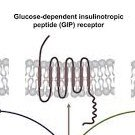
Em 2023, um estudo de fase II já empolgava:
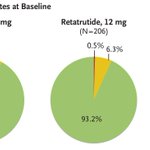
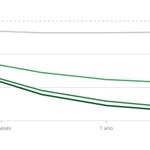
Em 24 semanas, a menor dose (1mg) já reduziu 7,2% de peso. Com 8mg, a redução média foi >17%.
Em 48 semanas, a dose de 8mg reduziu mais de 22% de peso – efeito *jamais* visto antes para um tratamento não-cirúrgico.

"Mas se vai ser caro, o que adianta?"
Infelizmente, pelo menos enquanto a patente estiver de pé.
Mas há um lado positivo:
Outras drogas menos eficazes podem abaixar o preço com a entrada da Retatrutida no mercado.
Isso inclusive aumenta a chance destes outros medicamentos serem incluídos no SUS, visto que um dos maiores empecilhos tende a ser o alto custo.
Não é um tratamento isolado que vai resolver o problema da obesidade.
Assim como estatinas não resolveram doença cardiovascular e metformina não resolveu diabetes.
Mas não dá para negar que estes medicamentos são peça fundamental nessa difícil missão de melhorar a saúde (e longevidade) de pessoas com obesidade.