
practice
📍India
Joined July 2023
- Tweets1.2K
- Following978
- Followers267
- Likes5.4K




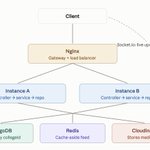

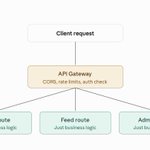

I’ve been building WhisperNet for the past few months.
The idea: an anonymous social app for each individual college campus.
Anonymity comes with responsibility. So over the next few days I’ll harden the code, tighten privacy, add moderation, and make the architecture cleaner and more modular.
What it can do today:
- Upload different kinds of media
- Anonymous video calls
- Chat
- Confession mode
- Campus vibe
- Repost and quote repost your whispers
- An alternate feed (coming soon)
I’ll share a demo once the hardening is done.
More project ideas are on the way.
If you’ve built or used an app like this, what features or tips would you add?
Tell me in the comments.
And this other song is a perfect example of how a simple melody, with a simple arrangement and straightforward execution, can still carry so much weight and feel so big.
#TerePaasMain
This film mix offers better space and openings for the various small alaaps that @arrahman uses.
And in the end, he takes the ending melody in this film mix as well.
This might be the song of the year for me.
So damn beautiful.
#MainVapasAaunga
Anthropic replaced git.
In May, Anthropic merged about 2,500 code changes a day. By September, it was over 30,000.
That is one merge roughly every three seconds, all day, every day.
At that point git stopped being a tool and became the bottleneck.
So a team of seven built a replacement in five months. It's called Scion, and it now runs Anthropic's monorepo.
I read their engineering post twice. Here is what I think matters.
What was happening:
Their main branch history is almost 100 GB. CI alone runs about 25 million checkouts a day. Fetched the normal git way, that would be over 600 petabytes of traffic daily.
They tried the usual fixes: shallow clones, sparse checkouts, internal mirrors, repo snapshots. Each bought some time. At peak they were running several hundred git mirrors. None of it kept up with the growth.
The insight:
Git is built for people who might be offline. Every clone is a full copy of the repo, so you can diff, blame & read history on a plane.
But most of Anthropic's clients are not people. They are agents & jobs, and they are never offline. In practice they were already using git as a centralized system, with one authoritative copy, while paying for decentralization they never used.
You pay for every feature you don't use.
What Scion changes:
A thin client. The server does history, blame, merges and rebases.
Commits happen on the server. There is nothing to push.
Clients ask only for the files they need. Every object is immutable, so any cache can serve it. Each cache tier hits over 99%.
Branches are discouraged except main and release branches. Global state that every server must agree on is a scaling risk.
No packfiles, no repo maintenance, and no fully materialized copy of the repo anywhere, "even on the server."
The result: infrastructure 200x smaller than the old git mirrors, and CI checkouts in seconds instead of minutes.
What I take from it:
Design for the user you have, not the one you had. Git's first user was a kernel developer in 2005. Its heaviest user at Anthropic is now a swarm of agents.
Scaling is mostly deleting work. In Scion the cost of a commit scales with the size of the change, not the size of the repo.
When something gets cheap, the bottleneck moves. Writing code got cheap. Merging, testing & review did not. In their words, "the latent demand for merging code is practically infinite."
Where this might go:
Anthropic say it plainly that Scion is "by no means a suitable replacement for git for general use." It only makes sense for huge monorepos or swarms of agents.
[my bet] Git itself stays. But the ideas leak into it. Anthropic suggest git could adopt server-side operations behind comprehensive APIs, a different fetch negotiation, & sparse & shallow features that compose better. I think the first place you'll feel this is not in git, but in the tools around it: CI, code review, merge queues. Those were all designed assuming a human is waiting.
Which tool in your stack assumes a human is waiting?

New on our Engineering blog: Creating in-house source control.
In May, we merged around 2,500 code changes per day. In September, we merged more than 30,000 per day. As a result, we became bottlenecked by developer infrastructure built for human (rather than agent) scale.
Here, we share how we built a new version control system—and fully migrated our monorepo from git—in five months: anthropic.com/engineering/re…

Rishit Thakur retweeted
1/ In May, Anthropic merged ~2,500 code changes a day.
By September: over 30,000.
One merge every ~3 seconds. Git couldn't keep up, so a team of seven built a replacement in five months.
What broke is more interesting than the speed. 🧵

1/ In May, Anthropic merged ~2,500 code changes a day.
By September: over 30,000.
One merge every ~3 seconds. Git couldn't keep up, so a team of seven built a replacement in five months.
What broke is more interesting than the speed. 🧵
8/ Their own caveat:
Scion is "by no means a suitable replacement for git for general use."
Git isn't wrong. It was built for a human who sometimes goes offline.
Rishit Thakur retweeted

Claude now writes code so fast that Anthropic had to rip out git, the tool basically every software company on Earth uses to track changes to its code.
Back in May, Anthropic was merging about 2,500 code changes a day. By September it was over 30,000. That's one every three seconds, all day and all night, with Claude driving most of the increase.
Git was never built for that. It was designed in 2005 so every developer's copy of a project carries the full history and works offline. That's great if you're a person coding on a plane. Anthropic's main code history is now almost 100 GB, their test systems pull a copy of the code 25 million times a day, and nearly all of those requests come from AI agents and automated jobs that are always connected anyway. Done the normal git way, that adds up to 600 petabytes of traffic a day.
They tried every standard workaround first. At one point they were running several hundred internal git mirrors just to keep up, and it kept falling behind.
So they built their own system, called Scion. The server does nearly all the heavy lifting (commits, merges, diffs, figuring out who changed which line) and most jobs just ask it questions over an API without downloading the code at all. The new setup uses 200x less compute and memory than the mirror fleet it replaced, and checkouts that used to take minutes now finish in seconds.
Seven engineers built it.
Those same seven also built a new code review tool and code search, then moved the entire company over in five months, while the amount of code flowing through was growing 10x under their feet. Google spent years building its version of this, called Piper, and Meta put the better part of a decade into scaling Mercurial into what's now Sapling. Anthropic openly says it borrowed lessons from both. Still, seven people.
Every engineer on that team now says Claude writes code better than they do. Early on, they took the ingestion pipeline they'd mostly written by hand, gave it to an internal preview of Claude Mythos with a request to rewrite it and no other instructions, and got back a version that used 20x less memory and ran 4x faster.
So what were the humans actually doing? Making the big design calls, and reviewing each change at the level of what it was trying to accomplish. And according to the post, a lot of the job was telling Claude "no." The model would sometimes bend core system rules to make a bad pattern work, or pile on defensive code for problems that were never going to happen.
They even gave up on the traditional merge queue. When thousands of changes can land while a single test run is still going, merging one at a time with the whole repo locked just stops working. So they test after merging and let Claude untangle the conflicts, which it usually does before a human would even notice them.
Nearly every tool software teams use was built on the assumption that a person types every line. Anthropic hit the wall first, and they're saying they expect plenty of other companies using AI coding tools to hit it within the next 6 to 12 months.
New on our Engineering blog: Creating in-house source control.
In May, we merged around 2,500 code changes per day. In September, we merged more than 30,000 per day. As a result, we became bottlenecked by developer infrastructure built for human (rather than agent) scale.
Here, we share how we built a new version control system—and fully migrated our monorepo from git—in five months: anthropic.com/engineering/re…
Current read: American Prometheus
I’m deep into the story of J. Robert Oppenheimer (the J stands for nothing, apparently, haha).
The guy was ridiculously brilliant. Lecturing at 12, publishing major papers in his 20s, and eventually leading the entire atomic bomb project at Los Alamos. It’s hard to wrap your head around that kind of mind.
But what’s really interesting is that his life wasn’t all brilliance and big achievements. There were plenty of struggles, contradictions, and gray areas.
The communist connections, the bomb itself and all the paradoxes that came with it, and the guilt that followed. I haven’t reached that part yet, but I’m looking forward to seeing how it all unfolds from his perspective.
What I really like about this book is that it doesn’t try to paint him as some perfect genius. It digs into his inner chaos, his struggles with identity, and how those things seem to follow him from childhood well into his later years. Even the guilt seems to change over time.
He’s definitely not someone you can blindly look up to. Whether he was right or wrong is for you to decide.
Let’s see how the rest of this goes.
