

🟣 For wholesalers looking to buy or sell crypto, trade with MHC today (https://xitter.cf/t.co/KknYyPA0IT) 🟣
Takaka
Joined March 2014
- Tweets27.5K
- Following707
- Followers6.5K
- Likes4.4K

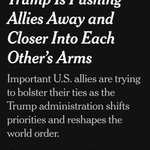


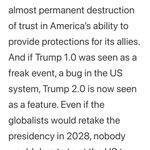


Never heard it summarised so well. True across the west except USA. Hitchens is rolling in his grave


Mark Carnegie 🛡️ retweeted
Curious to see y/y GDP growth in the US vs Australia:
US Aust
Q3 2025 2.6% 2.1%
Q4 2025 2.0% 2.6%
Q1 2026 2.6% 2.5%
Q2 2026 2.2% 2.1%
Just saying
Mark Carnegie 🛡️ retweeted
Median wealth per person (US$)
Australia $262,000
US $69,000
That's interesting
visualcapitalist.com/ranked-…

Mark Carnegie 🛡️ retweeted

Given that the Indonesian market is in free fall, this report by @verdadcap is once again recommended reading: static1.squarespace.com/stat…
Yes

If you probe these peoples' beliefs deeply enough it usually boils down to one simple maxim:
The average patient is not capable of giving informed consent.
This in turn is downstream of one of two justifications:
1) Patients are "desperate". When people describe patients as "desperate" they are often implying that because those patients are in such dire straits, their emotions have overridden their ability to rationally evaluate decisions, and they have become incapable of making informed decisions. Like they are suffering from a psychiatric illness which has rendered them incompetent. When the going gets tough, only the enlightened elite could possibly remain clear headed enough to judge the situation, which is why the plebs must seek the permission of their betters before they can access medicine.
2) Patients lack expertise. Modern medicine is just too complicated, it takes too much research to make an informed decision. Only with years or even a lifetime of study could a person possibly gain the necessary level of familiarity with the subject matter required to make a decision which was actually "informed". So it doesn't matter what data or disclaimers a patient is presented with, or how it is formatted, the average person is simply too stupid and ill-informed to make this call. Thus, again, the plebs must seek the permission of their betters before they can access medicine.
I think a large portion of regulators and intellectuals in American healthcare hold one or both of these beliefs. However, they remain unspoken, always implicit and never directly acknowledged. These topics are avoided like the plague. That is because at some level, most of the people who act based on these maxims understand that they are morally repugnant. They know if they were honest about what they believed the public would demand they be kept far from the levers of power.
It is the rejection of these unwritten credos which form the spirit of the Right to Try. The simple assertion that yes, Americans are capable of making their own medical and financial decisions.
This ends well

Eritrea says it is severing all diplomatic ties with Ethiopia reut.rs/4rRybeP reut.rs/4rRybeP


Mark Carnegie 🛡️ retweeted

It also stole the amount of time we’re going supposed to spend dying of smallpox

Mark Carnegie 🛡️ retweeted

Australia is being hypocritical and backwards by selling uranium to India, yet refusing to use it here.
Mark Carnegie 🛡️ retweeted

The Vampire Problem thought experiment is the single most illuminating thing I’ve encountered about the paradox of transportation, why it’s so hard for us to change (ourselves, our habits, our lives) themarginalian.org/2017/09/1…

Mark Carnegie 🛡️ retweeted

Just another grift from the richest man in the world and you might well be picking up the tab. Why am I not surprised at the fall in value of SpaceX?
The markets even rigged the rules to allow Musk to take advantage of indexing. This means that like it or not, if you have a 401k you have no choice but to invest in a stock that has lost 35% of its value since its opening.
If you think this is bad imagine what happens when the AI bubble finally bursts, then true carnage will ensue.
Thanks to Bloomberg Business for the clip.
🎥 TikTok - vm.tiktok.com/ZNRoYXnuc/
Mark Carnegie 🛡️ retweeted

The US and Iran at this point are simply two rival protection rackets squabbling over who gets to extort shipping in an international strait after the US started the dumbest war in modern history.

BREAKING: US President Donald Trump says Washington is reinstating a naval blockade against Iran -- but also says the US will demand a 20% fee on all cargo shipped to guarantee the Strait of Hormuz is open to other countries (on first reading, that equals to ~$15 per barrel!!!!)


Mark Carnegie 🛡️ retweeted

Westminster has built a country where we spend more money on the planning paperwork for a single road than it costs other nations to build an entire mountain tunnel.
This isn't a system accidentally strangled by red tape: it is a highly lucrative industry. A vast priesthood of consultants and lawyers is making a fortune they have no interest in the work being done.
It is corruption by bureaucracy, and working-class communities are footing the bill for projects that never even see a spade in the ground.
The absolute paralysis of modern Britain was laid bare in a recent parliamentary committee. A single witness gave them the truth with both barrels, exposing the administrative vampires sucking public money dry while the work goes undone. The details are an insult to every community waiting for homes, decent transport, and cheaper energy.
Take the Lower Thames Crossing. The planning application alone has swallowed more than a quarter of a billion pounds. For that exact same amount, Norway actually constructed the world’s longest road tunnel. We spent it on paper, and we have not even turned a sod of earth.
This is a permission state eating itself alive.
Look at HS2, the most expensive railway line on earth. Part of the reason it cost so much is that we are spending £121 million on a specific "bat tunnel" to protect a few hundred bats living in a nearby wood, a wood the line does not even pass through.
Look at Hinkley Point C, the most expensive nuclear power station in human history. For eight years, developers locked in a multi-million-pound wrangle with regulators over installing an underwater "fish disco", an acoustic deterrent to stop fish swimming into the pipes. 20 years ago, we built nuclear fleets at a fraction of the cost. Today, we sacrifice national infrastructure to the gods of endless compliance.
The final absurdity is the plan to reopen just 3.3 miles of an existing railway line between Bristol and Portishead, a route already built but closed during the Beeching cuts. The planning application is 80,000 pages long. Over one thousand of those pages are about bats.
We have created a system that trades in paper while the real economy rots. The working class pay the price for this institutional cowardice. They pay for it in soaring energy bills, missing homes, broken transport links, and a country that cannot build the future it keeps promising.
Protecting the environment is vital, but drowning ourselves in paper is not environmentalism. A system that takes 80,000 pages to clear three miles of existing track is broken. It is not governance: it is managed decline with a clipboard.
It's the bureaucratic vampires drinking the country's wealth...
