
cto @withpersona, also i used to make flash games
SF
Joined February 2011
- Tweets244
- Following206
- Followers123
- Likes137







we’ve worked on deep technical problems in identity and computer vision since day one. this year, our research landed at CVPR; and our work with @UBuffalo produced an open taxonomy of selfie fraud. as AI blurs who's real online, here's why shared research matters more than ever:
research.withpersona.com/the…

AI is getting remarkably good at looking human. we need to get just as good at knowing when a real person is behind the screen, while protecting privacy and making access easy for everyone. the human side of the internet has to keep pace. right now, it isn't clear if it will
part of the problem: much of the evidence about fraud works sits inside a few companies, while fraudsters trade tactics openly. so we’re funding university researchers working on privacy, fraud, and accessible identity, with grants of up to $100K. Check it out here: withpersona.com/research/per…
a great way to get unique looking motion graphics it to mention computer graphics + computer vision concepts in opus 5.5 prompts
what a fraud investigation looks like. gave opus 5.5 an api key for GPT images 2.5 and it did the rest 🤯 (i did tell it to pre-generate a 3d floor plan in order to keep all images consistent)
this example shows identity muling, where real people rent out their real identity to fraudsters. it requires coordination to do at scale and something that we've seen more and more of this year. in many cases we'll see an operator give directions, sometimes even with other identity mules visible in the background waiting their turn
(none of the people are real)
people still tell me they can always tell when something is ai..
nytimes.com/interactive/2026…

was amazing meeting researchers at Stanford's Trust and Safety Research Conference (TSRC) and hearing about their projects to better safeguard against fraud, scams, and abuse online
from someone personally talking to hundreds of scammers to reconstruct scam playbooks, to teams infiltrating fraudster communities to discover what credentials they're selling to each other.
if you attended or are interested in these general areas of research, we're always looking for collaboration opportunities. don't forget to check out our research grant program or open-source datasets. or we'd love to hear from you at [email protected]

single photo -> controllable 3d model, with rigged head and neck too. specifying computer vision and computer graphics terms in prompts seems really effective
(none of these people are real, except for me obv)
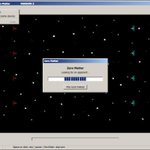
reviving dead projects with ai, but on 25 year old visual basic files. all it needed was the zip. actually kinda fun lol
zero-matter.charles-4f6.work…

more opus 5.5 visual explainer one-shots, but with scrollable step-by-step of the process fraudsters use to steal identities (via injection attack)
i asked opus 5.5 to create a website that explains our taxonomy for selfie fraud, then convert that into a video that highlights its research contributions.
we use this taxonomy for prioritization, design, and evaluation of our fraud models. crazy how it interpolated our paper into motion graphics that specifically convey the design intent of our system.
(shout out to our collaborators at SUNY Buffalo; also, none of these people are real)
i found a new use for opus 5.5: reviving 20 year old dead projects. I thought my flash games were gone forever but here it is again. all i had to do was dig the source files out of my dropbox and pass it over
selfie photo -> controllable 3d model by opus 5.5, in explainer form
someone suggested I should export this into a cad file and 3d print a mask which seems scarily easy and similar to faceid spoofing studies... although I guess texture mapping is still manual
i watched muse casually pass a captcha so I'm introducing meCAPTCHA. send your agent at it and tell me whether it works
mecaptcha.charles-4f6.worker…
who needs deepfakes when you can one-shot a 3d model from one photo with opus 5.5?
unlike generated videos, using a 3d model means it's controllable down to the cheekbone, and it even gave me teeth! because of the control it gives, we actually see fraudsters try 3d renders fairly often, generated from leaked IDs or social media photos
it's scary how things can be reconstructed from a single photo or short clip now. there needs to be a link between each person and their own identity that's stronger than short recordings of the ID or selfie.
as everyone bets on ai, we choose to bet on humans. so we're launching the persona research grant program.
human identity can be fundamentally more private, safe, and accessible, even as AI becomes more pervasive and the risk of identity theft is higher than ever. but getting there takes research at the foundations, not just better products.
that work is bigger than any one company and benefits everyone online, which is why we're expanding our existing collaborations into an open call: if you do research into data privacy, fraud intelligence, equitable access, or online safety, we'd love to hear from you.
applications are open now and evaluated on a rolling basis:
withpersona.com/research/per…

using the butterfly effect to get LLMs to actually be random is a great idea
lennysnewsletter.com/p/how-t…
