

Data Science team lead at @toolioretail Data Science, LLMs and Civil Engineer
Comunidad Valenciana, España
Joined April 2011
- Tweets2.5K
- Following883
- Followers290
- Likes3.7K



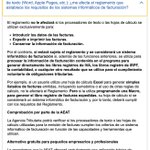




Da lastima ver como personas como Lucas se curran buenos estudios con artículo e hilo bien explicados, para que luego la gente llegue a los comentarios y saque a lucir sus sesgos favoritos.
Porque no existe un PISA para adultos, pero sería incluso peor.


@ClaudeDevs today's 5 hour quota is draining like if there was an 80% reduction. Just a quick "please put it into simple terms" for Opus high at 50% contexts drains 5% of 5 hour quota. Strangely the rest of quotas feels good.
Is there something wrong?


Esta es la idea/propuesta más interesante que he leído en el campo de la IA en muy tiempo. Continual learning de verdad, personal y en escala


Mi decision de no consumir medios de información tradicionales se prueba acertada con cada año que pasa. Esto no es información ni línea editorial, es un sesgo político y muy deshonesto con la realidad

El Gobierno da más poder a los estudiantes de las universidades: lo que los profesores enseñan cada curso tendrá que contar con el visto bueno de los alumnos elmundo.es/espana/2026/05/10…

Readers added context they thought people might want to know
Falso: tal y como se lee en la propia noticia, la programación docente debe ser aprobado por un órgano con representación de los estudiantes, tal y como ya hace en la mayoría de casos.
Aunque todos esos representantes voten en contra, la programación puede ser aprobada.
elmundo.es/espana/2026/05…
Por último, si de verdad queréis información fiable respecto a lo que afecta a los estudiantes universitarios, seguid a @CREUPCREUP que son los que trabajan a pie de cañón

Entiendo la buena intención, y a tope con la Aemet en el apartado científico. Pero ese texto, como muchos otros suyos, es terrible y es imposible que un lector promedio lo entienda ya que ¡literalmente dice otra cosa!
Hay que darle una vuelta a la UX y comunicación


Con todos los respetos al ganador. El sistema de predicción de disponibilidad de valenbisi es una práctica que se lleva haciendo 10 años en el máster de big data de la @UPV

🥇 Nikolas Hrudka guanya el 1r premi de Projectes de #DadesObertes i Periodisme de Dades 2025 amb 'PrediBisi'
▶️Un projecte que facilita la planificació de desplaçaments amb @ValenbisiOfi basat en dades obertes municipals
👏 Enhorabona als guanyadors!
🔗f.mtr.cool/qedtwocply


El continual pre-training es la gran promesa que nunca llega, por muchos motivos. Parece que Amazon ha lanzado un servicio comercial, no he podido mirar precios aún, pero con esto se pueden comer un buen trozo del pastel


If you work with MCPs or plan to, read this carefully

*gets up on soap box*
With the announcement of this new "code mode" from Anthropic and Cloudflare, I've gotta rant about LLMs, MCP, and tool-calling for a second
Let's all remember where this started
LLMs were bad at writing JSON
So OpenAI asked us to write good JSON schemas & OpenAPI specs
But LLMs sucked at tool calling, so it didn't matter. OpenAPI specs were too long, so everyone wrote custom subsets
Then LLMs got good at tool calling (yay!) but everyone had to integrate differently with every LLM
Then MCP comes along and promises a write-once-integrate everywhere story.
It's OpenAPI all over again. MCP is just a OpenAPI with slightly different formatting, and no real justification for doing the same work we did to make OpenAPI specs and but different
MCP itself goes through a lot of iteration. Every company ships MCP servers. Hype is through the roof. Yet use of MCP use is super niche
But now we hear MCP has problems. It uses way too many tokens. It's not composable.
So now Cloudflare and Anthropic tell us it's better to use "code mode", where we have the model write code directly
Now this next part sounds like a joke, but it's not. They generate a TypeScript SDK based on the MCP server, and then ask the LLM to write code using that SDK
Are you kidding me? After all this, we want the LLM to use the SAME EXACT INTERFACE that human programmers use?
I already had a good SDK at the beginning of all this, automatically generated from my OpenAPI spec (shout-out @StainlessAPI)
Why did we do all this tool calling nonsense? Can LLMs effectively write JSON and use SDKs now?
The central thesis of my rant is that OpenAI and Anthropic are platforms and they run "app stores" but they don't take this responsibility and opportunity seriously. And it's been this way for years. The quality bar is so much lower than the rest of the stuff they ship. They need to invest like Apple does in Swift and XCode. They think they're an API company like Stripe, but their a platform company like an OS.
I, as a developer, don't want to build a custom chatgpt clone for my domain. I want to ship chatgpt and claude apps so folks can access my service from the AI they already use
Thanks for coming to my TED talk
iTor retweeted

One of the big disappointments this year has been multimodal AI. When GPT-4o was introduced by @OpenAI, many believed that multimodal (“omni”) models would define the future of AI. The idea was that knowledge could seamlessly transfer between modalities. For example, that image understanding could enhance text reasoning.
Unfortunately, this hasn’t worked out as hoped. Very little knowledge actually transfers between modalities.
Still, I’m hopeful that we’ll see another breakthrough in multimodal AI someday!
iTor retweeted

Excited to release new repo: nanochat!
(it's among the most unhinged I've written).
Unlike my earlier similar repo nanoGPT which only covered pretraining, nanochat is a minimal, from scratch, full-stack training/inference pipeline of a simple ChatGPT clone in a single, dependency-minimal codebase. You boot up a cloud GPU box, run a single script and in as little as 4 hours later you can talk to your own LLM in a ChatGPT-like web UI.
It weighs ~8,000 lines of imo quite clean code to:
- Train the tokenizer using a new Rust implementation
- Pretrain a Transformer LLM on FineWeb, evaluate CORE score across a number of metrics
- Midtrain on user-assistant conversations from SmolTalk, multiple choice questions, tool use.
- SFT, evaluate the chat model on world knowledge multiple choice (ARC-E/C, MMLU), math (GSM8K), code (HumanEval)
- RL the model optionally on GSM8K with "GRPO"
- Efficient inference the model in an Engine with KV cache, simple prefill/decode, tool use (Python interpreter in a lightweight sandbox), talk to it over CLI or ChatGPT-like WebUI.
- Write a single markdown report card, summarizing and gamifying the whole thing.
Even for as low as ~$100 in cost (~4 hours on an 8XH100 node), you can train a little ChatGPT clone that you can kind of talk to, and which can write stories/poems, answer simple questions. About ~12 hours surpasses GPT-2 CORE metric. As you further scale up towards ~$1000 (~41.6 hours of training), it quickly becomes a lot more coherent and can solve simple math/code problems and take multiple choice tests. E.g. a depth 30 model trained for 24 hours (this is about equal to FLOPs of GPT-3 Small 125M and 1/1000th of GPT-3) gets into 40s on MMLU and 70s on ARC-Easy, 20s on GSM8K, etc.
My goal is to get the full "strong baseline" stack into one cohesive, minimal, readable, hackable, maximally forkable repo. nanochat will be the capstone project of LLM101n (which is still being developed). I think it also has potential to grow into a research harness, or a benchmark, similar to nanoGPT before it. It is by no means finished, tuned or optimized (actually I think there's likely quite a bit of low-hanging fruit), but I think it's at a place where the overall skeleton is ok enough that it can go up on GitHub where all the parts of it can be improved.
Link to repo and a detailed walkthrough of the nanochat speedrun is in the reply.

