

PhD student studying efficient deep learning @utexasece
Joined April 2013
- Tweets134
- Following381
- Followers101
- Likes593
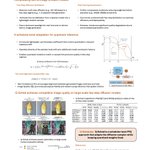






Excited to share that our paper "Q-Sched: Pushing the Boundaries of Few-Step Diffusion Models with Quantization-Aware Scheduling" has been accepted to ICML 2026! 🎉
📄 Paper: arxiv.org/abs/2509.01624
💻 Code: github.com/enyac-group/q-sch…

📝 TL;DR: Q-Sched is a new post-training quantization paradigm that tunes the diffusion scheduler instead of the weights ⚡ — matching full-precision quality with a 4× smaller model 🚀, all without touching the backbone.
I'm deeply grateful to my advisor @dianamarculescu for her guidance throughout this work, and to my colleagues in EnyAC at UT Austin for their continued encouragement.
We have released our latest work on quantizing few-step diffusion models using training-free scheduler adaptation!
Arxiv: arxiv.org/pdf/2509.01624
Github: github.com/enyac-group/q-sch…
Our work, Q-Sched, is compatible with state-of-the-art few-step diffusion models, achieving high fidelity images while only modifying the diffusion model scheduler.
Natasha Frumkin retweeted

We’re excited to pre-release our latest work: Quamba2!
🔧 W4A8 / W4A16 / W4AX / W8A8 Mamba models
🚀 Achieves 4× memory reduction and 3× generation speedup
️⚡ Enables 8B model inference on Orin Nano 8G at 13 tokens/sec
🔥 Outperforms W4A8KV4 Llama3-8B in both speed and quality

We’re researching how people perceive visual artifacts in AI images — and your input would really help.
It takes about 3 minutes.
Participate here:
tinyurl.com/mtenmu9m

I woke up at 3:14am, went on Twitter in a daze, and realized it was Pi Day. Wishing you all more happy coincidences on this perfectly (round) day

Our #ICCV2023 poster session will be tomorrow in Room Nord at 10:30am. Please stop by!

This is exciting — there’s now a benchmark for mixed precision performance at scale

No widely available, open-source software has existed for testing lower-precision performance at extreme scale on GPU-accelerated supercomputers — until now. ORNL researchers have released a new cross-platform benchmarking software package called OpenMxP. olcf.ornl.gov/2023/09/22/orn…
Natasha Frumkin retweeted

Transformers can learn to compute the greatest common divisor of two positive integers. They make deterministic predictions that can be fully explained. Training from a log-uniform distribution of operands achieves best results.
My new paper is on arXiv: arxiv.org/abs/2308.15594

Our ICCV 2023 paper is now available on Arxiv! We present an interesting observation into the loss landscape of quantized vision transformers: small changes in quantization parameters greatly affect the final loss and lead to a non-smooth landscape.
arxiv.org/abs/2308.10814

The same phenomena is not true for CNNs, which exhibit a smooth landscape when perturbing quantization scale. Hence, we show that gradient descent is unstable when used to update a ViT’s quantization parameters, and advocate for an evolutionary algorithm instead.


Natasha Frumkin retweeted

This is huge: Llama-v2 is open source, with a license that authorizes commercial use!
This is going to change the landscape of the LLM market.
Llama-v2 is available on Microsoft Azure and will be available on AWS, Hugging Face and other providers
Pretrained and fine-tuned models are available with 7B, 13B and 70B parameters.
Llama-2 website: ai.meta.com/llama/
Llama-2 paper: ai.meta.com/research/publica…
A number of personalities from industry and academia have endorsed our open source approach: about.fb.com/news/2023/07/ll…
Natasha Frumkin retweeted

Segment Anything (SAM) with OVSeg huggingface.co/spaces/facebo…
TL, DR: We enable SAM's text prompts with mask-adapted CLIP, achieving fine-grained open-vocabulary segmentation!!!
Feel free to check out our CVPR 2023 paper OVSeg: jeff-liangf.github.io/projec…
#SAM #OVSeg #CVPR2023


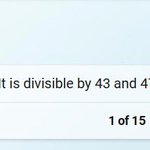
Neither ChatGPT nor BingGPT can tell me the numbers that 2023 is divisible by. ChatGPT says its a prime, Bing gives incorrect divisors


