

Building @appliedaiclub community for operators - Here via @zorpone @Bounceshare @gopaysense @stayzilla @lifeatisb.
Bangalore
Joined September 2009
- Tweets3.1K
- Following472
- Followers667
- Likes4.9K


Bala Panneerselvam retweeted

I’m building an AI agent that brings email, WhatsApp, and company data into one control centre.
Bala Panneerselvam from Applied AI Studio enlightening us on this now.
At Action Labs session. Founder's right hand
@iBala @techsparks @YourStoryCo

Bala Panneerselvam retweeted

@fint_ai helps you with same in India. DMs open.


kovai tamizh! adada

Mom, your daughter just helped India win the GOLD!
You said, “Just won bronze, not gold”…
Well, Vithya made sure it was GOLD! 🫡🔥
#AsianGames2026
Bala Panneerselvam retweeted

We grew from ~0 to $500M ARR, adding $250M last year alone while being EBITDA profitable.
1,300-word post on every growth tactic that worked for us:
1. What got us from 0-$400M ARR in the US works in every country.
2. Retention and Monetisation Hacks.
3. Localization > Translation.
4. Experiment with $1M internal seed checks.
5. Pivoting to only AI content production unlocked 100% ARR growth.
Pocket FM is like Netflix for audio-only dramas, with our own pool of one-person studios.
1. Acquisition Playbook for 0-$10M ARR in any country in 6 months
We run a 90 sec video trailer of an audio drama as an Ad and ask users to download the app if they're interested in the rest of the story.
Our core insight after spending >$100M on acquisition is: If the clickthrough rate (CTR) for an ad goes from 2% to 2.25%, our customer acquisition cost (CAC) decreases by ~ 30%.
We remodelled our system around this insight and built an AI-first 2.25% CTR ad manufacturing machine that works in every country.
For every new country, we take our hit shows -> use LLMs to extract and most intriguing moments -> Write a 5-min script combining all the best parts. The first 60 seconds has to have a hook every 5 seconds and needs to end with a crazy cliffhanger to force a download mid-scroll.
If a marketing video is not hitting our benchmarks (2.5% CTR and 55% 3-second through-play), a creative director gets involved to change the hook or cliffhanger to get the numbers there.
AI lets us make 1,000 Ads per show, and in total we do ~17.5k Ads per month. When a business creating scales from 1k to 10k Ads, the normal thing is for CAC to skyrocket. But with what I just shared, we 7-8x'd our User Acquisition budget without increasing our CAC materially.
It took us 8 months to figure this out, but then the timeline from 0-$10M in every country got shorter and shorter:
US revenue grew to $25M in 19 months. (US is now 78% of total)
Germany to 21M in 11 months.
France to $10M in 3 months.
2. Retention and Monetisation Hacks.
We knew we wanted to create an audio entertainment platform, but there was no standard format. For the first 2-3 years, we tried 10 different formats before landing on the winner.
After we got it right with audio drama (8-12min chapters, written for mobile fiction, serialized, episodes have strong hooks and end on cliffhangers), avg daily streaming time went from ~25mins to 150+.
Audio drama made us realize that Pocket FM was creating a whole new medium. There was no playbook for anything that we were doing. Everything had to be thought & built from scratch.
This is what we did for each major bullet:
- Monetization: Users have some free daily minutes to listen; then it's pay per episode. We also added the option for users to unlock episodes by watching ads, which is doing extremely well. Ads scaled from zero to a ~$90M run rate in 12 months.
- Engagement & production: You don't become obsessed with an app you open once a week. To have users engage daily, we make the next episode free every day. Also helps them build the habit.
- Discovery. Huge problem because people consuming Pocket FM enter the app, tap the show, and lock the screen. We fixed it by doing "playlists" of episodes. Once users's free minutes on a show are done, we ask users if they want to pay. If they say no, we play a new show, one where they haven't used their free mins. And we stitch episodes of different shows together that way, creating natural discovery.
3. Localization > translation.
78% of our revenue is still concentrated in the US. Localisation is fixing this: You might write a show for a Spanish audience where language, jokes, folklore, have a certain flavor; if you merely translate the show for, say, a Norwegian audience, that color is lost and hurts the show in the Norway. Listeners would relate more if the show was written by a Norwegian.
That's why, instead of translating, we localize shows to different regions. We use AI to take the spine of stories and adapt their whole cultural layer to the other country.
The results: a US show that was localized for a German audience had 50% higher retention than the translated version.
Localization + our user acquisition playbook led to:
- $10M+ ARR in France within 3 months
- $21M+ ARR in Germany within 11 months.
And this expands writers' addressable market.
We get messages of writers thrilled to have revenue coming from the US, India, EU, LatAm, without them doing much incremental work.
4. Experiment.
We give $1M checks to new internal initiatives, and the team has 12-18 months to prove their thesis. If they prove it, we double down.
This is how Pocket Saga came about, our AI video microdrama app. It's an AI video equivalent of Pocket FM. Same shows and structure, but as a vertical 2-min mobile video series.
We launched it two months ago and it's at ~$15M ARR.
Pocket's broader thesis is to help creators tell their stories to as many people as possible. Start with audio drama -> multiple languages or localize to diff countries -> microdrama -> more formats like movies, TV shows, and games.
Best of all is that writers get revenue streams not only from countries they wouldn't have tapped into, but also from formats they wouldn't have thought possible.
5. Pivoting to only AI content production unlocked 100% ARR growth.
In mid-2024, we pivoted to only AI content production.
Our growth took a very direct hit. Pocket was already at $200M ARR, growing 50% YoY, and we flatlined for a whole semester.
Six months later, the business exploded.
After the switch, we went from ~25k hours of content produced per year to over 2.5M hours, which are also higher quality. Because AI orchestrates the writing and more data is fed into it, more blockbusters come out.
Over 90 titles have $1M+ in lifetime earnings and 13 crossed $10M.
Quality control is done with LLM as a judge, and LLMs are quite tough.
Results are very encouraging:
- 12-month revenue retention went from 44% to 76%.
- In the past year, we added $250M in net new ARR.
__________________________________
Pocket Entertainment (Pocket FM + Pocket Saga) has become the largest AI entertainment platform.
We have the largest storytelling catalog with 770,000 titles, 550k creators, and 5.5B hours of playtime with minute by minute retention & engagement data. We are using all of this data to improve every aspect of our business.
Our Bet: In the next 3 years we will be able to produce Naruto-like series for $1000.
Netflix has to spend $17B to find 100 Blockbusters per year.
What happens when you can produce 1M high quality shows for $1B?
The streaming wars caused a $300B reallocation of market cap.
The AI entertainment wars may be a $1T+ reshuffling of market cap.
We are at a unique spot. Unlike other AI creator tools like Runway or Midjourney, we own both the supply and demand side of AI content.
We've attracted over 550,000 writers who are producing an annualized 2.5M hours of content every year. This pairs with 137B+ minutes streamed.
Because of this, growth is accelerating as we scale further.
We have multiple S-curves inflecting at the same time:
- AI produces better and more ads -> scale faster in new countries
- Writers + AI produce more shows -> more blockbusters
- Localisation -> more reach per blockbuster
- Audio to video format expansion -> larger TAM -> more creators
Every aspect of our business is designed to improve another, and everything is aligned so that the number of blockbusters continues to rise.
If you're interested in building at the intersection of ai, tech and entertainment, DM me.


The recent foundational launch by @razorpay is an incredible moment for Indian R&D. Using transformer based models for payments processing is not new. @Stripe did exactly this some time ago. And transformer based models for non-text use cases have existed for a while.
Why this is interesting:
One of the few times I've seen large scale R&D effort has been put in by an Indian enterprise. And given (Razorpay says) that it materially improves their business will lead to more investments into corporate R&D which is anemic in India right now.
There are some caveats in the model itself though. For payments transaction data, history does count. Razorpay says they don't use timeline data, so wondering how they encode this. Also, the latency part. GBDTs are extremely fast and give good results at their scale. But transformers may not bring the ms latency that they need for payment routing use cases. Would love to read a paper on this.
Either way, incredible moment that is going to inspire a lot of corporates to invest in R&D and not just operational efficiency.
Folks, this Independence day, we have something exciting to showcase at Applied AI Club. Our Social Impact study group cohort is demoing their projects tomorrow and we look forward to all of you to join and show your support. Details in the event link.
luma.com/c59kbiwv
See you all at 10 AM tomorrow.

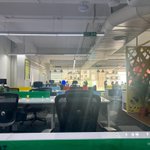
How a Bangalore office looks at 10:15 in the morning. How do we expect to do good work if we don't show up?
The problem is not the people. But the effort it takes to show up in the office.
A 4 km stretch takes 20 mins in a scooter around the HSR area and 30 mins in the car. And peak hours, add another 10 mins. And with all the swirling, dodging random two wheelers jumping signals, you're no longer fresh when you reach the office.
And evening, if you leave after 6, it takes double the time to reach home. Even if you leave at 5 pm, you reach home so tired that you cannot do anything in your personal life. And obviously people show up late the next day.
It took me 2 hours to travel from Whitefield to HSR (17 kms) yesterday at 4 PM in the afternoon. Non-peak hour on a random day with no delays due to rain or any other factor.
We're absolutely destroying our ability to do good work in this city. If you're so overwhelmed with noise all around you, how do you spend time thinking?


Bala Panneerselvam retweeted

Hats off to doctoral student and podcaster Zhong Shu in Beijing, China, who did this fascinating and smart interview with Christopher Nolan about THE ODYSSEY yesterday, originally posted to Bilibili.
A great listen/watch.
Or if you don't want to get tied to the claude ecosystem, use open-artifact.com


Bala Panneerselvam retweeted
Our FDE intern came in as a high-agency college student, crushed it for months, and the client literally wanted to hire him full-time.
#Hiring few more folks now. Reach out if you are keen to work at intersection AI, Agents & Business Finance.

Bala Panneerselvam retweeted

I taught JEE physics for years. That paper breaks strong kids in three hours.
This exam is five hours of theory and five hours of lab work, and these five did close to perfect scores on it.
Let me tell you what actually happened.
The International Physics Olympiad is the world championship of school physics. It was the 56th edition. Held in Bucaramanga, Colombia, from July 5 to 12.
381 students. More than 85 countries. Every one of them the best physics student their country could find.
India sent five kids.
All five came back with gold.
Their names are Kanishk Jain from Pune. Riddhesh Anant Bendale from Indore. Rishit Garg from Dwarka in Delhi. Shresth Suraiya from Mumbai. Svarit Joshi from Ahmedabad.
We know a hundred cricketers by their nickname and not one of these boys. :)
That clean sweep put India at joint World Number One. Tied with China, Russia, Kazakhstan, South Korea and Taiwan.
Those are countries that pour serious money and national pride into science education. We are standing level with them.
Now here is what the exam actually was.
Two papers. Each five hours long.
The theory paper had three problems. One on the thermodynamics of paramagnetic cooling. One on the photoionisation of ozone. One on the dynamics of electron positron pairs.
The experimental paper was another five hours in a lab, working through heat transfer and thermodynamic processes in fluids.
That means you get given equipment you have never seen, and you have to design your own experiment, take your own readings, handle the errors, and reach a real answer.
Not multiple choice. No shortcuts. No pattern recognition. You either understand physics or you sit there for five hours.
HBCSE says the Indian students were near perfect on theory and excellent on the practical too.
Now, this was India's 27th appearance at the IPhO.
Across all those years, about 44 percent of Indian students have won gold, 41 percent silver, 10 percent bronze.
In the last ten years, every single Indian student has come home with a medal. 62 percent gold, 38 percent silver.
Not one kid has gone and come back empty handed in a decade.
Five golds in one year has happened only twice. This year, and in 2018.
So who built this.
The programme is run by HBCSE, the Homi Bhabha Centre for Science Education. It sits under TIFR, which sits under the Department of Atomic Energy.
They run the whole funnel. A national exam, then a national olympiad, then a brutal selection and training camp, and out of everyone in the country, five kids get on a plane.
The team was led by Professor Anwesh Mazumdar of HBCSE-TIFR and Dr Leena Joshi from St Xavier's College, Mumbai.
The scientific observers were Professor Ananda Dasgupta from IISER Kolkata and Nisha Kelkar from Gogate-Joglekar College in Ratnagiri.
Yes. Ratnagiri. A college in a small coastal town in Maharashtra.
This is public education doing something the private coaching industry could never do on its own.
The coaching industry is very good at one thing. Teaching you to solve a known problem fast.
That is what JEE and NEET reward, and I say that with love because I was part of that world.
But an olympiad paper does not have a known type. There is no shortcut chapter. There is no formula sheet that saves you. You have to sit with a problem you have never seen and think.
That is a completely different muscle. And a government funded centre has been quietly building it in Indian teenagers for 27 years.
So yes, be proud. Loudly.
HBCSE also shared that around 64 percent of India's olympiad medallists go on to do a PhD.
But only about 32 percent of medallists end up settling in India.
I do not say that to spoil the moment. These kids owe the country nothing. They earned every option they have.
But it should tell us something. We are excellent at finding this talent. We are excellent at training it. We are still not great at giving it somewhere worth staying.
Congratulations Kanishk, Riddhesh, Rishit, Shresth and Svarit. This is one of the best things an Indian did this year and most of the country will never hear about it.

🇮🇳 India Tops the World at the 56th International Physics Olympiad 2026!
🥇🥇🥇🥇🥇India's young physicists deliver an extraordinary performance at #IPhO2026 in Colombia. All five members of the Indian team win Gold Medals. 1/3
@PMOIndia @DrJitendraSingh @HBCSE_TIFR @TIFRScience

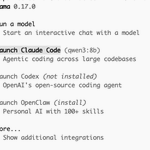
Claude code is down?? Ollama has a way of using CC harness and running a local model. Thank me later.

This is like the beginning of the internet. While this is great, it will take 5-10 years to proliferate and we should see some incredible companies building amazing products. This is a great time to be a builder.

The video for last week's "Deeeeep dive into Claude Code" session in Applied AI Club is up. The best part - CLAUDE CODE EDITED AND UPLOADED the entire video!
Yes! I used Claude Code to do the following.
• Creating the teaser
• Removing pauses
• Transcribing
• Creating chapters
• uploading the video to youtube
• Thumbnail for the video
• Create a page in the applied ai club website and embed the video in there.
You can see the final output in the thread.

I've been using coding tools and IDEs for over a year now. But the future never felt so real until I started with Claude code. So much so that, I bought the $100 plan the same day. And it's totally worth it.
Claude code is magical and our community deserves to learn how to use it effectively.
That's why we have Vysakh Sreenivasan taking us through how to use Claude Code effectively. Don't miss this session!

Hiya folks! We’re back after the new year. And we have an amazing session to start with.
This Saturday at Applied AI Club, we have our OG member Gautham Muthukumar is taking us through Evals. This week Gautham will take us through a session on Evals focused on Product Managers.
For folks who don't know, Gautham works at the forefront of SOTA AI models at Microsoft, Intuit etc where he has done work around ML and Evals platforms. You don’t want to miss this one.
Details in the thread.
Here's the link: luma.com/87lnzjpd
Date: 10th Jan, Saturday
Time: 10 AM to 11 AM.
