

The Honorable Did What They Could, And The Shameless Suffered What They Must
Las Vegas, NV Yerevan, Armenia
Joined January 2013
- Tweets3.2K
- Following779
- Followers2.8K
- Likes3.8K
Professor Kopalyan retweeted

Two publications. Two perspectives on Armenia’s past and future.
📖 Writing the War - Nerses Kopalyan & Raffi Kassarjian | Nov 22, 1:45 p.m.
📖 CSN Lab: Until 2031 - Tigran Amiryan & Agnesa Tariverdyan | Nov 22, 3 p.m.
Free entry. Register: evnmediafest.com/


Professor Kopalyan retweeted

Heartfelt thanks to Commissioner @MartaKosEU for the warm farewell meeting & touching words. I deeply value your leadership, unwavering support for Armenia–EU relations, your personal encouragement & friendship. It has been a privilege to work together to bring 🇦🇲 closer to 🇪🇺.

Professor Kopalyan retweeted
In response to Armen Grigoryan’s article on the risks of Armenia’s EU integration, @STatikyan challenges the assumption that closer ties with the EU deepen dependence on Russia, arguing that EU integration and multi-alignment need not be mutually exclusive.evnreport.com/opinion/europe…

Professor Kopalyan retweeted
🇪🇺🇪🇪🇫🇷🇱🇻🇱🇹🇬🇧🇩🇪🇳🇱🇳🇴🇵🇱🤝🇦🇲 Statement after the Leaders Meeting of the Core Group of Support to #Armenia
consilium.europa.eu/en/press…


Professor Kopalyan retweeted

Armenia has the talent to build physical AI. 🇦🇲
This seven-year program gives researchers time to tackle hard problems and build technology.
Thank you to AIF, ASOF, ARCS.ai, the universities and government teams who made it happen.
linkedin.com/feed/update/urn…
Professor Kopalyan retweeted

surely a book endorsed by an authoritarian government is rigorous

It was a great honor to moderate today's presentation of "The War for Karabakh: Strategy, Technology, and Victory" at the Baku Book Center and to share the panel with its authors, Col. (Ret.) Liam Collins and Maj. (Ret.) @SpencerGuard. Their book is one of the most thorough studies of the 2020 war. It examines how Azerbaijan's strategy, its use of drones and modern technology, and the conduct of its armed forces led to a decisive victory. It also explains why that war now matters well beyond the South Caucasus for anyone studying modern warfare. The presentation was followed by a lively Q&A with an engaged audience of experts, diplomats, students and members of the military community. I thank the authors for their visit to Baku and their rigorous scholarship, and everyone who joined us today.


Professor Kopalyan retweeted
To understand the political behavior of Armenian officials and its citizens, one must understand the political culture of Armenia and how this political culture is shaped by the Hayastantsi sociocultural system. What is it about the Hayastantsi culture that reproduces a political culture that is defined by underdevelopment, anti-system or anti-government attributes, low trust of political institutions, systemic patronage and “benevolent” nepotism, strategic indifference to law, collective normalization of illegal behavior, and general disregard toward civic duty and responsible citizenship? I explain the cultural syndromes thay reproduce political behavior in Armenia.
evnreport.com/statecraft-gov…

Professor Kopalyan retweeted

The most important issue for Armenia right now! Absolutely agree with everything written here.

To understand the political behavior of Armenian officials and its citizens, one must understand the political culture of Armenia and how this political culture is shaped by the Hayastantsi sociocultural system. What is it about the Hayastantsi culture that reproduces a political culture that is defined by underdevelopment, anti-system or anti-government attributes, low trust of political institutions, systemic patronage and “benevolent” nepotism, strategic indifference to law, collective normalization of illegal behavior, and general disregard toward civic duty and responsible citizenship? I explain the cultural syndromes thay reproduce political behavior in Armenia.
evnreport.com/statecraft-gov…
Professor Kopalyan retweeted
For the broader Middle Corridor, the World Bank estimates that Armenia will see an increase of $873 million in GDP and a 3.9% increase in employment within 10 years.
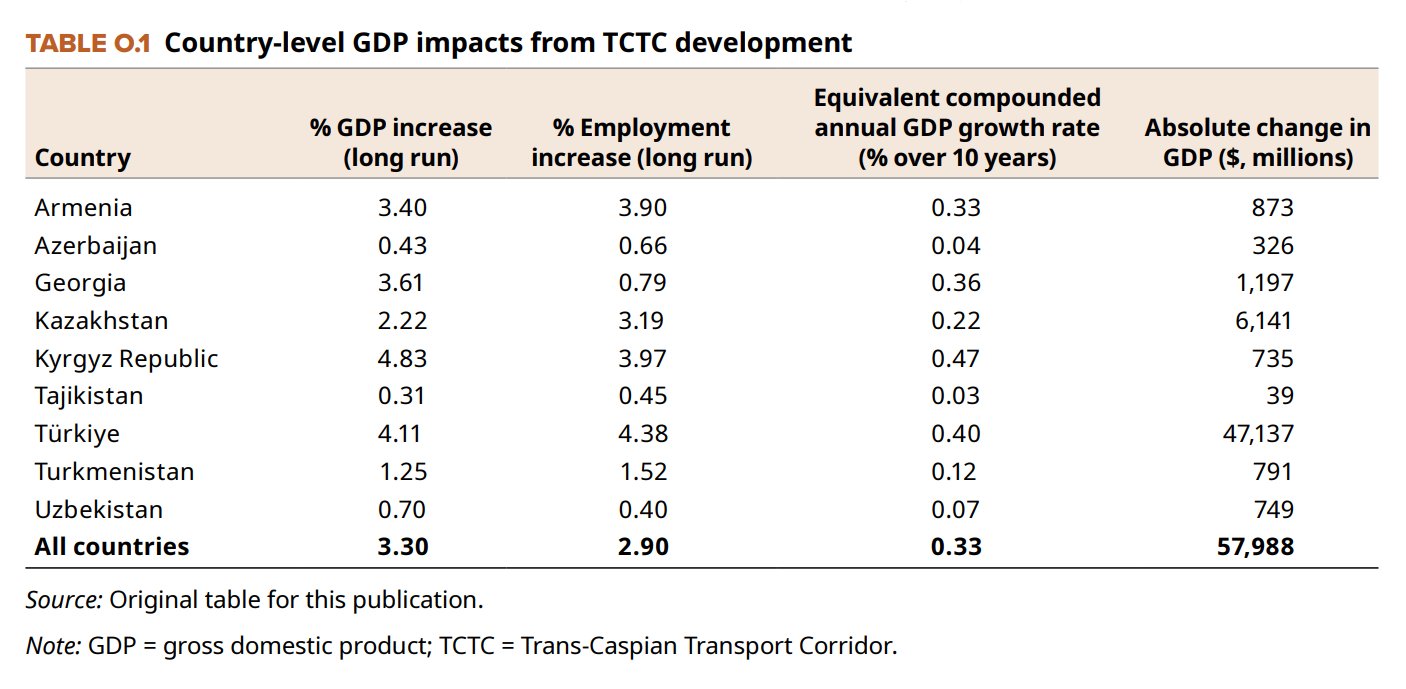

Brilliant piece by @varpetareg on Armenia's nuclear energy contours, and the most prudent way of approaching this highly-complex, yet extraordinarily important issue. When an MIT nuclear expert chimes in, it's vital that we all listen.
Why a Russian 1,000 MW Nuclear Reactor in Armenia Would Be Problematic evnreport.com/opinion/why-a-…

Professor Kopalyan retweeted

Armenia's EU Exports Up 51%, Reaching $717 Million in First Nine Months of 2026 🇦🇲 🇪🇺
➖➖➖
Armenian exports to European Union member states reached $717 million in the first nine months of 2026, up 51 percent from $475 million in the same period last year, Economy Minister Gevorg Papoyan said, reports Zartonk Media.
The nine-month figure already exceeds the $667 million Armenia exported to the EU across all of 2025, according to Hetq.
Exports rose to 20 of the 27 member states and fell to 7. The largest increases were to Bulgaria, up 4.9 times, Malta, up 4.8 times, Austria, up 3.1 times, and Poland, which tripled.
Exports to Germany fell 7.6 percent, to the Netherlands 13.7 percent, to Luxembourg 32.3 percent and to Portugal 32.8 percent. France, Greece and Slovakia also declined.
Papoyan posted the figures on Facebook and did not identify which goods drove the increase.
The pace has eased over the year. Speaking at a Cabinet meeting on September 24, Papoyan put EU exports up about 70 percent for January through August, against the 51 percent he gave for January through September.
The EU remains a secondary market for Armenia. Hetq reported that the bloc took 7.9 percent of Armenia's exports in 2025, against 35.3 percent for Russia, which bought about $3 billion. A decade earlier the EU's share was roughly 28 percent.
The European Union's autonomous trade measures for Armenia took effect on October 10 and are not reflected in these figures.


Professor Kopalyan retweeted

1/5 The massive Yandex outages following recent drone strikes on Russian data centers have triggered a noticeable shift online.
While many celebrated a "drop in bot traffic," the reality is far more nuanced. Here is how it actually impacts Russian influence ops. 👇
Professor Kopalyan retweeted

Azerbaijan is blocking social networks as one of the tools to stop the protests – at Armenia

⚠️ Confirmed: Metrics indicate restrictions to TikTok, Instagram and Twitter/X web platforms on multiple internet providers in #Azerbaijan corroborating user reports of difficulty accessing social media. The incident comes amid protests over the regulation of hijabs in schools.

Professor Kopalyan retweeted
As Armenia and Azerbaijan move toward normalization, why is Baku simultaneously intensifying its campaign around Armenian history and cultural heritage? In this episode of “State of Play”, Maria Titizian speaks with Dr. Nerses Kopalyan about Azerbaijan’s strategy of managed antagonization, the revival of the Caucasian Albanian narrative, and what these efforts reveal about the competition for strategic depth and influence in Washington D.C.
🎥 Watch the latest episode of State of Play: youtu.be/b8FIY4N8r7c?si=iMXD…
Professor Kopalyan retweeted

Was a pleasure to have an interesting conversation with @KofmanMichael in Yerevan

The latest Russia contingency is out. I’m joined by Leonid Nersisyan and Vazgen Ghazaryan to discuss how Armenia is reshaping its defense policy since the 2020 Nagorno-Karabakh war, the country's diversification away from Russian procurement and training, military reforms, and the lessons they take from the Russia-Ukraine war. @WarOnTheRocks warontherocks.com/episode/th…
