

Personal health mastery https://xitter.cf/t.co/NFn0v9a4UO
Austin
Joined June 2009
- Tweets13.9K
- Following183
- Followers9.5K
- Likes3.6K






Pinned Tweet
400 mg of caffeine can seriously disrupt sleep, even well before bed.
In a randomized crossover trial:
☕ 400 mg cut deep sleep by up to 34 min
🛏️ Increased nighttime wakeups and delayed sleep onset
😴 100 mg had no effect—even 4 hours before bed

humanOS.me retweeted

A high-fiber diet mimics aging-related signatures of caloric restriction in mammals
nature.com/articles/s41467-0…

🧊 Cold plunges after lifting may blunt muscle gains
In young men, 20 min of 46 °F (8 °C) immersion post-workout:
🩸 Cut muscle blood flow by >50%
🧬 Reduced amino acid incorporation into muscle by 31%
Cooling impaired nutrient delivery right when muscles needed it most.
Each leg was used as its own control — cold vs. thermoneutral water.
Reduced microvascular perfusion strongly predicted lower amino acid uptake
Study: journals.lww.com/acsm-msse/a…

humanOS.me retweeted

I’m excited to announce my new book FOOD INTELLIGENCE coauthored with brilliant journalist @juliaoftoronto! Cutting through the confusion about diet & health, #FoodIntelligence describes the fascinating science of how food both nourishes and harms us.
penguinrandomhouse.com/books…
#FoodIntelligence combines my scientific expertise with Julia’s incisive journalism to help you better understand nutrition science, how our food environment drives metabolic disease, & what to do about it. This book has been years in the making & it’s finally a reality! @Avery_Books

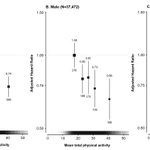
🚶♂️ More steps = lower mortality, even if you sit a lot
📊 In 72,000+ adults, 9,000–10,500 steps/day led to
🔻 38% lower all-cause mortality
❤️ 48% lower cardiovascular mortality
💡 Benefits started at just 4000–4500 steps/day and even highly sedentary people saw reduced risk
Importantly, there was no plateau.
Mortality risk kept decreasing with step counts beyond 10,500/day.
No upper threshold was identified — more steps meant greater improvement.
Study: bjsm.bmj.com/content/58/5/26…

Aerobic fitness helps the aging brain regulate blood flow.
In 104 adults aged 40–70, higher cardiorespiratory fitness was linked to better dynamic cerebral autoregulation & greater baroreflex sensitivity.
Both vital for maintaining brain perfusion under stress.
Dynamic cerebral autoregulation and baroreflex sensitivity decline with age — raising risk for dizziness, cognitive issues, and stroke.
This study suggests midlife aerobic exercise helps preserve these systems.
Paper: journals.physiology.org/doi/…

Mental fatigue hits harder with age — but habitual physical activity helps buffer the blow.
After a 20-minute cognitively demanding task, older adults showed declines in both cognitive and physical performance.
But active individuals were less impaired than sedentary peers.
Participants engaged in walking, strength, and cognitive tests before and after a 20-min dual-task challenge.
Those who were older or sedentary experienced greater declines in response speed and physical endurance.
Study: journals.humankinetics.com/v…
Lifelong exercise reduces age-related inflammation.
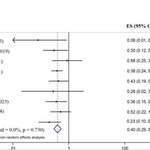
A meta-analysis of 17 studies found master athletes (age 45-75) had 71% lower CRP and 1.4 SD higher IL-10 (anti-inflammatory cytokine) compared to untrained peers of the same age.

However, IL-6 and TNF-α remained elevated compared to young adults.
Exercise slows immune aging, but doesn’t stop it.
Study: pubmed.ncbi.nlm.nih.gov/3979…

Higher lutein + zeaxanthin levels are linked to lower depression risk.
In NHANES data (n > 7,000):
– Highest vs. lowest dietary L+Z intake → 32% lower odds of depression
– Highest vs. lowest plasma L+Z → 42% lower odds of depression
Lutein and zeaxanthin are carotenoids found in leafy greens, egg yolks, and brightly colored produce.
Study: pubmed.ncbi.nlm.nih.gov/4013…

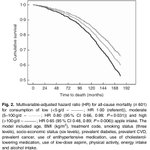
Higher blood levels of vitamin C, D, β-carotene, and lycopene were linked to lower mortality.
In a U.S. cohort (n = 11,539), those with the highest 25(OH)D had:
– 34% lower all-cause mortality
– 52% lower cancer mortality
– 41% lower cardiovascular mortality

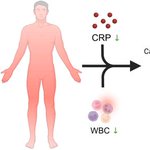
CRP and white blood cell count mediated up to 20% of the mortality benefit.
Study: pubmed.ncbi.nlm.nih.gov/4002…

Immune resilience may be a key to extreme longevity.
A study of 690 adults found that those with the most youthful immune profiles lived up to 15 years longer than those with the most dysregulated immune markers.
Resilient immunity tracked w/ physical and cognitive healthspan.

Researchers identified 5 immune phenotypes — only one was linked to exceptional survival.
This “resilient" group had low inflammation, strong adaptive responses, immune stability over time.
Findings support immunity as a driver of healthy aging.
Study: onlinelibrary.wiley.com/doi/…
Aging unlocks new fat cell growth.
A new experiment found that middle-aged male mice generated 80% new visceral fat cells via a hyperactive progenitor population.
These cells emerge with age and drive fat gain via LIFR signaling.

Unlike most stem cells, these age-enriched CP-A progenitors become more active with age.
They show up in humans too.
Blocking LIFR — a key receptor in these cells — prevented visceral fat gain in mice.
Study: science.org/doi/10.1126/scie…
