Health-sci comms. Now: @TheReisGroup Then: @ResearchAmerica @OgilvyDC @KetchumPR @DavidsonCollege
Edge of Baltimore
Joined March 2009
- Tweets10.8K
- Following3.3K
- Followers1.5K
- Likes411K
Heather Jameson retweeted
In 100% agreement
Exercise should be a prescribed
New @JACCJournals @ACCinTouch scientific statement
jacc.org/doi/10.1016/j.jacc.…
Heather Jameson retweeted
Covid attacks your heart. I’ve been dealing with heart issues since the last time I contracted it. My 30 year old nephew had a heart attack after the last time he did (he passed). The pandemic is not over and the longer you pretend it is, the worse this stuff is going to get.
Heather Jameson retweeted
🔥Peer-reviewed research (NEJM, Nature, etc.) shows COVID causes measurable IQ drops (3–9 points), accelerates Alzheimer’s pathology, and stacks organ damage with every reinfection.
Read the 🧵. Then repost it. Most people still treat this like a seasonal cold. The data clearly says otherwise!! #IWarnedYou
#AvoidSars2 #AvoidReinfections
Heather Jameson retweeted
When I talk to people about the ongoing impact of COVID, I find it helpful to lead with a concrete, undeniable indicator, which is that there are about 3,000,000 more disabled workers in the US than at pandemic onset.
PMC COVlD Update, Week of Oct 12, 2026
(Posted 48 hrs early)
🔸Levels revised upward for a double-peak
🔸39-state outbreak (see ALT)
🔸PMC estimates 750,000 new daily infections, & 1 in 65 people actively infectious
🔸1st time starting Oct w/rising levels since 2020
1/🧵

ALT States with observed outbreaks include Alabama, Alaska, Arizona, California, Colorado, Connecticut, Delaware, Florida, Georgia, Guam, Hawai’i, Illinois, Indiana, Iowa, Kansas, Kentucky, Louisiana, Maine, Maryland, Massachusetts, Michigan, Missouri, Montana, Nevada, New Hampshire, New Jersey, New Mexico, New York, North Carolina, Ohio, Oregon, Puerto Rico, South Carolina, Tennessee, Texas, Utah, Virginia, Washington, and Wyoming. Additional states with poor monitoring likely have outbreaks based on high levels in bordering counties in adjacent states.
Heather Jameson retweeted
On average men were diagnosed in 3 months. Women in 2 years.
Women's auto-immune diseases aren't trickier.
But doctors afford women less epistemological authority.
Women are simply considered less trustworthy, even, especially, about themselves.
theguardian.com/society/2026…
Heather Jameson retweeted
Here's the part most people don't want to hear. Each time you catch COVID, the risks don't reset. They stack. Every infection is another roll of the dice, and the odds get worse each time.
Heather Jameson retweeted
Devastating. Just really devastating. statnews.com/2026/10/13/hele…
Heather Jameson retweeted
Everyone should get a fresh diphtheria vaccine every 10 years along with tetanus and whooping cough (pertussis). DTaP or TDaP shot. It's a no-brainer.
With confirmed case in Erie County, here is what to know about diphtheria: Highly contagious, dangerous, and there's a vaccine for it. buffalonews.com/news/local/a… via @TheBuffaloNews
Heather Jameson retweeted
Exclusive: “The instant I saw the picture my mouth fell open and my pulse began to race.” So wrote James Watson in The Double Helix: A Personal Account of the Discovery of the Structure of DNA, his controversial account of how he and Francis Crick deciphered the structure of DNA in 1953.
The image, now known as photograph 51, showed an elegant, symmetrical pattern of spots formed by x-rays diffracted from strands of DNA—the fingerprint of the molecule's helical structure.
Rosalind Franklin, an x-ray crystallographer, had produced the image in the spring of 1952. But Watson's 1968 book, amid other slights and sexist language directed at Franklin, implied the flash of insight was his alone.
Popular accounts still routinely suggest Franklin missed the significance of the photo. She never had a chance to challenge Watson's dismissive narrative; she died of cancer in 1958, a decade before his memoir was released and became a bestseller.
But a new analysis of her notes on another x-ray image, which she made just days earlier using the same DNA sample, offers a firm rebuttal.
Learn more: scim.ag/4hNj7KB @NewsfromScience
Heather Jameson retweeted
A state medical board can review a doctor’s case, find nothing wrong, and close it, and the report to the National Practitioner Data Bank still stays.
That’s what Aysun Alagoz, an OB/GYN in Texas, says happened to her.
In 2011 she had a solo practice in a small town, about nine years in. A hospital executive called and told her to come to an urgent meeting. Nobody would say what it was about. She was accused of mismanaging a colleague’s patient while she was on call, a pregnant woman with high blood pressure. She wasn’t allowed to see the written complaint, and in two days there was no way to get a lawyer.
She was given a summary suspension and walked off the premises. She had until Monday to resign her privileges or be reported to the data bank. She says a summary suspension is an automatic referral anyway, so she refused, to keep a paper trail of her side.
What followed, in her account:
1. A small committee of physicians reviewed the case and wrote that she should be allowed to resign rather than be reported.
2. The executive committee reported her anyway. The board of directors gave the same answer, with no explanation.
3. The Texas Medical Board took about a year, found nothing wrong, and closed the case.
4. The data bank entry stayed. She was told she could add her own comments, but she says nobody reads those. She couldn’t find a job for about two years and lost several jobs once they queried the data bank.
She says the patient’s diagnosis turned out to be a migraine headache, and the colleague who filed the complaint never called her to ask a question. Her bylaws allowed an outside review, she says, and none happened.
Her argument about why this keeps happening: the Health Care Quality Improvement Act of 1986 makes people who sit on peer review committees immune to lawsuits. She has heard of doctors who sued for bad faith, spent hundreds of thousands of dollars, and lost.
Her advice if you get the call:
Delay the meeting if you can.
Go with a lawyer, or at least consult one who represents doctors in peer review.
Don’t agree to anything.
Don’t be afraid.
The line she was given about the data bank: “Once it’s on the data bank it stays on the data bank.”
Listen to the full conversation on The Podcast by KevinMD. Link in the replies.
Search "The Podcast by KevinMD" wherever you listen to podcasts
What would you do in the first hour after a call to an urgent peer review meeting with no reason given? #ThePodcastbyKevinMD
Heather Jameson retweeted
Exclusive: “The instant I saw the picture my mouth fell open and my pulse began to race.” So wrote James Watson in The Double Helix: A Personal Account of the Discovery of the Structure of DNA, his controversial account of how he and Francis Crick deciphered the structure of DNA in 1953.
The image, now known as photograph 51, showed an elegant, symmetrical pattern of spots formed by x-rays diffracted from strands of DNA—the fingerprint of the molecule's helical structure.
Rosalind Franklin, an x-ray crystallographer, had produced the image in the spring of 1952. But Watson's 1968 book, amid other slights and sexist language directed at Franklin, implied the flash of insight was his alone.
Popular accounts still routinely suggest Franklin missed the significance of the photo. She never had a chance to challenge Watson's dismissive narrative; she died of cancer in 1958, a decade before his memoir was released and became a bestseller.
But a new analysis of her notes on another x-ray image, which she made just days earlier using the same DNA sample, offers a firm rebuttal.
Learn more: scim.ag/4hNj7KB @NewsfromScience
In 70% of cancers, one gene is too active and fuels aggressive growth, spread and survival of tumors all over the body. A new study sheds light on what triggers cells to churn out extra copies of the gene, offering a potential drug target.
nytimes.com/2026/10/02/scien… via @NYTimes
Heather Jameson retweeted
Kenya confirms first Ebola case imported from Congo after patient dies while receiving treatment in Nairobi. apnews.com/article/kenya-con…
Heather Jameson retweeted
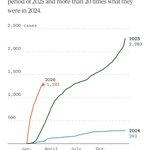
Pennsylvania’s measles outbreak has hit a sobering milestone, surpassing 1,000 cases — the first U.S. outbreak to do so in 35 years.
The virus moved through communities where many children and adults have gone years without the two doses of measles vaccine. wapo.st/4dSrjIg
Heather Jameson retweeted
🚨 BREAKTHROUGH: 4th COVID Shot Cuts Long COVID Risk by Nearly a Third, Massive Swedish Study Finds
Sweden just dropped the biggest real-world study yet 1.6 MILLION people tracked through national health registries
The finding? A 4th dose cut Long COVID diagnoses by 31%.🧵
Heather Jameson retweeted
Infections were responsible for 2.3 million new cancer cases in 2024, 12% of total global cases that year, a study has found.
The research found Helicobacter pylori to be the leading infectious cause of cancer
bmj.com/content/395/bmj-2026…
Heather Jameson retweeted
One in eight cancers are caused by infections, a new study finds. And there’s an easy way to protect yourself against most of them: get vaccinated.
spklr.io/6018EpPma
Hearts from young donors age rapidly in the bodies of older recipients, and older hearts are rejuvenated inside young people
go.nature.com/4rzzsHf
Heather Jameson retweeted
We found that measles eraaed up to 80% of people’s existing antibody repertoire (Immune Amnesia confirmed) and that they then had to build it back through vaccines or infections - placing them at high risk for disease for years.
2nd main paper here:
6/
science.org/doi/abs/10.1126/…