





HiMJ retweeted

"The High Cost Of Cheap Intelligence": AI Is Deflating 13x A Year, Faster Than Any Technology In History zerohedge.com/markets/high-c…

HiMJ retweeted

INTEL: JPMorgan Asset Management projects Bitcoin to outperform stocks, bonds and gold over the next decade at 10% annualized returns in its 2027 outlook

HiMJ retweeted

Credit Default Swaps for Oracle, Broadcom, and Nvidia continue to widen out, with Oracle at a 23% default probability, Nvidia at about 8%, and Broadcom at 12%. Which is pretty amazing, given these are among the largest companies in the world.

HiMJ retweeted

The SKEW Index has reached an extreme level.
Over the past 10 years, this has happened only a handful of times. In the last three instances, it preceded significant downside pressure on equities—not immediately, but weeks later.
Current price action looks more like 2021. If this analogy holds, we could see a year-end rally before a downturn in January 2027.
*The CBOE SKEW Index measures the perceived tail risk of extreme negative returns in the S&P 500 over the next 30 days, based on the prices of out-of-the-money options (with 100 indicating a normal distribution and higher readings signaling greater demand for crash protection).



HiMJ retweeted

Ethereum is settlemenet layer of choice for global banks
- @DeutscheBank and @jpmorgan building on @ethereum
$DB $JPM

Two major pieces of Ethereum news landed today: Deutsche Bank, Germany’s largest bank, is reportedly preparing to offer institutional ETH custody, while JPMorgan, the largest bank in the United States, is bringing JPM Coin’s tokenized dollar deposits to Ethereum.
Two giants of traditional finance embracing Ethereum and ETH. But the price barely reacted, whereas on another network, people would be expecting a major pump.
There are two reasons for this.
First, ETH is larger and more liquid than most competing assets, so it takes more buying pressure to move it. Second, the market already expects major institutions to build on Ethereum. Another announcement is not subverting expectations.
Some people might say Ethereum is cursed: success is expected, and it only has something to lose when it disappoints.
This is where Ethereum bulls diverge from bears.
For years, bulls predicted the adoption now materializing before our eyes. This was NOT consensus. People said institutions would never use Ethereum, or would build everything privately.
Now it’s: “That’s already priced in. Good for Ethereum, but how does it accrue value to ETH?”
There are two things that mentality ignores.
First, this is financial adoption, with size. The players matter, but so do the capital they commit, the assets they tokenize, and how deeply they integrate their products and services.
All of that shows growing trust in Ethereum as a financial network, both for people using layer one directly and for layer twos using it for settlement.
We are gradually building an internet of finance where the underlying network has one native asset: Ether.
ETH secures that system and can be used directly as collateral. Bringing Bitcoin or any other asset, into Ethereum requires additional backing, bridge, or custody arrangements. Native ETH already belongs there.
Why does this matter so much?
Financial activity settling on Ethereum does not pay Bitcoin’s miners. Bitcoin’s own security model anticipates transaction fees replacing its declining issuance. That activity will not magically show up on Bitcoin just because its proponents expect it to.
Second, the uncertainty pushed around ETH’s supply ignores what has actually happened.
Since the Merge, ETH’s net supply has grown roughly 1.3% in total, while continuing to reward the stakers securing it. Stakers can earn above supply dilution, with transaction income on top. For an asset used as a store of value, that cannot simply be ignored.
There is already actual substance behind ETH’s gradual recognition as a store of value. The network has matured. Proof of stake has years of operation behind it. Current SEC guidance identifies ETH as a digital commodity. The ETFs that critics said would never happen now exist, including BlackRock’s multibillion-dollar fund.
Treasury companies like Bitmine and Sharplink are accumulating ETH at scale, and their holdings can produce staking income. That adds another way for investors to gain exposure, and another reason to hold the asset.
So when bulls talk about ETH eventually flipping Bitcoin, then gold, this is what they are looking at: an asset with restrained supply growth, native yield, and direct usefulness in a growing financial system.
You can disagree with that thesis. But “the price didn’t move” does not answer it. Fundamentals are moving int the right direction, but price is a lagging metric.
Many of the things bulls expected are happening. The argument is that ETH is severely underpriced, and that the market still underestimates where it leads.




HiMJ retweeted

FRANCE'S DEBT CRISIS IS INTENSIFYING:
French 10-year government bond yields jumped +10 basis points to 4.89%, while 30-year yields rose to 5.44%, both near their highest levels in 22 years.
The spread between French and German 10-year yields widened by as much as +8 basis points to 146 basis points, its highest since the Eurozone Debt Crisis.
Furthermore, the Euro fell as much as -0.5% to $1.1183, while France’s CAC 40 plunged -1.2%, underperforming the broader European market.
The renewed selloff followed a weekend of violent unrest, with public buildings burned, hundreds of shops looted and nearly 2,400 people arrested, following weeks of demonstrations over the cost of living and deteriorating public services.
Meanwhile, France’s public debt stands at a massive 115.6% of GDP, while its budget deficit stands at 5.1%, leaving the government under pressure to rein in spending amid growing public unrest.
The government’s proposed 2027 budget includes €43 billion in deficit-reduction measures, but political divisions and an approaching presidential election threaten to derail the plans and increase borrowing needs.
Moody’s upcoming sovereign rating review adds another risk, with a downgrade seen as more likely given its negative outlook, further intensifying concerns over France’s fiscal position and political stability.
French markets and streets are in turmoil.


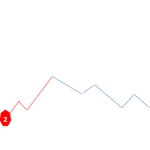
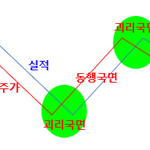
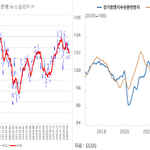
1번 하락장이 지나간 후 잠시 반등이 있었고 한국경기 하방전환이 확인된 이후부터 재차 하락하고 있는 2번 구간이다. 공포심과 회의감이 1번보다 크다. 그러나, 지금은 의미있는 단기반등을 따먹어야하는 구간이지 투매할 구간은 아니다.


HiMJ retweeted
China’s state-backed funds appear to be stepping back into the stock market as authorities seek to limit further losses:
The E Fund CSI 300 Index ETF, one of the so-called “national team’s” favorite blue-chip ETFs, attracted a record +18.8 billion yuan, or +$2.8 billion, on Thursday.
The inflows came as the CSI 300 was close to a -20% drop from its peak, before trimming losses late Thursday and rising on Friday for the first time this week.
Other ETFs frequently used to support equities, including the ChinaAMC STAR 50 ETF, also posted larger inflows, signaling a possible return of official market support for pressured technology stocks.
The intervention follows a similar effort in July, when state-linked investors, insurers and asset managers moved to shore up confidence after a tech-led selloff, with authorities also seeking to support Chinese AI companies’ access to capital.
China’s equities are on the verge of entering a bear market.

HiMJ retweeted

New blog!
The past two weeks kept me fully occupied, but as usual the material piled up across public notes, private thoughts, Discord, and my prep and review docs.
I pulled it together into one post: my current read on the market, how I'm positioned, and why ever since the massive short and followed bounce trade around the AI trade.
I'm also working on several posts in parallel, covering more frameworks and actionable processes (pyramiding among them) and answering the questions that came in through the Q&A series.
More very soon!
Let me know what you think and don't hesitate to share it around.
theshortbear.substack.com/p/…

미국채10년물이 큰손 매수리스트에 올라와있기 때문에 금리가 위로 슈팅하기 어렵고 단지 금리때문에 못갔었다고 생각되는 제약바이오주가 있다면 이 역시 매수리스트에 올라가게 되어, 현재 제약바이오업종의 가성비가 좋은편이다.

