

🧑💻 local AI with https://xitter.cf/t.co/pQKDykIf77 & https://xitter.cf/t.co/BkEFpRHrl4 🥷 get protected with https://xitter.cf/t.co/jtZvIltVOx
building on →
Joined June 2007
- Tweets1.5K
- Following379
- Followers21.7K
- Likes2.3K



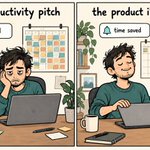




best prompt context ever for the new AI vibe coders

Every week someone tells me they vibe-coded their app over the weekend and don't need developers anymore.
Before it touches a paying customer, make sure it includes:
> a schema someone designed, instead of one the AI improvised table by table
> login that still works when someone puts a plus sign in their email
> password reset links that expire and work once
> MFA, plus a recovery path for the user who lost their phone
> sessions that time out, and a way to kill every session for one user
> SSO for the enterprise customer who won't sign without it
> SAML, because that customer's IT team doesn't do magic links
> SCIM, so a fired employee loses access the moment IT offboards them
> roles and permissions deeper than "admin" and "everyone else"
> checks that stop user A from reading user B's data by changing one number in the URL
> tenant isolation, so one customer's bug never shows another customer's records
> an admin "log in as this user" button for support, with an audit trail on every use
> rate limits on login, so nobody can guess passwords at scale
> lockouts that stop attackers without locking out your CFO the night before the board meeting
> database migrations that run forward and roll back
> migrations that don't lock the main table at 2pm on a Tuesday
> indexes, because the query that was instant on 50 test rows times out on 5 million real ones
> connection pooling, so a traffic spike doesn't exhaust the database
> backups every night
> a restore from those backups, tested, because a backup you've never restored is a hope
> point-in-time recovery for the day someone runs a delete without a where clause
> soft deletes, so "I deleted it by accident" is a support ticket and not an incident
> validation on the server, not just in the form
> timezones stored right, so the 9am reminder doesn't fire at 4am
> the customer with an apostrophe in their last name
> emoji, accents and right-to-left text in every field
> money stored as integers, because 0.1 + 0.2 doesn't equal 0.3 in floating point
> currency, rounding and tax rules for every country you sell into
> a data model that survives your second customer asking for "one small change"
> idempotency keys, so a retried payment doesn't charge the card twice
> deduplication for the user who clicks submit four times
> pagination that still works on page 400
> exports, because sooner or later every customer wants their data in a spreadsheet
> imports that survive the CSV someone saved in 2009
> retention rules, and code that deletes what your contract says you'll delete
> secrets out of the code, out of the repo and out of the AI chat history
> rotating every key the AI pasted into a config file last month
> confirming every package the AI installed exists and is the one you meant
> dependency scanning, because the AI pulled in libraries nobody reviewed
> input sanitization everywhere a user can type
> protection against SQL injection, XSS, CSRF and the rest of the OWASP list
> file uploads that get scanned, size-limited and stored where they can't execute
> CORS rules that aren't "allow everything"
> security headers on every response
> encryption at rest and in transit
> least-privilege access for everyone, including the AI agent holding production credentials
> logs that record who did what, without recording passwords, tokens or card numbers
> a penetration test before your enterprise customer's security team runs their own
> answers to the security questionnaire every enterprise buyer sends, with evidence behind each one
> a disclosure process for the day a stranger emails you a vulnerability
> a plan for the day a laptop with production access gets stolen
> SOC 2, which means policies, evidence and an auditor, not a checkbox
> HIPAA, the moment a single patient record touches your system
> a BAA with every vendor that touches that data, including your AI model provider
> audit trails that show who viewed a record, not just who changed it
> PCI scope, and card numbers kept out of your database
> GDPR deletion requests that reach every table, backup and log
> data residency for the customer whose contract says EU only
> quarterly access reviews someone signs off on
> dev, staging and production environments that match each other
> infrastructure written as code, so the setup lives somewhere other than one person's memory
> a deploy pipeline that runs the tests before anything reaches customers
> one-click rollbacks, because Friday deploys happen
> zero-downtime deploys, because your customers don't have maintenance windows
> feature flags, so you can ship the code without shipping the feature
> autoscaling for the Monday morning spike
> a CDN, so the app loads fast in Singapore too
> DNS, SSL certificates, and renewals that don't expire on a Sunday
> background job queues, so slow work doesn't freeze the page
> retries with backoff, so one flaky API call doesn't become a lost order
> a dead-letter queue for the jobs that fail every retry
> cron jobs that don't run twice the day you add a second server
> caching, and clearing that cache when the data changes
> SPF, DKIM and DMARC, so your password resets don't land in spam
> bounce and complaint handling on every transactional email
> storage rules, so you stop paying to keep 2021's temp files
> cost alerts, so a runaway agent loop shows up the same day and not on the invoice (we learned this one for $1,382.59)
> a disaster recovery plan, written down and tested once a year
> a second region, if your contract promises uptime one region can't deliver
> structured logs you can search at 3am
> error tracking that groups the same bug instead of sending you 4,000 emails
> uptime checks from outside your own network
> alerts that page a human, tuned until they stop paging for nothing
> dashboards for latency, error rate and throughput
> tracing for one slow request across every service it touches
> an on-call rotation, and a person who picks up
> runbooks, so the engineer on call knows what "queue depth critical" means
> postmortems that change something
> a status page customers check before they email you
> unit tests written by someone who knows what the logic should do
> integration tests for every third-party API you depend on
> end-to-end tests for signup, checkout and the other flows that make you money
> load testing before the launch email goes out
> test data that looks like production without being production data
> regression tests, so fixing bug 41 doesn't bring back bug 12
> testing on the five-year-old laptop your biggest customer's ops team still uses
> accessibility compliance, because the enterprise contract requires it
> subscriptions, upgrades, downgrades and proration
> failed-payment retries and dunning emails
> invoices with the customer's PO number on them, because procurement won't pay without it
> sales tax and VAT
> refunds, credits and partial refunds
> usage metering that matches what you bill, to the cent
> annual contracts with custom terms your billing logic never planned for
> revenue reports your finance team can reconcile
> webhooks that verify signatures
> webhooks that retry, with a log of every failed delivery
> a versioned API, so you can change it without breaking your customers' integrations
> API keys customers can create and revoke
> API rate limits that protect you without blocking real integrations
> a plan for the day a third-party API changes its response format without telling you
> OAuth token refresh, because tokens expire at the worst possible moment
> a sandbox where customers can test their integration
> protection against prompt injection in every field that reaches the model
> customer and patient data kept out of prompts that leave your network
> a model spend cap per customer, so one heavy user can't run up your bill
> evals, so you find out when a model update makes your answers worse
> a fallback for the afternoon your model provider goes down
> a migration plan for the day your model gets deprecated
> prompt and output logs for debugging, minus whatever you're not allowed to keep
> a human approval step for anything the AI does that can't be undone
> pages that load on hotel wifi
> empty states, loading states and error states on every screen
> error messages a customer can act on, instead of "something went wrong"
> forms that keep what people typed when one field fails validation
> emails that render in every mail client your customers use
> notifications people can turn off
> undo
> keyboard navigation and screen reader support
> translations, with dates and numbers formatted for each locale
> a back button that does what people expect
> code a human can read
> code review on every change
> a branching strategy, so two people can work without overwriting each other
> monthly dependency upgrades, so you're never two major versions behind
> framework upgrades before the old version stops getting security patches
> deleting the dead code the AI left behind from its first three attempts
> splitting up the 2,000-line file the AI kept appending to
> architecture decisions written down, with the reasons
> a README that gets a new engineer running locally in under an hour
> documentation for whoever inherits this
> an admin panel for your ops team
> support tooling, so customer success can answer questions without pinging engineering
> a changelog customers can read
> terms and a privacy policy that match what the code does
> every account, domain and repo in the company's name, not the name of whoever built the prototype
> a bus factor higher than one
Oh, and besides keeping all of this working every day, forever… your vibe-coded app will still need people who know what they're doing:
> reading every line the AI wrote before it ships (a senior engineer)
> designing the data model before your second customer breaks it (a backend engineer)
> explaining why the AI's fix for one bug created two new ones (a senior engineer, again)
> deploys, rollbacks, servers and the cloud bill (a DevOps engineer)
> answering the page at 3am when payments stop (whoever's on call)
> patching the framework the week a vulnerability goes public (security)
> walking an auditor through how patient data moves (security and compliance)
> testing what the AI says it tested (QA)
> running a migration on a live database without losing a row (a backend engineer)
> saying no to the feature that breaks three others (a tech lead)
> turning "works on my laptop" into "works for every customer at once" (an architect)
> debugging the code when the AI that wrote it can't (a senior engineer)
> remembering why it's built this way, a year from now (someone who was there)
…wishing them the best 🫡
A landing-page illustration has to share its budget with the page itself, so I like the standalone SVG default in @Teddarific's fork of @wheresryan22's Anatomy. WebGL makes sense when the interaction earns the extra runtime.

Introducing Anatomy-Asset, a fork off @wheresryan22's amazing Anatomy skill.
I tuned the skill towards creating assets. Here's an example landing page made with it.
npx skills add Teddarific/skills --skill anatomy-asset -g
The memory tests in @jmeistrich's benchmark run separately because screen recording can inflate GPU memory. I trust that comparison more than a blanket "native is faster" claim, though the results still depend on these particular apps and workloads.


Enroute acknowledges small pushes after a Raft majority persists them, before the S3 upload. That ordering matters more to me than the throughput headline, because it tells you what "success" means for the write.

We just built the most scalable Git server out there: 7,600+ concurrent pushes/s per repo at millisecond latency.
Powered by Raft and S3, designed like a modern database.
Today we're making it open source by releasing Enroute 0.3.0.
Read the write-up: enroute.sh/blog/everyone-is-…

Sharing the same actions between the UI and an agent makes sense to me, because it keeps validation in one place. The detail I'd watch is approval: Agent-Native leaves it off by default, so sensitive changes need an explicit needsApproval rule.

The provisional result state is the useful detail here, in my view. An agent UI should distinguish an early tool output from a finished call, because someone may act on that answer before the rest of the work arrives.

I just published Trace, a new component for agent activity. It's one abstraction for reasoning, tool calls, queues, chain of thought, subagents...etc
Also in this release: Code Block and AI Elements.
ui.shadcn.com/docs/changelog…
Making the TV you already own easier to use is an upgrade I'd like to see more often.

fiz reverse engineering na minha TV
usei o rea ( github.com/morluto/rea )
funcionalidades principais:
- troca de app/entrada
- volume
- controle remoto
- espelhar tela do mac
- tempo de tela
- controles gerais (brilho, constraste, etc)
The demo shows controls for volume, app favorites and a Chromecast input. Greco also corrected the 'reverse engineering' description: this uses pairing and the TV's local webOS API.
Ten agents at once is a queue-management problem in my view: someone still has to remember the intent, reconcile their changes and decide what's actually finished. A worker limit is a product feature, even when spawning another agent is cheap.

AI was supposed to make us work less
I've never been this tired in my life
most days I have up to 10 agents running at the same time. one fixing a bug, one writing pages, one refactoring something I already forgot I asked for, 3 other I have no idea what they are doing but i suppose i ask it?
and I jump from conversation to conversation all day
compared to 5 years ago, I probably context switch 100x more
by the end of the day my brain is fried. completely toasted. nothing left, not even for the people I love
I call it the fried brain effect
thought it was just me but almost every founder I talk to lately says the exact same thing
we got superpowers, and somehow the pressure only went up. if you can ship 10x more, you feel like you have to ship 10x more. every single day
I don't have a solution
honestly I have no idea where this goes from here
anyone else feeling this?
Earth's green glow in this April photo is an aurora, captured from Orion. To me, the thin atmosphere around it is a better argument for looking after our planet than another abstract debate.

ALT Earth seen from the Orion spacecraft on April 3, 2026. White clouds swirl above blue oceans and the brown African continent. A thin green aurora glows at the upper edge of the planet against black space. Credit: NASA/Reid Wiseman.


Finding one sentence in a recording shouldn't require listening to the whole thing again. That's a job for a search box.

I turned @googlegemma EmbeddingGemma 2, an embedding model, into a speech-to-text model, and it turned out to be one of the fastest STT models you can run on device.
On a base M3 MacBook Air it transcribes an hour of audio in about 13 seconds: 288× real time.
The idea came in March with Gemini Embedding 2. It puts text, images, audio and video into one shared space, so a spoken word lands right next to the written word. If that's true, you should be able to read a transcript straight out of the embedding model. I couldnt tried it then, but last week EmbeddingGemma 2 came out as an open model, so I tried it.
The next step I'd want is a search result that takes me back to the right moment. If I remember a phrase from a meeting, I should be able to find the words and hear what was said around them.
Freddy's approach is the kind of AI use I find convincing: helping someone get more out of a phone they already own. A slow device shouldn't automatically become an excuse to sell its owner another one.

Yo tengo un Android barato que es ridículamente lento y tiene 4GB de RAM y un chip ahí más o menos.
Lo conecté a la Mac y mandé a Codex a hacer la tarea:
- Activé el Developer Options y el debug por USB
- Instalé Android Debug Bridge (ADB) usando Homebrew
- Respalde las apps y tal
- Deshabilité todo el bloatware, como 60 mierdas
- Instalé Fossify Launcher, que es más lite.
- Reduje las animaciones de Android a 0.5×
- Corrí el "Android’s ART speed-profile optimization"
- Reset y vámonos.
No tuve que rutear. No ROM personalizado y funciona bastante mejor.