






Hetzer 🇮🇱 retweeted

अब जाकर बांग्लादेश के दंपति की मौत की सजा के मामले पर पूरी घटनाक्रम सऊदी अरब ने सामने रखा है
बांग्लादेश का एक दंपति जो पति-पत्नी थे वह उमरा करने सऊदी अरब गए
मक्का की एक मस्जिद में उन्होंने नमाज अदा किया और भाव विभोर होकर एक दूसरे से गले लग गए और एक दूसरे को kiss कर लिया
और यह सब करते हुए उनकी आंखों में आंसू थे जाहिर सी बात है कि उनका एक सपना पूरा हुआ था कि वह उमरा पर आए हैं तो यह उन्होंने किसी अश्लीलता की वजह से नहीं किया था बल्कि भाव विभोर होकर किया था
और एक पाकिस्तानी ने उनका वीडियो बनाकर वायरल कर दिया और उनका सर कलम हो गया
Hetzer 🇮🇱 retweeted

Four of the biggest names in American science ended this man's career over sexual misconduct claims from a woman he used to date. A jury just ruled those claims defamatory and awarded him $6 million, and not one of those four institutions has to pay a cent of it.
The guy is David Sabatini. He discovered mTOR, a protein that controls how cells grow, and for years people in biology talked about him as a future Nobel winner. He ran a 39-person lab at MIT's Whitehead Institute with Howard Hughes money behind it.
In 2018 he started seeing Kristin Knouse, a younger scientist at the institute. He says it was consensual. About five months in, Whitehead changed its rules so lab heads couldn't date anyone who worked there, even people at their own level.
The relationship ended, and in 2021 complaints about him reached the institute, including from Knouse. Whitehead hired an outside law firm to investigate. Knouse told the investigators the relationship had been coercive, and the firm concluded he'd broken the sexual harassment policy.
That report cost him everything. Whitehead pushed him out in August 2021, and Howard Hughes dropped him that same week. MIT moved to strip his tenure, so he resigned in 2022. When word got around that NYU might hire him, about 200 people at its medical school walked out, and the job never happened. He ended up running a lab in the Czech Republic, paid for by Bill Ackman and an anonymous donor.
Whitehead needed about seven months to go from the first complaint to his exit. Getting his side in front of a jury took Sabatini five years, and when it finally happened, seven women and six men sat through three weeks of testimony and ruled for him.
So who pays? Whitehead got itself out of the lawsuit before trial. MIT, Howard Hughes and NYU were never on trial at all. The whole $6 million, plus interest, falls on Knouse, who still teaches biology at MIT.
Think about how that setup works for the institution. Whitehead got to move fast, act on its own investigators' conclusion, and still walk out of the case before a jury ever weighed in. The one person left standing in court was the employee who talked.
Knouse is appealing, and her lawyer says several women testified about his behavior. The jury heard all of them. Sabatini is appealing too, on the ruling that let Whitehead out of the case.
That's the appeal that matters for everybody else. If he loses it, every university watching learns it can end a career on a report and never carry any of the risk.

Former MIT scientist wins $6M defamation verdict against colleague who accused him of sexual misconduct trib.al/q1cVlXE





Hetzer 🇮🇱 retweeted

U twijfelt eraan of deze rellen in Frankrijk goed gecoördineerd zijn? Dan mag u mij uitleggen waarom er op magische wijze pallets met flessen verschijnen op straat? 17 oktober stond al wekenlang op de agenda, en niet om te protesteren tegen de kwaliteit van het onderwijs.
Hetzer 🇮🇱 retweeted

Bývalý muslim, který vyrůstal v islámské zemi, tvrdí, že se ve školách již od útlého věku učí o takzvaném „migračním džihádu“.
Podle něj jde o plán, který je v současnosti realizován ve Spojeném království i v celém západním světě. Cílem je vyslat muslimy do našich zemí v rámci „migračního džihádu“ a ovládnout nás; tento plán je v chodu již od doby, kdy byli tito lidé ještě malými
„Migrační džihád je klíčovým učením islámu. Je to základ, na kterém islám stojí.“
„Vše začalo, když Muhammad přesídlil z Mekky do Medíny (dříve zvané Yathrib). Jeho raní stoupenci, kteří do Medíny přišli, vystupovali jako uprchlíci – chudí a neškodní běženci – a uzavřeli spojenectví s místními obyvateli, konkrétně s některými tamními kmeny. Netrvalo dlouho, ani ne pět let, a převzali moc. Ovládli území, vyvraždili mnohé z těchto kmenů a lidi oklamali."
Uvádí, že právě toto se ve škole učili jakožto cestu k ovládnutí světa. Podle něj bylo součástí plánu vytvořit nový termín „islamofobie“ – který dříve neexistoval – aby se tak vyhnuli kritice a mohli prosadit své globální ovládnutí.

Voormalige moslim die opgroeide in een islamitisch land zegt dat ze allemaal al op heel jonge leeftijd op school worden onderwezen over “migratie-djihad”
Hij zegt dat dit het plan is dat op dit moment wordt uitgevoerd in het VK en overal in het Westen. Om moslims naar onze landen te sturen als “migratie-djihad” om ons over te nemen, dit is een plan dat al in beweging is gezet sinds ze allemaal kleine kinderen waren
“Ze staan migratie-djihad toe. Ik zeg het ronduit omdat dat is wat ik heb geleerd op te groeien met andere kinderen op school. Migratie-djihad is precies wat ze toestaan”
“Migratie-djihad is de essentiële leer van de islam. Het is waar de islam op is gebouwd”
“Het is toen Mohammed migreerde van Mekka naar Medina, voorheen Yathrib genoemd, en zijn vroege volgelingen, die naar Medina trokken, zich gedroegen als vluchtelingen, arme vluchtelingen die onschadelijk waren, en bondgenootschappen sloten met sommige mensen in de regio, sommige stammen daar. En kort daarna, binnen de eerste 5 jaar, namen ze over. Ze namen over en ze doodden veel van de stammen en ze bedrogen mensen. Ze bedrogen hen op beschavingsniveau”
Hij zegt dat dit is wat ze op school leerden als de weg naar een wereldwijde overname. Hij zegt dat het plan was om deze nieuwe term “islamofobie” te creëren die nog nooit eerder had bestaan om kritiek te vermijden en de wereldwijde overname door te drukken
Als iemand het zou weten, is het deze man wel, deze mans naam is AJ
- Geboren en getogen in een moslimmeerderheidsland waar Arabisch wordt gesproken
- Verliet de islam aan het einde van zijn tienerjaren
- Daarna werd hij geconfronteerd met zware vervolging, waaronder een militiesaanval op zijn appartement, ontvoering, gevangenschap, marteling en beschuldigingen van werken voor buitenlandse inlichtingendiensten
- Hij beschreef dat hij na het verlaten van de islam werd behandeld als een “christelijke slaaf”
Hetzer 🇮🇱 retweeted
Historie francouzského úpadku. "Po válce byla Francie jako dobře promazaný stroj. Říkali jsme tomu „Trente Glorieuses“ – třicet slavných let. Postavili jsme Concorde, během zhruba patnácti let jsme vybudovali síť jaderných reaktorů a zajistili si tak jednu z nejčistších a nejlevnějších forem elektřiny na světě. Vyvinuli jsme raketu Ariane a vynesli Evropu do vesmíru. Postavili jsme TGV, nejrychlejší vlak na světě. Vynalezli jsme Minitel – online síť, která fungovala v milionech domácností ještě předtím, než většina z vás vůbec slyšela o internetu. Nebyli jsme muzeum. Byli jsme stavitelé.
Pak přišel rok 1981 a s ním François Mitterrand. Představte si ho jako našeho Bernieho Sanderse – s tím rozdílem, že on skutečně vyhrál. Vládl společně s komunistickými ministry. V roce 1982 znárodnili desítky bank a největší průmyslové skupiny v zemi: Paribas, Suez, Saint-Gobain, Thomson, Pechiney a Rhône-Poulenc. Snížili věk odchodu do důchodu na 60 let. Zkrátili pracovní týden na 39 hodin a přidali pátý týden placené dovolené. Zavedli daň z bohatství. A masivně nabírali nové zaměstnance do veřejného sektoru.
Realita na sebe nenechala dlouho čekat – už za necelé dva roky přišel tvrdý náraz. Kapitál začal prchat, inflace se vymkla kontrole a frank byl třikrát devalvován. V březnu 1983 musel Mitterrand prudce šlápnout na brzdu a zavést úsporná opatření, jen aby Francie mohla zůstat součástí evropského měnového systému.
Háček je však v tom, že brzdy nic nevrátily zpět. Pouze zpomalily další posun tím špatným směrem. Když se k moci vrátila takzvaná pravice v čele s Jacquesem Chiracem, nezměnilo se vůbec nic. Za prezidentství Jacquese Chiraca zavedla Francie pětatřicetihodinový pracovní týden. Ať už vládla levice nebo pravice, každá vláda přidala další program, další pravidlo, další daň – a nikdo nikdy nic nezrušil.
Politická elita se zároveň dopustila něčeho ještě zhoubnějšího než jen špatné hospodářské politiky: proměnila mládež v politický nástroj. Místo aby mladé lidi – včetně milionů dětí přistěhovalců – učila lásce k zemi, v níž žijí, předkládala jim příběh o vině a křivdách. Francie v něm vystupuje jako utlačovatel, jako něco, k čemu je třeba chovat zášť. Nelze integrovat lidi do země, o které jste je přesvědčili, že jí mají opovrhovat. Dnes sklízíme plody tohoto narativu – ve školách, na předměstích i v ulicích našich měst.
Následovalo čtyřicet let pozvolného úpadku, který trvá až do éry Emmanuela Macrona.
A nyní číslo, které by vám nemělo dát spát. V roce 1995 činil HDP na obyvatele ve Francii přibližně 27 000 dolarů, v Americe asi 29 000 dolarů. Byli jsme na tom prakticky stejně. Dnes je to ve Francii zhruba 49 000 dolarů, zatímco v Americe přibližně 90 000 dolarů. V přepočtu na hlavu jste tedy nyní téměř dvakrát bohatší než my.
Co se změnilo? Ne snad naše nadání, naši inženýři či naše matematické školy. Jediné, co se změnilo, je to, že jsme vsadili všechno na jednu kartu: na socialismus. 35hodinový pracovní týden, nekonečné regulace, daně, které vyhánějí každého, kdo něco buduje; přesvědčení, že stát by měl dělat všechno a jednotlivec by si měl o všechno říkat o povolení.
Existuje výrok, který lidé rádi připisují Einsteinovi: šílenství je dělat stále dokola totéž a očekávat jiné výsledky. My jsme to zkoušeli. Čtyřicet let jsme to zkoušeli. Každá vláda slibovala, že ještě jeden program, ještě jedna daň, ještě jedna regulace konečně všechno napraví. Právě jste viděli, kam nás to dovedlo."

My dear American friends, in my last post I gave you a snapshot of where France stands today. Now let me show you how we got here. I want you to see the whole movie before you buy the ticket.
After the war, France was a machine. We called it the Trente Glorieuses, thirty glorious years. We built Concorde, the most beautiful aircraft ever made. We built a fleet of nuclear reactors in about fifteen years and gave ourselves some of the cleanest, cheapest electricity in the world. We built Ariane and put Europe in space. We built the TGV, the fastest train on earth. We invented the Minitel, an online network in millions of homes before most of you had heard of the internet. We were not a museum. We were builders.
Then came 1981. François Mitterrand. Think of him as our Bernie Sanders, except he actually won. At his side, in the office next to his at the Élysée, sat a 37-year-old prodigy named Jacques Attali, his special adviser for the next ten years. The brightest minds of the left, convinced they could run an economy from a ministry.
Here's what they did. They governed with Communist ministers. In 1982 they nationalized dozens of banks and the biggest industrial groups in the country: Paribas, Suez, Saint-Gobain, Thomson, Pechiney, Rhône-Poulenc. They lowered the retirement age to 60. They cut the work week to 39 hours and added a fifth week of paid vacation. They created a wealth tax. They hired massively into the public sector.
Reality hit in less than two years. Capital fled, inflation ran wild, and the franc was devalued three times. In March 1983 Mitterrand had to slam on the brakes and impose austerity just to stay in the European monetary system.
But here's the trick: the brakes never reversed anything. They just slowed the ratchet. The so-called right came back with Jacques Chirac, and nothing was undone. Under Chirac's presidency, France passed the 35-hour work week. Left or right, every government added one more program, one more rule, one more tax, and nobody ever took one away.
At the same time, the political class did something even more destructive than bad economics. It turned the youth into a political instrument. Instead of teaching young people, including millions of children of immigrants, to love the country they lived in, it taught them a story of guilt and grievance: France as the oppressor, France as the thing to resent. You cannot integrate people into a country you've taught them to despise. We are living with the consequences of that narrative today, in our schools, our suburbs, our streets.
Then forty years of slow decline, all the way to Macron. And the story has a perfect ending. In 2007, Jacques Attali chaired a commission on how to unleash French growth. Its deputy rapporteur was a young civil servant named Emmanuel Macron. The commission proposed more than 300 reforms to free the economy. Almost none were ever implemented. Even the men who built the system knew it wasn't working, and even they couldn't undo it.
No balanced budget since 1974. Public spending around 57% of GDP. Debt above 3,300 billion euros. Growth stuck under 1%.
Now the number that should keep you up at night. In 1995, GDP per person in France was about $27,000. In America, about $29,000. We were neck and neck. Today France is around $49,000. America is around $90,000. You are now nearly twice as rich per person as we are.
What changed? Not our talent. Not our engineers. Not our schools of mathematics. The only thing that changed is that we went all in on socialism. The 35 hours, the endless regulation, the taxes that chase out anyone who builds, the belief that the state should do everything and the individual should ask permission for everything.
There's a line people love to attribute to Einstein: insanity is doing the same thing over and over and expecting different results. We tried. For forty years, we tried. Every government promised that one more program, one more tax, one more regulation would finally fix things. You just saw where it got us.
So if you choose the Democratic Party, which is literally turning socialist in front of your eyes, you will deserve what comes next.
Let me tell you exactly what will happen if you go down that road. Nobody will vote for decline. Every single measure will sound generous, compassionate, reasonable. Your builders will slowly leave or stop building. Your state will grow every year and never shrink. Your debt will compound. And in thirty years, your kids will look at a chart like the one I just described and wonder when it all went wrong.
You still have something we lost. You have Elon Musk sending rockets to orbit and landing them on their tail. You have Palmer Luckey building the defense industry of the future. You have Jeff Bezos, Jensen Huang, and thousands of founders nobody has heard of yet, building in garages right now.
Trust your entrepreneurs. Don't trust your politicians.
I come from your future. Don't make it yours.

Hetzer 🇮🇱 retweeted

Never forget: Ilhan Omar’s family didn’t flee Somalia as the oppressed. They fled because her father, Nur Omar Mohamed, was a senior colonel in the Somali National Army of the genocidal communist dictator Mohamed Siad Barre, the regime that systematically slaughtered up to 200,000 people, mostly Isaaq civilians, in one of the worst genocides in modern African history.
Her father wasn’t some low-level nobody or a teacher who just happened to be around. He was an esteemed senior officer who commanded a regiment, trained in the Soviet Union, and stayed in the military hierarchy of that brutal Marxist-Leninist dictatorship for years.
When the regime finally collapsed under the weight of its own mass murder, famine, and civil war in 1991, the family ran, not as victims of the dictatorship, but as people tied to the apparatus that had just spent years bombing cities, executing civilians, and turning northern Somalia into a killing field.
Now this same family is in the US, where Omar stands up and lectures Americans about justice, accountability, morality, and “genocide.” The hypocrisy is sickening. A daughter of a colonel from the regime that carried out the Isaaq genocide has the gall to moralize to the country that took her in after her father’s side lost power.
Her father came to the U.S. as a “refugee,” just like Yusuf Abdi Ali, who was accused of war crimes and later found liable for torture in a U.S. civil court. Yet, as far as publicly available information shows, her father never faced comparable scrutiny or accountability. Consider this: Ali was deported from the US only two years ago, after a survivor pursued justice through the courts. It took a survivor’s determination to bring his abuses before a judge and jury.
That’s the record.
Hetzer 🇮🇱 retweeted

Eight years after Denmark merged 239 councils into 66, places that lost their town hall had 26% fewer children and 35% lower house prices.
In 2027 Denmark folded 271 municipalities into 98, merging 239 of them into 66 larger ones. The basic idea (which makes every finance ministry happy), is that bigger councils spread fixed costs over more people, they cut duplicated jobs and deliver the same services via economies of scale. Earlier Danish research backed that up, finding administrative costs per head fell after the mergers.
But each new municipality kept only one town hall. Every other former council lost its administrative heart, and a bunch of economists wanted to know what happened to the places left behind.
They used Danish registry data covering every resident and every firm from 1996 to 2015, mapped onto 8,530 small neighbourhoods of at least 150 households each. They then compared the 2,187 neighbourhoods whose municipality lost its town hall with neighbourhoods in municipalities the reform left untouched. Because the untouched ones skew urban (Copenhagen, Aarhus, Odense), the authors built a weighted blend of them that tracked the losing areas closely before 2007, so the comparison is like for like.
The first domino is obvious. Neighbourhoods that lost their town hall shed about three full-time admin staff each, roughly a third of what they had, and the drop never reversed.
Then the losses spread to services nobody had voted to cut. School staffing fell by 17% on average across the nine years after the reform, and public-sector jobs overall by 21%. Private-sector jobs followed, down 16%, as the local economy lost the steady trade that a council and its staff bring.
People responded the way you'd expect. Each affected neighbourhood lost about three more working-age residents than it gained every year, around 0.7% of its population. The number of children fell 13%, which tells you young families were among the first to go. Those who stayed travelled 10% further to work, and their wages rose by just 1%, barely compensating for the extra time on the road. House prices fell 15% on average.
By 2015 the gap had widened. Against comparable untouched areas, public employment was down 38%, school staffing 36%, private jobs 24%, children 26% and house prices 35%.
The results hold when the comparison group changes. Comparing losing municipalities with neighbours that kept their town hall, or with the second-largest partner in the same merger, still shows clear damage, and so does using the number of council seats to predict which places lost out.
The geography is uneven tho. Neighbourhoods near Denmark's four biggest cities saw residents drift into those cities. Further out, people moved to whichever town had kept the town hall, and those winners added public-sector jobs. So a reform meant partly to slow urbanisation ended up feeding big cities in some places and building up regional hubs in others.
link to full article: doi.org/10.1093/jeg/lbaf038

Hetzer 🇮🇱 retweeted

Your body is hunting equipment from the skull to the heel, and you have been using it to carry shopping.
Your brain burns a fifth of your energy sitting still. Nothing that expensive gets built on leaves. It was paid for in meat and fat, and it was built to plan a kill.
Your eyes face forward, like every animal that chases and unlike every animal that gets chased.
The whites of them are on show so the hunter beside you can follow your gaze without a word being said.
You have two to four million sweat glands and no fur. You are the best-cooled animal on land.
An antelope cannot pant and gallop at once. You can sweat and jog all afternoon.
You have a ligament running up the back of your neck whose only job is to hold your head steady at a run. No ape has it.
Your shoulder throws at ninety miles an hour. A chimp, far stronger pound for pound, manages twenty.
Your backside is the largest muscle you own, and it hardly switches on until you break into a run.
Your Achilles tendon is a long spring that hands back energy on every stride. A chimp barely has one.
In the Kalahari, men still run a kudu to a standstill in the midday heat. It takes a few hours and the kudu loses.
In mid Wales every June, people race horses over twenty-two miles of hill. People have won it three times.
A brain to plan it, eyes to aim it, a cooling system, a throwing arm and a spring in each heel.
Nobody has ever needed any of that to creep up on a blackberry.


Hetzer 🇮🇱 retweeted

Holly Leeann Flores, 37, has been arrested in Northlake, Texas, after repeatedly stabbing her two young children in the chest and attacking her husband, Justin Hommel, 34, with a kitchen knife in their family home around 4:20 a.m., under the claim that she was suffering from postpartum depression.
Hommel had grown concerned about his wife's behavior after discovering her lighting candles in the children's bedroom with a kitchen knife nearby, prompting him to consider sleeping on the couch to remain close to them. Hours later, he woke to his children screaming and was stabbed in the head while trying to reach them.

Hetzer 🇮🇱 retweeted
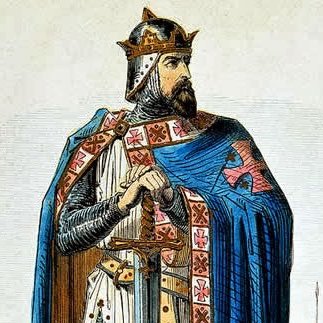
The anniversary of Columbus' discovery is a good day to review the hatchet-job that caused the Admiral's reputation to fall so far in recent decades.
From the opening paragraph of the mega best-seller A People's History of the United States (published 1980), the communist Howard Zinn lies about the great man. Zinn weaponized ellipses and inserted them into passages from Columbus' journal, warping the meaning beyond recognition and making the words maximally sinister:
“They have no iron. Their spears are made out of cane. . . . They would make fine servants. . . . With fifty men we could subjugate them all and make them do whatever we want.”
This, again, is from the opening of a book that sold 4M copies.
If you look at the actual entries, Zinn's methods become laughable. The part about making "fine servants" suggests that Columbus' first thought on seeing them. It wasn't. The comment was Columbus' attempt to make sense of the wounds he saw. Zinn of course leaves the context out:
“I saw some who bore marks of wounds on their bodies, and I made signs to them to ask how this came about, and they indicated to me that people came from other islands, which are near, and wished to capture them, and they defended themselves. And I believed and still believe that they come here from the mainland to take them for slaves.”
Similarly, the part about "fifty men" does not come from that same journal entry, nor even the same day. The entries are two days apart. To repeat: two days apart! But Zinn quotes it like it was one train of thought.
Columbus was more interested in linking up with the Great Khan to fight against Islam and was intent on treating these natives kindly.
The point of Zinn's exercise is turn Americans against Columbus and against their own country. And he succeeded. The book shaped the thought of countless history teachers across America. Zinn was a communist and this is what communists do. Understand what you're up against.
But thankfully the Admiral of the Ocean Sea's reputation is on the rise again. "In this house, Columbus is a hero, end of story." Happy Columbus Day to all patriots.
Art: The Inspiration of Christopher Columbus
by José María Obregón, 1856

Hetzer 🇮🇱 retweeted

Moc dobrý komentář k imigraci jako nástroji k řešení ekonomických problémů.
Mé oblíbené části:
"Lidé se ukájí iluzí, že bychom dopady nízké porodnosti mohli vyřešit imigrací, ale to je fantazie. Ve skutečnosti je totiž velmi obtížné stárnutí populace imigrací zvrátit nebo i jen zmírnit, a vyžadovalo by to daleko větší imiigrační toky, než jakých lze reálně dosáhnout – i kdyby to snad bylo žádoucí.
Mějme na paměti, že bychom neměli předpokládat, že i ten skromný vliv, který imigrace podle tohoto výpočtu má na poměr závislosti seniorů (old-age support ratio), se skutečně přetaví v podobný pozitivní dopad na HDP na obyvatele nebo veřejné finance. Je to proto, že výsledky neprovinciálních/nezápadních imigrantů na trhu práce v Evropě jsou poměrně špatné a jejich čistý fiskální přínos je záporný.
...
Například v případě Francie studie Chojnicki & Ragot (2016) zjišťuje, že imigrace by do roku 2060 zvýšila HDP na obyvatele o 1,7 % a snížila potřebu financování sociální ochrany o přibližně 1 procentní bod HDP. A to i přesto, že ve svém modelu předpokládají, že potomci imigrantů mají stejný socioekonomický profil jako ostatní rodilí obyvatelé, zatímco ve skutečnosti jsou jejich výsledky na trhu práce podle všech možných měřítek výrazně horší.
...
Jediným důvodem, proč lidé očekávají, že omezení nízkokvalifikované imigrace by vedlo k hospodářské zkáze, jsou ekonomické sofismata. Neustále například slyšíte, že nebýt nízkokvalifikovaných imigrantů, nebyl by nikdo, kdo by pracoval jako kuchaři, popeláři, uklízeči atd., protože rodilí obyvatelé tuto práci dělat nechtějí. Ale jak poznamenává JFV v reakci na některé odpovědi, to je prostě nesmysl. Nebýt nízkokvalifikovaných imigrantů, mzdy v těchto profesích by vzrostly, aby přilákaly více pracovníků, a firmy by investovaly do vybavení, aby zvýšily jejich produktivitu – ale tyto práce by se dělaly i nadále.
...
Naopak negativní dopady na společnost jsou zdokumentovány velmi dobře. Zejména tito imigranti a jejich děti mají velmi vysokou míru kriminality, což má obrovský nepříznivý dopad na kvalitu života rodilých obyvatel a nutí je to k nejrůznějším nákladným vyhýbavým strategiím. Pokud ale posloucháte různé intelektuálské analytiky, měli by být za imigraci vlastně vděční – a to kvůli imaginárním ekonomickým efektům, které by pro ně byly z velké části neviditelné, i kdyby imaginární nebyly.
...
Jednou jsem se bavil s pár přáteli – oba jsou levicově orientovaní a ani za nic by nevolili Le Penovou. Ti mi zcela věcně vysvětlovali, že je jim líto, že jsou jejich děti blonďaté, protože je ve škole budou šikanovat děti imigrantů. (Úžasné bylo, že se mě v tom samém rozhovoru, možná o 10 minut později, zeptali, proč jsem tak zásadně proti imigraci!)

I did a similar exercise for several West European countries, but prospective instead of retrospective (this is based on slightly revised work I did for @Hexagone_org a few months ago), which finds essentially the same thing across the sample.
Basically what I'm doing is project the population of each country in a scenario where the net migration rate of foreign-born people is assumed to stay constant at the average of the past 15 years and compare how much this affects the old-age support ratio, defined as the number of 15-64 people for each person 65 or above, relative to a scenario where the net migration rate of foreign-born people is assumed to be zero.
What I find is that, in every country, immigration has only a pretty modest impact on the old-age support ratio by 2050 even though in a large country like France or Spain it makes the population several million people larger. By varying the net migration rate used in the projection, I show that, for immigration to have a large impact on the old-age support ratio, the net migration rate has to be very high, much higher than what is sustainable whether politically or otherwise.
This is all the more true that, as the last chart shows, the net migration rate I have used for the projections in the baseline scenario is actually pretty high by recent historical standards because it was calculated using data from years that include the refugee crisis of the mid-2010s and the post-invasion flow of Ukrainian refugees. It's doubtful that even this level will actually be maintained in the next few decades when you look at the state of public opinion on immigration in Europe at the moment.
People have deluded themselves with the notion that we could address the effects of low-fertility with immigration, but that's a fantasy, because it's actually very difficult to reverse or even just mitigate aging with immigration and would require much larger immigration flows than what could realistically be achieved even if that were desirable.
Note that we shouldn't assume that even the modest effect immigration this exercise finds will have on the old-age support ratio will actually translate into a similar positive effect on GDP per capita or public finances. That's because the labor market outcomes of non-Western immigrants in Europe are pretty bad and their net fiscal contribution is negative.
Now, I know people will say that you have to look at the general equilibrium effect of immigration on GDP per capita and public finances, but when you look at papers that actually use a general equilibrium model to estimate the impact of immigration, there is no reason to think that general equilibrium effects will make up for the negative direct effects and indeed every reason to think they won't.
For instance, in the case of France, Chojnicki & Ragot (2016) finds that immigration would make GDP per capital 1.7% higher by 2060 and reduce the financing needs for social protection by about 1 percentage point of GDP. This is despite the fact that, in their model, they assume that descendants of immigrants have the same socio-economic profile as other natives, when in fact their labor market outcomes are much worse by every possible measure.
Some studies find a larger positive effect, but others find a negative effect. In general, when studies distinguish between the impact of Western and non-Western immigrants, they find that the effect of the latter is actually negative. Whether negative or positive, the effect is rarely very large, which ultimately is explained by the fact that, as we have seen above, the effect of immigration on the old-age support ratio is pretty modest at current levels.
The only reason why people expect that cutting low-skill immigration would lead to economic ruin is because of economic sophistry. For instance, you constantly hear that, were it not for low-skill immigrants, there wouldn't be anyone to work as cooks, garbage collectors, janitors, etc. because natives don't want to do this kind of work, but as JFV notes in response to some of the replies that's just nonsense. Were it not for low-skill immigrants, wages in those occupations would rise to attract more workers and companies would invest in equipment to increase their productivity, but those jobs would still get done.
Of course, this doesn't mean it wouldn't have a cost (prices would probably rise somewhat and the capital used to automate jobs that rely on low-skill labor will not be used elsewhere where it would have been more productive if the supply of low-skill labor had been higher), but market economies are very flexible and that's why the general equilibrium effects aren't as large as people assumed based on this kind of economic sophistry.
To be clear, I don't think we should take very seriously the results of a general equilibrium model about how immigration will affect GDP per capita or public finances several decades from now, but this only highlights the fact that the strong claims people make about the alleged positive economic impact of immigration in Europe are largely evidence-free. At least that's the case if we're talking about low-skill immigration from Africa and the Middle East, but let's be real, that's the immigration people in Europe are really complaining about.
The negative effects on society, on the other hand, are very well-established. In particular, those immigrants and their children have very high crime rates, which has a huge adverse impact on the quality of life of natives and force them to engage in all kinds of costly avoidance strategies. But if you listen to the sophisticates, they should actually be thankful for immigration, on account of imaginary economic effects that would be largely invisible to them even if they were not imaginary 🙃
Well, it turns out that, shockingly, they are not. This is the main reason why anti-immigration populist parties are rising everywhere in Europe, which in turn has adverse effects on policy that would probably dwarf the positive effects ascribed to immigration even if they were real, which they are not. Nevertheless, we continue to pretend that immigration is great and that the only problem is that people are racist, because it's basically a religion at this point.
I once had a conversation with a couple of friends, both of whom are leftists and would never in a million years vote for Le Pen, who explained to me in a very matter-of-fact way that they were sorry their kids were blond because they were going to get bullied by children of immigrants at school by children of immigrants. (Amazingly, in the same conversation, maybe 10 minutes later, they asked me why I was so opposed to immigration!) They were right, by the way: their kids *will* get bullied by children of immigrants at school. Like what are we even doing here?
Immigration in Europe has been a total failure and, the longer it takes us to accept that and get our shit together, the worse it will be. The only reason why this obvious fact isn't widely accepted and considered banal is cowardice. Not because everyone who disagrees is a coward, many of them are just clueless, but because if people who know better weren’t cowards the others wouldn’t be clueless.


Hetzer 🇮🇱 retweeted

Grifters will tell you wind is green. They forget to tell you about the 100–200 tons of steel rebar, 600–800 m³ of concrete buried forever, rare-earth magnets from toxic processing, and fibreglass composite blades that mostly end up in landfills.
Net Zero is a scam

Hetzer 🇮🇱 retweeted

Art Deco didn't die from being exhausted, it got blacklisted.
Its three main phases - Zigzag, PWA / Stripped Classical, & Streamline - weren't exactly sequential, they overlapped all throughout the 30s. But what happened after 1929 wasn't just that zig zag Deco became too expensive, it was evolving from the 'Return to Order' (WW1) beginnings towards a more robust machine age adapted classicism.
Earlier funding collapsed from private elites to the state, and a more civic form emerged - Stripped Classical/Classical Moderne. It was transatlantic, global. The American WPA, PWA, democracies and authoritarian regimes across the West all embraced it because the goal was the same: instill optimism, civic-mindedness, and resilience. Put your skilled artists & artisans to work.
It was seen as worthy recieving state funding for its public face - blending both classical & modern, a forward facing embrace between design, industry & craft.
That more colorful zig zag form was made logistically difficult to revive after 29, then that difficulty was made permanent. Deco needed a 50-year Beaux-Arts ecosystem - terracotta kilns like Gladding McBean and Atlantic Terra Cotta, plasterers, metal foundries, carvers, mosaicists - & that ecosystem took two hits.
The 29 crash bankrupted the firms & dissolved the apprenticeship pipeline, then the war shifted what was left to war industries. By 1948 a fully crafted lobby was hard to build like 1926 even if you wanted to.
Hard isnt impossible. With a regular cycle craft revives with demand, but revival was blocked.
Tax codes, FAR, federal budgets, and curtain-wall specs all rewarded flat, uncrafted surfaces, so there wasnt much incentive to maintain the ateliers.
The firmest lockout was ideological. To make High Modernism the post-war approved standard, its promoters had to discredit what came before.
Politically, Stripped Classicism was rebranded as "fascistic" because Hitler, Mussolini and Stalin had used identical forms. Culturally Deco, especially Streamline, was the 1930s World's Fair spirit: mass-produced household objects made beautiful, futuristic, optimistic, commercial & everyday.
High Modernism was austere, 'European' & highbrow, it treated that populist optimism as kitsch. That created a self-fulfilling loop: disincentivize the decorative, let craft firms die, then accuse dead craft as proof decorative design is infeasible.
Hence the narrative that Deco simply "fell from public taste" is fake.
It was slowed by the war, logistically hollowed out by '48, then ideologically blacklisted afterwards - making way for [indirect] tacit state support through modernist capture this time with the opposite design ethos: (mid century)"modernism".
The people never chose the glass modernist box over Deco. The people were simply never asked.


