

An online journal that publishes articles on medical humanities, history, art, ethics, and education.
Chicago, IL, US
Joined January 2011
- Tweets22.8K
- Following4K
- Followers14.1K
- Likes19K







In defiance of a Congressional ban against inoculation, General George Washington issued an order on February 5, 1777 to inoculate the entire Continental Army against smallpox. The first mass inoculation in military history, Washington’s order saved the army from destruction and the Revolution from collapse, but also thousands of civilian deaths. bit.ly/3UuX181

The story of curing Tobit’s blindness with fish bile may be less miraculous and more consistent with contemporary medical practice. Some attribute Tobit’s infection and blindness to a form of conjunctivitis, Chlamydia trachomatis, prevalent in the Middle East in both ancient and recent times. Despite the irritating factors of bile (or perhaps because of it, in homeopathic terms), it remained a treatment for bacterial trachoma in the eye for over two thousand years. bit.ly/3VE6U3z

George Washington, at age 51, found his vision failing. He called on David Rittenhouse: “I have sent Mr. Rittenhouse the Glass of such Spectacles as Suit my Eyes, that he may know how to grind his Christals.” Rittenhouse (1732-1796), who built the first telescope in America and was the first director of the US Mint, sent Washington 2 pairs of spectacles, for which Washington thanked him: “The Spectacles suit my eyes extremely well.” bit.ly/4zuMNnc. #GeorgeWashington.

Dr. Jules Bernard Luys (1828–1897), a prominent neurologist and proponent of hypnosis, argued that hysterical symptoms reflected disturbances in cerebral and subcortical centers, subject to identifiable biological laws. Hypnosis, in his view, provided an experimental tool through which hysterical symptoms could be induced, modified, or intensified, offering insight into their underlying mechanisms. bit.ly/3TDNf37.

Gaetano Donizetti caught the Great Pox as student in Bologna. The first symptoms of his venereal disease appeared in 1828 at age 31.He died in 1846 and an autopsy confirmed cerebrospinal syphilis. bit.ly/4rNmVAa

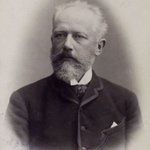
An unconfirmed account indicates that in 1893, a nobleman complained to the Tsar that Tchaikovsky was paying improper attention to a law student. This led eight former schoolmates to set up a “court of honor” to discuss the charges. The meeting lasted five hours, after which Tchaikovsky, looking frightened, ran out of the room and committed suicide by taking arsenic. bit.ly/3VdlkHP

In the medieval period, snails were a common food source for peasants, as they were abundant and easily gathered from gardens and fields. It was not until the Renaissance that snails regained high status as a gourmet food, especially in French cuisine, where chefs developed techniques to elevate the snail’s flavor and texture. This marked the beginning of escargot as a luxury dish, often served in aristocratic households and fine dining establishments.bit.ly/3VsXSp…

A recent review of 13 studies involving 3,951 patients has cast doubt on the diagnostic accuracy of earlobe creases for detecting active coronary disease. More likely, an earlobe crease is simply another independent marker for identifying individuals at elevated cardiovascular risk, alongside features such as age and gender.bit.ly/46WnDl6

Women have long faced discrimination, prejudice, and exclusion from formal medical training, despite having served as healers and midwives since antiquity. St. Hildegard of Bingen, a 12th-century Benedictine abbess, made significant contributions to natural science and medicine through her extensive writings on herbs and healing practices. bit.ly/46U6QPG

Sir William Osler has been called the father of modern medicine. He was the “compleat” physician, a scientist and humanist, and he exerted an immense influence on the medical world of his time. He was also called “a physician of two continents,” and his name is honored as much in England as in America. bit.ly/4AIh1o1

Chimpanzees and bonobos are the closest genetic relatives of humans, with whom they share 99.6% of their DNA.Chimpanzees are xenophobic and view outsiders as threats. Their society is male-dominated, aggressive, and violent. Bonobos, by contrast, are xenophilic, friendly, and welcoming to strangers. They are female-dominated, matriarchal, egalitarian, and peace-loving. If we want to understand why nations behave so irrationally, we could do worse than look at the apes and learn what they can teach us. bit.ly/4dLaNK6

Few desserts have achieved the lasting acclaim of the Dobosh torte.Behind its elegant appearance lies a story of culinary innovation, and the flourishing café culture of nineteenth-century Budapest. Among those said to have admired it were Emperor Franz Joseph I and his wife, Empress Elisabeth, better known as Sisi, whose affection for Hungary was well known. bit.ly/4xVqaqM

The observation that Vegemite is a symbol of Australia’s national identity captures its place in Australian culture and ethos. Although it originated from an attempt to make a product similar to Marmite, it became a unique Australian product that hit the market at the right time and was promoted in a patriotic way. bit.ly/4hCtW1W

Premature burial in literature
Nothing is more terrifying than the thought of being buried alive, of being wrapped in a shroud, bound hand and feet, with no way to escape. It was a real possibility before and during the 17th to 19th centuries, when numerous documented cases of premature burial, both verified and rumored, fueled public hysteria.

Emily Brontë’s Wuthering Heights portrays the character Catherine Earnshaw as enthralled by an all-consuming, passionate, insurmountable, and destructive love. But is love really the root cause of her tragic death? :bit.ly/3V7c483

Does the beguiling woman in the Johannes Vermeer’s legendary Girl with a Pearl Earring (1665) have syphilis? A visible early-stage chancre on her lip, and sparsity of eyelashes and eyebrows indicate the possibility. bit.ly/4AwURVQ

AI is now part of the language of medicine. How does a young physician benefit from using it? One physician incorporates AI to enhance, but not replace, evidence-based medicine. But as we train the next generation of physicians, we must use it to strengthen our clinical voice. It cannot speak for us: bit.ly/4y3PvQa

In 1846, while a crowd watched, Dr. John Collins Warren operated on a patient using ether as anesthesia at the Massachusetts General Hospital. When the patient, a young printer, woke up, he remarked it felt “as though the skin had been scratched.” Dr. Warren proclaimed, “Gentlemen, this is no humbug.” News spread rapidly, marking the birth of anesthesia and painless surgery. bit.ly/4y0MRe4


Frederick A. Cook, MD (1865 – 1940), is often regarded as the first physician explorer of the Heroic Age of Antarctic Exploration. The controversy persists as to the primacy of his claim of having “first” reached the North Pole. You decide: bit.ly/4yuTfKm

In the late 1880s, a young woman was denied admission to every Chicago nursing school because of her race. Her pastor brother approached Dr. Daniel Hale Williams, a young black surgeon, for help, and they founded, with the philanthropy of others, Provident Hospital, the first Black-owned and operated medical institution in the United States. bit.ly/4iRha1Q
