
Postdoc@Oxford, Reliable AI, building @paperena_ai, prev. @WisconsinCS, @iiscbangalore, @IBMResearch.
Oxford, UK
Joined December 2012
- Tweets354
- Following2K
- Followers667
- Likes2.7K



Harit Vishwakarma retweeted

Really enjoyed Terry Tao's talk at @SAIRfoundation 's Science x AI Summit.
Particularly liked this thoughtful categorization of the old and new worlds of math (pre and post-AI), with the degree of human understanding being the key variable to realizing the benefits of AI and avoiding the pitfalls.
"Misaligned math" is also a nice way to term the possible bad case.

Harit Vishwakarma retweeted

The one and only Michael Jordan was interviewed last week by the French newspaper Libération. Here is an English translation. Enjoy!
di.ens.fr/~fbach/MJordan_ITW…
Harit Vishwakarma retweeted

TERENCE TAO
“My feelings on recent developments are very mixed and complex.
On the one hand, many of the AI-generated proofs appear to introduce clever new ideas that will be fruitful once digested, while also building upon the existing contributions of countless human mathematicians past and present. But at the same time, I am deeply frustrated that, in sharp contrast to traditional breakthroughs, none of the humans involved in these proofs are available to take questions, give talks, attend conferences, submit papers to journals, train students, or otherwise participate in the subsequent development of these results.
Similarly, I am excited by the possibility of the community being able to use these tools to tackle ambitious and large-scale projects that one could not have even dreamed of in the past. But I am horrified by the many person-years of ongoing patient and deliberately slow research efforts – particularly by graduate students and postdocs – towards many motivating problems in mathematics being casually disrupted or destroyed by such a release. Much as one cannot unhear a movie spoiler or a crossword clue, one cannot explore a problem as profitably and richly once one is aware of an existing solution. Yes, one can still analyze and digest such an answer; but the best opportunity to do so is at the moment of its discovery, and such moments are increasingly wasted when delegated entirely to AI tools.
And I mourn the path not taken, and the opportunities lost in the frantic race to develop this technology. Labs submitting their frontier models to independent researchers for proper scientific evaluation. Coordination with the research community to ensure these tools are applied to complement and enhance the abilities and activities of human researchers, rather than compete with them. Use of these tools to foster collaboration and sharing, rather than competition and secrecy. Opening new doors, without closing old ones.
But that is not the path we now find ourselves in. Instead, the community needs to come together more than ever. To clearly declare our own standards and values, to build our own tools and practices, to support our most vulnerable members, and to chart our own path forward. Let’s get to work.”
Harit Vishwakarma retweeted

That's a wrap on Frontier Data Summit!
More than 30 speakers and a room full of researchers came together to discuss how we measure and advance frontier AI 🚀


Harit Vishwakarma retweeted

It was a pleasure talking about our recent preprint on causal decision-making at the @SimonsInstitute Trustworthy AI: From Hallucinations to Reliable Autonomy Workshop.
The recording is available below:
youtube.com/watch?v=-NfjZ_py…

Harit Vishwakarma retweeted
Really enjoyed the conversation at @SnorkelAI FDS!

Next up from @SnorkelAI’s Frontier Data Summit, fireside 🔥 chat with @fchollet and @fredsala on “Measuring and advancing true general intelligence toward AGI”
#frontierdatasummit


Evaluation is underrated and underfunded despite its importance and complexities. Great to see the success and expansion of this program.

Today, we’re expanding @SnorkelAI’s Open Benchmarks Grants by 10x to a $30M commitment:
- Funding a more diverse, robust, and continuously-updated ecosystem of open benchmarks
- Launching the Open Benchmarks Red Team to continually test and strengthen them
- Introducing the Snorkel Research Fellowship to support independent contributors developing new evaluation methods
Since our launch earlier this year, we’ve been humbled to partner with the teams behind Terminal-Bench, TB-Science, ARC-AGI-3, OSWorld 2.0, Agents’ Last Exam, Continual Learning Bench, Senior SWE-Bench, SlopCodeBench, and more. Alongside these teams, we’ve helped design evaluation methodologies, develop task construction pipelines, and scale quality control. OBG-funded benchmarks have appeared on the latest model cards from every major frontier lab; have helped to index and measure frontier progress and alignment; and have contributed to guiding the frontier of AI development.
Benchmarks have always been guideposts for—and drivers of— AI progress: setting a metric and then “hillclimbing” against it is the core of how AI works! But when benchmarks fall behind frontier capabilities, our ability to evaluate and align these systems does as well. They become too simple, static, or correlated, and the risk of “benchmaxxing” increases.
We need more diverse, robust, and continuously-updated benchmarks, developed by a broader ecosystem of researchers and domain leaders.
We’re incredibly excited to accelerate frontier evaluation with Open Benchmarks Grants— raising the ambition and investment in robust, open, and independent measurement. Read our full announcement and apply here: benchmarks.snorkel.ai/fronti…


Harit Vishwakarma retweeted

2 years ago in 2024, we were laughing at GPT-4o for getting “Is 9.9 > 9.11?” terribly wrong.
Now it feels like all the hardest math problems will be solved by AI.
What a wild time we’re living in.
Harit Vishwakarma retweeted

Going through PhD applications, I find that I'm less and less able to read slop. I zone out, and can't follow the reasoning. Not sure if it is the stylistic blandness or the suspicion that there is no author that makes me lose the thread, but whatever the reason, I lose it.


Harit Vishwakarma retweeted

I care a lot about AI safety
But I do find the constant “AI will kill us all by the end of the decade” commentary increasingly unhelpful, and, frankly, a little tiresome.
Sometimes I feel certain people in Silicon Valley have lost touch with reality and normal people.
There are so many other pressing problems. A relatively small, wealthy, technologically immersed community in the Bay Area can spend an extraordinary amount of cognitive bandwidth on scenarios that feel overwhelmingly important from inside that community, while a normal person is worrying about housing, healthcare, war (especially with all the new wars that seem to have started **by humans** recently), crime, their children, energy prices, employment, climate, poverty, or simply getting through the week.
In fact, I think the more extreme rhetoric can be actively counterproductive. It collapses a very broad field: robustness, misuse, autonomy, cyber/bio risk, deception, control, systemic risk, military applications, concentration of power into one spectacular endpoint. And because the endpoint is so extreme and so uncertain, it encourages people either to become quasi-religiously preoccupied with it or to dismiss AI safety altogether.
And there is an important technical distinction between:
“The tail risk is serious enough that we should invest heavily in understanding and reducing it”
and
“The median outcome is human extinction within a few years.”
The first proposition can be justified even when the second is very poorly supported. Nuclear safety is an obvious analogy: you don't need to believe nuclear war is virtually certain next Tuesday to think command-and-control, escalation, verification and weapons safety deserve enormous attention.
I also think a mature AI-safety programme should deliberately cover several timescales. Immediate harms and misuse matter because they are happening now. Emerging agentic risks matter because systems are becoming more autonomous. And genuinely catastrophic or existential risks matter because even a relatively small probability multiplied by an enormous consequence warrants serious research. Those positions aren't in competition.
There is a further strategic problem with constant doom rhetoric: it makes calibration almost impossible. If every capability advance is “the last warning”, every model is “terrifying”, and every year is supposedly the crucial year before catastrophe, observers eventually discount the signal. Safety researchers ought to be unusually disciplined about uncertainty, evidence, falsifiability and updating—not less disciplined because the stakes are high.
(no AI was harmed in the making of this post)
repost if you agree to restore some sanity to the debate
Like the recommendations.

Frontier AI models are impacting us (researchers) in ways that we collectively need to make sense of. My colleague Pierre Marion has nicely put down his thoughts in writing in this insightful blog post. Enjoy!
pierremarion23.github.io/tho…
Harit Vishwakarma retweeted

Here are the Playlists for the courses that I have taught:
1. Mathematical Foundations of Machine Learning - youtube.com/playlist?list=PL…
2. Mathematical Foundations of Generative Models - youtube.com/playlist?list=PL…
3. Mathematical Foundations of Genrative AI - youtube.com/playlist?list=PL…

Excited to be in SF and Berkeley next week. Will be at,
1. #COLM2026,
2. Trustworthy AI workshop at the @SimonsInstitute
3. Frontier Data Summit @SnorkelAI .
Will be presenting @paperena_ai our solution to tackle the brewing tsunami of papers and support AI-driven research.
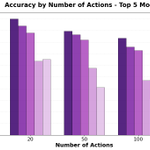
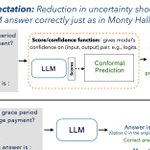
Pairscore: a simple solution to improve verbalised uncertainty in LLMs. Turns out, it’s better to ask them to score multiple items than doing it independently or via comparisons and rankings.
Happy to chat :)
Eager to hear your thoughts and work together. Get in touch.
docs.google.com/forms/d/e/1F…

Shoutout to the amazing collaborators:
@klarakaleb @AmitVshw, Iacopo Ghinassi,
@duynht , @quanphamnus, @EleanorTrollope, @zhengzhi20, @sahel_iqbal, @fredsala, @yeewhye and everyone else helping.