
MTS @ @amilabs | Multimodal pre-training/post-training. Ex Meta FAIR. PhD Oxford. Opinions are my own.
Joined July 2020
- Tweets311
- Following1.1K
- Followers1.4K
- Likes2.1K




Pinned Tweet
We live in a multimodal world. We see, talk, act, and dream.
Yet most LLMs still start with language pretraining. Why not train them natively with multimodal I/O from scratch?
Because it’s SUPER HARD, adding modalities triggers training instability, design complexity, and often modal competition
So what’s the path forward?
Introducing: Towards Physics of Multimodal Pretraining (junlinhan.github.io/projects…)
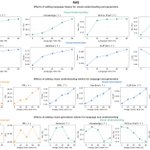
We unpack the underlying mechanics of multimodal pretraining across 4 aspects: Knowledge Flow, Modality Synergy, Early Unification, and Recipe.

Junlin Han retweeted

🎉 AnimalLift has been accepted to SIGGRAPH Asia 2026! 🐶🐱🐻🐯🦊
From a single image, AnimalLift reconstructs an animation-ready 3D animal with canonical geometry, UV texture, and explicit strand-based fur.
📄 arxiv.org/abs/2609.09513
🤗 huggingface.co/datasets/Chun…
Computer vision is officially 3D only.
7 out of the 10 candidates are 3D. Multimodal foundation models, generative scaling, representation learning? Irrelevant to intelligence. The universe is made of point clouds, meshes, and Gaussians.
(Nothing against the authors btw)

Junlin Han retweeted

New positions open! We’re looking for full-time researchers and interns with backgrounds in geometry and 3D vision to join our team at AMI Labs.
The roles can be based in NYC, Paris, Montreal, or Singapore.
If you’re interested, apply through the link below:
jobs.ashbyhq.com/ami/0d7332d…

Junlin Han retweeted

1/ Sharing a new, interesting project I did during my internship at Microsoft AI Frontiers w/ @JohnCLangford
TL;DR: At decoding time, we feed **previous hidden state** into the input together with token embedding, and it boosts performance for free.
arxiv.org/abs/2608.08888

Thanks for posting our work! Hope this can be helpful for multimodal intelligence!

Towards Physics of Multimodal Pretraining
Knowledge Flow, Modality Synergy, Early Unification, and Recipes
paper: huggingface.co/papers/2608.0…

[4/5] Recipe:
Translating physical mechanics into a practical scaling recipe:
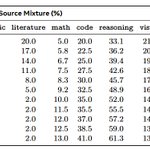
Data recipe: Allocating as little as 5% of the token budget to visual generation achieves competitive generative modeling while preserving strong language & understanding capabilities.
Scale Verification: Validated on multiple 13.5B MoE models trained across 2T tokens , proving that early fusion + asymmetric data blend + MoE scales efficiently.

[5/5] This is likely the final paper of my PhD.
When I began my PhD around the release of GPT-4V (Oct 2023), the AI landscape was very different. My entire doctoral journey has been a progression from computer vision research to cross-modality interaction, and ultimately to native multimodality.
I hope our exploration serves as a small step towards advancing multimodal intelligence. I still believe vision is a fundamental component of intelligence, and future models should pursue natively multimodal co-evolution, even if it's harder.
Please visit our webpage for more details: junlinhan.github.io/projects…
Joint work with @TongPetersb , @DavidJFan , @MinghaoChen23, @philiptorr , @filippos_kok, and @ml_perception .
Junlin Han retweeted

🎉 Our paper, “Asymmetric Idiosyncrasies in Multimodal Models,” is accepted to @COLM_conf 2026!
You can tell WHICH model wrote a caption with 99.53% accuracy. Render it into an image, and attribution collapses to 49.85%.
Where does the fingerprint go? 🧵
1/5

ALT Diagram of the Idiosyncratic Gap Analysis Pipeline. Three MLLMs caption the same image of a banana with peanut butter, producing different detailed captions. A text classifier attributes each caption to its source model correctly. The captions are then fed into an image generation model, and an image classifier tries to attribute the generated images but predicts incorrectly.
Don’t miss Beyond Language Modeling with two amazing main authors @DavidJFan and @__JohnNguyen__ !!!!!

@__JohnNguyen__ and I are presenting the Beyond Language Modeling paper as an ICML spotlight in 30 minutes at the 10:30 AM poster session!
I’ll also be at the AMI Mixer on Thursday and hanging around in Seoul until early next week :)
best lecture/tutorial in native mllms!!!

The video of my Stanford CS25 guest lecture, From Language Models to Native Multimodal Intelligence, is now online.
I discussed how the core ideas behind LLMs has shaped multimodal AI, from architectures to training paradigms and scaling, and where the next challenges may lie. 🧠🌐
🎥: youtube.com/watch?v=NDdc39KY…

💯
Very nice post, definitely worth reading!

Part 2: Is 3D really necessary to understand the world? IMO, probably not.
I always hear people say that since we live in a 3D world, we must use explicit 3D geometry. But I think we often confuse generating the world with understanding the world. Real understanding can actually be a lot less constrained.
Of course, whether you use explicit 3D representations depends on the application and the resources you have. But for what robotics mainly cares about, models should probably have fewer rigid inductive biases. Internet-scale images and videos are already our most diverse sources of world concepts.
Here is why I think world understanding shouldn’t bake in too much 3D:
- Humans don’t render meshes: As humans, we don’t need explicit 3D information to understand an object. We learn by interacting with the environment through raw sensory streams like touch, sound, and vision. I don’t think there is a clean way to model all these rich interactions just by baking rigid 3D information into a model. Doing so can easily introduce a chain of compounding errors from imperfect inputs.
- Scalability: High-quality 3D data is sparse and unlikely to scale. Because of this, these models often suffer from diversity issues. For example, if you post-train a video model by adding camera poses, it may struggle the moment it encounters an unseen/weird trajectory, and the scene can just collapse.
- Where does 3D belong: This doesn’t mean 3D is useless. It is still great for maintaining consistent state in many applications, like gaming, but it shouldn’t be the bottleneck for the world model, which should act more like the brain.
If we want robust world models for robotics, letting the model learn implicit physics and understand visual concepts and interactions feels much more natural. At the same time, figuring out how to efficiently learn from the real world feels more important now than ever.
After all, you can always train a renderer to output pixels, as many other works have shown, if that’s what you care about. But true world modeling should aim for robust representation learning through interactive data with minimal assumptions.
Of course, with fewer assumptions, it becomes significantly harder to learn. That’s exactly what I’ve seen from JEPA-style works and my early experience with energy-based models (EBMs) in 2020. But that’s also the challenge worth tackling.
Just my 2 cents and not trying to fight anyone and would love to hear your thoughts on this :)
Junlin Han retweeted

Modern text-to-image models are increasingly powered by large pretrained LLMs.
But there is a curious mismatch: the LLM typically encodes the prompt only once, while the evolving noisy latent states are handled entirely by a newly trained generative backbone.
Can pretrained multimodal prior participate in the denoising process?
Introducing RepFusion. (1/12)
📄 arxiv.org/abs/2606.14700
🌐 xichenpan.com/repfusion/


AMI was founded by amazing researchers I have deeply respected since the very beginning of my research career. They have built fundemental things:
before LLM era (SSL, JEPA, moco, mae, barlow twins, arch from LeNet to more recently resnext, convnext...),
during LLM era (gpt, dalle, gemini, Cambrian, rae, beyond language modeling...),
and AMI will undoubtedly open the path of building advanced, world-centric intelligence that shape the future!

i’m joining forces with @ylecun and an incredible group of people to start AMI Labs @amilabs.
AMI isn’t a conventional lab. we don’t intend to become one.
a lot to say about why this moment matters, but for now we’re heads down building.
join us: amilabs.xyz

Junlin Han retweeted

[1/9] What happens when you treat vision as a first-class citizen during multimodal pretraining? To find out, we studied the design space of training Transfusion-style models that input and output all modalities, from scratch. Here is what we learned about visual representations, data, world modeling, architecture, and scaling behavior!
Paper: arxiv.org/abs/2603.03276
Website: beyond-llms.github.io/
@TongPetersb, @DavidJFan, @__JohnNguyen__, @ellisbrown, @GaoyueZhou, @JasonQSY, @boyangzheng, @webalorn, @han_junlin, @rob_fergus, @NailaMurray, @gh_marjan, @ml_perception, Nicolas Ballas, @_amirbar, Michael Rabbat, Jakob Verbeek, @LukeZettlemoyer, @koustuvsinha, @ylecun, @sainingxie
