

Empowerment through Community Inclusion Currencies
Kenya
Joined February 2015
- Tweets958
- Following186
- Followers3.1K
- Likes878






Grassroots Economics retweeted

🩺 What if doctors could accept more than money for healthcare?
Imagine a doctor offering a consultation while a patient contributes gardening, teaching, transport, or another useful service through a community commitment pool.
Through Cosmo-Local Credit, we're exploring how medical vouchers, reciprocal exchange, and mutual aid could help communities make better use of the care and resources they already have.
Inspired by my search for healthcare for my daughter, I've written Healthcare Commons for Doctors and Patients.
Could this work in the US? What about taxes, medical ethics, and regulation?
I'm inviting doctors, dentists, healthcare lawyers, accountants, patients, and mutual-aid organizers to help us build the foundations for a small, responsible pilot.
🌱 What if more healthcare could begin with a promise to care?
willruddick.substack.com/p/h…

Grassroots Economics retweeted

im excited because @grassEcon just migrated to gnosis chain cosmolocal.credit/
Grassroots Economics retweeted
Thanks!
Note that @grassecon has moved to @gnosischain
Please stake on us here: grassroots.impactstake.com/
@impactstake

Grassroots Economics retweeted
Come visit us together with our community! Oct 31st
(p.s. might be the last chance for a while) facebook.com/share/1DQ98AMrE…
Grassroots Economics retweeted
Dogfooding is still product-first. You build something, then try to live with what you built. I appreciate that ...
But I keep looking for the opposite order.
Dogliving: live the life first, then see whether the product belongs in it.
Live the week you actually want to live. Who do you answer to? Who depends on you? What gets forgotten? What happens when somebody cannot show up, when care is needed, when a promise becomes inconvenient, when something simply fails?
Then bring the tool into that week and see whether it survives.
A clear concept and a beautiful UX can both be real achievements while the actual use remains mostly the work of describing, demonstrating, and administering the tool itself.
I think this is what troubles me when software designers talk about community, mutuality, reciprocity, and care. I hear a great deal about the systems they are building for those things, and much less about the actual forms of dependence and reciprocity in their own lives.
Who are they caring for? Who cares for them? What obligations have they accepted? What do they give without optimization? Where have these practices become difficult, inconvenient, or costly?
...I wonder whether the attraction of the tool is precisely the hope that we can transcend the messiness of the life it claims to serve....
Everyone's private life doesn't have to become evidence for their product. .... yet I want to know where the center of gravity is.
Is the tool being created in service of a life that is already being attempted?
Or is the imagined life gradually being constructed in service of the tool?
Is the tool in the life, or is the life in the tool?
Join us for a day of culture, connection, learning and nature with members of the Mijikenda community in Kilifi!
Come spend the day learning directly from Mijikenda community members, sharing experiences, and taking part in activities rooted in local culture and the environment.

Grassroots Economics retweeted
About 20km from our home is Msitu Wa Ndoto, the Forest of Dreams ... a forest growing inside an ancient limestone cave that was once beneath the sea.
Inside Panga ya Saidi, people lived for tens of thousands of years. Here, around 78,000 years ago, a small child was carefully buried. Tools, shells, beads, stories, sacred places ... layer after layer of human continuity.
Standing there I kept wondering: after all this time, what would our ancestors still recognize in us?
Care. Burial. Singing. Dancing. Tools. Healing. Gathering together when one person or family cannot carry something alone.
We lose forests and languages and ways of living, and that deserves mourning. But not everything disappeared. Some things travelled an unbelievably long way.
If you are anywhere near Kilifi, please go visit and support Msitu Wa Ndoto. Walk slowly. Listen to the guides. It is really worth your time.
This little video is from our visit to the Forest of Dreams. 📷
Read more about recognizing ourselves in the past and future: willruddick.substack.com/p/r…
Grassroots Economics retweeted
If you are around Kilifi Kenya come join!
What to expect:
🪘 Meet and learn from the community
Sit together, hear stories, learn about Mijikenda culture and traditions, and bring your questions and curiosity.
🎶 Music, instruments & dance
Discover traditional instruments and music, and join in the dancing!
🍲 Share an indigenous meal
Enjoy a delicious local meal
🌱 Regenerative farming
Get hands-on with regenerative farming and permaculture practices
💚 Your contribution
Suggested donation: KSh 2,500 per person
You are very welcome to contribute more if you are able to.
Your contribution helps support Mijikenda community-led initiatives and Grassroots Economics' wider work to:
* strengthen local livelihoods and small businesses
* support farmers and local producers
* increase access to goods, services and economic opportunities
* provide training and community organising
* develop local exchange systems
* strengthen resilient, community-led economies
By joining us, you are not only experiencing a day of culture and connection, you are contributing to a community-led initiative and helping create opportunities for local people to share their knowledge, strengthen their livelihoods and protect their environment.
Come with curiosity, respect and a willingness to learn!

Grassroots Economics retweeted
You can support Grassroots Economics by staking ETH or stablecoins and directing a portion of your returns here:
grassroots.impactstake.com/
Grassroots Economics retweeted
Sustainable Finance Hackathon
sustainablefinance.live/hack…
#cosmolocal #commitmentpooling
Share and Apply!

You can support Grassroots Economics by staking ETH or stablecoins and directing a portion of your returns here:
grassroots.impactstake.com/
Grassroots Economics retweeted
Sometimes seeing real care hurts,
because I notice most clearly what is missing or what has been lost, rather than what we came from and what can still be nurtured. It is a little like a pain doctor who has never seen a healthy person and only knows the symptoms.
Watching our daughter being welcomed by so many hands gave me a glimpse of what healthy social soil can feel like. Not to romanticize, just something I could actually see and feel around us. Remembering that these ways of caring for each other exist, and can be nurtured, makes me hopeful.
Grassroots Economics retweeted

SeedRights = Food Rights Kenya High Court: Criminalising indigenous seed sharing violates the Constitution. State appeal now threatens this win for farmers.@Seedsavers_KE @BIBA_Kenya @Greenpeaceafric
Read : josephsilali.substack.com/p/…

Grassroots Economics retweeted
My hope is in neighbors and colleagues who cannot be hired or fired, and who often cannot be paid enough.
Alignment there means visible commitments, shared limits, and repair when someone defects ....
If that cannot hold, claims about regional, global or ASI alignment feels premature.
Grassroots Economics retweeted
@grassecon could use some support here.
Plz share.

🌱 We’ve been selected for @Artizen Season 7!
@grassEcon Seed a Living Watershed initiative in Kilifi, Kenya is officially live. 🌍
Help us restore water, rebuild soils, grow biodiversity & strengthen community livelihoods.
Support us here 👇
artizen.fund/index/p/seed-a-…
Grassroots Economics retweeted

Data is not reality itself. It is only the part of reality that the system has learned to see. 🌾
Our network includes more than 60 ecovillages and community spaces. And almost everywhere, resources are scarce.
One community needs to repair a roof. Another needs additional solar panels, better insulation for a shared space, or tools for a community bike workshop.
To support this work, we create shared funding pools. For now, the mechanism is very simple: a community organizes a volunteer workday, publishes a report, and receives 10 USDC.
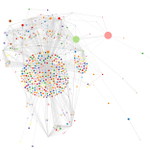
But when we put all these reports into one table and visualized them, something more interesting than the distribution of money became visible.
Some communities report regularly and receive a significant share of the support. Others are barely represented.
At first glance, you might conclude that the first group is simply more active.
But that is not necessarily true.
Communities may organize volunteer workdays regularly without publishing reports. People may lack the time, energy, digital skills, or capacity to understand how the pool works and properly document what they have done.
So funding does not necessarily flow to those who do the most work.
It flows more easily to those whose work has become visible to the system.
And this creates an interesting systemic problem.
If rewards depend on reporting, while the ability to report depends on organizational capacity, the system may gradually reinforce communities that are already stronger.
They document more → receive more resources → increase their capacity → document even more.
Meanwhile, less organized communities can remain invisible even when a lot of real work is happening on the ground.
This is no longer only a question of funding allocation.
It is a question of institutional memory.
What does our network actually remember about the work being done?
Which actions become part of our shared history — and which disappear simply because nobody had the capacity to document them?
And what can such a simple visualization tell us about weaknesses in the capacity of our communities?
Perhaps the next round of support should go where organizational capacity is lower. Perhaps some communities need help documenting work they have already done. Or perhaps the reporting mechanism itself needs to become much simpler.
And we don’t necessarily need complex accounting systems, blockchains, or dashboards spread across three monitors to see these patterns.
Sometimes a spreadsheet, a pencil and a sheet of paper are enough. You could even visualize the distribution with stones on the ground.
Accounting preserves the memory of what happened.
But only of what was recorded.
A good system should therefore do more than show us what it can see.
It should also help us understand who — and what — remains invisible.
Thank Will Ridduck and @grassEcon


