
Field-trained steel erector, self taught software dev, —now forging raw talent into life-changing careers at Stoneforge Academy in MA.
Stoneham, MA
Joined September 2008
- Tweets199
- Following1.1K
- Followers124
- Likes14.4K


Grant retweeted

I’m making a TV show!
Here’s why: When I was moving to New York, I told my leasing agent that I wanted a place with charm and character. She told me that if that’s what I want, I need to look for apartments built before World War II.
“So you’re saying we’ve basically built nothing with charm and character in the past 80 years?”
“That’s right.”
This is happening all over the world. The same boring and generic style has spread to the entire world. 150 years ago, new buildings in Shanghai looked nothing like the ones in Rome or Tokyo or San Francisco or Buenos Aires. The architecture of each place was as varied as the landscape itself.
And it’s not just the sameness of the modern world that has me scratching my head, but also the carelessness behind so much of what’s built these days. We boast about the triumphs of technology and how advanced we are as a civilization, but why has our built environment regressed so much? Shouldn’t we use our wealth to make our streets more charming and delightful?
There’s lots of talk about how we’ve polluted the natural world, but what about how we’ve polluted the man-made world? We’ve filled our streets with ugly railings, benches, lampposts, and clutter.
We assume these things have to be boring, but they don’t. Good design can make everything, even bins and bus stops, charming. New things can be prettier than old things. The first step is believing it’s possible.
Something has changed. We’ve taken a dramatic turn, and the majority of people prefer what we used to build to what we build today. Just look at where people take photos. In New York it’s the steps of brownstones in the West Village; in San Francisco it’s the old Victorian homes; in London there’s tourists galore in front of those iconic red phone booths which remain on the streets, even though they don’t work anymore, because they’re so nicely designed that people like having them there.
All this is what inspired me to make a TV show.
First: a pilot episode which now has 5.4 million views, 23,000 comments, and 379,000 likes. It also has 241,000 YouTube subscribers from that one video, which is just about unheard of for a new channel.
And now: a full-on, six-episode series.
But when I pitched Hollywood on the idea, they said cultural series of this sort don’t work: “The only kinds of documentaries that get funded are about sports, music, nature, or true crime.” Huh? How can that be?
People are interested in culture. The problem is most culture documentaries are terrible. They fail in one of two ways: (1) people dumb down the ideas in patronizing ways, or (2) people use so much jargon and high-falutin language that it becomes boring and inaccessible.
This is why I’m producing this work. It’ll be called The Modern World, and it’ll be a tour of art & architecture through the eyes of Sheehan Quirke, who goes by @culturaltutor.
It’s our ambition to do for the man-made world what Planet Earth did for the natural world. To use cinematic imagery and simple language in a way that everybody can understand. And to be rigorous, but not in a way that feels like school or your know-it-all friend who never stops talking.
The potential here is huge. Architecture impacts literally every person on earth. What we build shapes the moods of people and the spirit of our culture.
We’ll film in six countries (the United Kingdom, Belgium, France, Germany, Italy, and the United States) to produce six 30-minute episodes which we hope to publish on a major streaming service. We’re currently in the fundraising stage, and production begins once we’ve raised the money.
It’s our mission to help people see the world more clearly, and in turn, make the world a more charming and delightful place to live in.

I’m making a show about buildings.
The concept is simple: do for the man-made world what Planet Earth did for the natural world.
But, when I pitched the idea, the answer was that nobody would watch it.
So I released a pilot episode on YouTube. It’s got 5.4 million views, 379k likes, and 23k comments.
People are interested, and now it’s time to make the full show.
Six episodes, filming in the UK, France, Belgium, Germany, Italy, and the USA, and releasing on a streaming service like HBO, Netflix, or Prime.
Why does this show matter?
First: we’re surrounded by buildings all the time. Look around yourself, right now… what do you see? Buildings are the logical conclusion of everything a society believes in. That’s the real focus of this show: not the buildings themselves, but what they say about us.
Second: there’s global dissatisfaction with modern architecture. This feeling gets written about online, but nobody’s given a voice to it on film or TV. That’s what this show will be. But this isn’t just about criticising modernity. That’s easy. This is about learning from the past in order to understand and improve the present, for everybody.
Third: there’s a drought of high-quality culture shows. When I spoke to film executives they said that only documentaries about sports, music, or true crime get funded. That’s a colossal missed opportunity. Galleries are always full, content about architecture goes viral online all the time, and people spend their precious holidays visiting beautiful cities.
Why no shows about architecture, then?
Tourists flock in their millions to see (for example) the buildings of Antoni Gaudí in Barcelona. But, if you asked those same people if they’re interested in “architecture”, they’d probably say no.
To put that another way: not many people want to watch “a show about architecture”, but lots of people want to watch a show that illuminates the real world they’re living in, each and every day.
What will the show be like?
Six episodes, going chronologically through history and arriving at the present, each focussing on the architecture and design of a specific period:
1. Middle Ages
2. Renaissance
3. Enlightenment
4. The Nineteenth Century
5. Art Nouveau & Art Deco
6. Present Day
But, in each case, the point isn’t just to learn about that era; the point is to learn about our modern world through those eras and what they’ve left behind. If you watch the pilot episode (included below) you’ll see what I mean.
So the show’s not really “about” the past; it’s about the twenty-first century.
That’s why it’s called The Modern World.
When you think of a typical history show there are loads of interviews, stock footage, archive photos, historical recreations, and graphics. We’re doing none of that. Everything will be filmed on location, because we’re telling our story only through the real world that exists right now. And, rather than going to the most obvious places, we’ll focus on buildings that aren’t well-known but should be more famous.
But that’s all big picture; what will it be like on screen?
Buildings used to look different in every country, and now they look the same. Why? Because the weather is different everywhere, and buildings were always a way of dealing with that weather, using local materials. Now we have air conditioning and we ship concrete around the world, so we don’t need to design our buildings with regard to local weather or rely on local materials.
Look at really old clocks and you’ll notice something: they don’t have a second hand… because it was only invented 300 years ago! Then you look at the present and you realise we’re surrounded by timers, by seconds ticking down and ticking up relentlessly. If we’re looking for a cause of our anxiety-inducing culture, that might be it.
When you spend time with the sun-softened bricks and time-warped timbers of old cities you notice that synthetic materials like plastic have taken over. When we’re surrounded by things that feel temporary, how do you think it makes us feel?
It’s only by seeing 19th century train stations, designed like cathedrals, that you realise tradition and technology aren’t enemies. New things don’t have to look boring: if the Victorians had designed AI data centres, they’d look like Medieval castles.
In the 1920s, at the zenith of Art Deco, people believed technology would uplift humanity. That’s why they decorated their buildings with statues inspired by electricity. Only by seeing their enthusiasm can we realise our own cynicism, and perhaps begin to fix it.
All of that… and much, much more.
But, above all else, this show is about a way of seeing. If you want to understand any society then you need to look at what it creates, not what it says about itself.
There’s a worldview in every single object; our skyscrapers are designed the same way as our phones. Learn to look at this world, to notice its details, and everything else starts to make sense.
What now?
I’ve been quiet online recently because I’ve been researching and working on scripts for six full-length episodes. Production begins when we’ve raised the funding.
The Modern World is coming.
Grant retweeted

Ollama is now updated to run the fastest on Apple silicon, powered by MLX, Apple's machine learning framework.
This change unlocks much faster performance to accelerate demanding work on macOS:
- Personal assistants like OpenClaw
- Coding agents like Claude Code, OpenCode, or Codex
Last minute shopping guide for things men want:
Huckberry: huckberry.com
Postfly: postflybox.com
AFTCO: aftco.com
LL Bean: llbean.com
Duluth: duluthtrading.com
There are others.
Grant retweeted

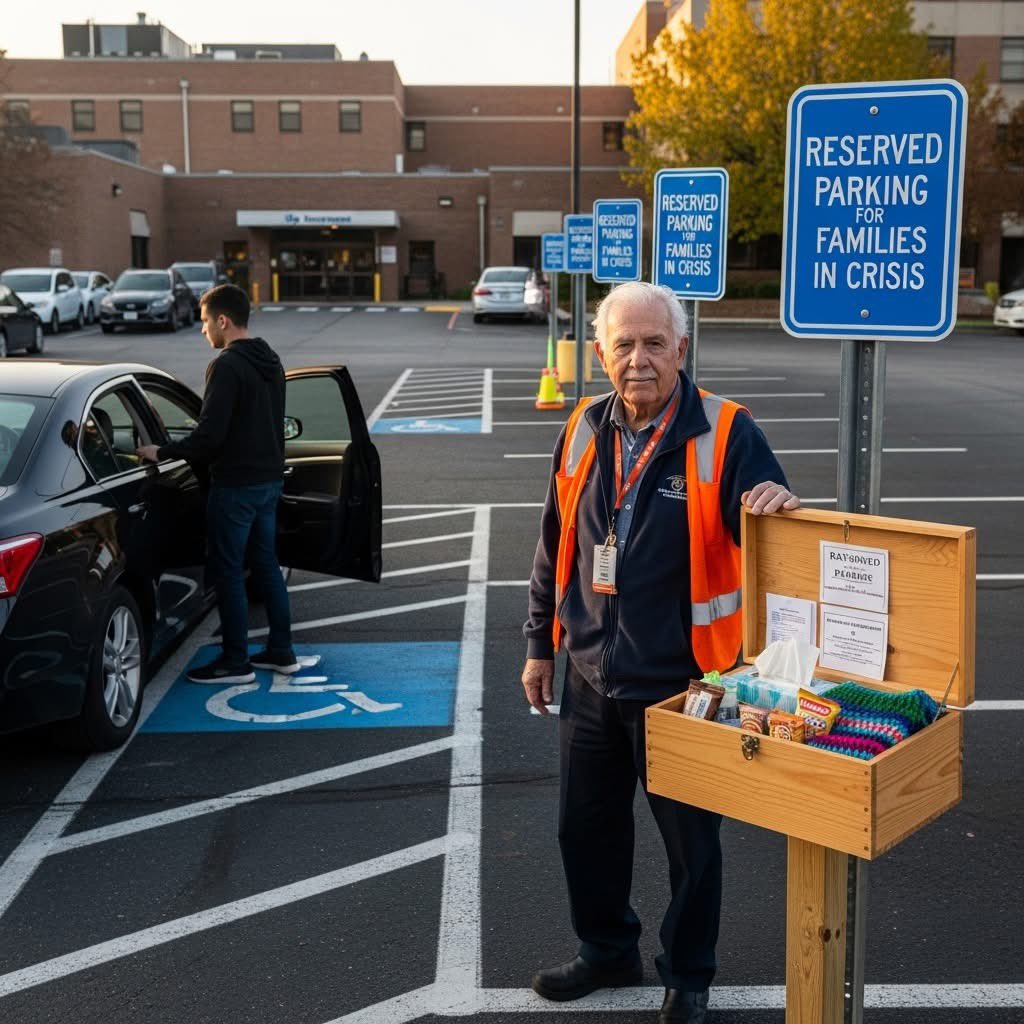
"My name's Raymond. I'm 73. I work the parking lot at St. Joseph's Hospital. Minimum wage, orange vest, a whistle I barely use. Most people don't even look at me. I'm just the old man waving cars into spaces.
But I see everything.
Like the black sedan that circled the lot every morning at 6 a.m. for three weeks. Young man driving, grandmother in the passenger seat. Chemotherapy, I figured. He'd drop her at the entrance, then spend 20 minutes hunting for parking, missing her appointments.
One morning, I stopped him. "What time tomorrow?"
"6:15," he said, confused.
"Space A-7 will be empty. I'll save it."
He blinked. "You... you can do that?"
"I can now," I said.
Next morning, I stood in A-7, holding my ground as cars circled angrily. When his sedan pulled up, I moved. He rolled down his window, speechless. "Why?"
"Because she needs you in there with her," I said. "Not out here stressing."
He cried. Right there in the parking lot.
Word spread quietly. A father with a sick baby asked if I could help. A woman visiting her dying husband. I started arriving at 5 a.m., notebook in hand, tracking who needed what. Saved spots became sacred. People stopped honking. They waited. Because they knew someone else was fighting something bigger than traffic.
But here's what changed everything, A businessman in a Mercedes screamed at me one morning. "I'm not sick! I need that spot for a meeting!"
"Then walk," I said calmly. "That space is for someone whose hands are shaking too hard to grip a steering wheel."
He sped off, furious. But a woman behind him got out of her car and hugged me. "My son has leukemia," she sobbed. "Thank you for seeing us."
The hospital tried to stop me. "Liability issues," they said. But then families started writing letters. Dozens. "Raymond made the worst days bearable." "He gave us one less thing to break over."
Last month, they made it official. "Reserved Parking for Families in Crisis." Ten spots, marked with blue signs. And they asked me to manage it.
But the best part? A man I'd helped two years ago, his mother survived, came back. He's a carpenter. Built a small wooden box, mounted it by the reserved spaces. Inside? Prayer cards, tissues, breath mints, and a note,
"Take what you need. You're not alone. -Raymond & Friends"
People leave things now. Granola bars. Phone chargers. Yesterday, someone left a hand-knitted blanket.
I'm 73. I direct traffic in a hospital parking lot. But I've learned this: Healing doesn't just happen in operating rooms. Sometimes it starts in a parking space. When someone says, "I see your crisis. Let me carry this one small piece."
So pay attention. At the grocery checkout, the coffee line, wherever you are. Someone's drowning in the little things while fighting the big ones.
Hold a door. Save a spot. Carry the weight no one else sees.
It's not glamorous. But it's everything."
Let this story reach more hearts....
Credit: Mary Nelson
Grant retweeted

Introducing Higgsfield Draw-to-Video.
RIP Prompts. Turn your sketch into an absolute cinema.
Works with all our video models: MiniMax, Veo 3 & Seedance Pro.
This is possible ONLY in Higgsfield.
Retweet to unlock the full capacity of the best video models in your DMs.
Grant retweeted

If you believe in TRADES please RT and share this.
We’re making a come back baby!

Is Namecheap unavailable for everyone or just me? I need to buy another domain I probably won’t do anything with!
I asked Grok to tell a highly personalized choose-your-own adventure story for my four-year-old and two-year-old on the way home from school today. Made the trip fly by. They loved it.


Grant retweeted

friends - if you or anyone you know was impacted by the LA fires, we would love to help:
If you need a plan set for exterior details (deck, fence, patio cover, pool, landscaping etc) for insurance or reconstruction purposes;
We will provide for free
Plz RT for reach


Grant retweeted

Homeowners affected by Hurricane Helene:
Answer 8 questions and instantly receive a personalized damage assessment report, designed to help your insurance company process your claim faster.
assessment.restorationrespon…
#HurricaneHelene #insurance
Grant retweeted

Steve Jobs email he sent himself 13 months before he died.
Whenever I re-read this, I regret waiting so long to have read it again.

Grant retweeted

The way this tape measure is used to track kids' height each year.
📹justinflom
xitter.cf/visualfeastwang/status…

Grant retweeted

When you know what's coming, prepare. When you don't know what's coming, position.
If you have a presentation on the calendar next week, you can rehearse. If you have an appointment, you can easily factor in travel time so you're not late. If you know the bill is due next year, you can save the money this year.
When the future is uncertain, you can position. No one knows what's going to happen with the economy, but you can position yourself against potential loss by spending less than you earn. You don't know what's going to happen to your health, but you can strengthen your position against disease by exercising. You don't know when you might need your friends, but you can be in a good position to ask for their help by being the kind of friend they can count on.
Being well-positioned enables anyone to come out ahead no matter what obstacles the unknown may present.
Grant retweeted
The courage to start.
The discipline to focus.
The confidence to figure it out.
The patience to know progress is not always visible.
The persistence to keep going, even on the bad days.
That's the formula.
We react to situations not based on the outcome, but rather on our fear and anticipation of the outcome. And we respond not based on the actual question someone asks, but on the question the mind believes is being asked. a.co/anU9JaI
Grant retweeted

Every piece of advice I could think of after 4 years as a Solopreneur.
1. Pessimists are often right, and optimists are often wealthy.


