

push past limits | real niu for @Gradient_HQ | part time troll | full time janitor | professional edging specialist
edge to edge
Joined December 2024
- Tweets7.3K
- Following669
- Followers2.3K
- Likes18.3K




rw ./ retweeted

SWE-bench Verified has become saturated. Seven models scored 95–97% (Vals AI, Sep 2026). But how well can coding agents build complete software projects from scratch?
Zero2Repo is a Gradient Data research initiative building hard, verifiable tasks and training data for whole-project development.
Agents start with a full spec, an interface contract and an empty workspace. They build the entire repo without reference code, then submit it for hidden deterministic testing. Every test must pass for a task to count. No LLM judge is used.
The first release includes 17 tasks derived from real open-source projects across Python, TypeScript, Go, C, C++ and Zig.
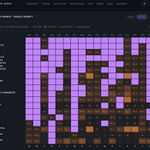
Across 18 model–harness configurations, scores range from 1/17 to 15/17. The top 10 span 47 percentage points, compared with 5 points on SWE-bench Verified.
No configuration has completed all 17 tasks. This matters for self-iteration: small unresolved issues can persist and compound as agents continue developing a project. Reliable self-evolution remains an open research challenge.
We’re expanding the task collection and looking for contributors to suggest seed repositories, develop tasks and review requirements and hidden tests.
More cases are coming.
👉 zero2repo.ai
👉 github.com/Gradient-Data/Zer…
rw ./ retweeted
A few research milestones worth looking back on as September comes to a close.
Our team and collaborators have been working across model infrastructure, agents, and evaluation, from making RL more efficient to testing whether AI systems actually do what they intend.
🧵
rw ./ retweeted
More capable models require more routing decisions, and better ways to benchmark how routers execute.
That’s what TwinRouterBench is built for.
Congrats to the team on the NeurIPS 2026 acceptance.

Can a coding agent choose the right model at every step?
Excited to share that our collaboration with @Gradient_HQ, TwinRouterBench, is accepted by NeurIPS 2026! 🎉 We route model calls at each agent step based on what the task needs next.
On 100 held-out SWE-bench Verified tasks, our router cut API cost by 53.1% vs. always using Claude-Opus 4.6, while resolving 75 vs. 74 tasks.
Paper: arxiv.org/abs/2605.18859
Code: github.com/CommonstackAI/Twi…


rw ./ retweeted
Can web agents learn through imagination?
DynaWeb: Model-Based Reinforcement Learning of Web Agents has been accepted to EMNLP 2026 Main Conference.
Training web agents with online RL means costly, risky interaction with the live web. DynaWeb learns a Web World Model instead, letting agents dream web interactions and train on imagined rollouts.
- Learns naturalistic web transitions from agent actions
- Generates imagined trajectories in a synthetic web environment
- Interleaves imagined rollouts with real expert trajectories
- Consistent gains for open-source agents on WebArena and WebVoyager
Imagination as a scalable path toward online agentic RL.
This is part of our ongoing work at Gradient on distributed and efficient RL: training capable agents without the cost, latency, and risk of centralizing them.
Paper: arxiv.org/abs/2601.22149
Code: github.com/jadeleiyu/MBRL-Ag…


rw ./ retweeted

🚀 MERA: Model Evolution and Routing with Skill Adaptation for Agentic Systems at Scale
How can we make small models stronger for on-device agent deployment?
MERA uses stronger models to guide an iterative loop of RL/GRPO, skill learning, and router optimization. Student failures become verified demonstrations, reusable SkillBook procedures, and LoRA updates, helping the small model take on more work over time.
🔥 Results:
Qwen2.5-Coder-1.5B: 28.7% → 49.7% coding pass
Qwen3.5-2B on TAU-2: 14/35 → 18/35
Fine-tuned 2B matches an unadapted 4B model
Don’t just route around small models. Evolve them.
📄 arxiv.org/abs/2608.10333
💻 github.com/yh-yao/MERA-Evolv…

rw ./ retweeted
New research we’re excited about: MERA powered by commonstack.ai
Evolve small models with SkillBook + routing + adapters so they take on more of the agent workload over time, instead of always defaulting to the biggest (and most expensive) model.
Faster agents. Lower costs. Better systems.
Paper + code 👇

🚀 MERA: Model Evolution and Routing with Skill Adaptation for Agentic Systems at Scale
How can we make small models stronger for on-device agent deployment?
MERA uses stronger models to guide an iterative loop of RL/GRPO, skill learning, and router optimization. Student failures become verified demonstrations, reusable SkillBook procedures, and LoRA updates, helping the small model take on more work over time.
🔥 Results:
Qwen2.5-Coder-1.5B: 28.7% → 49.7% coding pass
Qwen3.5-2B on TAU-2: 14/35 → 18/35
Fine-tuned 2B matches an unadapted 4B model
Don’t just route around small models. Evolve them.
📄 arxiv.org/abs/2608.10333
💻 github.com/yh-yao/MERA-Evolv…
rw ./ retweeted
Proud to share MERA: joint work from a group of brilliant researchers including our very own.
It evolves small models with SkillBook + routing + adapters so they take on more of the agent workload over time.
Paper + code 👇
🚀 MERA: Model Evolution and Routing with Skill Adaptation for Agentic Systems at Scale
How can we make small models stronger for on-device agent deployment?
MERA uses stronger models to guide an iterative loop of RL/GRPO, skill learning, and router optimization. Student failures become verified demonstrations, reusable SkillBook procedures, and LoRA updates, helping the small model take on more work over time.
🔥 Results:
Qwen2.5-Coder-1.5B: 28.7% → 49.7% coding pass
Qwen3.5-2B on TAU-2: 14/35 → 18/35
Fine-tuned 2B matches an unadapted 4B model
Don’t just route around small models. Evolve them.
📄 arxiv.org/abs/2608.10333
💻 github.com/yh-yao/MERA-Evolv…
rw ./ retweeted
Agents are impressive. Multi-agent systems are where things get interesting.
As AI systems evolve from single agents into networks of specialists, a new question follows:
How do agents decide who does what?
That’s a problem we’ve been exploring with Symphony.
Symphony brought multi-agent collaboration across heterogeneous environments. To take that further, we released Symphony-Coord, where coordination and specialization adapt through task context, performance, and feedback.
github.com/GradientHQ/sympho…

rw ./ retweeted
GPT-5.6 family is live on Commonstack.
Route your agents to Sol, Terra and Luna.
openai/gpt-5.6-sol
openai/gpt-5.6-terra
openai/gpt-5.6-luna
Same key as your Claude, Gemini, DeepSeek and Kimi calls.
rw ./ retweeted

The Bitter Lesson of Asynchronous RLHF:
Why Staleness Matters and How to Control It linkedin.com/pulse/bitter-le…

rw ./ retweeted
A self-evolving agent + a 428B model + 3 Macs = ?
Your own AI lab.
We ran @MiniMax_AI M3 locally with @tryParallax, right on our desk.
Then @GA_agent_ai took over to create a 5-stock portfolio and write it to disk.
No cloud. No API bills. Nothing left the machine.
Wild to see a ~3K-line agent drive all this with a 400B+ model on local hardware.
Thanks to the GenericAgent and MiniMax teams for making local AI feel real.
rw ./ retweeted

This is a glimpse of where local AI is heading and we are glad to be part of it.
Really impressive work by all the teams involved @Gradient_HQ, @tryParallax, and @GA_agent_ai

A self-evolving agent + a 428B model + 3 Macs = ?
Your own AI lab.
We ran @MiniMax_AI M3 locally with @tryParallax, right on our desk.
Then @GA_agent_ai took over to create a 5-stock portfolio and write it to disk.
No cloud. No API bills. Nothing left the machine.
Wild to see a ~3K-line agent drive all this with a 400B+ model on local hardware.
Thanks to the GenericAgent and MiniMax teams for making local AI feel real.
rw ./ retweeted
Great to see TwinRouterBench accepted to the #RLEval Workshop at #CAIS2026!
Per-step routing is quickly becoming essential infrastructure for agentic systems: each planning, coding, retrieval, and verification call should use the cheapest sufficient model without hurting final task success.
Proud to open-source TwinRouterBench and contribute a practical benchmark for this problem.
Excited to share that TwinRouterBench has been accepted to the #RLEval Workshop at #CAIS2026 🎉
As LLM apps become long-horizon agents, one request can trigger many model calls across planning, tool use, retrieval, coding, and verification.
That makes per-step LLM routing a core infrastructure problem: sending each call to the cheapest sufficient model without breaking downstream success.
TwinRouterBench introduces:
⚡ Static track: 970 router-visible prefixes from 520 instances across SWE-bench, BFCL, mtRAG, QMSum, and PinchBench
🚀 Dynamic track: live SWE-bench Verified evaluation with official task resolution + realized API spend
Key result: a router trained on static labels achieves comparable SWE-bench resolve rate while cutting API cost by ~53% vs. an unrouted Opus 4.6 baseline.
Paper: arxiv.org/html/2605.18859v1
Code: github.com/CommonstackAI/Twi…
Dataset: huggingface.co/datasets/Amor…
Website: commonstackai.github.io/Twin…
#LLM #AgenticAI #LLMRouting #Benchmark #SWEBench


rw ./ retweeted
How do you evaluate an LLM router fairly?
Most benchmarks look at prompts, but routers operate at an agentic-step level. A router that saves money but breaks the task could be worse than no router.
We open-sourced TwinRouterBench to measure this honestly.
🧵

rw ./ retweeted
Fraction of the bill. Same results.
Fully local, open source, works with any client.
Just > pipx install uncommon-route
github.com/CommonstackAI/Unc…
rw ./ retweeted
Run Claude Code with Commonstack in 4 steps:
- generate an API key
- set 4 environment variables
- run claude
- /status to verify
Set it up now in 5 minutes with @alex_mirran.
