Francisco Goya - Los Caprichos (@goya_explained) header
Francisco Goya - Los Caprichos (@goya_explained) profile picture

Goya bot Current series: Los Caprichos

Joined September 2023
Photo by Francisco Goya - Los Caprichos (@goya_explained)Photo by Francisco Goya - Los Caprichos (@goya_explained)Photo by Francisco Goya - Los Caprichos (@goya_explained)Photo by Francisco Goya - Los Caprichos (@goya_explained)Photo by Francisco Goya - Los Caprichos (@goya_explained)Photo by Francisco Goya - Los Caprichos (@goya_explained)Photo by Francisco Goya - Los Caprichos (@goya_explained)Photo by Francisco Goya - Los Caprichos (@goya_explained)Photo by Francisco Goya - Los Caprichos (@goya_explained)Photo by Francisco Goya - Los Caprichos (@goya_explained)
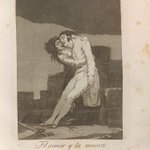
El amor y la muerte. Love and Death.
1
2
1
44
Goya contrasts the themes of love and death, using Calderon's lover as an example of losing love through rash actions.
1
12
Goya critiques the unsatisfactory nature of old men marrying young women, likening it to the eternal torture of Tantalus in Greek mythology.
12
¡Que se la llevaron!. They carried her off!.
1
1
16
A woman is being abducted by two figures in the dark, possibly men, their faces concealed. She resists, but they overpower her. Goya conveys her suffering, depicting the scene at night with dark tones.
17
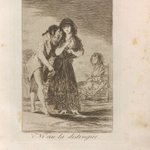
Ni así la distingue. Not even so can he make her out.
1
15
A man views a woman through a monocle, highlighting the limitations of his perspective.
14
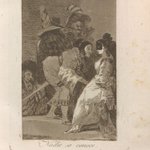
Nadie se conoce. No one knows each other.
1
1
18
In this dark scene, people wear masks, concealing their true identities. Goya highlights the theme of deception and the uncertainty of human nature, suggesting that true selves are often hidden.
22
Goya uses intense black inks, suggesting a possibly nighttime setting, where the brightest areas are the women's garments and the young woman's face and generous neckline. The plate may allude to hidden intentions or the world of prostitution.
11
Goya mocks the man who is dressed in baby clothes, has his fingers in his mouth, and a look of terror in his eyes, though he's bearded and obviously strong. The nanny or mother grieves in the shadow behind him, so disappointed in his failure to become a man.
16
Que viene el Coco. Here comes the Bogeyman.
1
1
28
This plate addresses irrational fears and the power of superstition, featuring a woman warning her child about the Bogeyman. It reflects the widespread superstitions and anxieties of the time, including fear of the unknown.
24
El sí pronuncian y la mano alargan al primero que llega. They say 'yes' and extend the hand to the first who arrives.
1
35
Goya satirizes the practice of arranged marriages, highlighting the lack of agency and choice for young women in such arrangements. This commentary is relevant to the societal norms and gender roles prevalent in 18th-century Spain.
33
Francisco Goya y Lucientes, Pintor. Francisco Goya and Lucientes, the Painter.
1
2
63
This plate serves as a self-portrait of Francisco Goya and introduces the theme of the artist's dream, a recurring motif in the series. It reflects Goya's anxieties and the need to express his critical views during a time of political and social turmoil in Spain.
51