San Francisco, CA
Joined November 2006
- Tweets9.2K
- Following2.3K
- Followers2.5K
- Likes10.3K





Pinned Tweet
Perhaps someday banking will shrink to a clearing algorithm. Everyone will pay w/ their own promises and will vote by accepting others'.
The solution is to put an AI chip in your cow brain. Some will do it, some will not.
This quoted post is unavailable.
"4. It's pretty clear we're living through the reinvention of the computer. The model is the CPU, the harness is the operating system, and skills and plugins are the apps. Thinking about it that way makes it easier to see where the whitespace is."

I spent 48 hours in SF hanging out with billionaires, data labs and AI founders and execs running $1B to $100B companies.
My observations:
1. Sooo MANY stories of data brokers making like $2M a WEEK selling company data to labs. I can't tell if it's the beginning or a bubble, and I kept wondering which niches are left. Digging into it actively.
2. At dinner, someone asked the table, "If a new model drops next month, does your company get better or worse?" HALF the table went quiet! I think that's the best question to ask about any AI startup right now.
3. The bar people talk about now is hitting $1B in revenue in 12 months (I guess that's the new unicorn?). What I didn't hear much about is retention. AI revenue can come in fast and leave fast, and I think we're going to see a lot of stories of AI companies with huge revenue and terrible retention.
4. It's pretty clear we're living through the reinvention of the computer. The model is the CPU, the harness is the operating system, and skills and plugins are the apps. Thinking about it that way makes it easier to see where the whitespace is.
5. We're maybe 12 months from an agent that can watch you work for a week and then do your job without any instructions. The screen recording plus agent memory plus local model combination makes this possible right now.
6. Agent harnesses feel like the new GPT wrappers, in a good way, especially vertical ones. The best teams I talked to treat the model as swappable. One founder walked me through routing different models to different jobs: one for taste and visuals, a cheaper one for the everyday stuff, another for text.
They use prompts they can move across models over fine-tuning, and A/B test the output on what users actually do with it: do they edit it, export it, share it? A vertical harness is basically four things: the connectors for that industry's data, evals written by people who know the work, rules for what the agent can and can't touch, and a clean screen for a human to review. The model is maybe 20% of it.
7. There's a lot of reverse engineering going on/cloning going on more than I've ever seen. People are decompiling software and rebuilding it with agents, and someone showed a suite of like 10 apps that are worth $5B+ each all that he cloned open source. Me and everyone are still thinking through what it means when software gets this easy to copy.
8. My guess is the value moves to data. If the software can be rebuilt quickly, what's worth paying for in a legacy SaaS company is the years of customer data and workflows inside it. Some SaaS companies are secretly data companies.
Gets me thinking about how do you truly value data for this saas companies? Like if we were buying these dying saas companies at 2x ARR before (as example), maybe there is a better metric. Idk, just thinking out loud here.
9. It feels like a good chunk of legacy software won't make it to the agentic era, especially anything built around people clicking through a lot of screens.
10. Every company I talked to wants to pipe its internal data into one place and expose it to agents through MCP. Then they look at the data and realize it's a mess: five versions of the same customer, old Slack channels, PDFs nobody can search. Cleaning that up feels like a big consulting opportunity!
11. A lot of founders are building the basic building blocks for agents: APIs, data layers and tools. Some of the companies I saw barely have a UI because the main user is an agent. I really believe the startups that build primitives to this agentic era will do extremely well. Building blocks is the best way to think about it.
12. Labs can get plenty of training data, but it's harder to get real examples of agents failing inside companies. Whoever has those logs has something valuable.
13. Someone running a big consumer company told me the next fight is over memory. The model that remembers the most about you wins, and the smartest model matters less than people think.
14. Physical AI came up a lot. Astra I think was the first model that got people into AI can actually do CAD, and I think a lot of people are thinking what does vibe manufacturing really look like. The line I keep thinking about came from a robotics founder: the hardest problems in AI are deployment problems now, not research problems. Their robots work on their own, call a human when they get stuck, and every one of those calls becomes training data.
15. Cybersecurity companies are having a moment and are actually cool companies to build now, especially the ones that clean up after a breach. Every agent with access to your systems is a new door into your company, and a lot of those doors were left open.
16. Some startups are worth more dead than alive now. A shutdown company with 5 years of Slack, email and code can get paid for licensing all of it. I wouldn't be surprised if founders start factoring that into when they shut down.
17. People are starting to talk about monetizing the agent web. It feels really early, but when the most popular user of the internet is an agent, what startups should you be building?
18. I think agent insurance is coming. Once an agent makes an expensive mistake, insurers will want audits before they cover anyone.
19. Several people said the hire they want most is someone with taste who can write evals. The models are getting good at generating ideas, so the hard part is judging which ones are good.
20. New trend I observed: startup raises VC, uses venture dollars to become a creator, startup fails, founder falls back on being a full-time creator and incubates other products bootstrapped.
21. Getting SIGNIFICANT distribution is HARD right now. Founders are sponsoring buses, buying billboards like crazy and throwing parties with famous DJs to get noticed. Kinda feels dotcom era in that sense.
Attention is what's scarce! The growth guy going viral sharing his UGC strategy from Wispr Flow is a good example. It's the sauce everyone wants, and I truly believe there are probably only 50 people on the planet who know how to scale these types of businesses efficiently in this era.
Always good to get that dose of SF. I felt sooo lucky to have such an incredible trip during such an incredible time in building businesses. Surreal in so many ways.
Happy to be home and locked in.
Until next time!


In a world of personal agents, product quality wins

Assorted things I've been mulling over regarding agents in the economy:
• Companies are in some sense the original superintelligence. It's often the case that they can use their amortized cognitive surplus to advance their interests against those of certain consumers: relative to the optimization capacity of companies, consumers can be inattentive, underinformed, irrational, etc. (Think, say, of some of the classic insurance upsells at the end of a booking process, which is typically priced substantially above what a regular policy would cost.) Herbert Simon introduced the idea of bounded rationality, and firms often end up benefiting from it. Thanks to personal agents, we will probably get somewhat more rational in how we engage with companies.
• How exactly will outcomes change? Well, certain kinds of price discrimination will work less well (how do coupons work if every agent hunts fastidiously for them?), and certain kinds of customer cross-subsidy will change (today, people who forget to cancel subscriptions subsidize those who don't). Taken across the economy as a whole, I'm not sure what the incidence of all of this will be.
• In corporate strategy, people have long debated the relative importance of distribution and product quality. Perhaps you've made something better, but does anyone know about it? Won't people just continue to buy the ACME Corp Mousetraps? Personal agents will, I think, act as a kind of structural subsidy for product quality. How would markets look different if individuals always spent at least 10 hours researching their purchases? On the margin, focusing on making a product better is, I think, going to become a more effective strategy for companies. This is good!
• It true, a corollary is that information about product quality will become more important and impactful. Today, most people have very limited ability to aggregate and integrate such data, but agents will have insatiable thirst for such signals. (It's often said that data is becoming more valuable because it helps in the training of models. That's obviously true, but I think there's a secondary way in which it's more valuable simply as a complement to cheaper intelligence.)
• A big question is whether agents will increase superstar effects (rational agents all settle on the same product) or increase dispersion (because everyone has slightly different tastes and preferences, which agents are good at eliciting, finally overcoming the artificial clustering we've been subjected to).
• Many internet companies have monetized demand routing, which is in turn often predicated on short attention spans. "I'll click on the first thing I see." This has led to some amount of inefficiency, as companies try to propitiate capricious ranking algorithms and incur various placement fees. It's not all deadweight loss (willingness to pay is itself a kind of signal, which is valuable to buyers), but it's not great. How will the nature and value of this routing change in a world of personal agents? I don't know the answer, but I think that the effects might be pretty big.
• Much of what I'm writing hinges on the assumption that personal agents will be on the consumer's side. I suspect that that will be the winning strategy, but whether it's true, and what it means to be true, involves a lot of other questions.
Taken as a whole, the market is a massively parallelized, decentralized, and highly imperfect value attribution machine, and, taking stock of all of the effects, it seems to me that the quality point may well be the biggest: that agents will change the nature of the backpropagation such that the rewards for better products increase. Maybe this is too optimistic, but I suspect (and hope) that companies that make things that they're proud of will feel that the universe is a little more partisan in their favor.
Giyom Lebleu retweeted

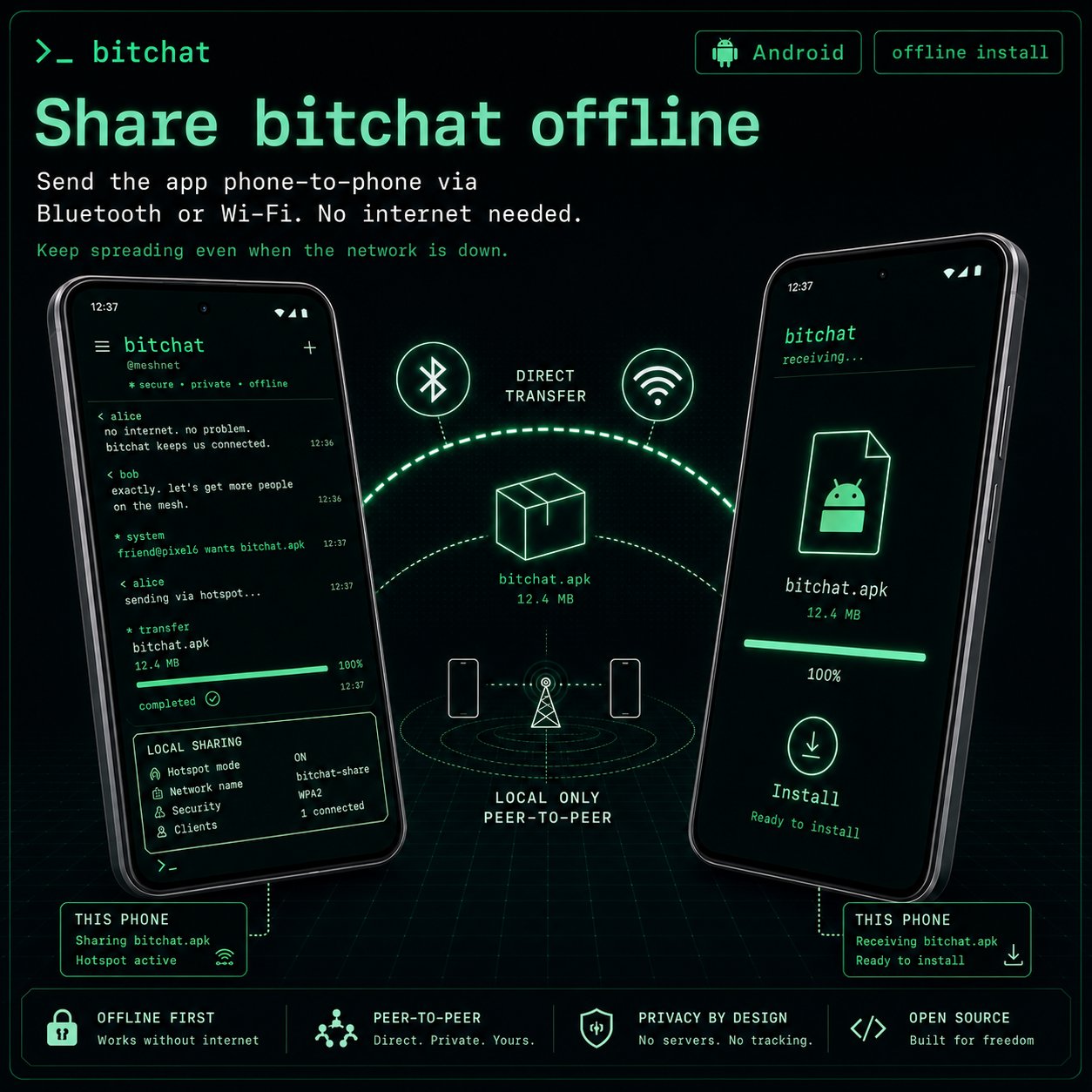
REMINDER: bitchat is now capable of sending itself to another Android phone with no internet, AppleStore or PlayStore required.
With the updated bitchat app on your phone. You can share the app using NearbyShare or simply turn on your WiFi hotspot, share the APK file over HTTP


Robinhood and other apps have taught a generation that trading = investing. Prediction markets are now teaching that gambling is trading is investing.
The opportunity is to teach again that investing is buying with conviction and holding for years.

At the gym tonight, there just so happened to be about 8 high school guys in the sauna.
The entire 15 minutes I was in there with them, the entire conversation was about Kalshi, Draftkings, and how the entire school is hooked.
How they get gambling tips from TikTok, what kids are losing the most, who is taking the most money from their parents to gamble, how they sneak their parents identity to get around age limits, etc...
Not to sound like that guy looking down on the younger generation but I had no idea how bad the online gambling situation was.
This isn't the first time either. Anytime I'm around high school kids, all they talk about is sports and gambling.
These online platforms really have that generation hooked and it's not going to lead to a good outcome.
Giyom Lebleu retweeted

Anecdotal, but very bad!!!
At the gym tonight, there just so happened to be about 8 high school guys in the sauna.
The entire 15 minutes I was in there with them, the entire conversation was about Kalshi, Draftkings, and how the entire school is hooked.
How they get gambling tips from TikTok, what kids are losing the most, who is taking the most money from their parents to gamble, how they sneak their parents identity to get around age limits, etc...
Not to sound like that guy looking down on the younger generation but I had no idea how bad the online gambling situation was.
This isn't the first time either. Anytime I'm around high school kids, all they talk about is sports and gambling.
These online platforms really have that generation hooked and it's not going to lead to a good outcome.

g-AI-co: 5 minutes could save you 75%

Yesterday I uploaded my auto insurance policy to Meta @Muse and asked for a better rate with identical coverage. In ~5 minutes, it found a policy saving me $3,500 /year, bought it, and canceled my old one.
I knew I was overpaying. I’d abandoned several attempts to switch because insurance websites and aggregator portals are so painful.
Why fill out forms, compare quotes, and field sales calls when an agent can finish the entire job in five minutes? Killer product.

Giyom Lebleu retweeted

This is one of my favorite features of the iPhone Duo.
When you’re on FaceTime, you can utilize both screens and cameras. If you’re pointing the camera at someone in front of you, the person on the other side of the phone can talk to whoever you’re on the call with too.
You don’t need to flip the phone like we do now. Very impressive software/hardware integration.
Giyom Lebleu retweeted

A Quantum Safe Bitcoin tx on mainnet -- Amazing!
Two important things about this important tx:
(1) It took a lot of work by Avihu and StarkWare engineers to actually get this tx mined, and thanks to @MARAFoundation_ for their Slipstream service.
This kind of quantum-safe Bitcoin tx requires expertise and dedication, and this tx shows our determination to go to every length possible to make our tech, and blockchain, future proof.
(2)This amazing feat should not be viewed as a message saying "Bitcoin is prepared for the quantum threat". Far from it.
I hope whatever attention this brilliant work gets will also help folks hear loud and clear our message: Huston, we've got a problem, and the way to fix it should be to get serioius about serious soft forks for Bitcion. That's how catastrophe can be avoided, and we still have time.
There are ways to prepare for the quantum era. We should all be working to make them happen.
Yahoo!

A few months later - a Quantum Safe Bitcoin tx on mainnet: mempool.space/tx/305a24ffea9…
Thanks to StarkWare's @giladi_tom85141 taking this to the finish line and @MARAFoundation_ Slipstream mining this non-standard tx
Also @robin_linus & @Ethan_Heilman on previous work led to QSB

Interesting

Did you catch that?
The new maxed out 256GB M5 Ultra Studio can be leased for *basically* the same price as a Max subscription across providers.
For $257 a month, you can have on device intelligence that never runs out of tokens, and sips power.
Best part is you can buy out the lease at the end of the lease for a $0 penalty. That's right 0% interest.
So if the price is $12.9K and your lease is $9.9K over 36 months, then you pay the $3K difference and you now own that device.
Or you can trade up into the M8 Ultra or whatever.
I'm excited for this. 1.2 TB/s is pretty impressive. Can't wait to see some real benchmarks and testing on this.
I'm waiting for the 512GB.


Want to help the next generation reach financial independence faster?
@step is now part of @Beast and have a few open roles for builders, across design, engineering and product.
step.com/careers or DM me


Giyom Lebleu retweeted

many folders in fintech

The Full Neobank Scaling Playbook ($0 → $1B)
📂 Neobank
┃
┣ 📂 Infrastructure
┃ ┣ 📂 Sponsor Bank
┃ ┣ 📂 Card Issuer
┃ ┣ 📂 Yield Provider
┃ ┣ 📂 Virtual ACH Accounts
┃ ┣ 📂 Wallets
┃ ┗ 📂 Stablecoin Orchestrators
┃
┣ 📂 Regulatory & Compliance
┃ ┣ 📂 KYC / KYB
┃ ┣ 📂 AML
┃ ┣ 📂 Sanctions Screening
┃ ┣ 📂 Transaction Monitoring
┃ ┗ 📂 Compliance Program
┃
┣ 📂 Core Banking Product
┃ ┣ 📂 Checking Accounts
┃ ┣ 📂 Savings Accounts
┃ ┣ 📂 Debit Cards
┃ ┣ 📂 Credit Cards
┃ ┣ 📂 ACH
┃ ┣ 📂 Wires
┃ ┣ 📂 Stablecoins
┃ ┗ 📂 Travel & Hotels / Concierge VIP
┃
┣ 📂 Money Movement
┃ ┣ 📂 ACH Push / Pull
┃ ┣ 📂 Wires
┃ ┣ 📂 RTP / FedNow / Swift
┃ ┣ 📂 Push To Card
┃ ┣ 📂 Stablecoins
┃ ┗ 📂 Cross-Border Payments
┃
┣ 📂 Cards
┃ ┣ 📂 Debit
┃ ┣ 📂 Credit
┃ ┣ 📂 Employee Cards
┃ ┣ 📂 Card Controls
┃ ┣ 📂 Rewards
┃ ┗ 📂 Premium / Metal Cards
┃
┣ 📂 Credit
┃ ┣ 📂 Underwriting
┃ ┣ 📂 Debt Facility
┃ ┣ 📂 Working Capital
┃ ┣ 📂 Revolving Credit
┃ ┣ 📂 Term Loans
┃ ┗ 📂 Collections
┃
┣ 📂 Treasury
┃ ┣ 📂 Treasury Bills
┃ ┣ 📂 Money Market Funds
┃ ┣ 📂 Yield Products
┃ ┣ 📂 Liquidity Management
┃ ┗ 📂 FDIC Coverage
┃
┣ 📂 ICP & Positioning
┃ ┣ 📂 Consumer
┃ ┣ 📂 SMB
┃ ┣ 📂 Startups
┃ ┣ 📂 Middle Market
┃ ┣ 📂 Enterprise
┃ ┣ 📂 Vertical Specific
┃ ┣ 📂 Crypto Native
┃ ┗ 📂 Ultra High Net Worth
┃
┣ 📂 Distribution
┃ ┣ 📂 Founder Brand
┃ ┣ 📂 Organic Content
┃ ┣ 📂 Referral Programs
┃ ┣ 📂 Strategic Partnerships
┃ ┣ 📂 Vertical SaaS
┃ ┗ 📂 Enterprise Sales
┃
┣ 📂 Customer Acquisition
┃ ┣ 📂 X / LinkedIn / Insta / Tiktok
┃ ┣ 📂 SEO / GEO
┃ ┣ 📂 Paid Acquisition
┃ ┣ 📂 Events
┃ ┣ 📂 Partnerships
┃ ┣ 📂 Influencers
┃ ┣ 📂 Warm Introductions
┃ ┗ 📂 One-to-Many Distribution
┃
┣ 📂 Onboarding
┃ ┣ 📂 Account Creation
┃ ┣ 📂 KYC / KYB
┃ ┣ 📂 Risk Review
┃ ┣ 📂 Account Approval
┃ ┣ 📂 First Deposit
┃ ┣ 📂 Card Activation
┃ ┣ 📂 First Transaction
┃ ┗ 📂 Direct Deposit / Payroll Switch
┃
┣ 📂 Activation
┃ ┣ 📂 Fund Account
┃ ┣ 📂 Connect External Bank
┃ ┣ 📂 Add Card to Wallet
┃ ┣ 📂 Move Direct Deposit
┃ ┣ 📂 Move Payroll
┃ ┣ 📂 Pay First Bill
┃ ┗ 📂 First Card Spend
┃
┣ 📂 Primary Account Strategy
┃ ┣ 📂 Direct Deposit
┃ ┣ 📂 Payroll
┃ ┣ 📂 AP / AR
┃ ┣ 📂 Bill Pay
┃ ┣ 📂 Accounting Integrations
┃ ┗ 📂 Multi-Product Adoption
┃
┣ 📂 Monetization
┃ ┣ 📂 Interchange
┃ ┣ 📂 Deposit Float
┃ ┣ 📂 Treasury Yield
┃ ┣ 📂 Lending / Credit
┃ ┣ 📂 FX Spread
┃ ┣ 📂 Wire Fees
┃ ┗ 📂 Subscription Revenue
┃
┣ 📂 Unit Economics
┃ ┣ 📂 Revenue Per Customer
┃ ┣ 📂 Gross Margin
┃ ┣ 📂 CAC
┃ ┣ 📂 LTV
┃ ┣ 📂 Rewards Cost
┃ ┣ 📂 Fraud Losses
┃ ┗ 📂 Credit Losses
┃
┣ 📂 Retention
┃ ┣ 📂 Product Stickiness
┃ ┣ 📂 Multi-Product Expansion
┃ ┣ 📂 Customer Success
┃ ┣ 📂 Personalization
┃ ┗ 📂 Switching Costs
┃
┣ 📂 Risk
┃ ┣ 📂 Fraud
┃ ┣ 📂 Credit
┃ ┣ 📂 ACH Returns
┃ ┣ 📂 Chargebacks
┃ ┣ 📂 Reserves
┃ ┗ 📂 Loss Prevention
┃
┣ 📂 Operations
┃ ┣ 📂 Customer Support
┃ ┣ 📂 VIP Support
┃ ┣ 📂 Disputes
┃ ┣ 📂 Treasury Ops
┃ ┣ 📂 Credit Ops
┃ ┣ 📂 Fraud Ops
┃ ┗ 📂 Sponsor Bank Management
┃
┣ 📂 Metrics
┃ ┣ 📂 Total Deposits
┃ ┣ 📂 Average Balance
┃ ┣ 📂 TPV
┃ ┣ 📂 Card Spend
┃ ┣ 📂 Funded Accounts
┃ ┣ 📂 Products Per Customer
┃ ┣ 📂 Gross Margin
┃ ┣ 📂 CAC / LTV
┃ ┗ 📂 Net Revenue Retention
┃
┣ 📂 Product Expansion
┃ ┣ 📂 Banking
┃ ┣ 📂 Credit
┃ ┣ 📂 Payments
┃ ┣ 📂 Treasury
┃ ┣ 📂 Accounting
┃ ┣ 📂 Payroll
┃ ┗ 📂 Wealth Management
┃
┣ 📂 Scale
┃ ┣ 📂 Hiring
┃ ┣ 📂 Engineering
┃ ┣ 📂 Sales
┃ ┣ 📂 Partnerships
┃ ┣ 📂 Operations
┃ ┣ 📂 Risk & Compliance
┃ ┣ 📂 International
┃ ┗ 📂 M&A
┃
┗ 📂 Moats
┣ 📂 Distribution!!
┣ 📂 Brand!!
┣ 📂 Banking Relationships
┣ 📂 Regulatory Infrastructure
┣ 📂 Proprietary Data
┣ 📂 Credit
┗ 📂 Switching Costs
"The cost of writing code may be going to 0. What about checking it? making sure it is correct? that it does what we want? that cost is not zero at all. Every new line of code is a liability."

Xavier Leroy (creator of OCaml) is an expert in compilers, formal verification of software and functional programming.
This interview should be an approachable resource if you're curious about formal verification of software since I was learning that on the fly during it.
In this episode:
• OCaml compared with Rust and JavaScript
• What is formal verification and how does it work
• How languages call each other across boundaries
• How to address "almost-correct" LLM code
• How type inference works in programming languages
Where to watch:
• YouTube - youtu.be/9Cswiqrq6So
• Spotify - open.spotify.com/episode/7cd…
• Apple Podcasts - podcasts.apple.com/us/podcas…
• Transcript - developing.dev/p/creator-of-…
Thank you to the sponsor of this episode for supporting my work:
• WorkOS: makes your app Enterprise Ready with easy to use APIs to add SSO, SCIM, RBAC, and more in just a few lines of code, check them out at workos.com/
Chapters:
00:00 - Intro
00:43 - What sets OCaml apart
04:39 - OCaml vs Rust
07:57 - Why is manual memory management more performant
11:21 - Javascript vs OCaml
14:00 - Famous Rob Pike quote
16:05 - Type inference and how it works
22:12 - What is formal verification and how does it work
40:07 - What made multicore support difficult for OCaml
50:17 - How programming languages interface and call each other
57:41 - The danger of almost-correct LLM code
01:05:39 - How LLMs will change programming languages
01:10:26 - Industry vs academia
01:15:05 - Most interesting unsolved problems
01:18:30 - Top book recommendations for engineers
01:21:17 - Advice for his younger self
01:23:31 - Outro