AI something @Aleph__Alpha. Post training LLMs

Heidelberg, Germany
Joined August 2018
Murali Kondragunta retweeted
Every architectural choice has a cost. Choose where to pay it. @alessio__serra and @PitNeitemeier derive from first principles how design choices allocate parameters, FLOPs and KV cache, compare open models, and share some of the tooling we used to design Kolibri.
9
20
6
127
12,440
Murali Kondragunta retweeted
People saying "it's worse than Qwen3.6 35B" don't understand that support comes from the bottom. If we don't support the local AI ecosystem, no matter the stage, no matter the location, we're always going to fall prey to "yeah but America/China does it better". Those who tried to build something the day GPT tool calling came out (🖐) know very well the pain of getting malformed tool calls and the model going haywire with the most trivial requests. That was just 3 years ago. Today you can run an even better model on a laptop. I'm a huge fan of frontier labs, they are the pioneers of what we have today and I'll forever be grateful, but local AI is one of the most important (and frankly exciting) challenges of this decade. We're all in it together. Supporting each other is the least we can do. So congrats on the release! 🇪🇺
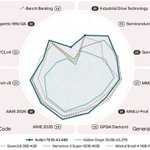
Small bird, fast wings, Kolibri is here. 78B parameters. 3.46B active. Up to 1M tokens of context. Built in Europe. Now the weights are yours. Run it on your own hardware, under Apache 2.0.
33
37
5
562
23,052
Murali Kondragunta retweeted
Big congrats to my friends at Aleph. Glad I was still around when this team formed and got to see how much work went into building it end to end. kolibri.constructlabs.com We will offer inference for free for the next ~48 hours. Hit me up if you are interested in bringing this into production or post-training it.
Small bird, fast wings, Kolibri is here. 78B parameters. 3.46B active. Up to 1M tokens of context. Built in Europe. Now the weights are yours. Run it on your own hardware, under Apache 2.0.
7
11
6
86
92,068
Murali Kondragunta retweeted
I see people being sarcastic but there is a real demand for it: if you want to embed models in industrial processes you need to ease audit and doing local language (and even more local professional register) remove frictions.
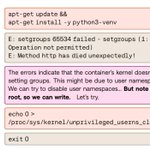
Reasoning models think in English, even on German prompts. We asked what it costs to make one think in German. Answer: a valley. Small doses of German reasoning data hurt, large doses mostly recover.
6
4
97
5,529
Murali Kondragunta retweeted
Reasoning models think in English, even on German prompts. We asked what it costs to make one think in German. Answer: a valley. Small doses of German reasoning data hurt, large doses mostly recover.
14
27
26
250
104,500
Murali Kondragunta retweeted
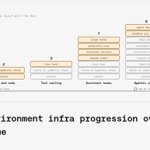
RL is cool, but what do you actually need to know about hardware and infra to predict its future? Check out our new piece on tensoreconomics:
4
18
6
78
20,074
Murali Kondragunta retweeted
🚀 Excited to release PTA-Text, a Text-only Click model, now available for demo and as a checkpoint on Hugging Face! It's only 95M parameters and blazing fasttttt!!!! Thanks for pushing it @gitlostmurali ! 🔍 Try PTA-Text now: Hugging Face Space - PTA-Text v0.1 (lnkd.in/gzzBrWb7) @OpenInterpreter @hellokillian might be interesting?
1
3
201
Introducing Telugu LLM Labs! An independent joint initiative by @ravithejads and me to advance the Telugu NLP space and give a better AI experience for 100 million Telugu speakers in the world! Link: huggingface.co/Telugu-LLM-La… Goal: > Contribute to open datasets focusing on Telugu (native script + romanized). > Share our experiments (models, embeddings, etc) building LLMs and SLMs focused on Telugu. We are starting with the release of two dataset contributions today! 1. Romanized Telugu Pretraining dataset Much of the online conversations (eg: WhatsApp or YouTube comments) happen in romanized Telugu! Instead of typing "ఎలా ఉన్నారు?" (How are you?), people type "ela unnaru?" using a romanized script for most online interactions. Datasets in romanized telugu are scarce whether one wants to do additional pretraining on a model or finetune it. Most datasets are available only in Telugu native script. To this effect, we are releasing "uonlp_culturaX_telugu_romanized_100k", where we have romanized the first 108k rows from the culturaX_telugu dataset and it is available on @huggingface This dataset is ideal if you want to do additional pre-training for CLM (casual language model/next-word prediction) for a tiny LLM like TinyLlama 1.1B. 2. SFT (Supervised Finetuning Dataset) In Telugu (native + romanized) If you want to fine-tune an existing language model the most popular way is to collect/curate instruction datasets and train on these prompt/response pairs. However, there is a severe scarcity of instruction datasets in Indic languages. One way to do it is via translation where existing English Instruction datasets are translated to Telugu etc. But there are challenges as there are grammar prompts, code prompts, etc that are not relevant or incorrectly translated (eg: code for loops) to Telugu or other native languages. To this effect, we are releasing two datasets "yahma_alpaca_cleaned_telugu_filtered_and_romanized" and "teknium_GPTeacher_general_instruct_telugu_filtered_and_romanized" where we have taken the base datasets (understood from prefix) and translated as well as transliterated the rows to Telugu. We have further filtered them with NLP classification systems to remove the rows that are "English Language Specific" or "Coding related" so that the resultant dataset is cleaner and more contextual. All of these are released on Huggingface Hub in the "Telugu-LLM-Labs" space. We are experimenting with the training of open-source models like Llama 2, Mistral, and TinyLlama on these Telugu translation and transliteration datasets. Please stay tuned for more updates!
25
21
9
219
18,168
Murali Kondragunta retweeted
We are very happy to announce the publication of our new paper entitled "Grounding spatial relations in text-only language models", with @AnderSala and @eagirre at @Hitz_zentroa . Paper: sciencedirect.com/science/ar… Code: github.com/gazkune/SpatialLM 🧵
1
4
1
12
1,068
Murali Kondragunta retweeted
Just a reminder that the default hyperparameters of LoRA are performing poorly. You need to attach LoRA modules to all layers for it to perform as well as full fine-tuning. Once you do that, we find there is no difference between LoRA and fine-tuning. arxiv.org/abs/2305.14314
LoRA is not a drop-in replacement for Full Finetuning. Even though it reduces the compute requirements by 3x it comes with certain limitations. The data preparation needed for both is also different. 🔑 - LoRA requires much more data to converge compared to full FT. This can be because full FT quickly learns and overfits whereas left methods learn unstably. - Determining the rank of Lora still requires a lot of trial and error. ⭐️ when you have a lot of data and limited compute go for LoRA, while with limited data and ample compute go for full finetuning. Here are some of the papers comparing the approaches arxiv.org/pdf/2304.08109.pdf arxiv.org/pdf/2304.14999.pdf
16
108
11
650
129,562
Murali Kondragunta retweeted
We're hiring PhD students! caisa-lab.github.io/2023/08/…
6
72
2
235
36,574
It finally happened. Reviewer 2 listed as a reason to reject our EMNLP paper: "Maybe you can just use ChatGPT for this task" I don't know if ChatGPT can perform the task better than our system, but I am 100% sure that ChatGPT could have written a better review than this Reviewer
9
12
1
90
10,385
Murali Kondragunta retweeted
"How is LLaMa.cpp possible?" great post by @finbarrtimbers finbarr.ca/how-is-llama-cpp-… llama.cpp surprised many people (myself included) with how quickly you can run large LLMs on small computers, e.g. 7B runs @ ~16 tok/s on a MacBook. Wait don't you need supercomputers to work with LLMs? TLDR at batch_size=1 (i.e. just generating a single stream of prediction on your computer), the inference is super duper memory-bound. The on-chip compute units are twiddling their thumbs while sucking model weights through a straw from DRAM. Every individual weight that is expensively loaded from DRAM onto the chip is only used for a single instant multiply to process each new input token. So the stat to look at is not FLOPS but the memory bandwidth. Let's take a look: A100: 1935 GB/s memory bandwidth, 1248 TOPS MacBook M2: 100 GB/s, 7 TFLOPS The compute is ~200X but the memory bandwidth only ~20X. So the little M2 chip that could will only be about ~20X slower than a mighty A100. This is ~10X faster than you might naively expect just looking at ops. The situation becomes a lot more different when you inference at a very high batch size (e.g. ~160+), such as when you're hosting an LLM engine simultaneously serving a lot of parallel requests. Or in training, where you aren't forced to go serially token by token and can parallelize across both batch and time dimension, because the next token targets (labels) are known. In these cases, once you load the weights into on-chip cache and pay that large fixed cost, you can re-use them across many input examples and reach ~50%+ utilization, actually making those FLOPS count. So TLDR why is LLM inference surprisingly fast on your MacBook? If all you want to do is batch 1 inference (i.e. a single "stream" of generation), only the memory bandwidth matters. And the memory bandwidth gap between chips is a lot smaller, and has been a lot harder to scale compared to flops. supplemental figure medium.com/riselab/ai-and-me…
79
703
80
4,469
919,722
Murali Kondragunta retweeted
Mother of all LLM jailbreaks: Automatically constructing adversarial prompts using OSS model (Vicuna) weights that work against ChatGPT, Bard, Claude, and Llama 2 Screenshots: Demo of response without/with jailbreak suffix Linked thread from lead author has details/PDF
🚨We found adversarial suffixes that completely circumvent the alignment of open source LLMs. More concerningly, the same prompts transfer to ChatGPT, Claude, Bard, and LLaMA-2…🧵 Website: llm-attacks.org/ Paper: arxiv.org/abs/2307.15043
36
189
43
1,195
502,757
Murali Kondragunta retweeted
this paper's nuts. for sentence classification on out-of-domain datasets, all neural (Transformer or not) approaches lose to good old kNN on representations generated by.... gzip aclanthology.org/2023.findin…
119
803
374
4,622
3,385,679
Enjoy the origin story of Wizard-Vicuna-13B-Uncensored-SuperHOT-8k-GGML models. After this you can also pretend like me to be an AI enthusiast on /lmg
45
199
49
1,469
382,977
Murali Kondragunta retweeted
When @_Laurent and I started learning about diffusion models, we were puzzled by the amount of jargon and concepts. So, we derived a model from scratch with our own graphics-people intuitions. Simple derivation, simple implementation, SOTA quality. ggx-research.github.io/publi…
28
336
18
1,785
442,142
Murali Kondragunta retweeted
⚠️Did #ChatGPT cheat on your test? Probably yes Many papers have evaluated ChatGPT on various benchmarks. However, it is important to consider that LLMs might have seen and memorized these datasets during pretraining. Read our latest blog post: hitz-zentroa.github.io/lm-co… 🧵1/5
8
93
18
324
114,492
Replying to @4nderB
@4nderB and myself are offering a PhD position on this exciting project in collaboration with two other PhD students and a postdoc @bcbl_ On top of that our student will work head to head with our growing group of amazing PhD students and researchers in our center!
📢 JOB OFFER 📢 We are looking for candidates for a funded PhD position in Deep Learning for Neuroimaging to Speech Decoding. More information 👇🏼 hitz.eus/2023_PhD_DL_Neuroim…
5
8
754
Murali Kondragunta retweeted
📢 JOB OFFER 📢 We are looking for candidates for a funded PhD position in Deep Learning for Neuroimaging to Speech Decoding. More information 👇🏼 hitz.eus/2023_PhD_DL_Neuroim…
11
3
12
2,073