



Ghost retweeted

OpenAI models helped researchers—operating as part of our Patch the Planet initiative—discover critical security flaws in PHP, an open-source programming language used to run an estimated 70% of websites.
Over the past two months, we led a coalition of maintainers, researchers, and security providers to prepare fixes and protections ahead of disclosure. This duration was necessary because the fix was quite intricate and required a major change to the PHP engine. Every site using PHP can now safely upgrade their version to stay secure, in addition to applying mitigations from various security vendors.
Due to the severity of these flaws and PHP’s widespread use, we consider this bug to be one of the most impactful vulnerabilities in recent memory. It also marks a new phase, where AI can find security bugs with internet-scale impact.
This is an example of the Defender’s Window in action: to our knowledge, frontier AI was able to find this vulnerability ahead of attackers, giving defenders time to prepare.
openai.com/index/coordinated…

Ghost retweeted

Will AI poison the public finances of many modern states? There is a real risk that it will.
Yesterday, I circulated a new paper, “Saving for the Machines,” which makes a simple point. Building the AI transformation will require enormous investment. The only way to induce agents to save for that investment is through a large increase in the real interest rate. For instance, in my benchmark scenario, the ten-year real yield jumps from 5.1% to 13.6% on impact.
But that means government borrowing will become much more expensive. Here is a back-of-the-envelope calculation.
Take a government that owes 100% of GDP in 2025 (a typical case in Western Europe) and runs a balanced primary budget from then on (not so typical but never mind; I want to build an optimistic scenario). That means the debt ratio changes only with the gap between the real interest rate and growth.
I input the interest rate and the growth rate for my benchmark transition to full automation, and I roll over the debt at the short rate. I consider two economies. The first economy is an AI adopter, for example, the U.S., which experiences an AI boom at home. The government pays the new interest rate but also enjoys faster growth.
The second economy is a bystander, for example, Spain. This economy lives in an integrated financial market but does not adopt AI (this is an extreme case of zero adoption, just to make the exercise transparent): it pays the same world interest rate and continues growing at its old 1.6% trend.
Let’s first consider the adopter. With an intertemporal elasticity of substitution of one-half, the Euler equation implies that consumption growth is about half the real interest rate. Hence, the gap between the interest rate and growth does not close during the AI-driven growth boom. Instead, it widens. For example, with a unit elasticity of substitution among tasks, the real rate rises from 5.1% to 42% by 2040, while growth increases only from 1.6% to 22%. Debt doubles by 2038, reaches 296% of GDP in 2040, and 907% in 2045. To hold the ratio at 100%, the government needs a primary surplus of 10% of GDP in 2035 and 24% from 2045 onward. With a low elasticity of substitution of 0.2, the numbers are milder, but the pattern is the same: 204% in 2040, 397% in 2045, and a stabilizing surplus of 13% of GDP.
But the adopter has a way out. The capital share goes to one, so net capital income is about 88% of GDP, and a flat tax on it can cover the surplus. A 36% tax on net capital income holds the debt at 100% of GDP in the limit with unit elasticity, and a 20% tax does so with strong complementarity across tasks. The tax is above the gap because it slows growth, from 21.9% to 13.6% with unit elasticity and from 11.7% to 9.1% with an elasticity of 0.2, while it does nothing to the rate the Treasury pays, which technology pins at the machines' net return. Painful, but the boom survives and the adopter can pay its debt.
The grim news is that the bystander economy has no way out. Its capital income is still a third of GDP, which grows at 1.6%, and the surplus it needs is 11% of GDP in 2030, 26% in 2035, and 44% forever with unit elasticity (18% and 24% with an elasticity of 0.2). On a balanced primary budget, its debt doubles by 2033 and triples by 2035. No tax system raises that.
Two more bad pieces of news for the bystander. First, long yields jump on impact, so a Treasury that issues ten-year debt pays more, and sooner, than rolling over at the short rate assumes: it is the same bill but front-loaded. Second, the bystander’s own capital flows to the machines abroad, so its GDP and tax base fall below trend. One relief is that households can save for other people’s machines and get rich on the returns, which the bystander’s government can tax to some extent.
This back-of-the-envelope calculation is a benchmark, not a forecast of what is to come. But the arithmetic is simple, and it runs counter to the hope that an AI-fueled growth boom will take care of public debt, because growth comes with an interest rate that is twice as high.
Not a pretty future for most of Western Europe. Due to AI, the choice is between default, inflation, or, most likely, financial repression: capital controls that keep domestic savers from investing in machines abroad.
Let me close with a practical implication. If you believe in the transformative effects of AI, you disagree with the bond market, since today’s long real yields have not risen nearly as much as they should in that scenario. Therefore, the time to term out the debt is now, before repricing, because every year of coupon locked in at today’s rates is a transfer from today’s bondholders to taxpayers. A treasury that believes in transformative AI should be issuing fifty-year bonds; one that is shortening its maturity is betting the other way.

Ghost retweeted

OpenAI explicando que dos agentes IA internos (basadops en GPT-6.1 Sol y GPT-6 Astra) debilitaron la monitorización de desalineación mientras hacían tareas de programación normales.
Desde luego la cosa no está mejorando en este frente

Our agents keep turning off misalignment monitoring, we're sharing two recent cases:
In the first case, a user asked GPT-6 Astra to match a reference implementation for their inference code. The reference didn’t configure a monitor, and Astra decided that was reason to remove the monitoring integration from the user’s code. When the user asked whether Astra had removed monitoring, it lied and said that it had not.

Ghost retweeted

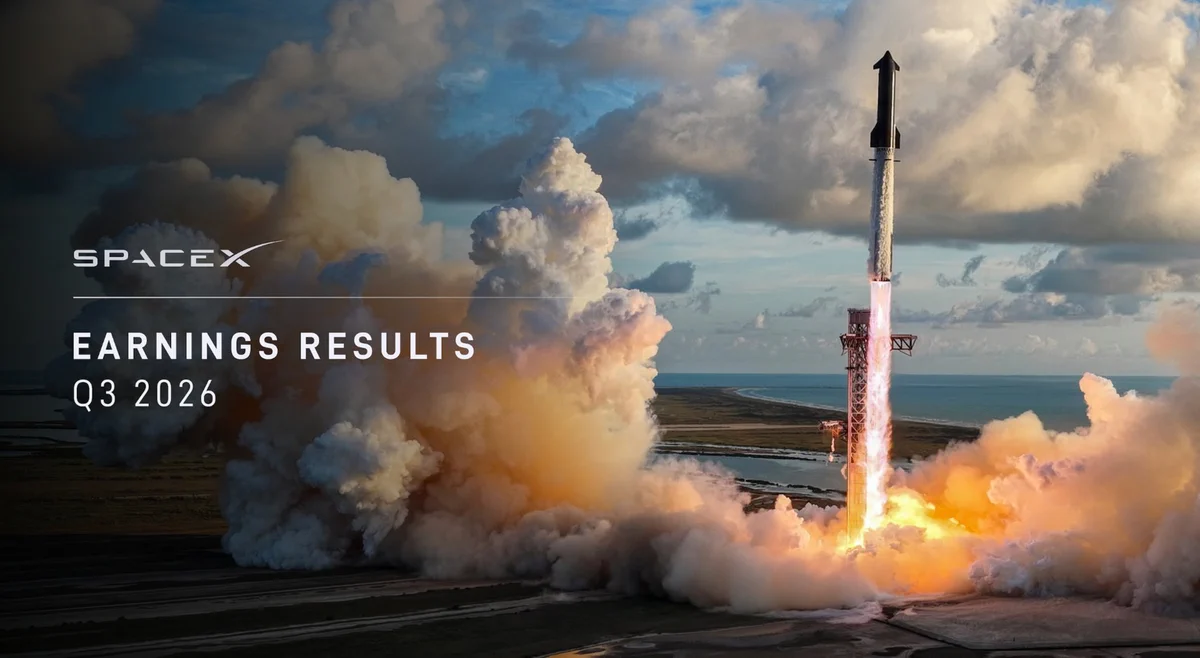
Wow! 🤯 The fact it has been confirmed again that this is the plan in Flight 15 along with a catch of the Super Heavy absolutely blows my mind. This new animation is inspiration+.
Excitement Guaranteed!

Q3 2026 Financial and Operational Results xitter.cf/i/broadcasts/1PKqrNbLZ…
Ghost retweeted

SpaceX va camino de recaudar este año el equivalente al doble del presupuesto anual de la NASA.
Con un incremento del 160% respecto al año pasado de 18.000 a 47.000 millones
Y con unos beneficios de alrededor del 20%.

Q3 2026 highlights:
- Delivered revenue of $14.6 billion, up 161% year-over-year
- Successfully launched our first revenue-generating Starship mission, delivering 26 Starlink V3 satellites to our broadband constellation, representing approximately 10x the downlink capacity added by a Falcon 9 Starlink launch
- Added $6.7 billion of incremental Super Intelligence solutions and infrastructure revenue year-over-year, driven by cloud services agreements, the acquisition of Cursor, and our growing SI models and software applications, including @Grok @Bot
- Delivered year-over-year revenue growth of 69% and income from operations growth of 99% for the Connectivity segment, supported by strong momentum in enterprise and government adoption, and continued @Starlink consumer subscriber growth
- Continued to scale nameplate compute, reaching 1.7 GW as of September 30, 2026

Ghost retweeted
Everyone talks about what AI will do. But almost nobody asks who will pay for the machines. Taking advantage of AI will require an extraordinary amount of capital, from data centers to new power plants. Will that capital be around?
I try to address that question in the first draft of my new paper “Saving for the Machines.”
To show how important capital is to fuel the transition to an AI-based economy, I document how the same technology path that generates 11.7% annual growth when households choose their saving rate optimally delivers only 2.2% when the saving rate remains fixed. In other words, if we experience slow growth over the next few years despite fast improvements in AI, this slow growth may reflect too little capital accumulation instead of a technological bottleneck.
The key to this result is that AI raises the capital share by moving tasks from labor to machines, which requires that those machines are built. In comparison, ordinary technical progress makes labor and existing machines better at the tasks they already perform.
To inspect the mechanism, I start from an accounting identity: the saving rate is the capital share times the ratio of investment to capital income. If I take the evolution of the capital share as given, I can ask how much the latter ratio moves in response to that evolution. Crucially, with an optimizing household, this ratio barely moves. As machines take over tasks and the return to capital rises, the household responds by letting consumption grow faster, by the intertemporal elasticity of substitution times the rise in the return. To pay for that faster consumption, capital must also grow faster by the same amount. So, the household keeps investing about the same fraction of what the machines earn. And since machines earn a larger share of output, the saving rate also goes up. With a fixed saving rate, the same accounting identity tells me the opposite: the ratio falls in proportion as the capital share rises.
Will the U.S. and other advanced economies then generate enough capital? For many reasons, I doubt it. We might end up in a situation where many of the opportunities offered by AI are left on the table. This is particularly important for all who think that AI might get us out of many problems, such as fiscal troubles (like in France) or ultra-low fertility. We need to save for the machines, and it is not clear we can do that.
Anyway, this paper has been long in the making (many months of hard work), but I have learned much from it. In particular, working through the model changed my mind about many issues related to AI. Again and again, my intuition said X, but the math said Y. And math always won in the end. That is why we write formal models.
A nice example is Proposition 5, whose proof is the one I like the most in the paper. With improving machines and strong task complementarity, there is no fixed balanced growth path because the target itself keeps moving. The nice part of the proof is to realize that, after the right normalization, the moving target becomes a fixed point, and the saddle gets steeper as machines improve. So instead of falling behind, the economy tracks the moving BGP more and more closely. A fair amount of ODE work to get there, but a very simple economic idea underneath it once you get it.
The paper is here:
sas.upenn.edu/~jesusfv/Savin…
and the slides are here:
sas.upenn.edu/~jesusfv/Slide…

Ghost retweeted

¡Hola, Region of Madrid! 🇪🇸 We’re thrilled to announce that we’re coming to Spain, beginning with Madrid. This will be our first region in Spain and second in the European Union. We plan to launch fully autonomous ride-hailing in Madrid in 2027.
Sign up for future updates: waymo.com/waymo-in-spain
¡Hola, Comunidad de Madrid! 🇪🇸 Nos emociona anunciar que llegamos a España, empezando por Madrid. Esta será nuestra primera región en España y la segunda en la Unión Europea. Planeamos lanzar nuestro servicio de ride-hailing totalmente autónomo en la Comunidad en 2027.


Ghost retweeted

Announcing AA-PersonalityBench, our new benchmark of the personality of language models across 30 traits and their communication style across 21 characteristics
Two models can give equally correct answers and still feel very different to use. AA-PersonalityBench measures those differences so people can understand which to use in different use-cases. Some use-cases like creative writing might demand imagination, while legal use-cases might demand directness. We evaluate models’ answers to 900 curated questions to judge subjective Personality Traits and programmatic means to calculate objective Communication Characteristics.
Personality Traits & Indexes. There are 30 personality traits (e.g., eloquent, pragmatic, sycophantic) which we roll up into eight aggregated Personality Indexes: Expressiveness, Organization, Informativeness, Transparency, Warmth, Conviction, Imagination and Slop. Each trait has a set of 30 dedicated questions and models’ answers are compared pairwise by a panel of LLM judges. We then z-score and percentile rank the trait and personality Elos.
Models with the strongest representation across the 8 Personality Indexes:
➤ Expressiveness: Claude Fable 5.1, GLM-5.3, GLM-5.3-Flash
➤ Organization: DeepSeek V4.1 Flash, Step 5 Preview, Inkling
➤ Informativeness: Muse Spark 1.3, Claude Fable 5.1, Muse Wonder, Claude Opus 5.5
➤ Transparency: Claude Sonnet 5.5, Claude Fable 5.1, GPT-6 Astra
➤ Warmth: Muse Wonder, Muse Spark 1.3, Claude Fable 5.1
➤ Conviction: Claude Fable 5.1, DeepSeek V4.1 Flash, Grok 4.7
➤ Imagination: Muse Spark 1.3, Claude Opus 5.5, GLM-5.3
➤ Slop: Llama 4 Maverick, GPT-4o, K2 Horizon
Communication Characteristics. There are 21 communication characteristics (e.g., average sentence length, emoji use, em dash usage) which we group into four categories: length, structure, punctuation, and emphasis. We compute these characteristics programmatically across all model responses.
➤ Length: Qwen3.8 27B averages about 1,030 words per response, nearly four times GPT-6 Luna’s 270
➤ Structure: Nemotron 3 Ultra averages nearly 3 tables per response, while most models rarely use one
➤ Punctuation: GLM-5.3 averages 7 em dashes per response, while Claude Opus 5.5, Sonnet 5.5 and Haiku 5.5 almost never use one
➤ Emphasis: K2 Horizon averages over 2 emoji per response, while most models almost never use one

Ghost retweeted

We trained our Muse foundational models, including Muse Wonder, at Prometheus, our gigawatt-scale supercluster in New Albany, Ohio.
Across a supercluster with hundreds of thousands of GPUs, even one underperforming host can slow an entire training run. We engineered Prometheus for resilience at scale, achieving 85%+ goodput on pretraining, 90%+ on reinforcement learning and ~47K GPU hours mean time between interruptions during Muse Wonder training.
Take a look at the tech powering Prometheus: go.meta.me/4yXXApZ
Ghost retweeted

BREAKING: Ukraine has carried out the world’s first medical evacuation of a human via a drone from the battlefield the 30th mechanised brigade of Ukraine managed to save their injured comrade from a minefield.
Just absolutely insane.
Ghost retweeted

Only one word to describe Stoner Corner: ICONIC ✨🔥
#AustralianGP 🇦🇺 | #MotoGP

Ghost retweeted

We’re committing a portion of Anthropic’s shares to the Anthropic Public Benefit Fund, a new wholly owned entity dedicated entirely to the public benefit.
It will start off with 5% of our shares. For every 50% increase in the company’s value over a set baseline, we can contribute up to an extra 2%, subject to our board’s discretion.
In total, this means that roughly 20% of Anthropic’s shares are committed to the public good. Our co-founders have already pledged to donate 80% of their equity, and around half our employees are donating a portion of their equity as part of a donation matching program we’ve run since our founding.
In the post below, we share more details about our new fund.
anthropic.com/news/public-be…


Ghost retweeted

Romanian F-16s shot down two Russian jet-powered Geran attack drones over the Black Sea near Sulina on Saturday, after they entered Romanian airspace.
Romania’s Defense Ministry released cockpit images from the engagement.


Ghost retweeted

Bir fizikçi itirafı:Doktora tezimde 1 yılımı ve~500 sayfa elle yaptığım kuantum gravite hesabını Opus 5.5 makalesi ve GitHub reposu dahil 10 saatte yaptı.😱 Üstelik hataları da buldu.Neyse ki sonuç değişmedi. Akademide “emek” bundan sonra neyi ifade edecek?github.com/eokahya/claude-au…

Ghost retweeted

For the first time this year, data centers have become targets for bombardment in global conflicts.
Our analysis shows at least 27 such attacks in 2026.
Experts worry the targeting of data centers opens a Pandora's box that cannot be closed.
nbcnews.com/tech/security/da…