

We're all born mad, some remain so.
Route53
Joined June 2011
- Tweets32.9K
- Following834
- Followers236
- Likes2.4K






Zoo retweeted

Sometimes, to love… is to let go.
THANKS FOOTBALL. ⚽️❤️♾️
A veces, amar… es dejar ir.
GRACIAS FÚTBOL. ⚽️❤️♾️


Zoo retweeted

Delete 99.87% of your digital footprint from the internet.
Here is a step -by -step guide:

Zoo retweeted

robert engle won the nobel prize in economics for proving something hedge funds already knew
they never bothered to mention it to retail
price direction is mostly noise. but volatility? predictable. mathematically, provably, across every liquid market ever studied
it clusters - that's not a pattern someone found, it's a structural law. high vol today predicts high vol tomorrow with 70%+ historical accuracy
the model is called GARCH. published in every econometrics textbook on earth, chapter 4, about 60 lines of python to run
quant desks at citadel and D.E. Shaw don't ask "will it go up?" - they ask "will the next move be large or small?"
because sizing correctly inside a vol regime is worth more than being right on direction
a trader right 48% of the time who sizes with vol awareness beats someone right 62% of the time sizing blindly - every time, over any long enough sample
run it on 10 years of SPY data:
> low vol state -> 74% chance next session stays low vol
> vol spike -> 81% chance next session is also elevated
now you're not predicting markets. you're reading a state machine the market keeps filling in for you every single session with real data
the predictable part of markets was never price direction
it was the distribution of price. the size of the moves. which regime you're currently inside
math is free, data is free, implementation is free
you were just told to stare at candlesticks instead
Bookmark this before the feed buries it


Zoo retweeted

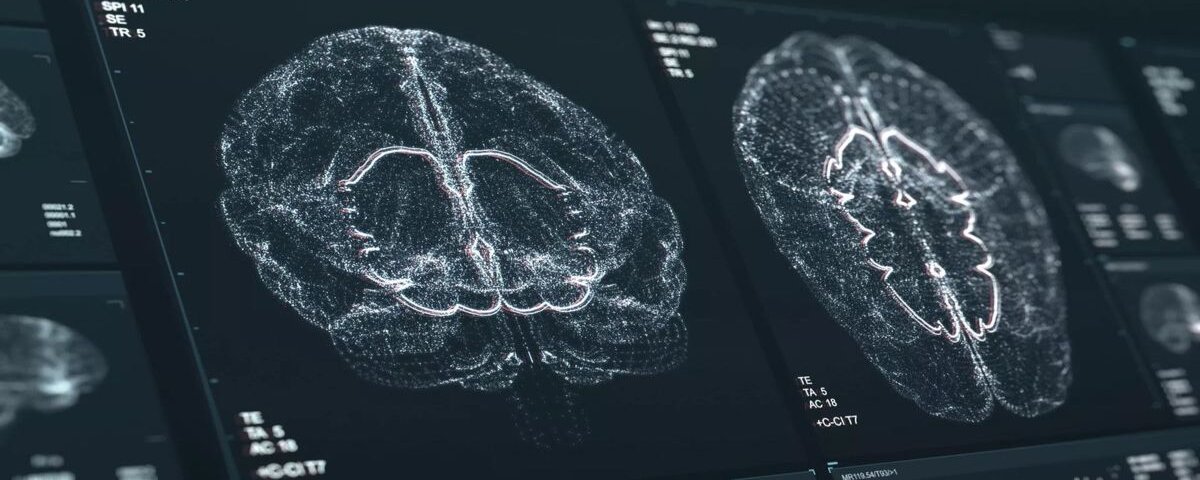
that's neuron.
it doesn't know fear.
it doesn't know lack.
it just repeats what you tell it.
you tell it "i'm not enough" 500 times. the neuron fires. then fires again. then builds a superhighway for that belief.
you tell it "nothing ever works for me" every morning. the neuron doesn't argue. it just memorizes.
you tell it "i can't change" long enough, the neuron believes you. and then your reality matches.
that's neuroplasticity.
from a quantum perspective, your focused attention is what turns possibility into experience. the neuron is the bridge, but the bridge only appears when you choose a direction.
the good news? the same neuron doesn't know truth from a lie. it just repeats. so you can overwrite the lie with a new signal. when you hold that new signal with quiet certainty, reality reorganizes around it, without you forcing it.
what most people get wrong: they try to "think positive" once. then wonder why nothing changes.
one weak signal doesn't build a highway. repetition does. and without the inner "already done", the repetition stays hollow."



Zoo retweeted

My coworker has developed a very convenient habit.
Any food she sees in the office fridge apparently becomes “for everyone.”
She has eaten snacks.
Leftovers.
People’s lunches.
Today she ate the meal I brought from home.
When I asked her about it, she said, “Oh, I thought it was for everybody.”
Ma’am.
It was in a container with my name on it.
At this point, I'm less concerned about the food and more fascinated by the confidence.
Imagine opening someone else's clearly labeled lunch, eating the entire thing, and somehow deciding you're the one who misunderstood.
I'm trying very hard to remain professional.
Because the next thing I put in that fridge might come with a warning label. 😭
Zoo retweeted

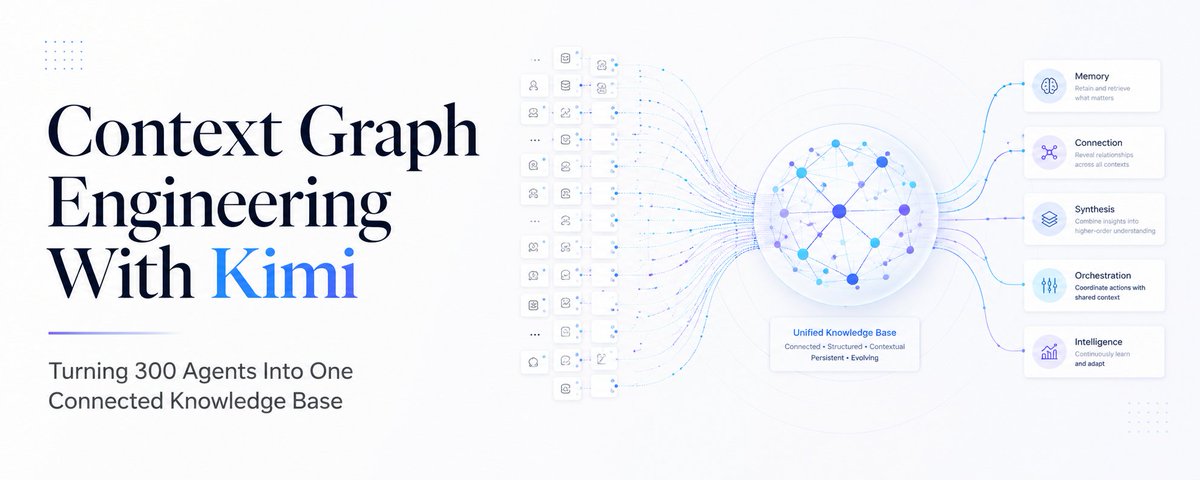
300 agents just finished your research in 40 minutes. congrats, now go read 300 documents.
that's what a swarm gives you. a pile.
the useful part isn't in any single one of them. it's in how they link up. 100 assets have 4,950 possible connections between them.
nobody holds that in their head.
kimi agent swarm keeps the links. 300 agents in one launch, up to 4,000 steps. every asset and every wallet an agent touches becomes a node. two agents hit the same counterparty, it draws an edge between them.
you don't get 300 answers. you get one map.
point it at your own trading portfolio and the picture gets uncomfortable. positions you thought were unrelated land in the same cluster, because the same market maker quotes all of them.
one bridge lights up as the hub half your holdings route through. that's your single point of failure, and nobody asked for it in the prompt.
Renaissance hedge fund keeps around a hundred PhDs on staff to catch things like that.
it also doesn't die when you close the tab. next launch adds to the same graph.
that's the gap opening right now. one guy re-reads 300 docs every week. the other one has a base that gets smarter every run.
my friend broke down the full framework and wrote the guide in the article below. read it, then go look at what your last agent run left you with.
🤝 Paid partnership

Zoo retweeted

This is how ML should be Taught,
Actually seeing the models learn is insanely satisfying.
- ml-visualized.com


Zoo retweeted

A finance professor opens his first probability lecture by refusing to say anything technical. He teaches the whole hour on a green chalkboard.
Lecture 1 of a full course on probability and stochastics for finance.
No slides. No description under it. One camera at the back of a lecture hall.
He starts with an ordinary question before a single formula appears. The definition arrives only after the students have already argued with him.
Every quant course sells the model. He spends the first hour on why the model is allowed to exist.
One chalkboard. Lecture 1. It is in the video.

Zoo retweeted

15 Books That Will Transform Your Life in 2026:
1) The Pathless Paul by Paul Millerd
This book is an invitation to a curious, creative, and meaningful life for anyone reflecting on work’s life impact. It offers new learning's and self-discovery.

Zoo retweeted

If your face is puffy, it's cortisol.
If your belly won't shift, it's cortisol.
If you're wired but tired, it's cortisol.
Here's how to fix all three at once:
1. No food 3 hours before bed.
Zoo retweeted

An Indian institute of technology filmed a full course on how money actually moves through a banking system and released it for nothing.
The course is Economics of Banking and Finance Markets, produced at IIT Kanpur under NPTEL, India's national open courseware programme. It runs in sequence as one continuous argument rather than a set of clips.
A green chalkboard, a lapel microphone, a checked shirt, one fixed camera.
He opens with the only question that matters at the start. Where does surplus money sit, who needs it, and what stands between them.
Then he splits the answer in 2. Direct finance, where the saver reaches the borrower through a market. Indirect finance, where a bank stands in the middle and absorbs the risk instead.
Everything after that hangs off the split. Time value of money, risk, information asymmetry, why institutions exist at all, and what regulators are actually regulating.
The turn is what he does with information. Banks are not warehouses for money. They exist because one side of every transaction knows things the other side does not, and the whole industry is built on charging for that gap.
It matters more now. Every fintech product claims to cut out the middleman, and almost none of them remove the information problem that put him there.
Free, in order, subtitled, funded by a public programme.
The banking system explained from the first principle, for nothing.
Lecture 1. 2 channels. It is in the video.


