

Writer. Business enthusiast. Political amateur. Be careful not to mistake my sarcasm for something more.
Jos, Nigeria
Joined August 2014
- Tweets5.1K
- Following590
- Followers228
- Likes29.1K
Good.
Now that you have admitted what everyone already knows, can we stop the performative act of always asking Peter Obi to call his supporters to order?
By your own admission, nobody can.

This is simply performative. A perfunctory statement released for its stake.
The average Obidient is incapable of respecting the right of others to choose or think differently from them. They don't even have such an allowance for their fellow Obidis.
Issuing a statement calling for them to be civil is like expecting cats to start barking just because you issued a statement for them to.
1
15
Silent Participant retweeted

Our Federal, State, and Local Governments must work together. Where roads fall under different levels of government, there should be proper coordination, clear responsibilities, and accountability for delivery.
Above all, every road project must be properly designed, transparently procured, adequately funded, professionally supervised, and subjected to independent quality control.
The experience we acquired in Anambra State provides practical evidence of how these principles can be applied. We connected communities, opened up rural areas, constructed bridges, improved urban transportation, and established an institutional framework for road maintenance.
What we did in Anambra was at the State level. As President, the responsibility will be national, but the principles of planning, prudent management, accountability, and measurable results will remain the same. -PO
Silent Participant retweeted
In Awka, our urban renewal programme included the dualisation and lighting of Zik’s Avenue. We understood that modern urban infrastructure required not only good roads but also proper lighting, drainage, and facilities that made movement safer and supported commercial activities. We also improved internal roads and connecting routes to support its development as the State Capital, while in Nnewi we strengthened road connections serving industrial and commercial communities.
These investments formed part of a broader economic strategy. We wanted businesses to find it easier to move raw materials, transport finished products, and distribute goods.
The emergence of major industrial investments, including SABMiller’s brewery in Onitsha, reinforced our belief in the importance of an enabling environment for business. Infrastructure, security, institutional stability, and a predictable business environment must work together to attract investment.
V. Establishing a Road Maintenance Culture
One mistake governments make is to concentrate on constructing new roads while neglecting those already built. We understood that road construction without maintenance eventually becomes wasteful.
That was why, in August 2008, we established the Anambra State Road Maintenance Agency (ARMA) through an enabling law passed by the State House of Assembly. ARMA was created to provide a permanent institutional framework for maintaining State roads, repairing failed pavements, clearing drains, and responding to road deterioration.
We equipped the agency with road maintenance machinery, including graders, rollers, heavy-duty trucks, and other equipment. We also established a dedicated office complex to strengthen its administrative and operational capacity.
Our intention was to replace the practice of waiting until a road had completely failed before awarding another expensive reconstruction contract. We wanted maintenance to become a continuous government responsibility.
VI. Quality Control and the Materials Testing Laboratory
We recognised that constructing roads was not enough; the quality of materials and workmanship also mattered, especially when some contractors are in the habit of doing sub-standard work as a result of poor-quality materials, inadequate compaction, and weak engineering supervision, which often result in premature road failure and the waste of public resources.
Consequently, we initiated the establishment of the Anambra State Materials Testing Laboratory to provide scientific testing of construction materials and improve quality assurance in public infrastructure projects. The laboratory was designed to test soil, aggregates, sand, cement, water, chemical materials, and steel reinforcement, among others.
VII. Taking the Anambra Experience to Nigeria
Our road programme in Anambra State was not a collection of isolated construction projects. It was part of a broader development strategy linking agriculture, industry, education, healthcare, commerce, and rural development. Good roads reduce transportation costs, improve access to markets, encourage investment, increase the value of agricultural produce, and make public services more accessible.
As President, I will bring the same philosophy of deliberate planning, prudent resource management, and accountability to national infrastructure development.
Nigeria requires an integrated transportation network that connects agricultural communities to markets, industrial centres to distribution networks, ports to production areas, and rural populations to essential services. We must prioritise the repair of existing roads and the construction of roads that unlock economic opportunities rather than merely count the kilometres constructed. We must also establish effective maintenance systems so that public investments are not allowed to deteriorate through neglect.
Silent Participant retweeted
These are examples, not an exhaustive list of the extensive road construction and rehabilitation works we undertook across the State. These included internal roads, dual carriageways, drainage systems, and pedestrian facilities. Our objective was to ensure that infrastructure supported both urban economic activities and rural production.
II. Opening Up Previously Inaccessible Communities
One of the most important aspects of our programme was reaching communities that had suffered years of infrastructural neglect.
Anambra West was particularly important because many communities in the area are riverine, with difficult terrain and serious transportation challenges. We constructed the Umueze Anam–Mmiata Road and associated bridge infrastructure, opening up areas that had previously been difficult to access, particularly during the rainy season. This demonstrated our belief that geographical location should never determine a community’s entitlement to development.
The Amansea–Ebenebe corridor was another important intervention in rural connectivity. These projects reflected our conviction that a farmer in a remote community deserves the same consideration as a trader in Onitsha. Government must not concentrate development only where roads already exist or economic activities are most visible. Sometimes, the greatest impact comes from taking infrastructure to places that have long been neglected.
The Anaku–Omor–Ifite Ogwari–Umueje–Omasi Road in Ayamelum Local Government Area deserves particular mention. It was the first major road project flagged off by my administration after assuming office in 2006. Covering approximately 42 kilometres, the road opened up an important agricultural area, connecting communities that had long suffered infrastructural neglect. It reflected our determination to prioritise rural infrastructure, connect farming communities to markets, and unlock the economic potential of previously underserved areas.
III. Bridges: Connecting Communities Across Difficult Terrain
Road construction is incomplete without bridges, culverts, and other structures that ensure uninterrupted movement. We, therefore, made bridge construction an integral part of our road programme.
My administration constructed 28 bridges across Anambra State. Among the major bridge projects were:
Odor River Bridge: Along the Nibo–Umuawulu–Awgbu–Amaokpala–Oko Road.
Ezu River Bridge: Along the Amansea–Ebenebe–Ugbenu–Ugbene–Awba-Ofemili Road.
Umueze Anam–Mmiata Bridge: An important component of opening up riverine communities.
Ogbanabo Bridge: Connecting Okpuno and Isuaniocha.
Atani–Ozubulu Road: Three major bridges were constructed along this strategic corridor.
Beyond the 28 bridges, our administration also constructed more than 50 culverts across the State. These structures were essential to effective drainage, flood control, and the connection of communities separated by streams and difficult terrain.
The Odor River Bridge, approximately 165 metres long, deserves particular mention. It was a landmark intervention connecting communities along the Awgbu–Amaokpala corridor, which had waited for decades for a reliable crossing.
We also undertook pedestrian bridge projects in Awka and Onitsha to improve safety in busy areas.
Roads and bridges must be planned together. A well-constructed road that terminates at an impassable river crossing does not solve the transportation problem. Our record of 28 bridges was part of our determination to overcome such barriers and improve connectivity across the State.
IV. Urban Renewal and Commercial Development
Good roads are essential to the development of our commercial and industrial centres.
In Onitsha, we improved the road network around the Bridge Head, Upper Iweka, Zik’s Roundabout, and other important commercial areas. We also introduced pedestrian crossing facilities to improve safety and movement.
Silent Participant retweeted
NIGERIANS, GO AND VERIFY (5)
CONNECTING COMMUNITIES, UNLOCKING PROSPERITY: OUR ROAD INFRASTRUCTURE RECORD
Peter Obi
Another critical foundation of development is infrastructure, particularly road construction and maintenance.
Infrastructure is not just about constructing roads, bridges, and buildings. It is about connecting people, opening up economic opportunities, reducing poverty, and enhancing the well-being of ordinary citizens. A road that connects a farmer to a market, a patient to a hospital, a child to a school, or a manufacturer to a distribution centre is an investment in economic and human development.
This thinking informed our approach under the Anambra Integrated Development Strategy (ANIDS). We set out to connect all 177 communities in the State with motorable roads, paying particular attention to rural communities that had suffered years of neglect. Our objective was to build an interconnected road network that served the entire State, rather than concentrate projects in major cities or politically important locations.
I. The Road Revolution: Over 900 Kilometres of Road Projects
Between March 2006 and March 2014, during my two-term tenure in office, my administration asphalted over 900 kilometers of roads. These projects were deliberately distributed across the three senatorial zones of Anambra State to connect communities, facilitate commerce, and enhance transportation.
I acknowledge that Dr. Chris Ngige started the road revolution in Anambra State, and I commend the efforts his administration made in initiating several road projects. When we assumed office in 2006, we recognised the importance of continuing worthwhile projects rather than abandoning them simply because they had been initiated by a previous administration.
Among the roads we inherited from Ngige and completed were the Owerri–Ezukala–Umunze–Umuchu–Amesi–Uga–Igboukwu Road, where his administration stopped around Umuchu and we continued through Amesi, Uga, and onward to Igboukwu; the Iseke–Orsumoghu–Ukpor–Utu–Nnewi–Awka-Etiti Road, where his administration stopped at Ukpor and we continued towards Awka-Etiti; and the Ideani-Otuocha where work stopped around Awkuzu before our administration continued the project from Nteje to Otuocha.
There were also roads, such as Mmili John and Nkwelle Ezunaka bypass, which had been awarded before we took over, but on which no payment had been made by the time we assumed office. We took over these projects, assessed their status, and proceeded with the work. This was our approach to continuity in governance: acknowledging what had been started, distinguishing between projects merely awarded and those on which work and payment had actually commenced, and ensuring that important infrastructure projects were carried forward.
Some of the major roads and corridors included Amansea–Ebenebe Road; Aguleri–Umueze Anam–Mmiata Road; Nnewi–Ozubulu–Okija Road; and the Old Onitsha–Awka Road.
Other important projects included:
Awka and its Environs: Zik’s Avenue, Awka; Adazi-Nnukwu–Obeledu–Neni Road; 33 Junction–Nwafor Orizu College of Education Road; roads within the Awka Government Reserved Area (GRA); and the Old Nkpor–Amawbia Road.
Nnewi and Surrounding Communities: Nnobi–Nnewi Road; roads within Nnewi town; Akwaeze–Oraeri–Igboukwu Road; and Ekwulobia–Nkpologwu–Akpo–Achina–Umuchu Road.
Onitsha and its Environs: Bridge Head–Umunya Road; over 30 roads in other parts of Onitsha; more than 25 roads within the Onitsha GRA; over 20 stone-based roads within Harbour Industrial Estate, Onitsha; and the Nkwele Ezunaka Bypass.
Other Communities and Strategic Corridors: Awgbu–Amaokpala Road, with the Odor Bridge; Aguluezechukwu–Ogboji–Ajalli Road; Awkuzu–Igbariam Road, passing through the university; Owerri–Ezukala–Umuchukwu Road; Ugwuoba–Obosi Road; and Lilu Road.
I look forward to these everyday now.

NIGERIANS, GO AND VERIFY (5)
CONNECTING COMMUNITIES, UNLOCKING PROSPERITY: OUR ROAD INFRASTRUCTURE RECORD
Peter Obi
Another critical foundation of development is infrastructure, particularly road construction and maintenance.
Infrastructure is not just about constructing roads, bridges, and buildings. It is about connecting people, opening up economic opportunities, reducing poverty, and enhancing the well-being of ordinary citizens. A road that connects a farmer to a market, a patient to a hospital, a child to a school, or a manufacturer to a distribution centre is an investment in economic and human development.
This thinking informed our approach under the Anambra Integrated Development Strategy (ANIDS). We set out to connect all 177 communities in the State with motorable roads, paying particular attention to rural communities that had suffered years of neglect. Our objective was to build an interconnected road network that served the entire State, rather than concentrate projects in major cities or politically important locations.
I. The Road Revolution: Over 900 Kilometres of Road Projects
Between March 2006 and March 2014, during my two-term tenure in office, my administration asphalted over 900 kilometers of roads. These projects were deliberately distributed across the three senatorial zones of Anambra State to connect communities, facilitate commerce, and enhance transportation.
I acknowledge that Dr. Chris Ngige started the road revolution in Anambra State, and I commend the efforts his administration made in initiating several road projects. When we assumed office in 2006, we recognised the importance of continuing worthwhile projects rather than abandoning them simply because they had been initiated by a previous administration.
Among the roads we inherited from Ngige and completed were the Owerri–Ezukala–Umunze–Umuchu–Amesi–Uga–Igboukwu Road, where his administration stopped around Umuchu and we continued through Amesi, Uga, and onward to Igboukwu; the Iseke–Orsumoghu–Ukpor–Utu–Nnewi–Awka-Etiti Road, where his administration stopped at Ukpor and we continued towards Awka-Etiti; and the Ideani-Otuocha where work stopped around Awkuzu before our administration continued the project from Nteje to Otuocha.
There were also roads, such as Mmili John and Nkwelle Ezunaka bypass, which had been awarded before we took over, but on which no payment had been made by the time we assumed office. We took over these projects, assessed their status, and proceeded with the work. This was our approach to continuity in governance: acknowledging what had been started, distinguishing between projects merely awarded and those on which work and payment had actually commenced, and ensuring that important infrastructure projects were carried forward.
Some of the major roads and corridors included Amansea–Ebenebe Road; Aguleri–Umueze Anam–Mmiata Road; Nnewi–Ozubulu–Okija Road; and the Old Onitsha–Awka Road.
Other important projects included:
Awka and its Environs: Zik’s Avenue, Awka; Adazi-Nnukwu–Obeledu–Neni Road; 33 Junction–Nwafor Orizu College of Education Road; roads within the Awka Government Reserved Area (GRA); and the Old Nkpor–Amawbia Road.
Nnewi and Surrounding Communities: Nnobi–Nnewi Road; roads within Nnewi town; Akwaeze–Oraeri–Igboukwu Road; and Ekwulobia–Nkpologwu–Akpo–Achina–Umuchu Road.
Onitsha and its Environs: Bridge Head–Umunya Road; over 30 roads in other parts of Onitsha; more than 25 roads within the Onitsha GRA; over 20 stone-based roads within Harbour Industrial Estate, Onitsha; and the Nkwele Ezunaka Bypass.
Other Communities and Strategic Corridors: Awgbu–Amaokpala Road, with the Odor Bridge; Aguluezechukwu–Ogboji–Ajalli Road; Awkuzu–Igbariam Road, passing through the university; Owerri–Ezukala–Umuchukwu Road; Ugwuoba–Obosi Road; and Lilu Road.
27
Silent Participant retweeted

Power!!!!!
Go and verify!!!
We go school!!!!!
#VoteNDC
#NigeriawillbeOk
Silent Participant retweeted

Yesterday, @inecnigeria said ward collation results can’t go on IReV because the feature hasn’t been built or tested, and that it would take a while.
We disagree.
It’s not rocket science, so we built it. In one evening. On IReV’s own data.
Left: IReV today.
Right: IReV with Form EC8B. 🧵👇


Silent Participant retweeted

For next year ileya, someone needs to buy you as Ram. Not to kill you for meat, but to make you fight other rams. At least, they can make sure you use your head for once.

Silent Participant retweeted

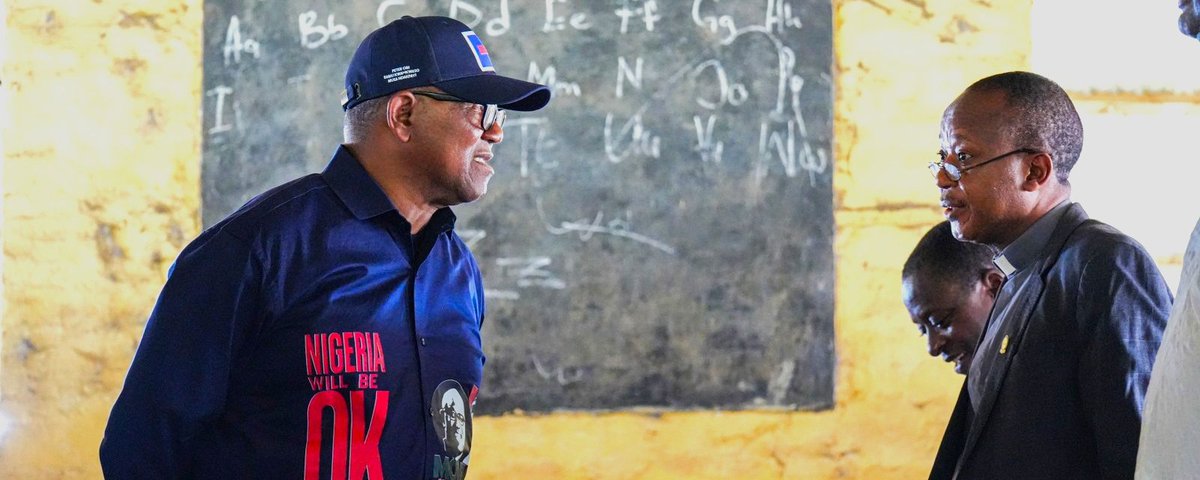
A day before I rejoin Peter Obi's team for the campaigns of the 2027 Nigerian presidential election, I recount what my last 72hours with him was like.

Silent Participant retweeted
The experience we acquired in Anambra State, as well as the lessons we observed elsewhere, provides a practical foundation for this national ambition. What we did in a state can be adapted and expanded to serve a country of over 200 million people. The scale is different, but the principles of planning, prudent management, accountability and measurable results remain the same.
In the next instalment, Go and Verify (5), I will discuss our efforts in the road sector. -PO
Silent Participant retweeted
Beyond the Chukwuemeka Odumegwu Ojukwu University Teaching Hospital, we, therefore, invested in medical training institutions and professional development.
By the time we left office in 2014, more than 12 health institutions, including two hospitals, had secured accreditation for their courses and programmes. This represented significant progress from the situation in 2006 when Anambra had no duly accredited health institution, according to records of the period.
We supported the development of schools of nursing, midwifery, and health technology, providing infrastructure, equipment, learning facilities, and other requirements for accreditation.
We also supported the training and specialised capacity development of healthcare workers, recognising that the quality of medical services ultimately depends on the competence and dedication of the people delivering them.
The Results of a Deliberate Policy
These interventions were not isolated projects. They were part of a deliberate effort to create a healthcare system in which primary healthcare centres, general hospitals, teaching hospitals, and mission institutions complemented one another.
We invested in rural healthcare, maternal and child services, immunisation, emergency response, specialist treatment, mental healthcare, disease prevention and control, medical education, and institutional accreditation.
Our success in the Bill & Melinda Gates Foundation immunisation competition was one external recognition of the work being done. More importantly, the development of accredited institutions, the establishment of a teaching hospital, the construction of maternal and child care centres, and the rehabilitation of hospitals provided a foundation for sustained improvements in healthcare delivery.
We also restored the annual Grant-in-Aid to government-owned and mission hospitals across Anambra State. This grant became a regular annual intervention, sustained every year until we left office in 2014. We recognised the historic contribution of missionary hospitals to healthcare delivery in Anambra and believed that government should support institutions that serve the public, irrespective of their ownership.
We did not achieve everything that needed to be done, but we demonstrated what could be accomplished through planning, partnerships, accountability, and the purposeful deployment of public resources.
Taking the Anambra Experience to Nigeria
My commitment to healthcare did not end when I left office as Governor. I have continued to support hospitals, medical institutions, and various other healthcare initiatives across the country as a private citizen.
As President, I will bring the same energy, commitment, and political will to the national healthcare system. We must move away from a situation where Nigerians are compelled to travel abroad for medical treatment that should be available in their own country.
Our primary healthcare centres must function, general hospitals must be properly equipped, and teaching hospitals must have the facilities and personnel required to provide specialist care and train medical professionals.
All agencies responsible for healthcare must perform their statutory duties effectively and be held accountable. Public funds allocated to healthcare must be transparently managed, and Nigerians must be able to see what those resources have achieved.
We must also recognise that government cannot provide all healthcare services alone. Mission hospitals, private hospitals, and other credible institutions must be encouraged and supported because they all contribute to the health of our people.
Our approach will therefore be based on accessible primary healthcare, functional hospitals, adequate medical personnel, preventive medicine, effective emergency services, medical research, and strong partnerships with institutions already serving our communities.
Silent Participant retweeted
We also invested in sophisticated diagnostic equipment to strengthen specialist healthcare. These included CT scan machines, mammography machines, digital X-ray equipment, and ultrasound machines. We further procured ventilators to improve intensive care services, including the provision of four ventilators for the Teaching Hospital’s Intensive Care Unit.
The centre and these investments demonstrated our determination to move beyond basic healthcare and develop facilities capable of handling more complex medical conditions.
Strengthening Mental Healthcare: The Neuropsychiatric Hospital, Nawfia
We also recognised that healthcare must address not only physical illnesses but also mental and psychological conditions. Mental health is an essential component of human well-being and deserves adequate attention in our healthcare system.
We, therefore, invested in the development and modernisation of the Neuropsychiatric Hospital at Nawfia, in Njikoka Local Government Area, supporting improvements in its infrastructure and equipment to strengthen its capacity to provide specialised mental healthcare. The project received national recognition when Dame Patience Jonathan, then First Lady of Nigeria, commissioned the improved infrastructure of the hospital in September 2010.
We also supported the development of the School of Psychiatric Nursing to train professionals in specialised psychiatric care. These interventions reflected our belief that people living with mental health conditions deserve appropriate medical attention, professional care, and human dignity.
Our Partnership with Mission Hospitals
One of the most important aspects of our healthcare policy was our decision to work closely with religious institutions.
We recognised that the Church had historically played a major role in healthcare delivery in Anambra State. Mission hospitals had served communities for generations, often providing services where government facilities were inadequate or unavailable.
Rather than ignore these institutions because they were not government-owned, we decided to support them. We restored government grants, provided vehicles, and funded infrastructure, equipment, wards, theatres, and other facilities required to improve their services and secure accreditation.
Our interventions covered institutions including:
Our Lady of Lourdes Hospital, Ihiala.
Iyi-Enu Hospital, Ogidi.
Holy Rosary Hospital, Waterside, Onitsha.
St Joseph’s Hospital, Adazi-Nnukwu.
St Charles Borromeo Hospital, Onitsha.
Immaculate Heart Hospital, Nkpor.
Diocesan Hospital, Amichi.
In 2013, we released an additional ₦3 billion to selected mission and government-owned health institutions. At that time, Our Lady of Lourdes Hospital, Iyi-Enu Hospital, and St Joseph’s Hospital received ₦200 million each, Holy Rosary Hospital received ₦150 million, while Diocesan Hospital, Amichi, received ₦100 million. Other institutions also benefited from the intervention.
The funds were intended to improve facilities, purchase equipment, upgrade wards and theatres, and help institutions meet accreditation requirements.
This partnership produced remarkable results. Institutions that had previously struggled to meet accreditation requirements began developing recognised schools of nursing, midwifery, and health technology. Iyi-Enu Hospital and Borromeo Hospital have also developed into university teaching hospitals.
Our philosophy was that government should not monopolise healthcare delivery. If a mission or private hospital was providing quality services to our people, it deserved government support. What mattered was the service rendered, not who owned the institution.
Training and Accreditation of Healthcare Professionals
We also understood that buildings and equipment alone could not produce a functional healthcare system. We needed qualified doctors, nurses, pharmacists, midwives, laboratory scientists, and other healthcare professionals.
Silent Participant retweeted
These centers were intended to provide basic medical services, maternal care, immunization, treatment of common illnesses, and health education.
We also supplied medical equipment, essential drugs, and other materials to these facilities.
We provided solar-powered boreholes and sanitation facilities to improve hygiene and the general conditions of healthcare delivery. These interventions were particularly important in rural communities where access to clean water and adequate sanitation was limited.
Maternal and Child Healthcare
We paid special attention to maternal and child health because we understood that a society cannot develop properly when mothers and children are exposed to preventable deaths.
Anambra State won the Bill & Melinda Gates Foundation’s US$1 million award as the best-performing state in immunization in the South-East. We complemented the prize money with government resources and used the funding to construct 10 maternal and child care centers, particularly in remote communities, in partnership with religious institutions.
In September 2013, we also provided an additional ₦330 million for the construction of 11 more rural maternity and child health centers.
These interventions were designed to bring antenatal care, childbirth services, immunization, and other essential healthcare closer to women and children who would otherwise have difficulty accessing them.
We considered this particularly important because many maternal and infant deaths can be prevented when appropriate medical attention is available at the right time.
Beyond maternal and child healthcare, we also pursued broader public health interventions, working with development partners, including UNICEF, the World Bank, and DFID, on immunization, malaria prevention, maternal health, and other disease-control programs. We recognized that a good healthcare system must not only treat illnesses but also prevent them through sustained public health interventions, community awareness, and accessible preventive services.
Ambulances, Medical Equipment and Emergency Services
We also understood that healthcare infrastructure without effective emergency response was incomplete.
Consequently, we purchased and distributed close to 100 ambulances to selected hospitals and medical institutions across the state. We also provided medical utility vehicles to improve transportation and service delivery.
We regularly supplied medical equipment and essential drugs to hospitals and primary healthcare centers. Our interventions included improvements in diagnostic facilities and other specialized medical equipment required for effective treatment.
In addition, we distributed medical equipment worth ₦135 million, sourced through the Millennium Development Goals program, to over 105 government and mission health institutions across the state. This intervention was intended to improve their capacity to provide effective medical services and ensure that healthcare facilities had the necessary tools to attend to patients.
The objective was to improve the capacity of our hospitals to diagnose illnesses, respond to emergencies, and provide appropriate treatment.
Specialised Healthcare: The Joseph Nwilo Heart Centre
Another important intervention was the establishment of the Joseph Nwilo Heart Centre at St Joseph’s Hospital, Adazi-Nnukwu.
Through our partnership with the Church, we supported the construction and equipping of this specialised cardiac facility, where heart operations could be performed at affordable costs.
This was particularly significant because specialised cardiac treatment was largely concentrated in a few major centres in the country. We believed that Anambra people deserved access to such services without always having to travel outside the state.
Silent Participant retweeted
NIGERIANS, GO AND VERIFY (4)
Building a Healthy Nation: Our Health Sector Record in Anambra
Peter Obi
In the previous instalment of this series, I discussed our investments in education and explained why we considered human capital development central to the progress of Anambra State. Another sector that received considerable attention under our administration was healthcare. We understood that education gives people the tools to build their future, while good healthcare enables them to live healthy and productive lives.
When we assumed office in 2006, the healthcare system in Anambra faced serious challenges. Our health institutions required rehabilitation, medical equipment was inadequate, many communities lacked accessible primary healthcare facilities, and several medical training institutions had not secured accreditation. We therefore decided to approach healthcare as a comprehensive development priority, rather than concentrate resources on a few prominent hospitals.
Under our Anambra Integrated Development Strategy (ANIDS), we invested simultaneously in primary, secondary, and tertiary healthcare, medical training, maternal and child health, medical equipment, and partnerships with religious and private institutions.
Our approach was simple: healthcare should be accessible to people wherever they live, and the quality of treatment they receive should not depend on their status or whether they live in a city or a rural community.
Building a Teaching Hospital and College of Medicine
One of our most significant achievements was the establishment of the Chukwuemeka Odumegwu Ojukwu University Teaching Hospital at Awka.
We initiated, constructed, equipped, and secured accreditation for the institution, building it virtually from scratch. When I discovered that the state university was admitting medical students without having a teaching hospital through which they could complete their training, possibly with the intention of assigning them elsewhere, I considered the situation unacceptable. We therefore embarked on the construction of a modern teaching hospital to address this deficiency.
We constructed more than 25 buildings and provided facilities for the College of Medicine, laboratories, pathology, accident and emergency services, pediatrics, male and female wards, special wards, consultant clinics, and other essential departments.
We also provided vehicles, including ambulances and staff buses, to support the hospital and the College of Medicine as part of the accreditation requirements.
The objective was not merely to build another hospital but to establish an institution capable of providing specialist healthcare while training the next generation of Nigerian medical doctors.
Rehabilitating General Hospitals
We also recognized that a teaching hospital alone could not meet the healthcare needs of the population. General hospitals had to function effectively because they provide the essential link between primary healthcare and specialist treatment.
We rehabilitated and resuscitated 15 general hospitals across the three senatorial zones of Anambra State. We undertook substantial improvements in their buildings, wards, equipment, and general facilities.
In 2013, we provided ₦400 million for the ongoing renovation of 11 selected general hospitals, alongside other healthcare interventions.
Our intention was to ensure that people did not have to travel unnecessarily long distances to obtain basic secondary medical care.
Taking Primary Healthcare to the Communities
We believed that the best healthcare system is one that prevents illnesses and treats people early, rather than one that waits until minor health problems become emergencies.
That informed our extensive investment in primary healthcare. We built over 120 primary healthcare centers across communities in the 177 autonomous communities of Anambra State and rehabilitated existing facilities.
A while ago, APC supporters claimed Peter Obi would get 25% in less than 19 states.
I'm glad the benchmark has since increased into the 20s.
Realization penetrates slowly, but once it hits, acceptance becomes easier. We are getting there.
61
If a student paying 300,000 in school fees, could afford to set the sum aside, why would he knowingly go into debt?
Let me break it (further) down.
You had N300,000 set aside for school fees. NELFUND now covers the fees. That N300,000 does not disappear. It goes into rent, or a business, or food, or whatever the household needed and could not afford while the fees were hanging over it.
That is what I meant by the multidimensional effect. Money is fungible. A loan that covers one obligation releases the cash that was tied to it for everything else.
Some people read that as me telling students to spend NELFUND disbursements on rent. That's not possible because the NELFUND sum doesn't come to you directly. Lol.
That is not what was said and it is not what the sentence can mean. The money being freed is the family’s own money. I really hope this here is clear enough.
1
48
Silent Participant retweeted

Yesterday’s discourse made me realise many of you struggle with understanding why horses must come before carts.
Most of Tinubu’s so-called “good” policies are basically him putting carts before fucking horses. You cannot champion a credit-driven economy when the economy and the population itself are still in turmoil.
Fix security. Fix infrastructure. Fix power. Fix healthcare. Fix the labour market. Fix schools. Fix food prices and purchasing power. Fix production.
Start with the fucking basics. Address the things that currently affect MOST Nigerians before coming up with flowery plans about mortgages, NELFUND or postcodes.
Is this too difficult to understand?