

@gershbrain
Account based inUnited States
About this account
- Account based in
- United States
- Connected via
- Web
Account-level information from X, not a live location or the device used for a specific post.
Professor, Department of Psychology and Center for Brain Science, Harvard University
Cambridge, MA
Joined July 2016
- Tweets2.7K
- Following58
- Followers16.5K
- Likes5.1K





I love this project, which feels like it opens many doors.

Looking for a distraction (for some reason)?
May I interest you in this cool new paper on "Blending simulation and abstraction for physical reasoning"?
(by Sosa, Gershman, and me)
paper link: sciencedirect.com/science/ar…
OSF: osf.io/preprints/psyarxiv/f9…


Great opportunity here!!

I'm hiring a postdoc to work with me on problems related to meta-learning and probabilistic representation learning in the brain.
Perks:
i) the amazing research community at @bcm_neurosci and @RiceNeuro.
ii) Houston food is DELICIOUS (and cheap)
jobs.bcm.edu/job/Postdoctora…
I think my point here has been misunderstood by most commentators. Obviously I agree that ephys is a more direct measure of spiking activity. Let me try to clarify...

My point is that it's too simplistic to think that measuring spiking activity is always a more "direct" way of testing hypotheses about the relationship between neural activity and information processing.
Papers that report neuronal recordings sometimes say that they provide "direct" evidence for neural encoding of something, in contrast to "indirect" methods such as non-invasive brain imaging. I don't really understand this. What makes one "direct" and the other "indirect"?
I'd like to teach a paper which shows how a fact about the brain materially improved an AI system in a way that is unlikely to have been figured out by engineering alone. I haven't been able to find a single example of this. Suggestions welcome.
I'm mainly interested in examples where neuroscientists make a correct ex ante prediction that some brain fact will improve performance when incorporated into an AI system (without changing other things). Ex post explanations in terms of neuroscience are less convincing.
Please don't tell me about perceptrons, neocognitrons, or TD learning. These aren't good examples, for reasons I go into here:
gershmanlab.com/pubs/NeuroAI…
What are the most compelling real-world applications of cognitive science? I'm looking for empirical papers (not opinions/reviews).
Sam Gershman retweeted

we've finally updated our 2⃣ year old preprint on action chunking as (conditional) policy compression! this was a lesson in perseverance and not giving up on your ideas...work with @gershbrain & @AnnHuang42 ✨ (1/3) osf.io/preprints/psyarxiv/z8… – at Onna-son, Okinawa

I advised a physics student and I kept worrying that the physics police would burst in to take her away because she wasn’t doing “real” physics. But I realized that if it’s interesting to physicists, it’s physics.

Sam Gershman retweeted

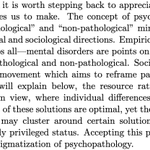
[Please retweet!] My paper, 'Cognitive Representations of Social Relationships and their Developmental Origins" has been accepted at Behavioral and Brain Sciences! I'm thrilled to be able to engage with people's commentary! Please consider writing one! osf.io/preprints/psyarxiv/xh…
If you're interested in the future of scholarly publishing, check out this panel discussion (open to the public):
libcal.library.harvard.edu/e…

This has been happening for a while. I have a few ideas for fixes:
(1) Editorial boards should be larger so that load is small for each editor. We've done this at Open Mind and I think it works well.
(5) Many editorial workflows wait for a reviewer to decline an invitation before the next reviewer is invited. The time limit for this waiting period is typically a week or more. I think it should be more like 2-3 days. Many people just never respond.