

v̴i̴b̴e̴ ̴c̴o̴d̴e̴r̴ agentic developer, bachelor of physics. 📈https://xitter.cf/t.co/PXUMVpzqUk Can I build a $2k MMR app in 18 months? Follow me to find out.
Home
Joined May 2026
- Tweets676
- Following252
- Followers233
- Likes1.4K





One of the worst feelings is wanting to work hard on something but not knowing what that is.
Having the energy to put into something but no knowing what will work.
And often having no return from it at all.
Uncertainty is the mother of pain. But action slowly kills uncertainty
My marketing habits (very early stage of learning for me):
- 10 X connect posts + responses per day
- 1-5 X posts per day
- 3 TikTok SlideShows per day for my app
This strat will develop over time.
I am convinced that the key to marketing are daily habits.

They say there was just a large PHP hack and governments are shutting down websites to fix this.
Just so you know.
Fable 5.5 lurking? 👀

"Fable 5.5" is showing up in public GitHub commits now. A T3 Code pull request merged on October 20 includes October 17 commits carrying the credit "Co-authored-by: Fable 5.5 "[email protected]" (mailto:[email protected])". The changes fix an authentication issue affecting locally hosted clients.
That fits the reports of partners testing Anthropic's next model. One caveat: anyone can edit a Git commit's coauthor field, so the credit alone cannot prove which model wrote the code. Anthropic still hasn't officially announced Fable 5.5.

Started consistently posting about 25 days ago.
Connected with circa 200 builders on X.
let's connect
Today I added camera shake while sprinting and I love how it looks.
I'm happy with how the movement is coming together. This is planned to be an adventure game so it needs to be good.
A sunny day on the island...
...gets ruined by a storm.
Taking advantage of the weather will be a major part of this game.
Got Ultra Dynamic Sky/Weather on Fab today.
What Codex made is not comparable with this. Got the transition probabilites and day/night cyle in too. Easy.

Fable 5.5 coming today?
Will this Mythos-class model be a big leap from Opus 5.5, an already excellent model?
We'll see.
Greg retweeted

For the second time in Google Chrome’s history, Google awarded a $250,000 bounty for a full-chain exploit… to @XBOW. Here’s the full story:
At an all-hands at the start of 2026 in Malta, I set the team a crazy challenge. A full-chain exploit of Chrome by the annual Black Hat cybersecurity conference in August.
I believed there were few better tests of whether @XBOW could move beyond web applications to desktop software, servers and devices.
Chrome is one of the most hardened pieces of software on the planet, used by more than half the world’s population.
A full-chain exploit lets an attacker take total control of a machine, where they can read every email, password and bank login the user types. You don’t need to download anything or click a phishing link. Visiting the wrong site is enough.
So @moyix, Andres Luksenberg, Baul Lee, and Willem Pinckaers took on the challenge along with a fifth teammate: OpenAI's GPT-5.6 Sol.
They built a chain they thought would win, but Google told us they already knew one of the bugs.
We were already in Las Vegas for Black Hat and DEF CON, and the team didn’t want to go home without the win.
So Brendan and the agents built a new exploit in just 6 days.
We submitted it to Google and waited.
The news came through that we'd done what should’ve been impossible. A full-chain bounty of $250,000, the first awarded under Google’s 2026 rules.
It took just 6 days and $40,000 of compute to construct an exploit that affects a billion users of Chrome on Windows. An intelligence-agency veteran told me his team used to spend 6 months on this kind of vulnerability.
My takeaway: the cost of finding truly critical vulnerabilities is collapsing, for attackers and defenders alike. Restricting powerful models is not the answer; GPT-5.6 Sol is already public.
But defenders have one advantage attackers never will: they can test their own code first.
Assume your software is exploitable. Whoever is hunting your bugs has the same building blocks we did.
This is cause for urgency but not panic.
XBOW is now developing an autonomous product for testing compiled software (desktop applications, servers, embedded devices), and partnering with the world’s top organizations to design that product.
If you’d like to be one of them, get in touch.
P.S. Restart Chrome whenever the Update button appears!

Greg retweeted

6 days and $40,000 of compute with GPT-5.6 Sol to find a critical vulnerability in Chrome, claiming Google’s first full-chain reward in 2026 for a vulnerability that would affect an estimated 1 billion users.
Highlights the opportunity for defenders to utilize these tools to secure their software to unprecedented levels:

For the second time in Google Chrome’s history, Google awarded a $250,000 bounty for a full-chain exploit… to @XBOW. Here’s the full story:
At an all-hands at the start of 2026 in Malta, I set the team a crazy challenge. A full-chain exploit of Chrome by the annual Black Hat cybersecurity conference in August.
I believed there were few better tests of whether @XBOW could move beyond web applications to desktop software, servers and devices.
Chrome is one of the most hardened pieces of software on the planet, used by more than half the world’s population.
A full-chain exploit lets an attacker take total control of a machine, where they can read every email, password and bank login the user types. You don’t need to download anything or click a phishing link. Visiting the wrong site is enough.
So @moyix, Andres Luksenberg, Baul Lee, and Willem Pinckaers took on the challenge along with a fifth teammate: OpenAI's GPT-5.6 Sol.
They built a chain they thought would win, but Google told us they already knew one of the bugs.
We were already in Las Vegas for Black Hat and DEF CON, and the team didn’t want to go home without the win.
So Brendan and the agents built a new exploit in just 6 days.
We submitted it to Google and waited.
The news came through that we'd done what should’ve been impossible. A full-chain bounty of $250,000, the first awarded under Google’s 2026 rules.
It took just 6 days and $40,000 of compute to construct an exploit that affects a billion users of Chrome on Windows. An intelligence-agency veteran told me his team used to spend 6 months on this kind of vulnerability.
My takeaway: the cost of finding truly critical vulnerabilities is collapsing, for attackers and defenders alike. Restricting powerful models is not the answer; GPT-5.6 Sol is already public.
But defenders have one advantage attackers never will: they can test their own code first.
Assume your software is exploitable. Whoever is hunting your bugs has the same building blocks we did.
This is cause for urgency but not panic.
XBOW is now developing an autonomous product for testing compiled software (desktop applications, servers, embedded devices), and partnering with the world’s top organizations to design that product.
If you’d like to be one of them, get in touch.
P.S. Restart Chrome whenever the Update button appears!
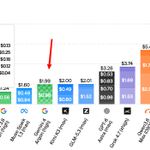
From what I have briefly seen, Gemini 4 Argon is a bit of a disappointment.
Its usage limits are pretty bad, and coding ability is not anything we haven't seen before.
It's definitely a step up, but it will likely take Google a few more models to give us something great.

Greg retweeted

We discovered a sophisticated recording device that was hidden inside one of our offices. We used our models to understand the device and where it had come from, identifying that a specific employee had planted it a few days earlier. We referred the matter to the FBI, and we’re grateful to the agents and prosecutors who moved quickly to make an arrest. The FBI’s investigation is ongoing and we will continue to support their work.
At this time, we have no indications of this individual inappropriately accessing or exfiltrating model weights, source code, or customer data. The employee was terminated.
We take protecting our technology, data, and people seriously, and as a matter of national importance. Our security program is designed to protect against a wide range of threat actors, from insider risks to cybercriminals to nation states, and this case is an example of how AI can help address these sophisticated security threats.
Next level

Okay, we have a LOT more details on the alleged spying situation at OpenAI.
So federal prosecutors identified a 35-year-old Saudi national named Abdulrahman Alfozan. Apparently, he allegedly planted what OpenAI calls a “sophisticated” recording device, with encrypted contents, behind a TV in an executive conference room, plugged it into a USB port, and literally concealed it with toilet paper.
This room was regularly used for discussions involving confidential AI research, product plans, business strategy, and even government engagements. The device was discovered on September 30th, and the FBI has since arrested him.

