

PhD @HazyResearch @ Stanford | Prev @ HRT Opinions are my own.
Joined January 2024
- Tweets68
- Following126
- Followers143
- Likes159


Pinned Tweet
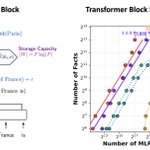
We can instantly build knowledge into a Transformer block, no gradient descent required!
New work w/ amazing team @jerrywliu, @ronnygjunkins, @EyubogluSabri, Atri Rudra and @HazyResearch!
To learn more, checkout our:
📝Blogpost: hazyresearch.stanford.edu/bl…
📄Paper: arxiv.org/abs/2607.10034


MLPs store facts in language models. Can we write them into Transformers without training?
New work w/ amazing team @garctrob @ronnygjunkins @EyubogluSabri, Atri Rudra & @HazyResearch gives a ✨closed-form✨ recipe for fact-storing, Transformer-ready MLPs. Accepted at COLM 2026!

Roberto Garcia retweeted

Superposition is a feature, not a bug: it does not affect interpretability, and it increases memory capacity. If each neuron in an LLM corresponds to a single feature, that's a problem, and we need to fix it.
Roberto Garcia retweeted

I have a lot of respect for Nick, and I’d be very happy if neural networks were much easier to understand than we thought. But I think the argument here mischaracterises what superposition predicts. Since it’s getting attention, here’s a first pass at some issues.

interpretability might be the most important scientific problem in the world right now, as I don't think we can solve alignment if we don't know what we're building. I think I have good news about it. I co-authored early work in mechanistic interpretability at OpenAI and came away pessimistic, because neural networks appeared to fold into arbitrary tangled knots. years later, I started openai's first large-scale automated interpretability project, finding about 2% of neurons legible with the primitive tools we had
with modern agentic tools and a much closer look, the picture looks totally different. the vast majority in models up to trillions of parameters are legible, and their circuits beautiful. many famous examples of tangled neurons turned out to be misunderstood. The roadblocks I expected mostly aren't there. I now think ambitious interpretability will be solved by the time we need it most, and possibly quite soon, as automated scientists keep improving. it may be a bitter lesson for interpretability: the simple thing, at absurd scale, works
already-clean.goodfire.com/

Roberto Garcia retweeted

Excited to announce Next-Concept Modeling (NCM): our new paradigm for fast and parallel, coarse-to-fine text generation! 🚀
Compared to strong diffusion language models (DLMs) at similar parameter sizes, NCM showcases:
⚡ 31× faster generation on downstream summarization and translation tasks.
🏎️ 10–21× faster unconditional generation across TinyStories, LM1B, and OpenWebText, with comparable or better generative perplexity using 3–5× fewer training tokens.
🧩 Better reasoning performance on tasks like Sudoku.
Check out the paper and codebase 👇
Arxiv: arxiv.org/abs/2610.14162
AlphaXiv: alphaxiv.org/abs/2610.14162
Code: github.com/HazyResearch/ncm
Enjoyed working with @KumbongHermann and advised by @simran_s_arora @Azaliamirh and @HazyResearch.


🚀 Introducing Next-Concept Modeling (NCM): our new paradigm for fast, parallel, coarse-to-fine text generation.
Compared to strong diffusion language models (DLMs) at similar parameter size, NCM achieves:
⚡ Up to 31× faster generation on downstream tasks like summarization and machine translation with comparable or better quality.
🏎️ 10–21× faster unconditional generation across TinyStories, LM1B, and OpenWebText, with comparable or better generative perplexity and using 3–5× fewer training tokens.
🧩 Better performance on reasoning tasks like Sudoku, outperforming both AR and diffusion baselines with fewer sampling steps.
With @ishanskhare, @IddahMlauzi, @ekellbuch, @simran_s_arora, @Azaliamirh, and @HazyResearch.
More details in the thread 🧵👇
Roberto Garcia retweeted

I can suggest an equation that has the potential to impact the future:
P = NP + AI
LLMs surprisingly store facts at the information-theoretically optimal rate. They do so in their MLP weights. How is this possible?
To answer this question, in our #COLM2026 paper, we show how MLPs can be constructed, without training, to store facts at the information theory optimal rate while remaining usable within transformer blocks for factual recall!

MLPs store facts in language models. Can we write them into Transformers without training?
New work w/ amazing team @garctrob @ronnygjunkins @EyubogluSabri, Atri Rudra & @HazyResearch gives a ✨closed-form✨ recipe for fact-storing, Transformer-ready MLPs. Accepted at COLM 2026!
Roberto Garcia retweeted

Softmax attention is expressive, but its KV cache grows with sequence length. Linear attention keeps a fixed state size, but is less expressive.
In our #COLM2026 paper, Switching Linear Attention (SwiLA) gets the best of both worlds by switching among multiple linear maps 🧵

Roberto Garcia retweeted

More basic controls need to be present in ML papers, especially ML x bio papers. Many cool architectural ablations---but we should always baseline against the simplest possible models and explanations when possible.

Roberto Garcia retweeted

Sorry for delay! Here is my work on zero order (ZO) optimization.
We achieve SOTA for ZO methods on pretraining controlling for compute and parameters.
ZO methods struggle to improve loss
as model size grows because relative gradient variance increases linearly with the number of perturbed parameters, inhibiting large model training.
All previous methods innovate on the optimizer, but adopt architectures designed for backprop.
Instead, we design an architecture with ZO in mind, that caps the gradient variance as you increase model size.
Introducing SOMA (Sharded Optimization Mixture of Assemblies). SOMA shards the model into tiny experts, and trains each expert independently, on disaggregated GPUs, without communicating gradients, activations or optimizer state during training.
Inspired by the thalamus and cortical columns, each expert specializes on a subset of the train set based on a fixed router.
At isocompute and isoparams, SOMA achieves lower loss vs. all monolithic ZO methods tested (e.g. EGGROLL, more perturbations w Vanilla SPSA, etc).
ZO w SOMA continues to improve at larger model sizes.
Additional inference benefits of this architecture, we can select top-k active experts over N trained experts to reduce inference compute by O(N/k), allowing us to tradeoff inference flops for accuracy wo retraining.

Roberto Garcia retweeted

we got early access and hipkittens is now running on amd helios mi455! here we share an educational gemm ladder to demonstrate how to use the new helios features.
overall, we found that the patterns identified in hipkittens for writing performant mi350/355 kernels translate well to helios making the forward port quite smooth!
🤖 Made with AI

Roberto Garcia retweeted

dreams do come true 🥹. excited to see our work (w/@JonSaadFalcon, @HazyResearch, john hennessy and @Azaliamirh) feat. in a major way in @FT. the world is becoming increasingly less dependent on centralized cloud ai. we are just getting started 🚀🌖


How big is the open-model threat to AI hyperscalers? ft.trib.al/eVI82ZQ

Roberto Garcia retweeted
thunderkittens is now running on nvidia vera rubin! was a smooth porting experience with some fun new updates -- checkout the blog! great work by @dylan__lim, Xinyi and the @togethercompute team!


thunderkittens is now running on nvidia vera rubin!
our kernels team got early access to nvl72 and spent the past few days digging through the new isa and bringing nvfp4 + fp8 gemms to life
after reworking the kernels for rubin, we pushed them past 22 and 12 pflops respectively — competitive with cublas + cute dsl

Roberto Garcia retweeted

We're releasing Terminal-Bench-Science: a benchmark for evaluating AI agents on research workflows across scientific domains.
An ongoing Stanford-led community effort, built by the team behind Terminal-Bench together with scientific domain experts at research institutions worldwide. v0.1 has 70 tasks. Claude Opus 5 solves only ~30%.
1/n 👇


Roberto Garcia retweeted

(1/6) If a prompt can generate every layer of the stack, what are programming abstractions worth?
GPU programming is at a weird inflection point. For decades we stacked layers of abstraction to ease our cognitive load. This year, we find ourselves constantly deleting them.
🤖 Made with AI

Roberto Garcia retweeted

We're open-sourcing Mixture-of-Kittens (MoK), our MoE training megakernel for NVL72s.
It fuses all Mixture-of-Experts communication and computation into a single, fully deterministic kernel, and runs up to 2.37x faster than the strongest public baselines.

ALT Bar chart: Mixture-of-Kittens reaches up to 2.37× higher MXFP8 forward throughput than the fastest public baseline on GB300 NVL72s, across Kimi K2.7, GLM 5.2, Qwen 3.5-397B-A17B, and DeepSeek V4 Pro.
Roberto Garcia retweeted
(1/9) I'm thrilled to share the open-source release of Mixture-of-Kittens (MoK), our MoE megakernel for NVL72s! MoK fuses all mixture-of-experts communication and computation into a single, fully deterministic kernel, and powers Composer training across tens of thousands of GPUs.
Joint work with @nash_c_brown, @hmwildermuth, @tmwilliamlin168, and @ellev3n11

We're open-sourcing Mixture-of-Kittens (MoK), our MoE training megakernel for NVL72s.
It fuses all Mixture-of-Experts communication and computation into a single, fully deterministic kernel, and runs up to 2.37x faster than the strongest public baselines.
ALT Bar chart: Mixture-of-Kittens reaches up to 2.37× higher MXFP8 forward throughput than the fastest public baseline on GB300 NVL72s, across Kimi K2.7, GLM 5.2, Qwen 3.5-397B-A17B, and DeepSeek V4 Pro.


What if we could directly bake knowledge into an LLM brain? Our most recent work shows how to build facts into a Transformer block. No gradient descent required!
(link to blog and paper in comments!)


Work done w/ amazing team @jerrywliu, @ronnygjunkins, @EyubogluSabri, Atri Rudra and @HazyResearch!
📝Blogpost: hazyresearch.stanford.edu/bl…
📄Paper: arxiv.org/abs/2607.10034