

News and opinion from Jack Gallant's Cognitive, Computational & Systems Neuroscience Lab at UC Berkeley
Berkeley, CA
Joined September 2011
- Tweets1K
- Following52
- Followers8.9K
- Likes200


Jack Gallant retweeted

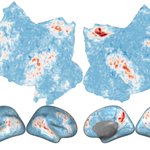
#Layer_fMRI_Artifact_of_the_Week In layer-fMRI, the voxel density is variable across depths and curvature. Thus, it’s hard to statistically compare different depths and columns.
The visualization is inspired from @cvnlab
So many hidden gems in his paper biorxiv.org/content/early/20…
In May Nature published a nice little article on Tips for Running a Healthy Lab. These are really good tips! The article is useful for both PIs and students/PDs. Check it out.
nature.com/articles/d41586-0…

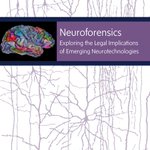
As neurotechnology develops it will become increasingly important to deal with the inevitable ethical issues surrounding brain reading and brain decoding. Here is a link to a free National Academy of Sciences report on this issue.
tinyurl.com/y7ne72ak

This is a really great summary of the disadvantages/problems of Matlab. A good read! xitter.cf/srvmshr/status/1015123…
If you are still writing your code in Matlab, please try to transition to a real open language like Python. Matlab is NOT open code, it is a walled garden. If you believe in open science then you shouldn't be using it. (As it happens Matlab is also poorly suited to big projects.)
I find it weird that the whole community is getting behind pre-registration but no one is pushing mandatory reporting of effect size and/or prediction quality out of set. Solid science isn't built out of null-hypothesis significance testing and p values even if they are reliable. xitter.cf/chrisdc77/status/10143…

Let's take a look shall we
V: No but if it did it’s for your own good
W,D&S: Jesus Christ No
B&R: Yes! Bureaucracy alert! HELP
F: Don’t forget theory. Also I am very serious.
F&N: F*ck no
G,R,B,L&T: NO
K&G: Strawman ate my homework
W&H: We’ll find out in 5 million years xitter.cf/BrianNosek/status/1014…
Jack Gallant retweeted

A thought provoking (and beautifully done) post on adversarial examples and L2 regularization
thomas-tanay.github.io/post-…
More Ph.D.s should consider alternative careers in government! In these trying times we desperately need people in government who are trained to think logically and rationally about facts and data. xitter.cf/clasberkeley/status/10…
In April the Journal of Neuroscience published a short piece on designing and reporting results from neuroimaging studies. But it doesn't go far enough. They should require all studies to report data from each individual subject as well as the group.
jneurosci.org/content/38/14/…
The First Law of Editing states that you can always cut 1/3 out of any document w/o loss of important information. The Second Law states that if you need to cut more than 1/3, you simply apply the First Law recursively. (Yes this probably breaks down in the limit...)
Fantastic advice for graduate students! The whole list is spot-on. xitter.cf/curiouswavefn/status/1…


After many years of work **WE HAVE RELEASED PYCORTEX 1.0**! Use pycortex for all your functional brain imaging needs. Its awesome!
See some demos: gallantlab.org/index.php/bra…
Read @james_s_gao's paper: dx.doi.org/10.3389/fninf.201…
Get it on github: github.com/gallantlab/pycort…
Why are so many Journals removing or demoting the methods sections? This is a giant step backwards for science. How can anyone interpret a result without knowing the methods that were used to obtain it? IMHO if space must be reduced then cut the length of the intro & discussion.
Large samples is always a good thing ALL ELSE BEING EQUAL. But if taking that large sample requires sacrificing stimulus/task conditions or SNR in each sampled subject, then large samples may actually REDUCE the total information gained relative to study with fewer subjects. xitter.cf/NeuroStats/status/1009…

Large samples let you focus on effect size - it means you probably have a good estimate of this and now need not worry about noise/sampling variability. This is *always* a good thing. How does this large sample myth persist? xitter.cf/cdfrith/status/1009455…
This looks great and they've been working on this for quite a while. I'm glad that @caseforge could help increase data quality! xitter.cf/alex_ander/status/1006…

This huge dataset was just released by some folks at CMU: 5000 images per subject! bold5000.github.io/ I'd love to hear about data quality if anyone has had a chance to check it out (although they used headcases, so there shouldn't be much motion 😉)
As a confirmed Jet hater, I approve of this thread. xitter.cf/choldgraf/status/10065…

Ever wanted to warp your data the same way that Jet warps your perception? Now you can! Introducing `makeitpop`. It comes with this blogpost that's pedantic about not using Jet :-) predictablynoisy.com/makeitp…