

Your edge isn’t strategy. It’s discipline. Gainlytics helps traders track what actually matters. No hype. Just data.
Joined January 2026
- Tweets8.4K
- Following7
- Followers128
- Likes1






Pinned Tweet
Gainlytics just crossed 700 users.
No funding. No ads. No marketing budget. Just a tool built by a trader who got tired of paying $50/month for journals that tracked numbers but never explained why I was losing.
Started as a side project a few months ago. Today 700 traders are actively using it to track not just their PnL but their behavior, their patterns, their mistakes.
86% of them are actually active. Not just signed up and forgotten. Actually logging trades, journaling, reviewing their data. That number means more to me than the 700 itself.
Every feature exists because a user asked for it or because I needed it myself. That's how it's been from day one and that's how it'll stay.
To everyone who joined early, gave feedback, reported bugs, shared it with a friend, or just quietly used it to get better at trading. Thank you.
700 is just the beginning. We're shipping fast and the roadmap is loaded.

Your broker shows you trades. Your spreadsheet shows you numbers. Neither shows you why you're actually making or losing money.
That's the gap we built Gainlytics to fill.
One dashboard. Everything you need to see. Your total P&L broken down by crypto, forex, and stocks. Your cumulative growth over time. Live market prices. Recent trades. And that's just the surface.
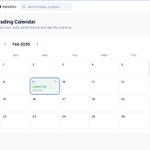
Go deeper and you'll find a trading calendar that shows your month at a glance. Analytics that break down your performance by day, session, and behavior. A discipline tracker that checks every trade against your own rules. A journal where you can attach screenshots and track your emotional state.
The stuff that actually makes you a better trader. Not another chart. Not another indicator. A mirror that shows you exactly where your money is going and why.
Free plan. 50 trades a month. 2 accounts. Full analytics. No trial. No bait and switch.
Stop guessing. Start seeing.

Most traders say "I just need more discipline" but have no system to actually measure it.
That's why we built the Trading Discipline feature in Gainlytics.
Here's how it works. You define your own rules before you trade. Your strategy name, your max risk per trade, your minimum risk to reward ratio, your maximum number of trades per day, and which sessions you're allowed to trade.
Then when you log trades Gainlytics automatically checks whether you followed your own rules or not. No guessing. No lying to yourself. Just data.
Because "I mostly followed my plan" means nothing when the Discipline Analytics tab shows you that you broke your rules 35% of the time last month and those rule-breaking trades had a 28% win rate compared to 64% when you stuck to the plan.
Discipline isn't a feeling. It's a metric. And if you're not measuring it you're just hoping you're being consistent.
Set your rules.
Trade. Review. Improve.

700 traders are using something I built out of frustration with my own journaling.
Trading journals exist everywhere. Spreadsheets, apps, notebooks, broker statements. But most of them do the same thing. They tell you what happened. You bought here, sold there, made this much, lost that much. End of story.
That was my problem for a long time. I was journaling consistently and it felt like I was doing the right thing. But after months of logging trades nothing changed. My results were the same. Inconsistent. Up one week, down the next, no real understanding of why.
I remember sitting at my desk one night after a particularly bad week going through my journal entry by entry trying to find the answer. And it hit me that I was looking at a list of trades and expecting it to teach me something. But a list of trades without context is just a receipt. It tells you what you spent. It doesn't tell you why you spent it.
That night I started asking myself different questions. Not what did I trade but why did I trade it. Not how much did I lose but what was I feeling when I entered. Not was the setup good but did I follow my rules or did I deviate and why.
I opened a spreadsheet and added columns I'd never tracked before. Emotional state. Whether the trade was planned or impulsive. Whether I moved my stop. Whether I was revenge trading. Time of day. Day of week. Session.
After about six weeks of doing this manually something changed. I started seeing patterns that had nothing to do with the market and everything to do with me.
My Tuesday and Wednesday trades were profitable. Thursday and Friday were a disaster. Not because the market was different on those days but because by mid-week I was either protecting a green week or trying to recover a red one. Both mindsets made me trade differently.
My first trade of the day had a 65% win rate. My fourth and fifth trades dropped to around 35%. I was overtrading every single day and the quality of my decisions deteriorated with every additional trade.
After any loss my next trade within 30 minutes had a win rate under 30%. I was revenge trading constantly and calling it "looking for a better entry."
None of this showed up in a regular journal. The PnL was there but the behavior behind it was invisible until I started tracking the right things.
That was the moment the idea for Gainlytics started forming. Not as a business idea. Not as a startup concept. Just as a frustrated trader thinking "why doesn't a tool exist that shows me this stuff automatically."
I wanted something that would take all the manual analysis I was doing in spreadsheets and make it visual, automatic, and impossible to ignore. A tool that didn't just confirm that I lost money but showed me exactly which behaviors were causing it.
What time of day I traded worst. How my performance changed after wins versus losses. Whether I was following my own rules or just thinking I was.
The first version was ugly. Barely functional. Just a database with a basic frontend that let me log trades with behavioral tags and spit out some charts. But even that rough version showed me more about my trading in two weeks than a year of traditional journaling.
I shared it with two trader friends. They both had the same reaction. "Why doesn't this exist already." One of them found out he had a massive leak on Mondays because he'd come in overloaded with ideas from weekend research and take too many positions. The other discovered his win rate doubled when he waited at least 15 minutes after market open instead of jumping in at the bell.
Simple patterns. Obvious in hindsight. Completely invisible without the right data.
That's when I realized this wasn't just a personal tool. There were thousands of traders out there doing the same thing I was. Journaling consistently, feeling disciplined, but getting nowhere because their journal was tracking numbers instead of behavior.
The idea behind Gainlytics was never to build the flashiest dashboard or the most feature packed platform. It was to answer one question that most trading tools ignore. Why are you losing.
Not how much. Not how often. Why. What behavior, what pattern, what emotional trigger, what time of day, what habit is the actual root cause of your inconsistency.
Because once you can see that clearly, the fix is usually simple. Stop trading after noon. Don't take a second trade after a loss. Reduce size on Fridays. Stick to your watchlist. Basic rules that only work when they come from your own data instead of generic advice from the internet.
That's the whole idea. That's why I built it. And watching 700 traders use it and have those same "oh that's why I'm losing" moments is exactly what keeps me building.
We just launched referrals on Gainlytics.
No complicated points system. No hoops to jump through. Just share your link, and when the people you invite actually start using the tool, you earn free Premium.
5 referrals = 1 month free.
15 referrals = 3 months free.
25 referrals = lifetime Premium. Forever.
We didn't want to reward people for spamming links. So a referral only counts when the person you invited actually uses the app for at least 7 days and logs real trades. Real users, real rewards.
Your referral link is already waiting in your dashboard. Log in and start sharing.
Most traders journal wrong.
They open a spreadsheet, type the ticker, the PnL, maybe the date. Close it. Never look at it again. Then wonder why journaling "doesn't work for them."
That's not journaling. That's bookkeeping.
Real journaling is writing down what you felt when you entered. Whether you hesitated. Whether you sized up because you were confident after a win. Whether you skipped a valid setup because yesterday's loss was still in your head.
Three entries from my own journal:
Took a trade after two clean winners during NY session. Felt confident so I sized up without adjusting my stop. Trade hit SL. The loss wasn't big but it was completely unnecessary. Emotion didn't cause the trade, it caused the risk deviation.
Had a perfect breakout setup during London open. Everything aligned with my plan. But I hesitated because of the previous day's loss. Price moved exactly as expected without me. The strategy worked. My confidence didn't.
Noticed FOMO during London session. Entered one trade early without full confirmation. Ended breakeven but the decision was messy and it shook my confidence for the rest of the day.
None of these entries are about the chart. They're about me. And that's the point.
When you journal behavior instead of just numbers you start seeing the patterns that are actually costing you money. Not bad setups. Bad decisions around good setups.
If your journal is just a trade log you're missing the whole point.

Nobody talks about this but your life outside of trading directly affects your performance inside of it.
Bad sleep. Stress from work. Fighting with your partner. Skipping meals. All of that shows up in your trading whether you realize it or not. You make worse entries, you hold losers longer, you revenge trade more, you size up when you shouldn't.
I started tracking my emotional state alongside my trades and the correlation was obvious. My worst trading days almost always lined up with days where something was off in my personal life.
You can't trade with a clear head when everything else is on fire. Take care of yourself first. The charts will be there tomorrow.
The most expensive lesson in trading is learning that more trades doesn't mean more money.
When I started I thought activity meant progress. If I wasn't in a trade I felt like I was missing out. So I traded everything that moved and by the end of the month I'd have 60 trades and nothing to show for it.
Then I looked at my data and realized something painful. My best months had the fewest trades. My worst months had the most. I wasn't generating alpha by trading more. I was generating fees and bad decisions.
Now my rule is simple. If the setup isn't screaming at me I don't touch it. Less trades, better trades, more money.
The most underrated edge in trading: knowing exactly when to stop trading for the day. Not because the market is bad. Because you are.
Every trader has a moment where they realize the market isn't the enemy. They are. The ones who make it are the ones who do something about it instead of just saying "I need to be more disciplined.
A 55% win rate with solid risk management will outperform a 70% win rate with no rules every single time. Trading is a math game disguised as a prediction game.
Your strategy isn't the problem. Your behavior is.
I spent almost a year blaming setups, indicators, and market conditions for my losses. Then I tracked every trade for 90 days and the data showed me something uncomfortable. My win rate on trades where I followed the plan was above 60%. But I was only following the plan about 65% of the time.
The other 35% was impulse entries, revenge trades, and forcing setups when I should have been done for the day. The strategy was never broken. I was.
Stop looking for a new system. Start tracking how well you follow the one you already have.
I just need more discipline" is the most useless advice in trading.
Telling yourself to be more disciplined without knowing where your discipline breaks down is like saying "I need to be healthier" without knowing what's making you sick. It sounds right but it changes nothing.
What actually works is tracking your trades with enough detail to see the patterns. What time of day you overtrade. What happens after a big win. How you react to two losses in a row. Once you see the pattern you can build a specific rule around it.
Discipline isn't a personality trait. It's a system you build from your own data.
Your best trading hours and your worst trading hours are probably not what you think they are. But you'll never know unless you track them.
I just need more discipline" is the trading equivalent of "I'll start Monday." Track your behavior. Find the pattern. Build a rule around it. That's real discipline.
Most traders spend 90% of their time looking for better entries and 0% reviewing why they exited early, sized up, or revenge traded. That's the leak.
Profitable on demo, broke on live. Same strategy, same market. The only variable that changed was you. Start tracking that variable.
Premium Feature Video is Live: AI Trade Coach
Just recorded a quick walkthrough of one of the Premium features: AI Trade Coach.
It basically takes all your trades and lets you ask anything then it gives you a deep, data-based breakdown of your performance + what to fix next.
Examples of what you can ask:
“What’s the best timeframe for me to trade based on my results?”
“How can I improve my win rate?”
“What should I focus on more — entries, exits, or risk management?”
“Why do I lose more on certain days / sessions?”
“What’s my biggest mistake pattern?”
It’s like having a coach that actually knows your stats, not just generic advice.
If you’re Premium, go check the video and try it out and if you want me to record more examples/questions, drop them below.