

business is war. scripts are the weapon. work w/@noahmorris @wannercashcow @phedEU @mattparofficial @jaketrinder_ @elliotrades & more
Joined August 2013
- Tweets11.8K
- Following615
- Followers9.4K
- Likes11K


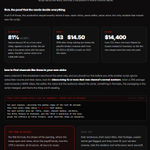





99% of faceless youtube creators are using the WRONG hook framework and they have 0 idea.
educational content and faceless content operate on completely different psychological systems. mixing them up is costing creators millions of views across the space. and nearly every channel i audit is making this exact mistake. let me show you why...
educational hooks use what i call the target-transformation-stakes framework. who is this for, what will they get, why should they care.
"if you're at 100 subscribers and want to reach 100K, i'm going to show you the 3-step system that took my client from 0 to 100K in 6 months."
that works for personal brand channels. the viewer is promised a transformation. they need to trust the creator. the hook builds credibility and maps to a specific outcome.
faceless hooks use the character-concept-stakes framework. who is the story about, what is the situation, why does it matter.
"at 3:47 a.m., mark zuckerberg sent an email that would destroy his best friend forever."
that works for faceless. the viewer is promised an engaging experience about someone else. 0 teaching. 0 transformation promises. pure curiosity about what happened.
the destruction happens when creators cross the frameworks.
a faceless channel opening with "if you want to understand criminal psychology, i'm going to teach you..." is using educational framing for entertainment content. the viewer came for a story. they got a pitch. they leave.
a personal brand opening with "this entrepreneur discovered a secret that changed everything" is using entertainment framing for educational content. the viewer came for expertise. they got a teaser. it feels like clickbait.
wrong framework = confused audience = destroyed retention. regardless of how well-written the hook is.
the fix is matching the framework to the format BEFORE writing a single word.
faceless? character-concept-stakes. drop the viewer into a character, present a situation, imply the stakes.
personal brand? target-transformation-stakes. name the audience, promise a specific outcome, establish the cost of inaction.
DM me "HOOKS" if you want FacelessOS to apply the right framework to your niche automatically
haris

YOUR YOUTUBE NICHE WILL F*CK YOU OVER
if your niche is boring, your scripts will ALWAYS be boring. it doesn't matter how good you get at writing them.
i've watched creators grind hook frameworks for 6 months while sitting in a category where 50 channels are producing the identical video about the identical topic.
they get better at writing every month and the views never move, so they assume the writing still isn't good enough.
when the algorithm has 50 interchangeable options, it has 0 reason to pick yours.
the fix? find untapped niches.
sounds a lot harder than it actually is, but it takes ~20 minutes:
untapped niches don't need finding. build one by combining +2 proven formats.
youtube's algorithm categorises by format, not only by topic. a "true crime" video and a "true crime + 3D animation" video get filed differently, surface to different viewer segments, and trigger separate recommendation pathways.
combine 2 proven formats and you get 3 things at once. proven demand from both audiences, 0 direct competition, and algorithmic novelty.
that last one matters more than people realise.
when youtube encounters a format it hasn't classified before AND that format retains above average, it pushes it aggressively to find the edges of the audience.
this is how a channel goes from nothing to 400,000 views on video 6.
here are some combinations printing right now:
true crime plus 3D animated reenactment.
the animation removes the stock-footage feel that plagues every other true crime channel. RPM around $10 to $14.
finance education plus gaming footage.
sounds ridiculous, which is exactly why it works. ambient visual engagement while the narration carries the value. RPM $8 to $12.
history plus AI cinematic visuals.
same stories every history channel tells, except yours looks like netflix funded it. RPM $10 to $15.
psychology plus animated explainers.
massive demand, and the entire category is talking heads or slideshows. RPM $9 to $13.
science plus horror aesthetics.
deep sea, medical oddities, space. credibility from the science, shareability from the dread. RPM $9 to $12.
pick 1 and ship 5 test videos. if 1 or 2 pull above-average impressions on a brand new channel, you have your signal.
DM me "MIX" if you want me to sanity check the combination you're considering
haris
Haris retweeted
the single most profitable hook format on youtube produces 3x the completion rate of a standard opening.
i've tested this across 8,000+ scripts. the gap in the data is enormous. one hook architecture CONSISTENTLY outperforms every other format for videos where the goal is conversion (email signups, product sales, coaching calls, affiliate revenue). the format, the psychology, and a plug-and-play template are below...
it's called the impossible result hook and the reason it works so well for conversion-focused content is because it pre-qualifies the viewer in the first 5 seconds.
the structure:
[a specific result that sounds too good to be true] + [a constraint that makes it sound even more impossible]
examples from real scripts:
"$14,400 from 225 views."
"490,000 views from a channel that didn't exist 3.5 hours earlier."
"$35K from an email list everyone said was dead."
"$50K from a single webinar recording."
each one of these is a REAL result from channels and creators in our network. and each one follows the same formula: a specific number paired with a constraint that makes the number seem impossible.
why this hook outperforms everything else for conversions:
standard hooks attract everyone. "7 tips for growing on youtube" brings in casual browsers, people killing time, viewers who'll scroll past every offer you make.
the impossible result hook attracts a SPECIFIC viewer: someone who sees the result and thinks "i need to know how."
that viewer is pre-qualified. they're interested in the outcome. they're already picturing what that result would mean for their own channel. and they'll watch the full video because the cognitive dissonance (the result seems impossible but the specifics make it feel real) demands resolution.
the completion rate on impossible result hooks averages 3x higher than standard hooks. and more importantly, the CONVERSION rate is disproportionately higher because the viewers who complete the video are the exact ICP for whatever you're selling.
the psychology:
there's a specific cognitive response to a claim that seems impossible but is stated with precision.
"i made a lot of money on youtube" triggers nothing, too vague, and the brain registers it as a generic claim before moving on.
"$14,400 from 225 views" triggers cognitive dissonance. the brain struggles to reconcile a small number (225 views) with a large outcome ($14,400). those two numbers clash with the viewer's existing mental model of how youtube works.
the ONLY way to resolve that dissonance is to keep watching and find out what made the equation work.
and the specificity ($14,400 rather than "$14K" or "over $10K") signals authenticity. round numbers sound fabricated. precise numbers sound measured. "225 views" is so specific it's almost embarrassing, which makes it feel MORE real.
the template:
line 1: [$exact amount] from [surprisingly small input]
or: [$exact amount] in [surprisingly short timeframe]
or: [impressive outcome] from [thing that shouldn't produce that outcome]
line 2: [one detail that makes the first line hit harder]
line 3: [the open loop: "and the method is the opposite of what you'd expect" or "let me show you what made this possible"]
what to AVOID:
vague results: "1,000s of dollars" (too fuzzy to trigger dissonance)
round numbers: "$50K" works but "$50,347" works better
unverifiable claims: the result MUST be real. viewers will check. one fabricated number burns trust for every future video.
hedging: "i almost made" or "we got close to" kills the entire mechanism. the hook needs to be a statement of fact rather than a near-miss.
the best faceless conversion funnels on youtube all open with this hook type. the video proves the result is real, the proof builds authority, the authority earns the CTA, and the CTA converts because the viewer has been watching for 10 minutes thinking "i want that result for myself."
DM me "HOOKS" if you want to see how i'd engineer conversion hooks for your channel
haris
the most RELIABLE way to make something go viral on youtube is older than writing: it's gossip.
humans have been trading stories about who did what since long before anyone could write them down.
and 1 faceless channel turned that into 1.86M subscribers, uploading once or twice a week. here's why it works so well, and how to do it without getting sued:
the channel is internet anarchist.
it made its name on callout documentaries about whatever internet beef is happening right now: the facts, the receipts and the timeline, put together into 1 story that's easy to follow.
its top 2 videos pulled 11M and 10M views. and 4 of its 7 biggest have penguinz0 in the title. he's 1 of the most popular commentary youtubers there is, and the biggest drama always involves the biggest names.
people eat this up for a reason that's way older than youtube.
for almost all of human history, knowing what was going on in your tribe gave you the best chance of survival.
you needed to know who lied, who cheated and who got kicked out, because that told you who to trust and who was about to come for you next.
the evolutionary psychologist robin dunbar found that about 2/3 of our conversation time goes on social topics, meaning other people and our relationships with them.
so gossip was the original social network, and this channel runs it at scale.
and outrage is what makes it spread. when someone we follow does something wrong, we want to know what everyone else thinks about it, and which side we should be on.
so use that outrage in your titles and scripts, but keep it honest. the anger has to come from what actually happened.
here's how its top video is built. it's 11M views on penguinz0 calling out a creator for copying other people's videos:
- it opens cold on the moment it blew up: penguinz0's clip calling the creator out, with no context yet.
- then it rewinds to how the creator got famous in the first place.
- then it walks through the timeline receipt by receipt, with every claim backed by a clip or a screenshot on screen.
and here's what i'd add on top:
- the other side's defence, and a strong one, because giving them their best case is what makes your verdict believable later.
- a turn: the detail that changes how everything before it reads.
- a clear verdict at the end.
then the part that keeps you from getting sued or taken down:
- only use facts from public sources people can check for themselves.
- say "alleged" on anything that isn't proven.
- never tell your audience to go after anyone, and never dox.
- label opinions as opinions, every time.
the same receipts that keep you out of court are what make people binge the whole video.
want to write callout scripts like this with the receipts built in? DM me "TRIBE" and i'll show you how it works
(200M+ views generated through AI scriptwriting skill files trained on 8,000+ scripts, one-time payment)

the single most profitable hook format on youtube produces 3x the completion rate of a standard opening.
i've tested this across 8,000+ scripts. the gap in the data is enormous. one hook architecture CONSISTENTLY outperforms every other format for videos where the goal is conversion (email signups, product sales, coaching calls, affiliate revenue). the format, the psychology, and a plug-and-play template are below...
it's called the impossible result hook and the reason it works so well for conversion-focused content is because it pre-qualifies the viewer in the first 5 seconds.
the structure:
[a specific result that sounds too good to be true] + [a constraint that makes it sound even more impossible]
examples from real scripts:
"$14,400 from 225 views."
"490,000 views from a channel that didn't exist 3.5 hours earlier."
"$35K from an email list everyone said was dead."
"$50K from a single webinar recording."
each one of these is a REAL result from channels and creators in our network. and each one follows the same formula: a specific number paired with a constraint that makes the number seem impossible.
why this hook outperforms everything else for conversions:
standard hooks attract everyone. "7 tips for growing on youtube" brings in casual browsers, people killing time, viewers who'll scroll past every offer you make.
the impossible result hook attracts a SPECIFIC viewer: someone who sees the result and thinks "i need to know how."
that viewer is pre-qualified. they're interested in the outcome. they're already picturing what that result would mean for their own channel. and they'll watch the full video because the cognitive dissonance (the result seems impossible but the specifics make it feel real) demands resolution.
the completion rate on impossible result hooks averages 3x higher than standard hooks. and more importantly, the CONVERSION rate is disproportionately higher because the viewers who complete the video are the exact ICP for whatever you're selling.
the psychology:
there's a specific cognitive response to a claim that seems impossible but is stated with precision.
"i made a lot of money on youtube" triggers nothing, too vague, and the brain registers it as a generic claim before moving on.
"$14,400 from 225 views" triggers cognitive dissonance. the brain struggles to reconcile a small number (225 views) with a large outcome ($14,400). those two numbers clash with the viewer's existing mental model of how youtube works.
the ONLY way to resolve that dissonance is to keep watching and find out what made the equation work.
and the specificity ($14,400 rather than "$14K" or "over $10K") signals authenticity. round numbers sound fabricated. precise numbers sound measured. "225 views" is so specific it's almost embarrassing, which makes it feel MORE real.
the template:
line 1: [$exact amount] from [surprisingly small input]
or: [$exact amount] in [surprisingly short timeframe]
or: [impressive outcome] from [thing that shouldn't produce that outcome]
line 2: [one detail that makes the first line hit harder]
line 3: [the open loop: "and the method is the opposite of what you'd expect" or "let me show you what made this possible"]
what to AVOID:
vague results: "1,000s of dollars" (too fuzzy to trigger dissonance)
round numbers: "$50K" works but "$50,347" works better
unverifiable claims: the result MUST be real. viewers will check. one fabricated number burns trust for every future video.
hedging: "i almost made" or "we got close to" kills the entire mechanism. the hook needs to be a statement of fact rather than a near-miss.
the best faceless conversion funnels on youtube all open with this hook type. the video proves the result is real, the proof builds authority, the authority earns the CTA, and the CTA converts because the viewer has been watching for 10 minutes thinking "i want that result for myself."
DM me "HOOKS" if you want to see how i'd engineer conversion hooks for your channel
haris
when a channel starts losing views, the instinct is to upload more.
the logic seems right. if a few videos aren't working, maybe volume compensates.
but here is what actually happens.
youtube weights recent performance heavily. 10 videos in 2 weeks that all show early viewer drop-off and flat retention graphs send a single, clear signal to the algorithm:
this channel does not hold viewers.
reduce distribution.
mario juice, the retention director for channels with over 100 million subscribers, published an analysis of over 1,000 channels in november 2025. his finding: up to 80% reduction in long-form video recommendation on the home feed.
the creators responding by uploading faster are accelerating their own decline. the ones gaining ground are uploading less and producing scripts with meaningfully stronger retention architecture.
the algorithm did not change what it rewards. it got significantly better at measuring it. the gemini integration through 2025 and 2026 means youtube's transcript analysis is more sophisticated than it was 18 months ago. it reads your script structure, your pacing,
your authenticity signals, with more precision than before.
the script that was getting away with flat AI output in 2024 is being caught now. not because youtube added a new rule. because the classifier got smarter.
the question to ask is not "how do i post more." it is "why are my viewers leaving at 40 seconds."
DM me "SCRIPTS" if you want to dig into that answer.
you can write the best hook of your life and STILL lose viewers in the first few seconds of your video
imagine that a documentary YT video about people freezing to death opening with "in this video you'll learn three tips to survive the cold." it wouldn't make sense.
the thumbnail promised a story and the first line delivered a lecture.
the mismatch registers INSTANTLY.
the viewers’ brain expected a narrative and got a tutorial format instead. the check fails, the content gets flagged as not what was promised, and they go looking for something else.
then you blame the algorithm, the niche, switch topics, and make the SAME mismatch on the next upload.
across 200+ script audits this year, the hook-format mismatch is the number one structural mistake. not because it's the hardest to fix, but because it's the hardest to notice.
the fix is ONE decision made before you write a single line.
write the format down first. "this is a documentary script." then write the hook framework next to it. "the hook uses character-concept-stakes." now the hook has to serve the format instead of fighting it.
if your retention graph shows a cliff in the first 8 seconds and you've swapped hook after hook without moving the number, stop testing hooks. the hook quality was NEVER the problem. the framework doesn't match the format your thumbnail promised.
here's a quick reference:
documentary, story-driven, biography: character-concept-stakes. who is the story about, what is their situation, why does the outcome matter.
educational, tutorial, explainer: target-transformation-stakes. who is this for, what will they specifically get, what happens if they don't watch.
true crime, investigation, mystery: in media res or dramatic stakes. drop into the most intense moment or name the consequence in the first sentence.
countdown, listicle, ranking: tease the strongest item first and promise the list escalates from there.
and that’s ALL you gotta know about how to approach hook writing depending on the format
DM me "FACELESSOS" if you want an AI scriptwriting system that does this for you though
there are specific transition phrases that trigger a neurological response in your viewer's brain that makes it PHYSICALLY harder to click away.
this isn't retention theory. it's how the brain processes incoming information. and the data across 8,000+ scripts shows that scripts with these phrases placed correctly maintain 75%+ retention while scripts without them lose 60% of viewers by minute 3. here are the phrases and exactly where to place them...
the brain has a state called anticipatory attention. when it encounters a signal that important information is coming, neurological alertness increases. processing speed accelerates. the viewer is PRIMED to absorb whatever comes next.
certain phrases trigger this state reliably:
"but here's what they didn't know..."
"what happened next changed everything."
"the real story is even darker."
"and what investigators found contradicts everything above."
these aren't random transitions. each phrase signals that something significant is about to happen, which triggers the anticipatory state before the information arrives.
the viewer isn't choosing to pay attention. their brain is doing it automatically.
the advanced application is the spacing.
true crime and mystery scripts: triggers every 30-45 seconds. these audiences are in active detective mode. they process information faster and need the next signal sooner.
educational content: triggers every 60-90 seconds. these audiences need processing time between triggers. spacing them too tightly makes the content feel manipulative and the viewer tunes out.
documentary and biographical content: triggers every 60 seconds. the pacing matches the viewer's expectation of narrative progression.
the critical rule: each trigger must feel like organic story progression. when viewers notice you're TRYING to keep them watching, the technique backfires COMPLETELY. when the trigger feels like a natural escalation of the story, viewers think "this keeps getting better" instead of "this person is manipulating me."
the tell that separates good triggers from bad ones: a good trigger introduces NEW information. "but here's what they didn't know" implies a revelation is coming. a bad trigger restates existing tension. "and it gets even crazier" is empty escalation with 0 new information behind it.
every trigger must EARN its place by delivering on the promise in the next 15-30 seconds.
DM me "RETAIN" if you want FacelessOS to build these triggers into your scripts automatically
haris
I DON’T BRAINSTORM FACELESS YOUTUBE VIDEO IDEAS
brainstorming produces generic topics that compete with 1,000 other channels.
instead i run a 10-minute outlier extraction inside opus 5 that tells me EXACTLY which angles are printing in my niche right now. and the process produces script concepts that are borderline impossible to compete against. here's the prompt i use...
the concept: find videos that performed 5-20x above their channel's baseline. the channel's audience size didn't change. the production quality didn't change. the ANGLE was the variable.
a video beating its own channel average by 10x means the script concept did something the channel's other uploads didn't. that's the concept worth extracting.
the prompt (paste this into opus 5 with the nexlev MCP connected):
"using nexlev, search for channels in [NICHE] with 10,000-200,000 subscribers. for each channel, pull their last 30 videos. identify videos where the view count is at least 5x the channel average. return the top 15 outliers sorted by view-to-average multiple, with video title, URL, view count, channel average, and publish date."
what this returns: a ranked list of the 15 videos in your niche that performed dramatically above normal.
then pull the transcripts of the top 5 and feed them ALL into opus 5 simultaneously:
"analyse these 5 outlier transcripts for structural patterns. for each: what hook type was used, where did the entry point land, what pacing pattern did the body follow, and what editorial decision made this video different from a generic take on the same topic."
in 10 minutes, opus 5 cross-references all 5 transcripts and identifies the common patterns the outliers share.
this produces something manual research NEVER could: a cross-referenced structural blueprint of what's printing in your niche right now.
i then run comment sentiment analysis on the top performers. the questions in the comments are the next batch of video ideas. the complaints are the structural improvements your next script should make.
20 minutes. replaces 3+ hours of manual browsing. and the script concepts that come out of this workflow hit at 5-10x the rate of brainstormed ideas.
DM me "IDEAS" if you want FacelessOS to run this workflow for your niche
haris
your youtube trust score might be killing your channel’s views and you don’t even know about it…
there’s no place to check it, but it exists
you've seen it happen. a creator posts 20 genuinely good videos. zero traction. under 100 impressions on all of them. they assume they're bad at this, burn out, and quit.
the content was fine, and the channel was flagged before their first upload even went live. let me break down exactly how this works and the $0 fix...
when you create a new youtube channel, the system evaluates a set of signals to classify whether you're a real creator or a bot farm.
fresh gmail + instant uploads + 0 viewing history + no subscriber activity = the exact fingerprint of the spam channels youtube kills every day
so the system treats you the same way.
your reach gets throttled before you've begun.
i've watched this wreck dozens of channels in the facelessOS community before we figured out the pattern. a creator sets up a new gmail, creates a channel, uploads 5 videos in the first week, and wonders why their impressions are in the single digits. they think their thumbnails need work. their hooks need work. their niche selection was wrong.
the real cause sat elsewhere: the channel was classified as low-trust on day one.
and once you're locked in what people are calling "0 view jail," the algorithm withholds enough initial impressions to even TEST whether your videos are good. you're uploading into a void.
the protocol fixing this costs nothing and takes 7 days.
step 1: use a gmail you've had for months.
an aged, real email with search history, youtube watch history, subscriptions, normal activity. this single change shifts how youtube classifies the account from the start. aged gmails signal "real human." fresh gmails signal "potential spam."
step 2: spend 7 days as a viewer before you upload anything.
watch full videos in your niche. complete watch-throughs rather than 30-second clicks. subscribe to 10-15 channels in your space. leave a few real comments. like videos. build a viewing profile that matches the audience you want to attract.
this sounds dumb. it's the highest-leverage 7 days you'll ever spend on a channel.
the system now has evidence you're a real person with real interests in the niche you're about to create content for. that reads completely differently to "anonymous account uploaded 5 videos about true crime yesterday."
step 3: verify your identity.
enable feature eligibility in your youtube settings. this requires a government ID and phone number. i know some faceless creators hate this because they want full anonymity. the tradeoff is the algorithm treating you like a verified human instead of an unknown entity. every creator in our network who verified saw an immediate increase in initial impression allocation.
step 4: upload cadence matters MORE than upload volume.
the channels that escape 0 view jail the fastest upload 2-3 videos in their first week with 48-72 hours between uploads, well away from 5 videos on day one.
consistent spacing signals "real creator." mass uploads signal "bot farm." youtube's system is pattern-matching your behaviour against known spam patterns, and spam channels dump content fast.
step 5: your first 3 videos are an audition.
youtube tests new channels by sampling a small audience. if those first 3 videos get decent retention (above 40%) and positive engagement, the system escalates your trust and your next uploads get shown to a bigger initial pool.
if your first 3 videos get 10% retention because the scripts were weak, the system downgrades you and your next uploads get an even smaller test audience. it's a compounding loop in both directions.
this is why i keep saying the script carries everything. especially for new channels, the first 3 scripts need to be ENGINEERED for retention. they set the trust score for every video that comes after.
the channels in our network running scripts built on retention data from 8,000+ proven scripts skip the 0 view jail entirely. their first videos get tested on meaningful audience sizes because the retention signals tell the algorithm "this channel is worth pushing."
DM me "FACELESSOS" if you wanna access the AI scriptwriting system that applies this to your niche
haris
an explainer video hit 950K views (16x the channel's average) using a framework most scriptwriters would call risky.
it opened by presenting the wrong answer and letting the viewer believe it for 3 minutes STRAIGHT.
a standard explainer presents information linearly.
“here's how the algorithm works.”
step one, step two, step three.
the viewer takes it in passively, and passive reception produces flat retention. the brain is storing data, not resolving a conflict.
the 950K-view script did the opposite.
it opened with the common belief about a specific algorithm change, presented it convincingly, and let the viewer nod along for 3 full minutes.
then it systematically dismantled the belief using specific data points.
so the viewer spent the first 3 minutes sure they understood the topic, and the next 5 discovering they were wrong.
this shift matters, because the brain responds to being wrong completely differently than to taking in new information. being wrong triggers the error-correction system. it throws maximum cognitive resources at resolving the discrepancy.
now they're actively rebuilding their mental model instead of passively storing facts.
this active processing is what produces 70%+ retention through the middle sections where other explainers bleed viewers.
the retention graph confirms this:
instead of the standard mid-video dip, the correction point showed a peak. the moment the viewer realised they were wrong was the moment engagement maxed out.
here's how to run it yourself:
spend the first 2-3 minutes presenting the common understanding as if it were correct.
use the same language your viewer would use for their own belief. cite the same sources they've already seen. build their confidence.
then introduce the first data point that doesn't fit. then another. then a third. each one widens the crack in the belief they were holding 60 seconds ago.
5 minutes in, their mental model is in active reconstruction, and the cognitive effort locks their attention, because the brain won't abandon a model mid-rebuild.
the payoff is the moment the correct understanding clicks into place.
understanding something at a deeper level than they did 5 minutes ago is the reward that drives the subscribe.
so next time you write an explainer, ask what your audience currently believes about the topic that's wrong. start there. let them believe it. then show them why they’re wrong.
high retention is basically guaranteed.
DM me "SCRIPTS" if you want the framework library behind 200M+ views.
"okay, but the spanish flu only infected like 30% of the world. that was ONLY 500 million people. it's time to go BIGGER."
this single transition line inside a faceless script is the reason the retention graph showed ZERO mid-video dip on a video that went to 806K views.
let me explain the mechanic behind it.
most countdown or multi-section scripts treat each section as independent.
section 1 delivers value. section 2 delivers value. section 3 delivers value. the viewer consumes each one individually and decides whether to stay for the next.
the problem: after every mini payoff, the viewer enters a state of completion. they got something good. nothing forces them to continue. each section break is a natural exit point.
the 806K-view script eliminated EVERY natural exit point using escalation bridges.
after each mini payoff (the resolution of one extinction event), the script explicitly reframed the next section as MORE extreme than what the viewer had already processed.
"only 500 million people" takes the spanish flu (which felt massive during the section) and recategorises the entire event as SMALL. the viewer who thought the spanish flu was the peak now discovers the scale is about to increase DRAMATICALLY.
the next section has been pre-framed as bigger before the viewer reaches it.
this creates compounding disbelief. each section raises the ceiling for what's possible, which makes the following section feel like a reveal even when the raw information is straightforward.
WITHOUT the escalation bridge: the viewer finishes the spanish flu section, feels satisfied, and has no structural reason to continue.
WITH the escalation bridge: the viewer finishes the spanish flu section, hears "it's time to go bigger," and the satisfaction transforms into anticipation.
the transition between mini payoffs matters more than the payoffs themselves.
each transition has to do two things at once. resolve the current section so the viewer feels satisfied. reframe the next section as more extreme so the viewer feels COMPELLED.
resolution without escalation creates a comfortable exit.
escalation without resolution creates frustration.
the combination creates momentum. the viewer rides the momentum from section to section without ever hitting a point where stopping feels natural.
if you write countdown, listicle, or multi-section scripts, audit your transitions right now.
read the last sentence of each section. does it close the section cleanly AND raise the stakes for the next one? if the transition ONLY closes (no escalation), you have a natural exit point where viewers will leave.
add ONLY one escalation line after every payoff. reframe whatever came before as the warm-up for what comes next. the retention graph responds to this immediately.
DM me "SCRIPTS" if you want the retention mechanic system that places these bridges automatically.


Haris retweeted
every faceless creator is "trying" (failing) to build their own scriptwriting system right now.
a JSON template with maybe 10 reference videos that you use to slop together a few SOPs last weekend that you plug into claude or chatgpt.
that’s your entire scriptwriting strategy behind your channel.
congrats. you built an AI that writes you flops faster.
FacelessOS is 10,000+ of my scripts across 100+ niches, distilled into 22 skill files with my rules baked in.
the hooks that ACTUALLY fucking hold.
the structures that kept people binge watching MULTIPLE HOURS of videos in a row.
the stuff that actually got channels paid.
drop it into the AI you already pay for. claude, chatgpt, codex, whatever.
stop guessing. start shipping.
Get FacelessOS: fyreinteractive.co/facelesso…

a 12-minute faceless video hit 3.2M views by doing something the creator's entire niche had NEVER seen before.
the video took a mainstream entertainment topic and analysed every major plot point through economic game theory.
this format is called “niche-bending”.
you take something familiar (a movie, a historical event, a cultural phenomenon) and analyse it through a lens the audience has never considered.
the familiar topic provides the built-in audience. millions of people already care about the entertainment property.
the unfamiliar lens sparks curiosity.
nobody has ever broken down those plot points through game theory.
the viewer who clicked because they liked the entertainment property stayed because they were learning economic principles without realising the lesson was happening.
and the retention graph shows something highly unusual:
no mid-video dip at all
the standard mid-video drop (where most formats lose 10-20% of viewers) was completely absent.
the reason for this? the viewer's brain had no template for the content. they've seen entertainment breakdowns before. they've seen game theory before. they've never seen the two combined.
with no template to predict against, the brain never drops into autopilot. attention stays locked, and the viewer sits in a constant state of discovery. every section reveals a connection they hadn't considered, and the game theory lens shows something real about the property a standard analysis would have missed.
this is why niche-bend formats outperform single-domain content at the outlier level.
single-domain content competes against thousands of videos running the same template, so the brain calibrates within 90 seconds and attention drops.
cross-domain content gives it no template to calibrate to.
the only constraint: the lens has to be surprising enough to prevent prediction, but coherent enough to produce real insight. random combinations don't work.
it has to illuminate something true about the subject.
if you write faceless content, try this on your next script:
take your strongest topic and analyse it through a completely different discipline. history through psychology. finance through military strategy. technology through biological evolution.
the combination nobody has seen yet is what produces the best retention.
DM me "SCRIPTS" if you want the format selection system behind these mechanics.

the prompt 9 out of 10 faceless creators use to write scripts is a 1 sentence.
"write me a 10 minute youtube script about [topic]."
and then they think about why the output reads like a wikipedia article with a voiceover. the problem sits with the instruction rather than claude. you're giving a brain surgeon 1 sentence and expecting precision. the 4-stage prompt framework i use to produce scripts holding 60%+ retention is below...
stage 1: the research prompt
before writing anything, claude needs context. specific, structured research rather than "go research this topic."
"using the research tools available, find the 5 most counterintuitive facts about [topic] that would surprise someone who thinks they already understand it. for each fact, include the source, the specific data point, and 1 sentence on why it contradicts the common assumption. do NOT include obvious or widely known information."
why this structure matters: the word "counterintuitive" forces claude to filter for surprising information rather than surface-level facts. "contradicts the common assumption" gives it a comparison frame. "do NOT include obvious information" prevents the generic padding that kills the first 3 minutes of 9 out of 10 faceless scripts.
nearly every creator skips research entirely or pastes a topic and lets the AI decide what's interesting. that's how you get scripts full of information everyone already knows.
stage 2: the structure prompt
the script format needs to be declared BEFORE writing begins. this is where 95% of AI scripts go wrong.
"using the facelessOS skills and the research above, structure a [format] script about [topic] for a [length] youtube video. the hook must create cognitive dissonance or narrative tension in the first 8 seconds. plant curiosity gaps at the 2-minute, 5-minute, and 8-minute marks. the payoff in the final section must connect directly back to the hook's opening question. include [B-ROLL], [CLIP], and [TEXT] visual cues for the editor. do NOT use generic transitions like 'but what does this mean' or 'so how does this work.' every section must escalate from the previous one."
the banned transitions line is CRITICAL. without it, claude defaults to rhetorical questions between every section. "but what does that actually mean?" is the AI tell that kills credibility with sophisticated viewers.
the visual cue instruction saves 2-3 hours of back-and-forth with editors. the script comes out ready for production rather than ready for interpretation.
stage 3: the audit prompt
this is the stage 99% of creators skip, and it's the stage that separates a 35% retention script from a 60% retention script.
"audit this script against these criteria: (1) does the hook confirm the video's topic within 8 seconds? (2) is there an active curiosity gap at every point in the script? flag any section where no open loop exists. (3) are there parallel repetition stacks (same word or phrase structure repeated consecutively)? flag and rewrite them. (4) does the payoff connect back to the hook? (5) are transitions declarative statements or are they rhetorical questions? replace any rhetorical questions. (6) does the pacing escalate or does it plateau? flag any section where the energy level doesn't increase from the previous section."
this prompt turns claude into a script editor rather than a script writer. and the output is DRAMATICALLY better than asking it to "improve" the script, because "improve" is vague. the 6-point audit gives it specific failure modes to identify and fix.
stage 4: the variation prompt
the last stage prevents the biggest problem with AI-assisted production at scale: every script sounding identical.
"check this script against the variety rotation log. are any transitions, commentary lines, or section bridges repeated from recent scripts? if so, substitute alternatives that maintain the same function but use different phrasing, rhythm, and structure. the script should not share any recurring phrases with the last 5 scripts produced."
this is the prompt that separates a channel where every video feels fresh from a channel where viewers notice the same phrases coming back every week. AI has a default vocabulary. without explicit variety rotation, it'll use the same 20 transitions across every script you produce.
the full workflow takes 45 minutes per script. research, structure, write, audit, rotate. first draft goes straight to the editor. 80% less rewriting than a single-prompt approach.
the skill files these prompts are designed to work with are inside FacelessOS at fyreinteractive(.co/facelessos)
DM me "SCRIPTS" if you want to see the full prompt system
haris
every faceless creator is "trying" (failing) to build their own scriptwriting system right now.
a JSON template with maybe 10 reference videos that you use to slop together a few SOPs last weekend that you plug into claude or chatgpt.
that’s your entire scriptwriting strategy behind your channel.
congrats. you built an AI that writes you flops faster.
FacelessOS is 10,000+ of my scripts across 100+ niches, distilled into 22 skill files with my rules baked in.
the hooks that ACTUALLY fucking hold.
the structures that kept people binge watching MULTIPLE HOURS of videos in a row.
the stuff that actually got channels paid.
drop it into the AI you already pay for. claude, chatgpt, codex, whatever.
stop guessing. start shipping.
Get FacelessOS: fyreinteractive.co/facelesso…