
Strategic Initiatives, Snorkel AI
San Francisco, CA
Joined September 2008
- Tweets7.3K
- Following530
- Followers1.6K
- Likes80





Friea Berg retweeted

We obtained early access to evaluate @spacexai's newest Grok 4.5 model on GDPval+: real professional deliverables (from a variety of economic sectors and occupations), graded against expert-authored rubrics. Grok 4.5: 29%. GPT 5.5: 22%. Claude Opus 4.8: 21%.

Friea Berg retweeted
We expect agents to act like senior engineers, but most benchmarks still evaluate them like interns.
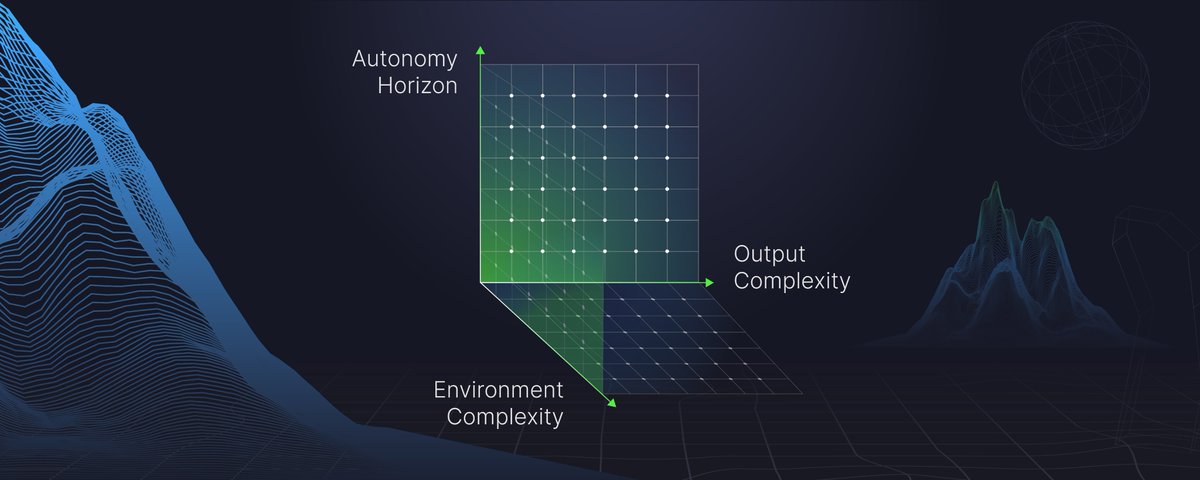
Excited to introduce Senior SWE-Bench, an open-source and @harborframework-native benchmark that assesses agents as senior engineers on long-horizon tasks with realistically under-specified instructions.
We expect agents to build real features going on just a quick Slack message, nothing like the super technical instructions most benchmarks provide. Senior SWE-Bench fixes that.
Claude Opus 4.8 is the current leader at 24% high quality solves, but it took 117K tokens on average to get there. Claude Sonnet 5 looked like it was going to swoop in for the top spot, but we found it cheated on 26% of trials.


Friea Berg retweeted

Thanks @SnorkelAI for the great tasks and especially @fredsala, Tom Walshe, and Jeong Shin for the collaboration
Terminal-Bench 2.0 on the horizon 👀 + some other exciting releases!

We're excited to announce Snorkel's role as one of the top contributors to Terminal-Bench 2.0!
Terminal-Bench has quickly become the gold standard for evaluating AI agent capabilities in terminal environments—and we're helping build the next generation.
🔗 snorkel.ai/blog/evaluating-c…

Friea Berg retweeted
-2016 (classic era): focus on data efficiency
2017-2025 (pretraining era): focus on compute efficiency
2026-: focus on data efficiency (again)
The standard Transformer paradigm is optimized for compute efficiency. As we look at data efficiency, we'll see very different design decisions, which will be exciting!


Are you exploring building RL environments for agentic use cases? Here's a good breakdown of misconceptions to avoid surprises.

Lots of chatter about agentic/RL simulation environments recently!
Some key misconceptions (slightly caricatured):
>> Building RL envs is easy, because you just code up a verifier quickly, and let the model do the tough data generation on its own!
- Usually, this boils down to over-indexing on environments where verification is easy.
- For example: you might need a chess expert to generate realistic expert gameplay traces, but anyone with a basic chess rulebook could verify a win easily.
- However: there are many, many settings where verification is not at all trivial. The simplest examples are settings with nuanced, domain-specific evaluation rubrics (e.g. most real world enterprise settings). An extreme example being: verify whether a program will halt :)
>> Building RL envs will get commoditized as the "standard" environments get rapidly solved.
- RL environments effectively encode a complete product spec - including unique tools, data resources, constraints, rubrics/verifiers, and human/agent simulators - and as such, are as diverse as the space of all possible AI products.
- Yes, certain generic RL envs will rapidly commoditize ('web browsing', 'computer OS') - but these are not the useful ones anyway!
- The useful RL envs will be deeply domain- and product-specific – and will require corresponding human expertise and customization to build and evolve over time.
>> RL (and RL envs) will be all that you need!
- Current evidence suggests that RL / RL envs will be one part of the overall AI development loop- which will continue to require golden human annotations/traces for initial SFT; ongoing human evals; and more
- Just like trial-and-error based learning is only one part of human learning, RL will likely be one tool/phase of many.
In summary:
- (1) Building the components of an RL environment is usually highly non-trivial.
- (2) RL envs effectively describe a product spec - there will be a wide range of unique ones, requiring deep product/domain expertise.
- (3) RL (and RL envs) will be one component of a rich ecosystem of tools for model learning, including human data, rubrics, evals, and more.
If interested in some of the work the @SnorkelAI team is doing in partnership with leading LLM developers here- shoot us a note!
It's an exciting time to build in this space :)
help! I’m stuck in Malaga trying to get home to California. Last night’s flight was cancelled, today’s rebooked @united flight is delayed on outbound to Newark. System rebooked me & split tickets. Local gate can’t help.
Friea Berg retweeted

1/ Super excited to deepen our partnership with @Azure! Most real-world use cases end up being blocked on the data. Solve data-centric development with @SnorkelAI , then connect seamlessly to Azure AI for model development and serving: snorkel.ai/snorkel-ai-partne…

Friea Berg retweeted

MyPOV - You know the #AI / #ML transformation has hit the mainstream when... a European / German (fair - high tech) company - presents in the US... #SplunkConf
Friea Berg retweeted

"Travel is the cure to ignorance."
Brilliant quote from @CarnivalCruise CEO at @Splunkconf #keynote. – at Florida, USA


Starbucks using Splunk ES for years and together with Phantom over 2 Years! Please continue to protect my coffee ☕️ yummy waiting for a break to get one #splunkconf18 #siem #protectthebusiness

SF North Beach festival - @sfmta_muni officer ignores oncoming traffic and illegal u-turns to enjoy the sun. @NorthBeachNow @SRESproductions pls fix this next year https://xitter.cf/t.co/IPpIQodsL2 #abc7now @sfgate @sfchronicle @esernoffsky
Watching the traffic fiasco at Kearny & Vallejo due to poor @sfmta_muni office placement. Sigh.

SF North Beach festival - officer ignores oncoming traffic and illegal u-turns to enjoy the sun. @NorthBeachNow pls fix this next year
Friea Berg retweeted

We’re not regular threat hunters, we’re accelerated threat hunters with the help of our partner @Cisco . Check out how: splk.it/2LRv3KU


Friea Berg retweeted

Have you seen the lineup for the first Talos Threat Research Summit?
ciscolive.com/us/learn/progr…
Join Matthew Valites (matthewvalites) of Splunk for a "SOC How-To". If you feel confused about how to proceed with building a SOC, this talk is for you.
