
L/S mgr, banks specialist. ExSBCWarburg/UBS. Securities industry since March1987. BSc(Syd, Biology) Skier. Cyclist. General advice only for wholesale investors.
Sydney, Australia
Joined December 2009
- Tweets14K
- Following483
- Followers657
- Likes96




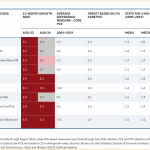

Looking at it another way. The quite timely decision to raise the caps would give banks additional headroom to issue covered bonds and thereby partially offset any future rise in overall funding costs.
The higher cap also enlarges the share of mortgage assets that can be removed from the pool. Banks have incentives to place better-performing loans into the cover pool to protect covered-bond ratings and funding access. The result is greater structural subordination of depositors and senior unsecured creditors if, for example, general asset quality is falling.
The CET1 deduction that applies to cover-pool assets above the statutory percentage would not begin until 12% rather than 8%. Banks could therefore top up cover pools further before triggering that deduction, but they would still hold capital against the loans themselves.
In a softening asset quality environment, the larger permitted pools would increase the volume of assets that could have additional alternate credit enhancements.
In summary, the cap increase would function as a partial buffer against rising funding costs caused by, say, mortgage deterioration, while simultaneously increasing asset encumbrance and the concentration of residual risk on shareholders. $ANZ.AX $CBA.AX $NAB.AX $WBC.AX MQG.AX $XXJ
afr.com/policy/economy/chalm…
Uppity oil and new K raises! That will do it.

$META Meta Announces New Class C Common Stock
— Introduces publicly listed, non-voting Class C shares effective January 19, 2027.
— Shareholders to receive one Class C share per Class A or B share, effectively a 2-for-1 stock split.
— New shares intended to fund AI investments, acquisitions & employee compensation.
— Structure preserves Zuckerberg's control and existing shareholder voting rights.
— Class C shares expected to list on Nasdaq.

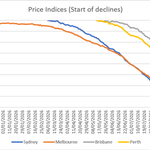
Australia is heading for a recession of epic proportions, driven primarily by a long, drawn out housing bust. It’s increasingly likely the drawdown will exceed 40%, but 50% shouldn’t be ruled out. The ramifications for $XXJ are serious.
James Falkiner retweeted

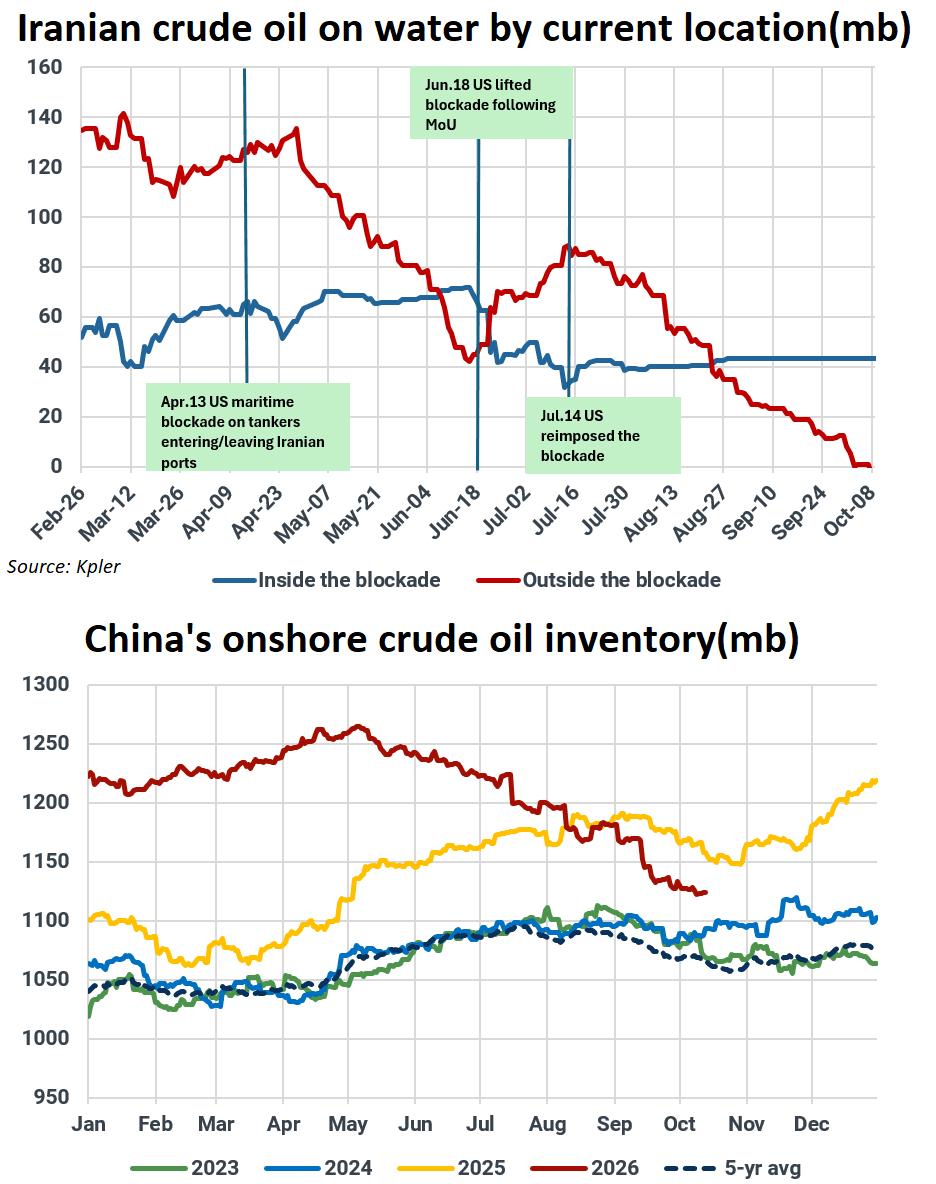
Also fwiw, there’s no phantom stash of Iranian crude that magically teleports into China the second sanctions get waived.
Every single floating barrel parked outside the blockade at places like EOPL has already been fully hoovered up by China anyway.
#oott #Iran


Before you get drunk on the headlines, let me walk you through the actual mechanics.
Under General License HH, shipping entity Roxette Maritime Shipping and Trading S.A. and seven associated vessels got slapped onto the SDN list today.
Concurrently, General License GG authorizes all transactions ordinarily incident and necessary to the wind-down of transactions involving 'Karnakis and Karnakis' or any entity owned 50% or more, directly or indirectly, by them ("Karnakis and Karnakis Entities").
The newly designated, sanctioned hulls under Roxette Maritime are: ANEMOS (IMO: 9205952), GLORIS (IMO: 9449510), PRIDE (IMO: 9487407), DESTINY (IMO: 9385491), FLAMINGO 1 (IMO: 9474199), HARMONY (IMO: 9449522), and PRINCE (IMO: 9548316).
Through this GL HH, the following narrow carve-outs are authorized:
1) Offloading at destination is permitted strictly for non-Iranian cargoes that were already loaded aboard these hulls prior to October 21.
2) Essential humanitarian provisions necessary to maintain the health, safety, and lives of the crew on board remain permitted.
3) Emergency marine repairs and environmental containment/salvage operations arising in transit are cleared.
4) The hard sunset on all safe-harbor activities is November 20, 2026. Any discharge or operational activity past this cutoff will be treated as outright illicit, triggering secondary sanctions risk.
5) This is strictly a damage control exit window. Fixing new charters or lifting fresh stems with designated entities is categorically prohibited.
6) Entering into new commercial agreements involving property or interests in property of blocked persons remains banned. No transactions prohibited under ITSR—including dealings with Iran, the Government of Iran, or Iranian-origin goods/services—are authorized.
7) Any payments owed to blocked persons must be routed directly into blocked accounts under ITSR compliance.
The cargo loaded on the ship may not be the property of Roxette Maritime, but legitimate non-Iranian cargo belonging to general global trading companies or third-country buyers.
If OFAC dropped an absolute blackout on all vessel ops without a wind-down clause, innocent charterers would be left stranded with hundreds of millions of dollars of physical product rotting in the middle of the ocean with zero legal recourse.
This is textbook collateral damage control and maritime risk prevention. But of course, the broader peanut gallery is entirely too fucking lazy to read beyond the raw headline.
Watching tourists claim Washington is "sending a surrender signal to Tehran" or crying "TACO" is so laughably brain-dead it physically hurts.
Literally takes 1 minute to pull the actual OFAC annex and read the fine print.
ofac.treasury.gov/media/9372…
ofac.treasury.gov/media/9372…
#oott #iran


Interesting perspective.

I'm an American bank guy who goes to rural France 4-5x/year. My academic background is European History.
The conservative forces of rural France have crushed urban liberalism many times since the Revolution (1848, 1871, 1959 and one could argue Vichy in 1940 as well). That's why they're on the 5th Republic. It's setting up for that again next year.
Background: France is run by highly educated mandarins for the benefit of the retiree class. There is little economic growth or job opportunity for the young because taxes and regulation are so high. President Macron's mild attempts to reverse this have been very unpopular with the retiree class.
The school funding protest is really about lack of opportunity post-graduation, which is valid. The Stalinist LFI and the essentially unemployed immigrant youth are exploiting the government's unwillingness to unleash its experienced and violent but not numerous riot police on the students.
Near-term, if the students stay home tonight, the police can start breaking heads with less fear of repercussions. If they don't, the govt is waiting for a spectacular outrage to justify it.
Long-term, the next Presidential election is in the spring. One should assume that National Front will win by a lot with dire consequences for the immigrant community.
Financially, France's social spending and still very capable (and conservative) military can not be maintained, yet the National Front wants to increase them. A financial crisis and EU exit can't be ruled out. Nor can a transition to a new form of government.
TLDR - we haven't yet seen the guys that Gerard Depardieu used to play in cop and detective movies. They about to come on to the stage.
Is “…the cost of compute is now set by the cost of capital, and the spot rental rate no longer tells you much.”

I've been critical in the past of AI compute indexes and the willingness to price compute based on the spot rental price, but now that the AI reset is sinking into the repricing of AI buildout debt its time to realize that the cost of capital is what determines the price of compute.
The most important number in GPU pricing right now isn't $/GPU-hour. It's the gap between what a hyperscaler pays to borrow (~90bp over Treasuries) and what a neocloud pays (~1,100bp).
The cost of compute is now set by the cost of capital, and the spot rental rate no longer tells you much.
The price of an H100 isn't one number. The same chip in the same rack costs a different amount depending on whose balance sheet it sits on. A ~1,000bp funding gap is a structural cost advantage that no amount of operating skill closes.
For example, take one GPU-hour apart. Most of it isn't power or space. It's paying back the chip, the interest on the loan that bought it, and the return the equity expects. A $40–55k all-in GPU, 75% debt-funded, at ~7,000 utilized hours a year is a financing instrument that happens to do matrix multiplication.
As the +500bp on neocloud debt (10%→15%) adds $0.20–0.30 to the break-even cost of every GPU-hour, which is then added on to the rental price.
That's 8–10% of the H100 index, from a credit spread alone, driven almost entirely by the cost of capital.
That means that the compute spot index is a derivative of the AI infra debt credit curve and the squeeze on neocloud margins.
It could be argued that the Giteau Rule (2015) actually accelerated the loss of elite players to o/s because it increased the chances they could have their cake and eat it.

Want to know what progressively happened in the period from early 2000's? Australian players, particularly elite level, increasingly played their professional rugby in France, the UK, and Japan where the salaries were/are much higher. By 2015 the Giteau rule was introduced, and that made matters even worse.

James Falkiner retweeted

Just finished listening to Jensen Huang with Brad Gerstner on the BG2 podcast
Probably one of the best things you can spend 90 minutes of your time listening to this weekend. Highly recommend.
Some of my takeaways from the conversation
1. The demand for compute will continue to be exponential. He once again cited inference as the biggest reason. Reasoning takes a lot more compute than simply spitting out answers from stored memory of knowledge
2. As more compute is used, the work and answer quality will also be better. This will lead to higher demand for that compute, leading to the exponential cycle that Jensen is referencing
3. The harness and tool usage have been the two biggest unlocks in AI over the last year. AI used to simply be a brain of knowledge. Now it has a skeleton around it that allows it to be useful. It is learning how to use existing tools to do better work without having to recreate tools from scratch each time.
4. The cost of intelligence will fall fairly quickly in the coming years. This will be driven by a combination of more compute coming online and better efficiency of models. No different than Moore's Law. Jensen still believes that the consumption of the intelligence (volume) will more than make up for the decline in pricing
5. The original GPT-1 cost $20M to train. If you train GPT-1 today, that number would be closer to $100. That is how fast the cost of intelligence is coming down.
6. The offset to this has been usage of the models and human ambition to build even better models. Despite cost coming down, usage of models has gone up 1M (x) times since GPT-1.
7. Jensen disagrees that work hours are going to come down. The more you learn, the more you want to do. Human ambitions have always existed to achieve and earn more. The bottleneck was the opportunity to do it.
8. Robotics is entering its ChatGPT moment. Similar to what Elon did with cars, every physical aspect of the world will soon be digitized with software and compute. Every massive corporation will have to reinvent itself as a technology company with AI
9. Safety is a core component of accelerating AI technology. When you think of a car, you don't just think of the engine. The airbags and braking systems are components of this car. Similarly, regulation and safety are core components of AI
10. NVIDIA's share of capex with the Neocloud customers is roughly 80%. With the cloud service providers, it is closer to 40%. Both of these numbers are growing every single year.
11. Even without AI, the semiconductor industry was already on its path to becoming the largest industry in the world. AI is the "X factor" that has accelerated that.
12. Moore's law is over. Before you could wait a year for your transistor cost to become cheaper. Today, if you wait a year, you will pay 2x as much
13. Analyst consensus estimates have been revised nearly 200% higher for future revenue and free cash flows vs. this time last year. Despite that, the stock is only +20%
14. Analysts questioned the need for general-purpose chips vs. custom chips. The reason that Jensen remains focused on general purpose is because it is fungible. Fungible = lower risk, which matters a lot when you are putting hundreds of billions of dollars to work
15. Global compute infrastructure spend was roughly $1T/yr. That old world was the retrieval way of doing computation. Jensen sees this number closer to $10T/yr in the near term, with roughly half of that spent on intelligence capex
James Falkiner retweeted

The RBA has been assuming the NAIRU is 4.6%, but its models say closer to 5%. Who knows what the real number is, but this explains why the staff/Board are open to the "need" for a higher unemployment rate to tame inflation.

James Falkiner retweeted

Jeremy Irons is an actor I fully embraced in 2025 - I found myself constantly watching his films. For my money, his performance in Margin Call is the best work of his career. In a film filled with stars, Irons shines the brightest. He is always, always interesting. A true artist.
Today $CBA.AX said 147k new hardship arrangements, but no statement on stock of existing hardship arrangements, outflows etc.
Analysts are largely left with high-level NPL and early-arrears ratios plus whatever selective commentary the banks choose to provide. That combination makes it difficult for investors, analysts, or the broader public to form a clear view of how much stress is being managed through concessions rather than being recognised as impaired.
There is no requirement for banks to publish regular, standardised, granular data on the stock of loans under hardship arrangements, the number or value of temporary interest-only switches, payment reductions, deferrals, or term extensions.
There is no public series that tracks how many loans have received multiple concessions, their subsequent performance, or the gap between reported NPLs and the broader pool of modified loans.
APRA itself chooses not to release the more detailed aggregates it collects, so the market cannot independently monitor trends in potential evergreening versus genuine temporary relief.
The "Economic sciences"? The majority of economists do not resemble scientists. Thankfully some do.

Congratulations to Robert E. Hall, winner of the 2026 Nobel Memorial Prize in Economic Sciences. The professor emeritus of economics and @HooverInst senior fellow emeritus shares the prize with Michael Woodford for developing macroeconomic models built on how households and businesses actually make decisions. Those models have helped governments and central banks time their policies to soften economic shocks.
📸: Patrick Beaudouin

"...suddenly Starlink Mobile covers everywhere a normal carrier does without the tower network."

T-Mobile spent five years trying to get rid of the exact spectrum Elon just called "the last critical piece" of complete phone coverage in America.
This 800 MHz block is Sprint's old Nextel spectrum, the stuff that powered push-to-talk walkie-talkie phones in 2004. The DOJ forced T-Mobile to divest it as a condition of the $26 billion Sprint merger. Dish had first rights at $3.59 billion and walked away because it couldn't raise the money. T-Mobile finally offloaded it to an investment firm called Grain Management last year for $2.9 billion plus a spectrum swap.
Grain's original plan was selling it to utilities for private networks.
Fourteen months later, SpaceX buys the whole portfolio, and shares of the carriers who passed on it fall as much as 8% in a single afternoon.
Here's why it matters so much. Starlink's satellite signal at 2 GHz can reach your phone outdoors, but it dies at the first wall. 800 MHz penetrates buildings. Most phones already have the band built in. So satellites handle the open sky, this low-band layer handles indoors, and suddenly Starlink Mobile covers everywhere a normal carrier does without the tower network.
Stack the moves. $17 billion for EchoStar's 50 MHz of 2 GHz spectrum. FCC approval for 15,000 Gen2 satellites this week. Now the low-band coverage layer.
Verizon, AT&T, and T-Mobile paid $81 billion in a single auction for C-band spectrum in 2021, then spent years and tens of billions more deploying it on towers. SpaceX assembled a nationwide carrier out of a distressed-asset sale, a forced divestiture castoff, and rockets it already owns.
The walkie-talkie spectrum from 2004 ended up being the piece that lets satellites replace cell towers. Nobody who touched it for twenty years saw that coming.

AI spend out of control? Maybe not...


Total investment in data centers and related AI infrastructure is projected to total $10.3 trillion from 2025 to 2032, or 3.6% of GDP per year, according to new estimates. That would dwarf other huge U.S. infrastructure projects such as the railroads, the highway system and the plumbing for the internet.


If Insignia Financial (formerly IOOF) really does have a $5.4bn exposure to Metrics across its superannuation businesses, which is equal to about 3% of its $180bn in super funds under management, according to the Australian, then that could reasonably be seen as an utter failure of governance and regulatory oversight. What happened to the management of concentration risk? It doesn’t bode well for the rest of the PC exposures amongst the investment managers.
James Falkiner retweeted

U.S. officials now see a Chinese invasion of Taiwan before 2028 as unlikely, Reuters reports, even though Xi Jinping has ordered the PLA to be capable of seizing the island by force by 2027. Officials point to readiness delays tied in part to Xi's anti-corruption purge, and to Beijing's interest in waiting out Taiwan's 2028 election.
U.S. officials also believe Beijing has drawn lessons from Ukraine and Iran: any attack would have to be fast and avoid turning into a prolonged war.