

A magazine of U.S. foreign policy and international affairs, founded in 1922. Sign up for our newsletters: https://xitter.cf/t.co/MpbtG0OxgB
New York, NY
Joined February 2009
- Tweets144K
- Following1.9K
- Followers951K
- Likes737




Pinned Tweet
Our September/October 2026 issue is now available online. Start reading here: foreignaffairs.com/issues/20…

Read @Scott_R_Singer and Pavlo Zvenyhorodskyi on China’s strategy for developing “robots that incorporate the advanced cognition of AI with autonomous physical movement.”
foreignaffairs.com/china/chi…

“The U.S. goal should not be to let go of the Middle East but to pursue its interests there in a smarter and more realistic way,” argues @PhilGordonDC.
foreignaffairs.com/iran/amer…

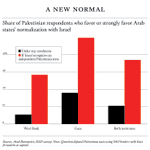
According to a recent @ArabBarometer survey, most Palestinians “regard diplomatic negotiations, not armed resistance, as the best way to resolve the Israeli-Palestinian conflict for good,” write Michael Robbins, Amaney Jamal, and Mark Tessler.
foreignaffairs.com/palestini…

“Tehran is confident that it can prevail by staying the course. No compromises are necessary.” Read Narges Bajoghli and @vali_nasr on how Iran plans to win:
foreignaffairs.com/iran/iran…

Read @pbmehta on how the “open defiance of young people” in India could shape the future of Indian democracy:
foreignaffairs.com/india/ind…

It is time for the U.S. intelligence community to rethink its policy against spying on foreign companies, argues David Cohen.
foreignaffairs.com/united-st…

As Trump antagonizes Canada and Mexico, he risks “destroying a precious geopolitical asset: a strong continental base from which Washington projects power,” writes Robert Zoellick.
foreignaffairs.com/united-st…

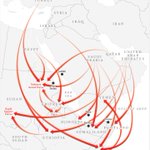
.@AKendallTaylor and @RHFontaine explain how “Trump’s efforts to create a more transactional and coercive world” could reinforce partnerships between U.S. adversaries:
foreignaffairs.com/iran/axis…

.@BrazilBrian examines the forces driving Latin America’s rightward shift, including the public’s growing frustration with crime.
foreignaffairs.com/south-ame…

In a new episode of “The Foreign Affairs Interview,” @AliVaez and Mohammad Ayatollahi Tabaar discuss the state of the war in Iran and examine U.S. and Iranian strategies.
foreignaffairs.com/podcasts/…

“Tehran will neither stay the course nor compromise with Washington,” writes Mohammad Ayatollahi Tabaar. “Instead, it will start doing even more to hurt the economies of the United States’ regional partners and to decimate global energy markets.”
foreignaffairs.com/united-st…

Although the “global aura of U.S. airpower” is declining, the United States should continue to prioritize air superiority, argues @Justin_Br0nk. “Airpower remains the most potent piece of the United States’ conventional forces.”
foreignaffairs.com/united-st…

Read Mansoor Moaddel on how changing attitudes in the Middle East could shape the region’s political institutions:
foreignaffairs.com/iran/midd…

When the AI bubble inevitably pops, “the weakest players will be wiped out, and the survivors will consolidate their lead,” writes Ruchir Sharma. “And from the rubble, a more stable AI ecosystem will emerge.”
foreignaffairs.com/united-st…

“China’s development as a space power should be a wake-up call for the United States,” write @KathleenCurlee and @SamBresnick. “The era of unassailable U.S. space power is ending, and Washington has no choice but to adapt.”
foreignaffairs.com/china/chi…

“Unlike in the 1960s, today’s nuclear debate has not been prompted by a change in the global balance of power,” writes @IvoHDaalder. “It has been precipitated by a unilateral change in the United States’ attitude toward Europe.”
foreignaffairs.com/europe/nu…

“The notion of military victory is a dangerous myth,” write Stephen Biddle, @SamWinterLevy, and Yuri Zhukov. “Terms and bargaining always matter: no war ends unless both sides choose to accept a settlement and stop.”
foreignaffairs.com/united-st…

“If governments rush to claim the world’s waters, as they did its land, they will make global commerce more difficult and encourage a new era of seaborne conflict,” warns @mikealbertus.
foreignaffairs.com/oceans-se…

When the United States approaches like-minded countries with hostility, it strengthens U.S. adversaries and weakens “the cohesion of the network best positioned to confront them,” write @AKendallTaylor and @RHFontaine.
foreignaffairs.com/iran/axis…
“Moscow thinks that the price Washington and Europe are willing to pay to support Kyiv is limited, whereas the price Russia is prepared to pay to conquer Ukraine is not,” writes @DmytroKuleba.
foreignaffairs.com/united-st…
