


The market knows... So, what are you going to do with your current and future skills and talents?
#Strategy #Data #Policy #Innovation

FranciscaAlbuquerque retweeted

Young adults are reaching life’s milestones later and later—not because they lack motivation, but because bad government policies are making it harder to get ahead.
Watch the latest Cato Podcast episode here: ow.ly/ruPS50ZXmeW
FranciscaAlbuquerque retweeted
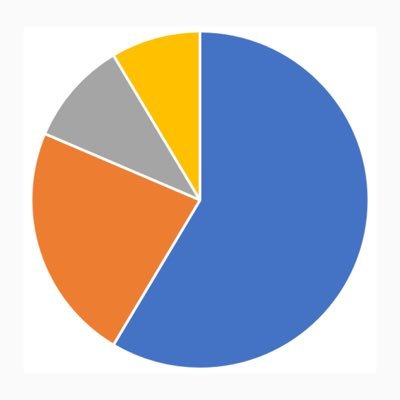
🇵🇹 Portugal: Renewables covered 64% of electricity demand in Jan–Sept 2026
REN data shows record consumption of 40.5 TWh (+3.4% vs 2025). Breakdown of the renewable share:
• Hydro 24%
• Wind 23%
• Solar PV 13%
• Biomass 5%
Natural gas supplied 14%, while imports hit a period record at 22%.
"This explosively growing, widely available, and gigantic body of data makes our time truly the data age."
Han, Jiawei, et al. Data Mining: Concepts and Techniques, Elsevier Science & Technology, 2011. ProQuest Ebook Central, ebookcentral.proquest.com/li…."
⬇️⬇️⬇️

Economist Daron Acemoglu says AI should be designed to help people do their jobs better, not make them expendable. He also suggests interventions like a tax code that incentivizes hiring real people. cbsn.ws/3TKVhqX
Interesting reflections!
Nobel Prize-winning MIT economist Daron Acemoglu fears unemployment could triple over the next decade if nothing is done and we stay on our current course. cbsn.ws/4zzQZlF
FranciscaAlbuquerque retweeted

Dear followers,
I’m delighted to share this interview with 60 minutes on AI and jobs. Thank you
Nobel Prize-winning MIT economist Daron Acemoglu fears unemployment could triple over the next decade if nothing is done and we stay on our current course. cbsn.ws/4zzQZlF
"In biopharma, AI can now propose thousands of drug candidates in the time it once took to generate a handful."
McKinsey Technology Trends Outlook 2026 mckinsey.com/capabilities/te… via @McKinsey
FranciscaAlbuquerque retweeted

What keeps me young is curiosity and adaptability.
Check out this AI-generated summary of my fireside chat about 'Leadership in an Age of Transformation' with @JulianaChanPH.

ALT AI-generated visual summary of the fireside chat about 'Leadership in an Age of Transformation' with Professor Klaus Schwab and Juliana Chan created by Timotius Marvin Chan
FranciscaAlbuquerque retweeted

Existem políticas publicas erradas, ineficazes, contra-producentes, que criam mais problemas do que resolvem. Controlar as rendas é uma delas. Que ainda haja partidos que o defendem é sintomático do grau de alheamento da realidade. Não resolvem nada e ainda estragam.

Human Capital as a Driver of Value Creation in Private Markets
"investors increasingly evaluate markets according to the resilience of their future workforce, innovation ecosystems and policy environments supporting talent development."
weforum.org/publications/the…
FranciscaAlbuquerque retweeted

Children are growing up with #AI as part of how they learn, create, communicate and play.
A new @wef white paper sets out practical steps to help organizations build AI systems that protect children while supporting their agency, inclusion, learning, privacy and development.
Read more: weforum.org/publications/chi…

"“Specialists … can spread the fixed cost of acquiring knowledge across many clients,” writes the author, Luis Garicano of the London School of Economics. “Artificial intelligence reduces the fixed cost and hence benefits those who use this knowledge less often.”"

I just presented a new paper at @BrookingsInst on the "Vanishing Advantage of Specialization (new paper)". It explains why this will be the age of the generalist.
We all understand that the key determinant of the economics of airlines is the utilization of the aircraft. The fuller the plane, the lower the cost per seat.
The same mechanism explains the value of specialization. Acquiring a piece of knowledge is very expensive in terms of our cognitive effort. A specialist is a person who uses this knowledge sufficiently often to spread that cost over many uses.
This explains outsourcing of "non core" capabilities in firms. A firm handles frequent problems internally and buys expertise outside for problems it encounters too rarely to justify maintaining the knowledge in-house.
For instance, Microsoft has a large legal department, but it hired a corporate law firm to advise it in its purchase of Activision Blizzard. It is not because Microsoft lacks lawyers that it relies on outside service providers, but because it does not use sufficiently often the specialized knowledge of mergers to justify an entire department.
Artificial intelligence reduces this fixed cost of acquiring knowledge and therefore also reduces the advantage of specialization.
Suppose a capability (such as merger law) costs $100,000 a year to maintain, a firm faces the problem 10 times a year while the specialist sees it 1000 times, and suppose that briefing an outsider costs $2,000 per case. Since the specialist's advantage due to utilization is $9,900 per case, the firm buys the service from the specialist.
Now suppose AI reduces the annual cost of maintaining the capability to $10,000 for both. The utilization advantage of the specialist is reduced to $990, less than the cost of asking for help across the boundary, so the firm prefers to acquire the capability itself.
The specialist still spreads the cost over more uses; the saving from doing so is now less likely to cover the cost of crossing the boundary because the fixed cost is lower.
Recent evidence shows workers using AI to cross their occupational boundaries. Chin and Richmond (2026) classify more than 800,000 work-related ChatGPT messages from users whose occupations are known. Each message is assigned to the occupation whose historical tasks look most similar. Most of the usage is generic, including what one would expect: help in writing, editing and planning represents 61.5 percent of all messages. But 16.8 percent of all work messages, and 43.5 percent of the ones which are specific to one occupation, concern tasks usually undertaken by a different occupation. Among the ones that cross occupational boundaries are calculating financial data, troubleshooting software, drafting promotional messages, and writing to government agencies.
Note that the fall in the cost of acquiring a given capability did not begin with generative AI. Google and databases had already lowered these costs. Generative AI greatly accelerates this process.
Consider lawyers, accountants, consultants and software workers: of the 337,000 jobs created between 2022 and 2025 by the four professions, 335,000 were outside their main specialist industries-- law is still being done, but you need less of a specialist law firm to do it.
Professional-service firms can be squeezed in the middle between model producers and their clients. The experts can be squeezed from above, by model makers or labs who supply the general knowledge at scale, and from below, by their clients who can apply this cheaper knowledge themselves. The specialist's comparative advantage lies in expertise that clients use too rarely to maintain internally and that remains costly to acquire even with AI, including the expertise required to check and verify a solution.
Thanks to Jan Ebberly and @JonSteinsson for inviting me to do this:
Summary and links to paper and slides here: brookings.edu/articles/the-v…
Paper: brookings.edu/wp-content/upl…

"Data miners have an ethical responsability to the individuals whose lives may be affected by the decisions that are made as a result of data mining activities.", in North, M. (2016). Data mining for the masses (2nd ed.). CreateSpace Independent Publishing Platform.

FranciscaAlbuquerque retweeted

When men have daughters, they become more supportive of women.
Data on every worker in Denmark over 25 years: After male bosses welcome their first daughter, they're 2.9% more likely to hire qualified women—and pay them 4.4% more—without any cost to firm performance.
But we shouldn't have to wait for men to have girls before they become feminists. It's time to replace "As a father..." with "As a human being..."


FranciscaAlbuquerque retweeted
"Talent is universal, but opportunity is not." What #skills actually get young people hired in the age of #AI?
Find out more: weforum.org/stories/jobs-and…

FranciscaAlbuquerque retweeted
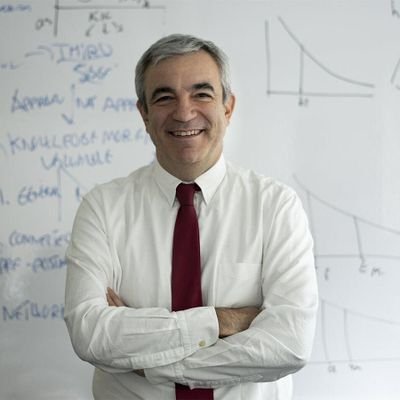
I love this. Being young today is tough, everyone wants to tell you about catastrophic risks. Here is a better way to face the future.


"Policymakers ask how tightly to regulate AI’s risks without putting their economies at a disadvantage; China, the European Union, and the United States are following different paths."
mckinsey.com/mgi/our-researc…

FranciscaAlbuquerque retweeted

The 2026 UN Global Risk Report shows that large-scale war is now seen as the world's greatest vulnerability, while concerns about AI & political risks are rising rapidly.
Respondents point to one clear solution: stronger international cooperation.
Read: un.org/en/global-risk-report

FranciscaAlbuquerque retweeted

When we learn something new, it feels like magic. We fail to connect it to what we studied in school or university. This is the biggest problem with our education system. We teach our children to memorize facts, and they achieve good grades, but we fail to develop the true understanding and learning skills they need. There is a famous story about Professor Richard Feynman regarding this.
In Richard Feynman’s words:
“I often liked to play tricks on people when I was at MIT. One time, in mechanical drawing class, some joker picked up a French curve (a piece of plastic for drawing smooth curves - a curly, funny-looking thing) and said, ‘I wonder if the curves on this things have some special formula?’I thought for a moment and said, ‘Sure they do. The curves are very special curves. Lemme show ya,’ and I picked up my French curve and began to turn it slowly. ‘The French curve is made so that at the lowest point on each curve, no matter how you turn it, the tangent is horizontal.’ All the guys in the class were holding their French curve up at different angles, holding their pencil up to it at the lowest point and laying it along, and discovering that, sure enough, the tangent is horizontal. They were all excited by this ‘discovery’ - even though they had already gone through a certain amount of calculus and had already ‘learned’ that the derivative (tangent) of the minimum (lowest point) of any curve is zero (horizontal). They didn’t put two and two together. They didn’t even know what they ‘knew’. I don’t know what’s the matter with people: they don’t learn by understanding; they learn by some other way - by rote, or something. Their knowledge is so fragile!”
I have always been an admirer of Prof. Feynman; the interest he has sparked in people regarding physics and mathematics is truly praiseworthy.
