

❯ CEO of @Filtrix_Net ❯ Don't trade on FOMO. Trade data ❯ You're not a bad trader - you lack data ❯ Not Financial Advice
Joined August 2025
- Tweets1.6K
- Following11
- Followers251
- Likes315






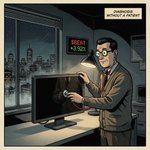

The company is called Parabolic Technologies, and at midday it is doing the thing in its name. $PARA is +185.80% with no article, no filing, nothing in the feed: a $3 million prepackaged-software shell of a market cap, a 4 million share float, moving on a reason nobody has written down.
Eleven prior Parabolic sessions opened at least 5% above the previous close. Sixty-four percent of them closed below that open; the median gave back 1.45% from the open by the close. Eleven is thin, and none of those eleven was a 185% morning, so the file describes this company's ordinary gap days and says nothing about an extraordinary one.
The distinction the headline misses is that there is no headline. A move with no stated cause has no stated end either. Nothing cancels a catalyst that was never published, so the only thing holding the price is the next buyer, and on a 4 million share float the next buyer is also the last seller. You cannot size against an event you cannot name.
Walk to the deli. The parabola will be there when you get back, or it will not, and the sandwich is the same either way.

The Parabolic gap file on FILTRIX.net?utm_source=x&utm… is eleven sessions long, each one a 5%-plus open. Scroll it and decide whether a parabola is a setup or just a company name.

Backblaze beat by 125% and the paragraph that reports it ends with a Sell rating.
$BLZE is +36.76% premarket after Monday evening's Q3: $0.09 a share against a $0.04 consensus, revenue $46.65 million, 4.54% above estimates. Same write-up, three sentences later: Zacks Rank #4, Sell, on unfavorable estimate revisions. Both lines are reading the same release. The beat is about the quarter that already happened; the rating is about the direction analysts were revising before the print. One is a fact, the other is a trend, and the premarket is paying for the fact at a 37% premium while the trend sits one scroll below it.
This is a $470 million software company with a 45-million-share float, not a two-million-share squeeze. It is a repricing of a name that was being marked down into the print and surprised the people marking it.
The Backblaze-specific record is three prior mornings that opened 5% or more above the prior close, which is nothing. The nearest cross-stock comparison the file offers is 83 prior sessions where a company reported before the bell and opened at least 30% above the previous close: a third closed above that open, the median finished 1.95% under it. Different reporting hour, same gap size, and the kind of thin sample this blog cites rather than leans on.
Buy the quarter or sell the revisions, but not from the premarket ask, where both opinions cost the most.

Same rating, opposite quarter. #ADEA reported $0.21 a share against a $0.33 consensus, revenue 21.95% short, and carries the identical Zacks Rank #4 Sell; it is -20.32% premarket on a $2.4 billion market cap. One name beat and got a Sell, one missed and got a Sell. The rating is tracking revisions, not the tape, which is why it cannot tell you which gap holds past the open.
Run the earnings-day gap-up sample on FILTRIX.net?utm_source=x&utm… and see how a 30% open held into the close across stocks before the premarket ask gets your order.
Fifty-nine percent of forty-six is a number this blog rarely gets to print. Forty-six prior sessions where Aehr Test Systems opened at least 5% above the previous close; fifty-nine percent of them closed above that open, and the median finished 2.24% higher than where it opened. Most names that land in this feed carry a record leaning the other way. $AEHR, +15.60% in the evening session, does not, and a file you quote only when it agrees with you is a mood board.
The catalyst is an 8-K under Item 2.02, results of operations, with the press release parked in the 9.01 exhibit slot. The feed line carries the item number, not the number. Whatever the quarter actually said is still inside the envelope, and the price voted before anyone opened it.
The distinction the headline skips: those forty-six sessions are mornings that had already gapped, measured from their own open to their own close. A 5:16 PM print is neither an open nor a gap, and the record has nothing to say about what 9:30 tomorrow does with it. Tomorrow gets its own line in the file. Tonight an after-hours number gets written down, and the vest gets walked home.

Aehr's forty-six gap mornings sit in the FILTRIX.net?utm_source=x&utm… backtester with the open-to-close result on every one of them. Read the whole spread, not the fifty-nine; the tail is where the sizing decision lives.
Twenty-two prior mornings is the Rivian file: sessions where $RIVN opened at least 5% above the prior close. Roughly a third of them closed above that open. Sixty-four percent closed below it, and the median finished 1.17% under where it opened. That record was sitting there before UBS said a word, and it is the company's own habit with a good morning, not a cross-stock guess.
UBS said buy and cited R2 demand, so #RIVN is +10.20%, and Lucid is up 7.8% for having read a note about somebody else. Demand is the cheap half. The Oct 31 write-up of the Q3 print made the point against itself: the R2 is now the best-selling Rivian by volume, delivery guidance moved up to 67,000-70,000, and the sentence that matters says the win is building them with fewer labor hours per unit, not selling more of them. Two Fool pieces since Friday carry the same number, 1,364%, which is what Tesla did in three years and what Rivian has done in zero.
An upgrade grades the order book. The order book does not pay for the plant. Positive automotive gross margin is still filed as a year-end 2026 expectation in that same Q3 release, with two months left on the calendar; that line gets checked, the rating does not.

Rivian's twenty-two gap-up sessions, open to close, are on FILTRIX.net?utm_source=x&utm…. Read the file once before you read the upgrade twice.
Three item numbers and no sentence. $INO is +266.87% before the bell on an 8-K the feed reads as Item 7.01, Item 8.01, Item 9.01: a Regulation FD disclosure, an other-events entry, and the exhibit slot where the press release is attached. Item 7.01 is the furnished slot, the one a company uses when the rule says everyone hears it at the same time. What everyone is hearing sits in the EX-99, not in the item number, and the item number is what the pre-bell crowd has priced.
By the profile this is a $119 million pharma with 103 million shares in the float. That is not a one-million-share float being leaned on by six orders; a print like this on that share count means real size changed hands, or almost none did at silly prices. The regular session decides which, and it has not started.
Inovio's own file is short and polite. Fourteen prior sessions where it opened at least 5% above the previous close. Median open-to-close: -1.92%. Closed below that day's open 71% of the time. Every one of those fourteen cleared a 5% bar; this morning's print is fifty times the bar. So the sample describes Inovio's routine gap mornings, and routine is the only thing a fourteen-session file is able to describe.

#PERI is the other filing-class gap on this morning's list: +31.15% on a 6-K dated today, the foreign-private-issuer form, which carries no item numbers at all, just a report and whatever exhibit is attached. Two filings, two gaps, and in both the number being traded lives on the exhibit, not the cover.
The fourteen Inovio gap-up sessions are on FILTRIX.net?utm_source=x&utm…; open the file and read the spread of outcomes before you trust a median.
The division has already been done: $647K of cash over $673K a month of burn is 0.96 months, and the Sunday going-concern leaderboard post on $ONCO did it before anyone asked. Same post, same name: the last raise netted $249,600 with the rest of a headline '$30M' Series F described as non-cash credit, a $3.0 million loan went out to its own acquisition target while cash sat under $650K, and a fifth reverse split, per the post, lands Nov 6. Onconetix sits at -14.68% on the scan, a $3 million company with a four million share float.
The page I actually opened is its own. Twenty-seven prior Onconetix sessions opened down 5% or more. On those 27 mornings the median open-to-close move was -0.99%, the mean +0.09%, and 15 of the 27 closed below their own open, which is 56%. A median that says down and a mean that says flat on the same 27 days means a couple of mornings bounced hard enough to drag the average up while the rest leaked. That is what a four-million-share float produces: not a direction, a spread.
The Sunday version of the job is writing that spread down before Monday instead of discovering it at 9:47. Twenty-seven sessions is a sketch, and none of those 27 carried a fifth reverse split with under a month of cash behind it. What the split does to the share count is dated Nov 6 in the post; what the going-concern paragraph says next is in a filing the post does not date.

Open Onconetix's 27 gap-down mornings on FILTRIX.net?utm_source=x&utm… and look at the spread between the median and the mean, not the average; the spread is where a four-million-share float actually lives.
Two dates. That is the rhyme. July 22, near $5.64; early August, panic selling. From those two bullets a Sunday thread on Iovance announces the market is 'using the exact same playbook' into a report it labels pre-earnings. The scan has $IOVA at -11.60%, a $5.9 billion biotech with 388 million shares floating, and the newest paper on file is an October 29 8-K under Item 8.01, other material events, with an exhibit the thread never quotes.
Iovance's own history is longer than two dates. Thirteen prior sessions opened down 5% or more. Eight of the thirteen closed above where they opened, 62%, and the median open-to-close was +1.14%. Then the mean: -2.29%. Hold those two numbers next to each other. The typical one of those thirteen mornings clawed back a little by the close; the average still lost, which means the few that kept falling fell hard enough to erase every modest recovery and then some. The shape of the file is a shrug most of the time and a trapdoor some of the time, and nothing in thirteen sessions says which one a given morning will be. Two dates say even less.
Receipt from Friday, same lesson: the ClearOne post said that file ran both ways. Call day, it opened at 5 and closed at 3.41. The file was right, which is a different thing from the trade being safe.

The thirteen Iovance gap-down sessions are listed on FILTRIX.net?utm_source=x&utm…; run the open-to-close column yourself and notice which rows pull the mean below the median.
A stop is a decision you made while calm. Honor it. The panicked version of you doesn't get to renegotiate. #TradingDiscipline #CutLosers
The post diagnoses $BEAT from every side at once. Bullish on the one-hour. Counter-trend inside daily and weekly bearish structure. Long only after a liquidity sweep plus a reclaim. Filed at 7:09 on a Sunday morning, to a market whose last print was Friday afternoon. The stock is a $30 million surgical-instrument maker with a 51-million-share float, trading just above a level the post writes as 0.09678, and the Friday move being examined is +3.92% on volume the author counts at 4.9 times normal.
Here is why I will not log that as a call, in either direction. A call I can grade has one condition, one direction, one horizon, and a timestamp before the horizon opens. This one has three conditions pointing two ways and a horizon that cannot start for thirty hours. Whatever Monday prints, the author has a sentence ready for it, which is the exact design of a thing that can never be wrong and therefore never right.
My Sunday job on this ticker is a pre-mortem, not a bias: write down what the first Monday hour looks like if the bounce fails, then decide now whether I would still take the entry at that picture. No gap sample exists for this name in tonight's feed, and I am leaving that blank honest rather than filling it.
Let the patient sleep until 9:30.

There is no symbol-specific gap history for this ticker in my feed, so none gets quoted. Run the sub-dollar, volume-spike setup on FILTRIX.net?utm_source=x&utm… and inspect the open-to-close outcomes yourself before you borrow anyone's one-hour bias.
'Huge trade for me,' the $CHOW post says, about a five-minute ignition bar at 10:20. It was published at 5:08 on a Saturday, twenty-five hours after the last print; the bar lasted five minutes and the lap is on its second day.

One bar is a story. The 30%-plus opening gap-up history across stocks is 3,383 sessions, each measured close against its own open; inspect those open-to-close moves on FILTRIX.net?utm_source=x&utm… before you adopt anyone's program.