






Can’t wait to finally share what we’ve been up to! This has been both the most work and the most satisfying collaboration of my PhD yet, and we want to put it out there in the cleanest way possible. Paper and tokenizer dashboard will be out soon!

A little late, but very happy to announce that our work on building and evaluating tokenizers for neural (spiking) data, led by @fededagos , Alex Gilbert, and Susi Keller as a joint collaboration between @metamorphiclabs and @uni_tue , has been accepted as an Oral at Neurips 2026 Evaluations and Datasets track! 🧠 🔤
Was quite a lot of work but equally a lot of fun putting this together, incredibly rewarding to be regarded as a top 15 / ~4000 submissions!
We're excited to share a website and dashboard soon 🤓


Federico D'Agostino retweeted

Long-horizon tasks + sparse rewards = no supervision. So, we need dense supervision methods… but how do we evaluate them?
Meet QVal, our latest release👇
Federico D'Agostino retweeted

🚀New Paper
arxiv.org/abs/2606.28551
Everyone obsesses over VLM architectures & training recipes. But what about the data?
Presenting the latest work in the DataComp-series: a testbed for VLM data curation with 1,000+ controlled experiments and some surprising lessons 👀
🧵👇

Federico D'Agostino retweeted

How well can you describe the feature selectivity of a vision neuron … with words? Interpretability has long borrowed from neuroscience — and maybe it can give back too! 🧵
Federico D'Agostino retweeted

🚨 New paper! arxiv.org/abs/2603.06610
Are you sure your post-trained LLM isn’t forgetting something?
Adapting LLMs is known to cause forgetting.
We usually measure it via general knowledge benchmarks.
But if MMLU doesn’t drop…. are you really fine?

Federico D'Agostino retweeted

How can agents learn in long, open-ended tasks where success is rare and rewards are sparse? 👀
🚨 Enter ∆Belief-RL: we show how to use agent’s own belief updates as a dense reward for turn-level credit assignment.
the result? Surprisingly strong generalization.
(1/8) 🧵⬇️

Federico D'Agostino retweeted

🚨 New paper at #NeurIPS2025!
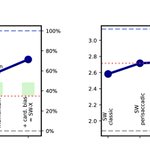
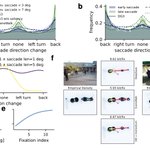
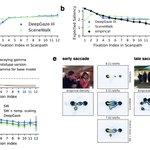
A systematic fixation-level comparison of a performance-optimized DNN scanpath model and a mechanistic cognitive model reveals behaviourally relevant mechanisms that can be added to the mechanistic model to substantially improve performance.
🧵👇

💬 Conceptually: Deep neural networks should be viewed as scientific instruments. They tell us what is predictable in human behavior.
We then use that information to ask why, building fully interpretable models that approach the performance of their black-box counterparts.
This is a concrete step toward bridging the performance/understanding gap in vision science.
⚙️ Code: github.com/bethgelab/what-mo…
📄 Paper: openreview.net/forum?id=cnrw…
🙏 A joint effort with Matthias Kümmerer, Lisa Schwetlick, @bethgelab
#NeurIPS #CognitiveModeling
🚨 New paper alert! 🚨
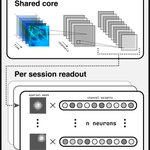
We’ve just launched openretina, an open-source framework for collaborative retina modeling across datasets and species.
A 🧵👇 (1/9)

This is just the beginning.
We see openretina as more than a Python package—it aims to be the start of an initiative to foster open collaboration in computational retina research.
We’d love your feedback! (8/9)
Try it out and help us improve the accessibility of retinal datasets and models together.
A team effort with:
@ThomasZenkel
@dgonschorek.bsky.social
@LaraHoefling
@teuler.bsky.social
@bethgelab
#openscience #computationalneuroscience (9/9)