

Celebrating the Ulster-Scots language in the Derry City and Strabane District Council area. Further information: [email protected]
Derry City & Strabane District
Joined May 2020
- Tweets377
- Following84
- Followers447
- Likes612





Moss (noun): a peat-bog. A road leading to a bog is defined as a ‘moss rodden’ in Fenton’s Hamely Tongue, and the Concise Ulster-Dictionary records the Scots/Irish hybrid ‘moss cash’ or ‘moss kesh’, moss (Scots) + ceis (Gaeilge) meaning ‘a wickerwork causeway' #Scots #UlsterScots

Do you have a great idea for promoting the #UlsterScots language online?
To mark #LeidWeek 2026, @dcsdcouncil is offering small grants of up to £300 to support the creation of digital content in Ulster-Scots.
For an application form contact: [email protected]

Lug (noun): ear. Old Scots records ‘lugg’ for the ear, and also for the handle of a vessel. Also features in dialects of Northern English. 'Lug in' - to listen. Possibly Scandinavian in origin #Scots #UlsterScots

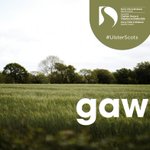
Gaw (noun): a trench marking a field boundary. From Scots; a form of gall "a wound produced by chafing" (Concise Ulster Dictionary) #Scots #UlsterScots

Join writers and poets Darren Gibson and Proinsias Mac a' Bhaird for a special evening of Ulster-Scots and Irish poetry to celebrate #CultureNight on Friday 18 September 2026. Free entry, all welcome, no prior knowledge of Irish or Ulster-Scots is required to enjoy the event!

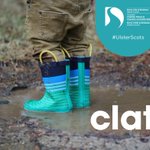
Clat (noun): a dirty person, or animal. Scots and English dialect, perhaps from ‘clod’ meaning soil or dung; either a form of clot or from Middle Dutch 'clatte' meaning 'a splotch' (Concise Ulster Dictionary) #UlsterScots


Yirth (noun): earth, e.g. the yirth gaes roon' the sin. Also soil, ground. Alternatively ‘yird’ e.g. ‘Tak mair yaird’ (take a wider furrow) – J. Fenton. From Old Scots 'ȝerd', cognate with English ‘earth’ and German ‘Erde’ #Scots #UlsterScots

Scobe (verb): gnaw, scrape off with the teeth, nibble, scoop out, hollow out. From Scottish Gàidhlig ‘sgolb’, cognate with Irish ‘scolb’ meaning a nick, crack, chip, also thatching-rod, slim stick #Scots #UlsterScots #Gàidhlig #Gaeilge #LanguageLinks

Joggins (plural noun): old, tattered clothes or rags. Also ‘juggins’ or ‘joogins’ meaning pieces, scraps, or small quantities. From Old Scots ‘duigs’ or ‘dewgs’ meaning fragments #UlsterScots

Maughy (adj): muggy, humid, damp, mouldy. Also ‘moughy’. Old Scots records ‘moch’ the origin of which is uncertain but believed to be connected with English dialectal form moke, meaning fog, mist, foggy weather #UlsterScots #Scots

Neb (noun): beak or nose. Common in bird names: black neb (crow); bridle neb or red neb (puffin); cooter neb (razorbill); long neb (heron). The adjectives ‘nebbet’ or ‘nebby’ can mean cheeky, forward or nosy. Cognate with Middle Dutch 'nebbe' and German 'Schnabel' #UlsterScots

Brattle (noun): a loud, clattering noise e.g. ‘a brattle o thunther’, also, ‘blatter’. Old Scots ‘brattle’, imitative, to rattle or clatter #Scots #UlsterScots

Scahldie (noun): Also ‘scaldie’. A nestling. Usually reserved for a very young baby bird which doesn’t yet have all its feathers. Cognate with Ulster Irish scalltachán #UlsterScots #LanguageLinks

“The whin is out afore the short day’s turnin’; Och but the whin is brave!” Florence Wilson (1874-1946). 'Whun' (noun): gorse (Scots form). ‘Whun-Lintie’ or ‘Whunny-Grey’ – the common linnet #UlsterScots

Yirp (verb): to chirp loudly (The Hamely Tongue, J. Fenton). Onomatopoeic and similar to English 'chirp'. Often used to describe the alarm call of the blackbird (‘merle’ in Ulster-Scots) and all the more common when wee scaldies (nestlings) are in the nest #UlsterScots

ALT Photo of male blackbird with the Ulster-Scots word for chirp 'yirp' superimposed
Scope (noun): A large expanse of ground e.g. ‘a scope o land’, ‘a scope o grun’ #UlsterScots

Coagle (verb): to rock or wobble. Coagly (adj.) rickety, wobbly. Origin unknown but perhaps imitative of 'joggle' and cognate with 'shoggle' from Old Scots 'schogg' to shake and Modern German 'schaukeln' to rock e.g. Schaukelpferd (rocking horse) #UlsterScots

Braw (adj): fine, fair e.g. weather. Old Scots records braw, bra meaning fine, splendid, excellent; considered a variant of 'brawf', brave, cognate with Irish Gaelic breá meaning fine #UlsterScots

ALT Ulster-Scots word 'braw' meaning fine superimposed on image of person reaching a hand towards the sun
Cappy (noun): a pet pig. Short for cappy-pig e.g. a pig fed by hand from a shallow wooden bowl (cap in Scots). Via Old Northumbrian ‘copp’ and Norse ‘koppr’ #UlsterScots #Scots
